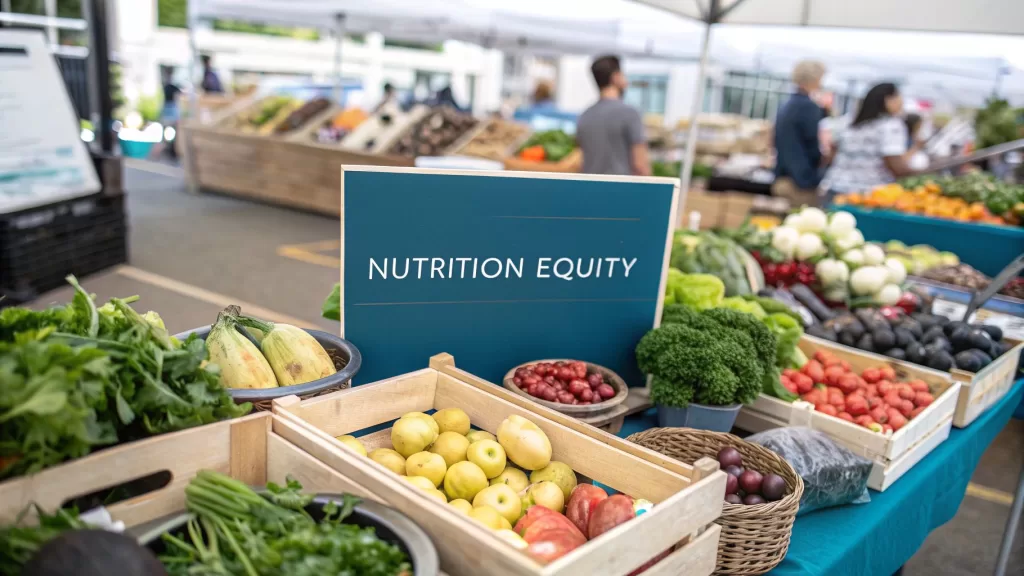
We often talk about healthy eating as a simple matter of personal choice. But if you've ever tried to stick to a healthy diet, you know it's rarely that simple. The reality is that our ability to eat well is shaped by a much larger, often invisible, set of forces: the social determinants of health (SDOH).
These are the conditions of the places where we live, learn, work, and play. They are the true drivers of our nutritional well-being and the missing piece in understanding the link between food and community health.
What Really Shapes Our Access to Healthy Food
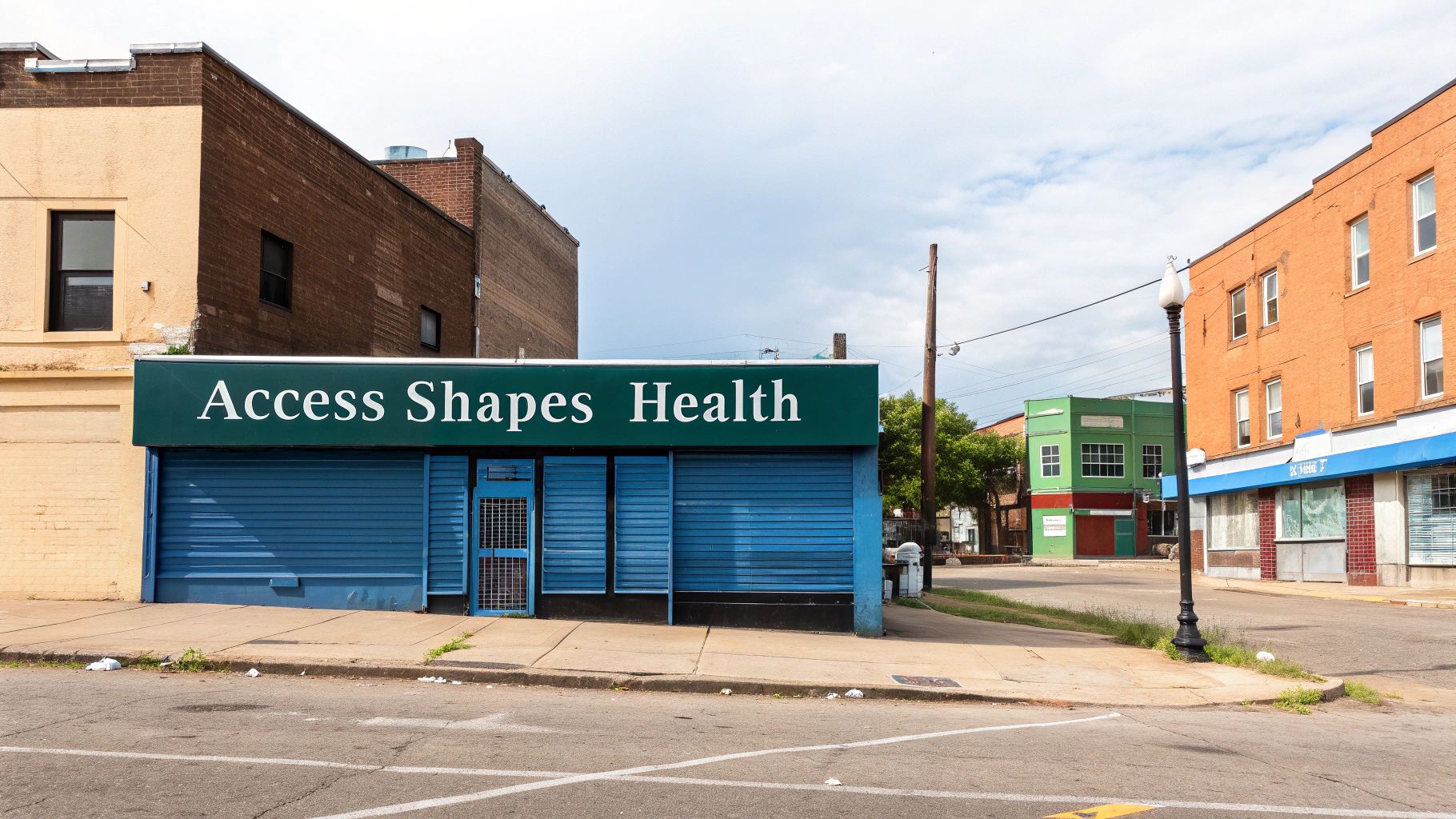
Think of it like trying to grow a plant. You can start with the best seed in the world, but if it's planted in poor soil with no sunlight or water, it just won't thrive. The seed itself isn't the problem—its environment is.
In the same way, a person's ability to eat nutritious food depends less on willpower and more on the conditions around them. These external factors, the SDOH, create either opportunities for health or barriers against it. When it comes to food, they dictate whether a family lives near a grocery store, can afford fresh produce, or has the time and tools to cook a healthy meal.
The Five Core Domains of SDOH
To get a clearer picture, it helps to break down the social determinants of health into five core areas. Each one plays a distinct and powerful role in shaping what ends up on our plates.
How Social Determinants Impact Your Plate
| SDOH Domain | Impact on Food Access & Nutrition |
|---|---|
| Economic Stability | This is the big one. Income directly impacts the ability to afford nutritious food. Low wages or job instability can force families to choose between paying rent and buying fresh produce. |
| Education Access & Quality | Education provides knowledge about nutrition and healthy cooking. It also influences employment opportunities, which in turn affects income and a family's food budget. |
| Healthcare Access & Quality | Access to healthcare professionals can provide crucial nutrition counseling and help manage diet-related chronic diseases. Lack of access means these resources are often out of reach. |
| Neighborhood & Built Environment | This covers everything from the safety of your community to your proximity to grocery stores versus fast-food chains. A lack of safe parks or sidewalks can also limit physical activity. |
| Social & Community Context | Social support networks and community cohesion play a huge role. Cultural traditions around food can be a source of health, but social isolation can make it harder to access and prepare meals. |
As the table shows, these aren't isolated issues. They are deeply interconnected systems that either support or undermine a person's health from every angle.
Why Food Access Is a Systemic Problem, Not a Personal Failure
When you see how these factors work together, it becomes clear that food access isn't a personal failing—it's a systemic issue. Things like income level, educational opportunities, and neighborhood safety are powerful forces that shape our diets every single day.
Someone working multiple low-wage jobs probably doesn't have the time to cook from scratch, making less-healthy, convenient options a necessity. A person living in a "food desert" can't just will a grocery store into existence; without reliable transportation, fresh fruits and vegetables are simply out of reach.
This changes the conversation from blaming individuals for their choices to asking tough questions about the environments that limit those choices in the first place.
"When we look closer, we see that many challenges aren’t being solved by traditional benefits alone. What consistently rises to the top are Social Determinants of Health (SDOH) — the non-medical factors that shape up to 90% of health outcomes."
Tackling these root causes is the only way to build genuine nutrition security, a state where everyone has consistent access to the foods that support their health and well-being. To dig deeper into this idea, check out our complete guide: https://umojahealth.com/nutrition-security/.
The Crisis on a Global and Local Scale
The impact of these determinants is staggering. In 2024, an estimated 673 million people faced severe food insecurity worldwide. And while that number is slightly down, the total number of people with limited access to adequate food remains alarmingly high at 2.3 billion—that's hundreds of millions more than before the COVID-19 pandemic.
This global crisis shows just how directly income, regional conflict, and economic stability dictate nutrition on a massive scale.
At Umoja Health, we see these statistics as real stories every day. Our work is about more than just handing out food; it's about understanding and dismantling the barriers our communities face. We see firsthand how a lack of culturally appropriate food or limited health literacy can stop families from making the healthiest choices, even when those options are available.
Understanding the financial pressures that shape food choices is essential. For practical insights, resources on eating healthy on a budget can highlight how economic factors play out in daily life. It’s only by addressing these fundamental causes that we can start building a more equitable food future for everyone.
Understanding The Frameworks That Guide Health Equity
To tackle the tangled web of factors affecting food access, public health experts don't just guess. They rely on established, evidence-based frameworks that act as strategic blueprints for creating healthier communities. These models help everyone visualize how different challenges connect, guiding efforts toward real, lasting change.
Think of it like building a house. You wouldn't just start nailing boards together without an architectural plan. Frameworks from leading bodies like the World Health Organization (WHO) and the Healthy People initiative are those plans. They give us a structured way to see the problem, design the right interventions, and know if we're actually succeeding.
These aren't just rigid academic theories. They are practical tools that help organizations move from simply handing out food to truly dismantling the root causes of hunger and poor health.
The World Health Organization Model: A Layered Approach
The WHO pictures the social determinants of health as a series of interconnected layers, one inside the other. Imagine a set of Russian dolls—it's a perfect way to see how individual health is shaped by much larger forces.
-
At the Core (The Smallest Doll): This is all about individual factors we can't change, like our age, sex, and genetic makeup. These things set the foundation for our unique health needs.
-
The Next Layer: Surrounding the core are individual lifestyle factors. This is where choices about diet and exercise come in. But, and this is a big but, those choices are hugely influenced by the next layer out.
-
Community and Social Networks: This layer is about our connections to family, friends, and neighbors. These networks can be a source of incredible support and resources, or they can introduce stress and instability that directly impact whether a family can get healthy food.
-
The Outer Layers: Finally, the biggest dolls represent the broad socioeconomic, cultural, and environmental conditions we live in. This includes everything from the availability of decent jobs and public transit to massive government policies on food assistance and agriculture.
This layered view is absolutely critical. It shows why just telling someone to "eat healthier" is pointless if they live in a food desert or can't afford fresh produce. It's this deep understanding that helps organizations like Umoja design programs that can tackle the problem on multiple levels at once.
Healthy People: National Health Objectives
Another essential guide is the Healthy People initiative. Every decade, it sets clear, data-driven national objectives to improve health and well-being across the United States. It’s essentially a roadmap for public health agencies, healthcare providers, and community groups nationwide.
Within this massive framework, there are specific goals directly tied to the social determinants of health that food systems depend on. These objectives are laser-focused on increasing food security and slashing hunger by getting at the underlying conditions that cause them in the first place.
By setting measurable targets, like reducing the percentage of households facing food insecurity, Healthy People turns the broad idea of "health equity" into concrete, actionable goals we can all work toward.
This framework allows organizations to align their on-the-ground efforts with national health priorities. For example, when Umoja develops a nutrition education program, we aren't just working in a silo. We are contributing to a coordinated national effort to build a healthier, more equitable food system for everyone. By using these guiding frameworks, we make sure our work is strategic, impactful, and aimed squarely at the true sources of food inequity.
How Umoja Turns Theory Into Community Action
Frameworks and theories are great maps, but the real work happens on the ground—in the very communities wrestling with food insecurity every single day. This is where we at Umoja move past the abstract and translate ideas about health determinants into tangible action that changes lives. We go beyond concepts to build programs that meet people right where they are.
Think about a neighborhood without a single full-service grocery store, a place people often call a "food desert." If you don't have a reliable car, this isn't just an inconvenience; it's a massive roadblock to staying healthy. This is the exact kind of problem Umoja was created to solve, not just with food, but with support and knowledge.
Our whole approach is grassroots. We always start by listening. We need to understand the specific, nuanced barriers people are up against. Is it transportation? Is fresh produce simply unaffordable? Or is it that people aren't sure how to cook with certain healthy foods?
From Education to Empowerment
Once we get a clear picture of what a community truly needs, we design educational programs that are much more than your standard nutrition lecture. These workshops are practical, hands-on sessions designed to give people real tools to navigate a system that often feels stacked against them.
For example, our sessions often cover:
- Budgeting for Health: We teach real-world skills for making a limited food budget stretch to include more nutritious foods, shattering the myth that healthy eating is always expensive.
- Navigating Assistance Programs: We walk community members through applying for programs like SNAP and WIC, cutting through the confusing jargon and paperwork.
- Advocacy and Organization: We show residents how to become their own best advocates. We teach them how to organize, speak up, and demand better local food resources like farmers' markets or community gardens.
This focus on practical education is central to our mission. It’s about building strength from within so that communities can drive sustainable, long-term change for themselves.
By focusing on education, we shift the dynamic from providing temporary relief to building lasting resilience. It’s the difference between giving someone a fish and teaching them how to fish—and then helping them advocate for cleaner water in their river.
This infographic shows how these different levels of action—from big government policies down to individual choices—all fit together.
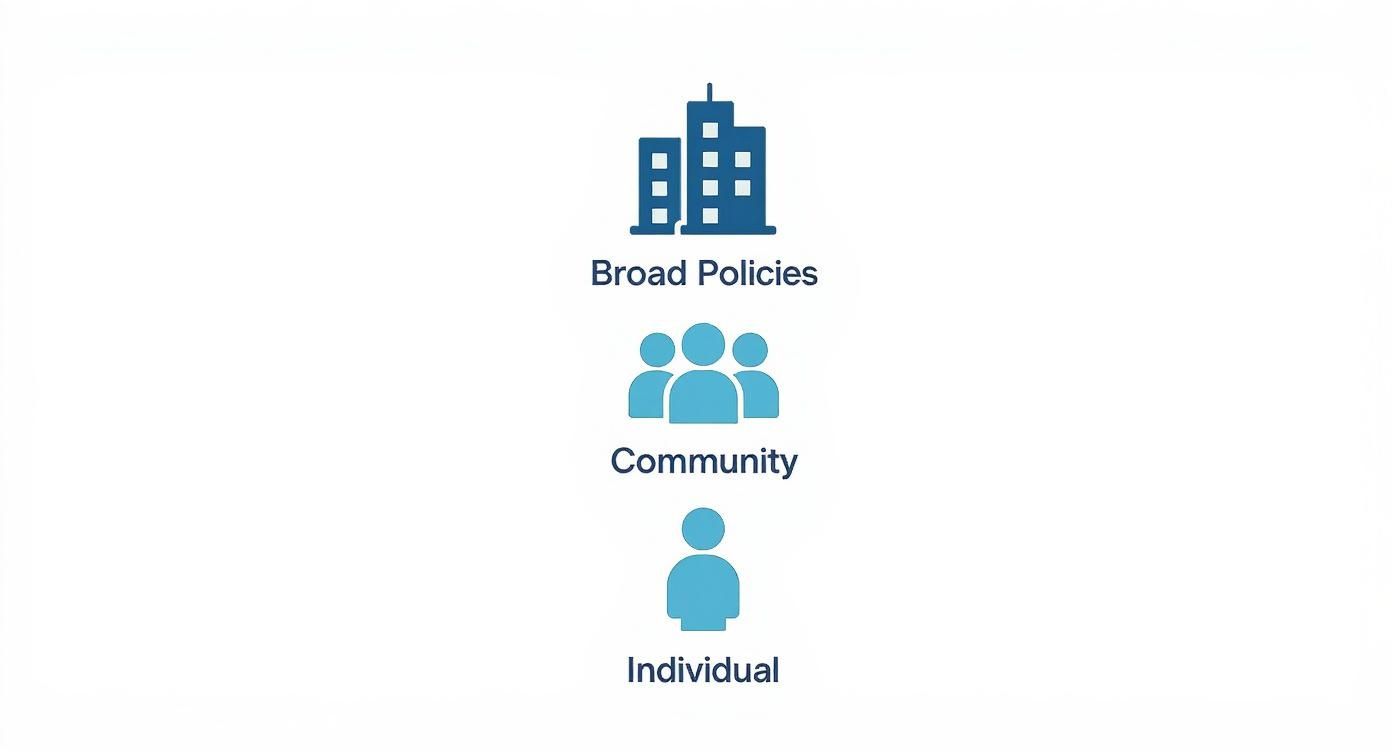
As you can see, individual choices are a piece of the puzzle, but they're heavily shaped by the community environment and the policies above them. That’s why our work has to target all three.
A Story of Real-World Impact
In one community we work with, residents told us that the local bus route didn't run late enough for people working evening shifts to get to the only grocery store in town. Handing out food boxes helped, but it didn't solve the root problem.
So, we worked alongside community leaders to help them organize a petition, backing it up with data we presented to the local transit authority. The result? They extended the bus schedule, directly improving food access for hundreds of families. It's a perfect example of how tackling a social determinant like transportation can have a huge impact on nutrition.
This story gets to a critical truth: effective interventions must be community-driven. The real experts are the people living these challenges day in and day out. Our job is to provide the resources and framework to help them turn that expertise into powerful action.
Building Power from the Ground Up
Ultimately, our goal is to build community power. When residents have the knowledge about social determinants health food connections, the budgeting skills, and the advocacy tools, they stop being passive recipients of aid. They become agents of change, ready to dismantle the systemic barriers that held them back.
This is the heart of what we do. Through the authentic stories and deep experience of our program leaders, we see it over and over again: targeted, grassroots education is the key to creating change from the ground up.
To learn more about our foundational mission and the team behind this work, you can explore the story and vision of Umoja Health.
Designing Food As Medicine Programs That Work
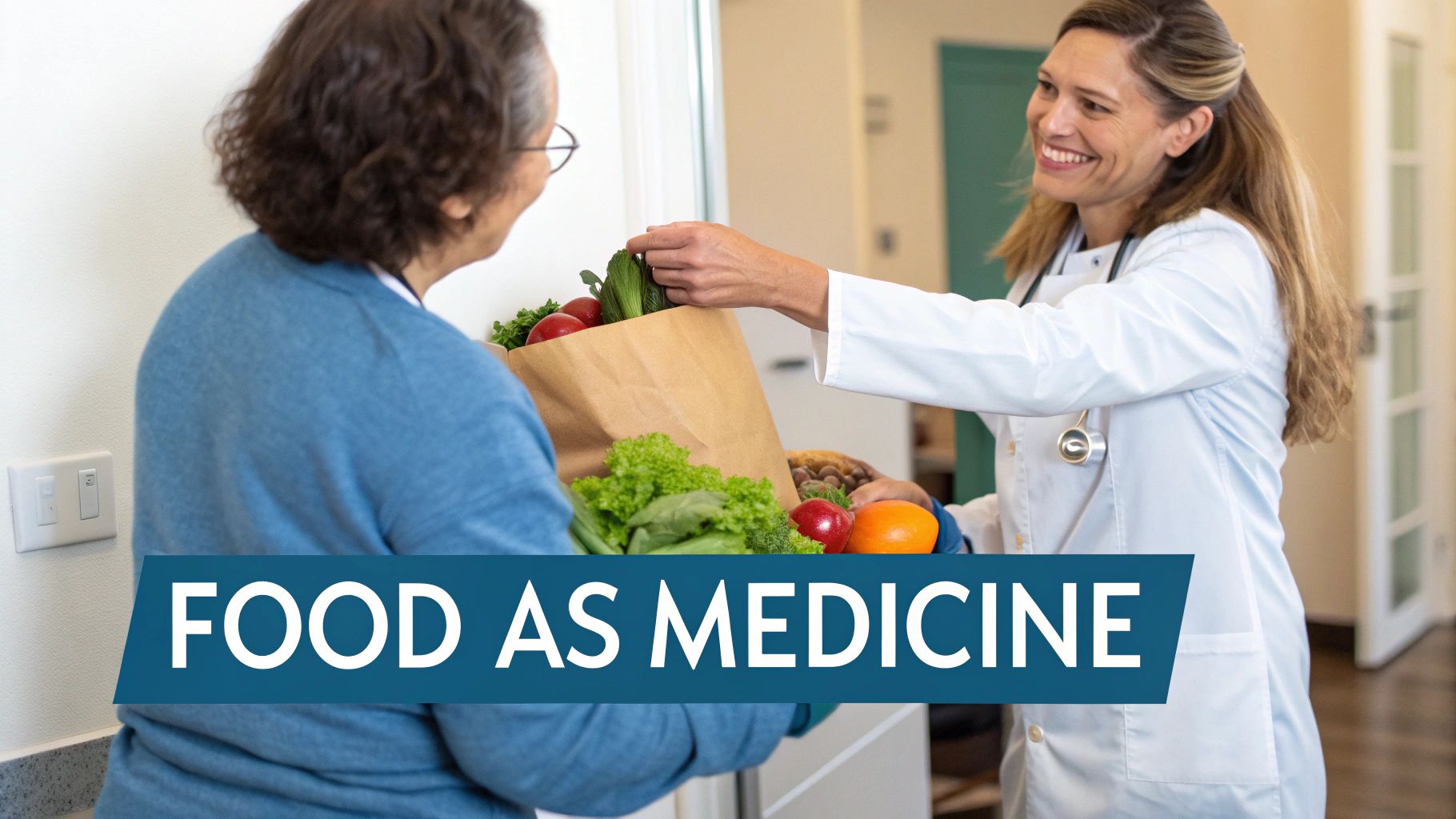
While community-wide education builds long-term resilience, sometimes you need to go more direct. That’s where targeted clinical interventions can produce immediate, life-changing health improvements for people struggling right now.
The “Food is Medicine” movement is built on a simple yet incredibly powerful idea: using specific, healthy foods as a direct tool to manage and prevent chronic illness. This is where healthcare and nutrition intersect with real precision, moving beyond broad dietary advice to specific nutritional prescriptions tailored to a patient's medical reality.
The Core Components of Food Is Medicine
Effective “Food is Medicine” programs are much more than just a food pantry. They are structured health interventions, with common models designed to plug directly into the healthcare system and address specific patient needs.
-
Medically Tailored Meals (MTM): Think of these as a complete prescription in a box. They are fully prepared meals, developed by registered dietitians, that meet the exact nutritional needs for someone with a condition like diabetes, heart disease, or kidney failure. MTMs take all the guesswork and labor out of meal prep for patients who are often too sick to cook for themselves.
-
Produce Prescription Programs (PRx): In this model, a healthcare provider literally "prescribes" fresh fruits and vegetables. Patients get vouchers or debit cards to use for produce at local grocery stores or farmers' markets, empowering them to make their own healthy choices.
-
Food Pharmacies: Often located right inside a clinic or hospital, these are on-site pantries stocked with healthy foods. Doctors can refer patients directly to the pharmacy right after an appointment, closing the gap and ensuring they walk out the door with nutritious options in hand.
Building A Program That Actually Delivers Results
Launching a successful “Food is Medicine” initiative takes careful planning. It's not enough to just hand out food; you have to think strategically about measurement, cultural relevance, and reporting. Without these pieces, even the most well-intentioned programs will struggle to prove their value and secure the funding needed to last.
A program can only be sustainable if it can prove its impact. That means tracking not just the food you distribute, but the tangible health improvements in the people you serve.
A huge part of this is understanding the wider context of social determinants health food access. What good is a produce prescription if a patient has no way to get to the grocery store or lacks a safe kitchen to cook in? A successful intervention has to account for these real-world barriers.
Measuring What Matters: Health Outcomes
To convince hospital partners and funders that your program is worth the investment, you need to track specific, measurable health outcomes. Personal stories are powerful, but data is undeniable.
-
Clinical Metrics: For a diabetes program, this means tracking changes in hemoglobin A1c levels. For hypertension, you’re monitoring blood pressure readings.
-
Patient-Reported Outcomes: Simple surveys can measure big changes, like improved medication adherence, better self-reported health, and, of course, reductions in food insecurity.
These are the metrics that show a direct return on investment, often translating into fewer hospital readmissions and lower healthcare costs down the line.
Cultural Relevance and Smart Procurement
Let’s be honest: the food provided has to be food people will actually eat. Sourcing culturally relevant foods isn't just a nice-to-have; it's non-negotiable for success. This means looking beyond the standard staples and including items that fit the culinary traditions of the community you’re serving.
This same logic applies to your educational materials. Recipes and nutritional guides should be available in multiple languages and feature familiar dishes. This makes healthy eating feel accessible and appealing, rather than foreign and restrictive.
Reporting and Demonstrating Your Value
Finally, you have to be able to tell your story clearly. Create simple, easy-to-read templates to summarize your activities and outcomes for stakeholders. These reports should instantly highlight key data points: how many people you served, how many meals you distributed, and—most importantly—the improvements in those key health metrics.
This kind of detailed reporting doesn't just keep funders happy. It helps you refine and improve your program over time, making sure it continues to meet the real, evolving needs of your community.
Strengthening Federal Nutrition And Emergency Food Systems
While grassroots programs can create powerful, localized change, true nutrition equity rests on a strong, reliable national safety net. In America, this backbone is formed by federal nutrition programs and the sprawling emergency food network. These systems are meant to catch people when they fall, but to be truly effective, they have to evolve.
It’s about more than just distributing calories. The real goal is to build systems that offer dignity, focus on health, and genuinely respond to the diverse needs of our communities. This means taking a hard look at how these programs run and figuring out what it takes to make them better.
Enhancing Federal Programs To Address Health Determinants
Federal programs are our first line of defense against food insecurity. But their impact could be so much greater if they were intentionally designed to tackle the underlying social determinants of health.
Here’s a look at how we can enhance some of the key federal food programs to better address the real-world challenges people face.
Enhancing Federal Programs To Address Health Determinants
| Program | Current Function | Proposed Enhancement to Address SDOH |
|---|---|---|
| WIC (Women, Infants, and Children) | Provides supplemental foods, healthcare referrals, and nutrition education for low-income pregnant women, new mothers, and young children. | Expand food packages to include a wider variety of culturally diverse foods, better reflecting the communities served and increasing program uptake. |
| Summer Food Service Program (SFSP) | Ensures that low-income children continue to receive nutritious meals when school is not in session. | Increase support for non-congregate models like home delivery, recognizing transportation and time barriers that prevent families from reaching meal sites. |
| The Emergency Food Assistance Program (TEFAP) | Supplements the diets of low-income Americans by providing them with emergency food assistance at no cost through food banks. | Prioritize procurement of fresh, locally sourced produce over shelf-stable processed items, improving the nutritional quality of emergency food supplies. |
These aren't just minor tweaks; they represent a fundamental shift in thinking. The aim is to make federal aid more accessible, culturally relevant, and nutritionally powerful, directly addressing the complex factors that impact social determinants health food access.
The Growing Need for Resilient Emergency Systems
The pressure on these systems is only getting more intense. We're in the midst of an escalating global food crisis, fueled by a perfect storm of conflict, economic shocks, and climate extremes. In 2024, more than 295 million people in 53 countries faced acute hunger—an increase of 13.7 million from the year before. This grim reality highlights the urgent need for robust, agile emergency food systems, both here at home and around the world. You can read the full analysis on this growing global food crisis.
This rising tide of need puts immense strain on the entire emergency food network, from national organizations all the way down to the local food bank. They are constantly navigating operational hurdles, from unpredictable supply chains to a heavy reliance on volunteer labor. For these organizations to succeed, they need reliable partners and streamlined logistics.
The ultimate goal is to transform food banks from centers for distributing shelf-stable goods into vibrant hubs for community health, offering fresh produce, nutrition education, and connections to other social services.
Getting there requires a deep understanding of logistics and an unwavering commitment to operational excellence. It means managing incredibly complex supply chains to get food where it’s needed most, especially during a crisis. This is where expertise in large-scale logistics becomes absolutely essential. You can learn more about how Umoja Health supports government agencies in disaster response to ensure a swift, effective distribution of vital resources. By reinforcing these systems, we build a more resilient foundation for community health across the nation.
Your Role In Building A More Equitable Food System
We've covered a lot of ground, from the deep-seated causes of food inequity to the large-scale solutions that can make a real difference. Now, let’s bring it home and talk about the part each of us can play.
Achieving nutrition equity is a matter of justice, not just charity. It demands a collective push to break down the systemic barriers that keep healthy food out of reach for so many. This isn’t a job that belongs to big organizations or government agencies alone. The fight against food insecurity is won on the ground, through countless actions—big and small—at every level of our communities.
Actionable Steps For Everyone
Whether you're shaping policy, providing healthcare, or are simply a concerned member of your community, your contribution is vital. The complex link between social determinants health food access means we need everyone pulling in the same direction.
Here are some concrete ways you can get involved:
-
For Policymakers: Be a champion for legislation that strengthens critical food assistance programs like SNAP and WIC. Push for policies that support local farmers and create incentives for grocery stores to open in underserved neighborhoods. Your decisions have the power to reshape the food landscape for millions.
-
For Healthcare Providers: Make food insecurity screenings a routine part of patient visits. It's as important as checking blood pressure. Connect patients with "Food is Medicine" initiatives and local food resources, truly integrating nutrition into healthcare.
-
For Community Leaders: Get your hands dirty. Volunteer at or support your local food pantries and community gardens. You can organize food drives or advocate for farmers' markets to accept EBT, directly boosting food access right where you live.
Achieving nutrition equity means moving beyond temporary fixes to tackle the root causes of hunger. It’s about building a system where healthy food is the easy choice for everyone, not a privilege for the few.
As individuals, our actions matter, too. For instance, learning how to reduce food waste at home maximizes our collective food supply and eases the strain on our environment.
By making conscious choices in our own lives and advocating for bigger changes, we all contribute to a more just and equitable food system. No matter the scale, your action is a crucial piece of this vital mission.
Common Questions
Diving into the world of social determinants, health, and food often brings up a few key questions. Let's break down some of the most common terms and ideas you'll encounter.
What's The Real Difference Between Food Security And Nutrition Security?
Think of food security as the baseline. It means someone has consistent access to enough food to avoid hunger. A family might be food secure if they have a pantry full of pasta and bread—they have enough calories, but that's only part of the story.
Nutrition security takes it a crucial step further. It’s about having reliable access to foods that truly nourish the body and support an active, healthy life. We're talking about fresh fruits and vegetables, lean proteins, and whole grains. It’s the difference between simply filling a stomach and fueling long-term wellness.
How Does A Food Desert Differ From A Food Swamp?
Both of these terms describe environments that put up major roadblocks to healthy eating, but they come from opposite problems: scarcity versus overabundance.
- A food desert is a neighborhood where finding affordable, healthy food is a real challenge. Full-service grocery stores are few and far between, leaving residents with limited, often less nutritious, options.
- A food swamp is an area drowning in unhealthy choices. Fast-food chains and convenience stores dominate the landscape, vastly outnumbering places to buy fresh produce. Even if a grocery store is nearby, it's "swamped" by a tidal wave of less healthy, heavily marketed alternatives.
Why Is Culturally Appropriate Food So Important?
Simply put, food is more than just fuel; it’s tied to our identity, traditions, and sense of comfort. Providing culturally appropriate food is absolutely vital for any nutrition program to succeed.
When people receive foods that are familiar and part of their cultural heritage, they are far more likely to actually eat and enjoy them. It sounds simple, but it makes a world of difference.
Ignoring cultural preferences is a fast track to food waste and low participation. When we offer foods that resonate with a community's background, we show respect and make healthy eating feel natural and accessible, not like a foreign prescription.
This single consideration—providing familiar foods—directly addresses the social and community context determinant of health. It ensures our efforts are effective, dignified, and genuinely meet people where they are.
At Umoja Health, we don't just talk about these concepts—we put them into practice. We design and deliver compliant, culturally connected food programs that tackle the real-world challenges of nutrition security head-on. From Food is Medicine kits to large-scale disaster response, we provide the food and operational support that communities can count on. Learn more at https://umojahealth.com.