
True social impact food distribution is more than just logistics; it’s a powerful engine for community health, economic stability, and workforce development. It’s about designing systems that deliver not only sustenance but also dignity, opportunity, and measurable well-being. From rural non-congregate meal kits to medically tailored groceries for managed care populations, the “how” of distribution is as critical as the “what”.
This article moves beyond generic success stories to provide a comprehensive strategic breakdown of 10 proven models. We will dissect the operational architecture that powers effective programs, offering a toolkit for administrators, operations leads, and logistics chiefs.
You will gain access to specific, actionable insights on:
- Delivery & Kitting Models: Comparing home delivery, pick-up points, mobile shopping, and the nuances of self-heating vs. ready-to-eat (RTE) meals for different populations.
- Regulatory Compliance: Navigating complex requirements like Buy American, OAA, CACFP/SFSP, WIC, and FDA/3PL standards with sample language and workflows.
- Measurement & KPIs: Presenting frameworks for tracking social outcomes and program performance with sample survey and reporting templates.
- Operational Excellence: Detailing supply-chain SOPs, inventory-aware substitutions, volunteer-friendly kitting guides, and first-72-hours emergency load plans.
Each example is framed for replication, providing the detailed analysis and behind-the-scenes data needed to build or refine your own high-impact food distribution initiatives. We will explore compelling case studies that demonstrate how thoughtful logistics create positive social outcomes, from improving local economies to fostering workforce development. This is your guide to building compliant, scalable, and genuinely impactful programs.
1. Food Banks and Food Pantries
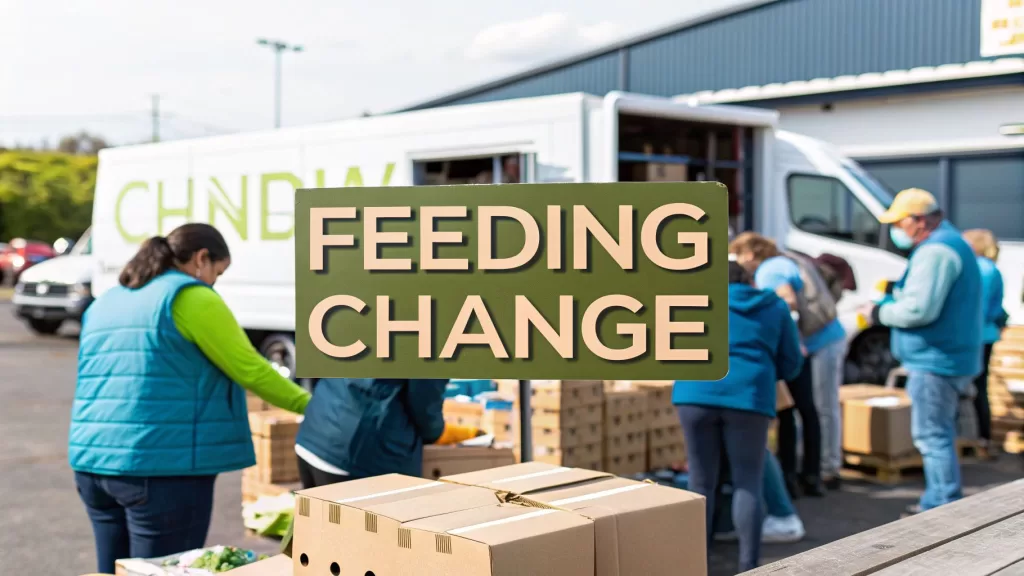
As the foundational model of community-based hunger relief, the food bank and pantry system is a cornerstone of social impact food distribution. Food banks act as large-scale warehouses, sourcing and storing bulk food from manufacturers, retailers, and agricultural partners. Food pantries, in turn, are the frontline distribution points, providing that food directly to individuals and families in their communities.
This two-tiered structure, pioneered by John van Hengel in 1967 and scaled nationally by networks like Feeding America, is designed for efficient aggregation and localized access. The Greater Chicago Food Depository, for example, leverages this model to serve over 700 partner agencies, effectively distributing food to hundreds of thousands of people across Cook County. This system not only addresses immediate hunger but also builds community resilience and supports local economies by redirecting potential food waste into a valuable resource.
Strategic Breakdown
- Model Analysis: The hub-and-spoke model (bank-to-pantry) allows for economies of scale in procurement and logistics while enabling tailored, community-level service. Food banks handle complex supply chain operations, freeing pantries to focus on client relationships and last-mile distribution.
- Social Impact: Beyond providing calories, this model fosters community health and workforce development. The San Francisco-Marin Food Bank, for instance, operates a CalFresh outreach program that helps clients enroll in benefits, improving their overall economic stability. Furthermore, their pantry network partners with healthcare providers to screen for food insecurity, creating a direct link between nutrition and health outcomes.
Key Insight: The most effective food bank models are evolving from simple charity to client-centered empowerment. Implementing “client choice” models, where individuals select their own food, restores dignity and significantly reduces food waste by ensuring families receive items they will actually use.
Actionable Takeaways
Food bank procurement managers and operations leaders can implement the following strategies to enhance their impact:
- Implement a “Client Choice” Model: Transition from pre-packed boxes to a shopping-style experience. This respects client dignity and dietary needs while minimizing waste.
- Leverage Technology for Inventory: Use inventory management systems (WMS) to track donations, monitor expiration dates, and forecast needs. This data-driven approach reduces spoilage and improves procurement efficiency.
- Establish Mobile Pantry Programs: For clients facing transportation barriers, especially in rural or underserved urban areas, mobile pantries deliver food directly to centralized, accessible locations like community centers or schools.
This approach is best suited for organizations aiming to build a broad, community-wide safety net. For those seeking specialized kitting, multi-day meal templates, or compliant home delivery logistics, you can explore solutions for complex distribution needs.
2. Community Supported Agriculture (CSA)
Community Supported Agriculture (CSA) creates a direct link between producers and consumers, representing a powerful model of social impact food distribution. In this system, individuals buy a “share” of a farm’s harvest in advance, providing farmers with upfront capital for the growing season. In return, members receive a regular box of seasonal, locally-grown produce throughout the harvest period.
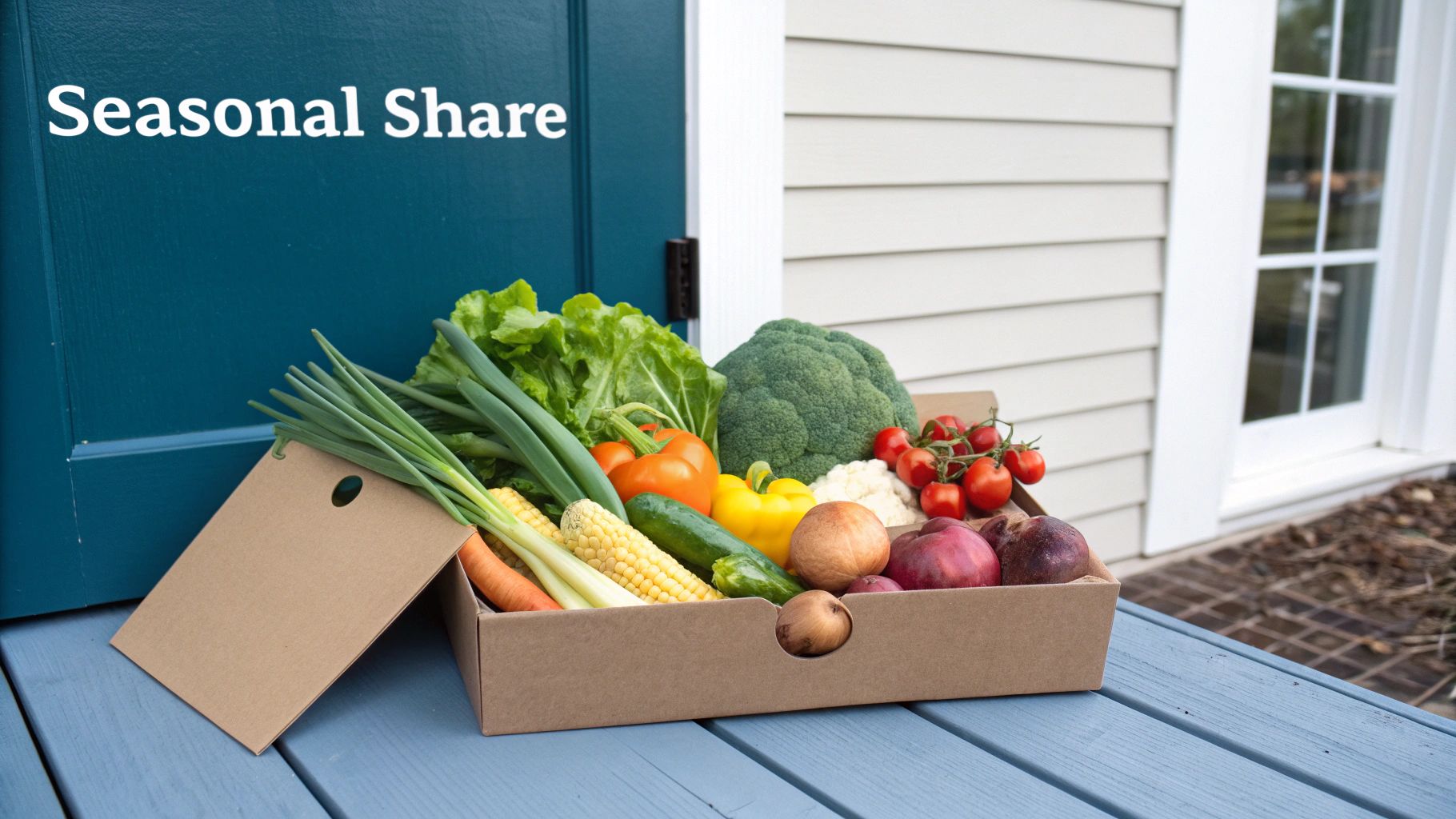
This model, rooted in Japan’s Teikei movement and popularized in the U.S. by pioneers like Robyn Van En, fundamentally reshapes the food supply chain. Instead of a long, often anonymous path from farm to table, the CSA fosters a relationship built on mutual support and shared risk. Organizations like Just Food in New York City use this framework to partner with regional farms, establishing over 60 neighborhood-based CSA programs. This approach not only guarantees farmers a stable income but also bolsters the local economy and provides urban communities with consistent access to fresh, nutritious food.
Strategic Breakdown
- Model Analysis: The CSA model is a pre-payment, direct-to-consumer system that eliminates intermediaries. This structure provides farmers with vital early-season cash flow and a guaranteed market, while consumers benefit from high-quality produce and a deeper connection to their food source.
- Social Impact: Beyond farm viability, CSAs build community and advance food equity. Farmshare in California, for instance, partners with community organizations to offer subsidized shares and accepts SNAP/EBT, making fresh produce accessible to low-income families. This direct investment in local agriculture also strengthens regional food systems and reduces carbon footprints.
Key Insight: The most impactful CSA models extend beyond a simple transaction to become integrated community food hubs. By incorporating sliding-scale pricing, SNAP/EBT acceptance, and partnerships with local aid organizations for surplus donations, they transform a consumer model into an equitable community asset.
Actionable Takeaways
CSA operators and community food program managers can adopt these strategies to deepen their social impact:
- Implement Subsidized Shares: Partner with local businesses, non-profits, or public health agencies to create a fund that subsidizes CSA shares for low-income households.
- Establish Workplace CSA Programs: Collaborate with local employers to offer CSA shares as a wellness benefit. This simplifies logistics with a centralized drop-off point and introduces new demographics to local food.
- Develop Food Literacy Resources: Include recipe cards, food preservation tips, and information about the farm in each share. This empowers members to use unfamiliar produce, reduce waste, and build a stronger connection to their food.
This direct-from-farm approach is ideal for organizations focused on strengthening local food systems, promoting healthy eating, and fostering direct community engagement. For entities needing to manage complex kitting, multi-day meal templates, or compliant home delivery for broader populations, you can explore solutions for large-scale distribution needs.
3. School-Based Food Programs (Free/Reduced Meals)
Leveraging educational infrastructure as a distribution network, school-based food programs are a highly effective form of social impact food distribution. These initiatives, primarily funded through federal programs like the National School Lunch Program (NSLP) and the School Breakfast Program (SBP), provide consistent, nutritious meals to children directly where they spend their days. By integrating meal access into the school day, these programs reduce logistical barriers for families and ensure students have the fuel they need to learn and thrive.
This model transforms schools into community nutrition hubs, addressing child food insecurity at a systemic level. A compelling case study comes from Chicago Public Schools (CPS), which adopted the Community Eligibility Provision to offer universal free meals. Research showed that this access to regular, nutritious meals correlated with improved test scores, better attendance, and a reduction in disciplinary incidents. This demonstrates a direct link between reliable food distribution and positive educational and community health outcomes.
Strategic Breakdown
- Model Analysis: This embedded distribution model utilizes existing infrastructure (schools, cafeterias, staff) and daily routines to achieve unparalleled reach and consistency. It minimizes the need for families to seek out separate assistance, integrating nutrition directly into the educational environment.
- Social Impact: Beyond immediate hunger relief, these programs are proven to improve academic performance, reduce absenteeism, and decrease visits to the school nurse. Furthermore, these programs are significant drivers of local workforce development, providing stable, often unionized, employment for thousands of food service professionals within communities.
Key Insight: The most impactful school nutrition programs are evolving from simple meal service to holistic wellness initiatives. By implementing farm-to-school sourcing, they improve meal quality with fresh, local produce while also providing valuable agricultural and nutritional education to students.
Actionable Takeaways
School nutrition directors and program administrators can enhance their impact with these strategies:
- Implement Universal Free Meals: Eliminate tiered application systems to remove social stigma, reduce administrative burden, and ensure every child has access to nutritious meals.
- Establish Farm-to-School Partnerships: Source fresh produce from local farms to improve meal quality, support the local economy, and create educational opportunities for students.
- Extend Access Beyond the School Day: Launch programs like the Summer Food Service Program (SFSP) and weekend backpack programs to provide a consistent source of nutrition when school is not in session.
This model is ideal for communities aiming to tackle child food insecurity at its roots, leveraging federal reimbursements to build a sustainable, integrated support system. For organizations managing the specific compliance and logistical needs of these initiatives, you can explore solutions for Child Nutrition Programs.
4. Gleaning and Foodwaste Recovery Programs
Gleaning is an ancient practice, revived as a modern social impact food distribution model, that involves systematically collecting surplus or unharvested produce from farms, gardens, and retailers. This approach directly intercepts food that would otherwise be wasted and redirects it to food-insecure populations, providing a critical source of fresh, nutritious produce that is often lacking in traditional food assistance channels.
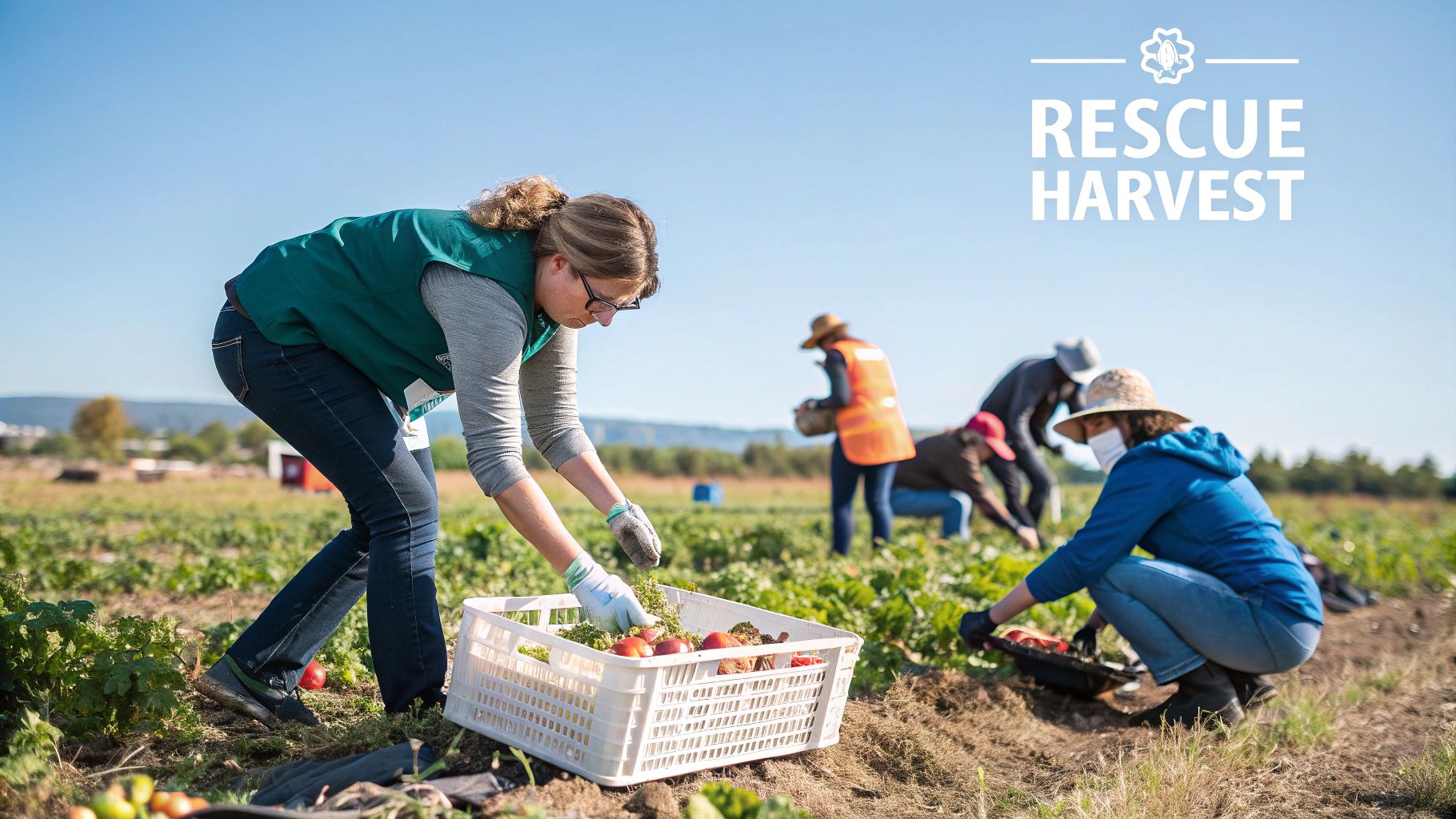
Organizations like Boston Area Gleaners exemplify the powerful social outcomes of this model. In a single year, they rescue over a million pounds of produce, which is then distributed through hunger relief agencies. This not only improves community health by providing nutrient-dense food but also offers meaningful workforce development opportunities for apprentices who learn skills in agriculture, logistics, and supply chain management. The model creates a triple win: farmers reduce waste, communities receive fresh food, and individuals gain valuable job skills.
Strategic Breakdown
- Model Analysis: This is a volunteer-centric, low-cost procurement model that transforms agricultural surplus into a community asset. It requires strong relationships with agricultural producers and a robust volunteer management system. The primary value lies in accessing high-quality, fresh food with minimal capital expenditure, relying on labor from community members.
- Social Impact: Gleaning programs generate significant social capital by providing meaningful volunteer opportunities that directly impact community health. Organizations like Common Harvest in Minneapolis build local resilience by creating a direct pipeline from local farms to local families, enhancing food sovereignty and providing workforce development skills in food handling and logistics for volunteers.
Key Insight: The success of gleaning hinges on logistics and partnerships. Establishing formal, liability-protected agreements with farms and having a pre-planned distribution network (e.g., local pantries, schools) are critical for moving perishable produce quickly from field to table.
Actionable Takeaways
Operations leaders and volunteer coordinators can use these strategies to launch or scale a gleaning program:
- Formalize Farm Partnerships: Create clear, written agreements with farmers that outline liability (often covered by Good Samaritan laws), scheduling, and harvesting protocols to build trust and ensure long-term collaboration.
- Develop a Volunteer Management System: Use scheduling software to manage volunteer sign-ups, communicate event details, and track hours. Implement a tiered training system for lead volunteers who can manage small groups on-site.
- Establish Rapid Distribution Channels: Coordinate with partner agencies before a gleaning event to ensure they have the capacity and cold storage to receive and distribute fresh produce within 24-48 hours.
This model is ideal for organizations looking to supplement their food supply with fresh, local produce while engaging the community directly. Programs like gleaning often complement broader efforts to tackle food waste. For practical tips on how even commercial entities can contribute, consider reading about reducing food waste in restaurants.
5. Community Kitchen and Meal Preparation Programs
Community kitchens represent a deeply integrated model of social impact food distribution where food access is interwoven with skills development, employment pathways, and social connection. These programs move beyond simple food provision by creating shared spaces where community members collectively prepare and distribute meals. They transform the act of receiving food into an act of participation and creation.
A prime example is La Cocina in San Francisco, a non-profit kitchen incubator that supports low-income women, immigrants, and people of color in launching and formalizing food businesses. Participants gain access to commercial kitchen space, technical assistance, and market opportunities. To date, La Cocina has helped launch over 100 businesses, creating jobs and stimulating the local economy. This case study demonstrates how a food distribution hub can become a powerful engine for entrepreneurship and workforce development.
Strategic Breakdown
- Model Analysis: This is a multi-faceted “empowerment” model. It combines the functions of a feeding program, a vocational training center, and a community hub. The focus is on leveraging food as a tool for skill-building, cultural exchange, and economic opportunity, creating a sustainable cycle of support rather than a one-way transaction.
- Social Impact: The primary impact extends far beyond nutrition. These programs are powerful engines for workforce development, offering tangible pathways from volunteer to paid employment in the culinary arts. They also combat social isolation by fostering a sense of belonging and preserving cultural heritage through shared food traditions.
Key Insight: The most transformative community kitchens serve as economic incubators. By providing access to certified kitchen space and business mentorship, they empower residents to launch their own food-based enterprises, creating generational wealth and a resilient local food system.
Actionable Takeaways
Program managers and community development leaders can use these strategies to launch or enhance a community kitchen:
- Integrate a Skills Credentialing Pathway: Partner with local community colleges or culinary schools to offer formal certifications (e.g., ServSafe) to participants. This validates their skills and makes them more competitive in the job market.
- Create Structured Volunteer-to-Staff Pipelines: Develop clear, documented pathways for dedicated volunteers to transition into paid roles within the organization, such as kitchen assistants, program coordinators, or trainers.
- Document and Share Culinary Traditions: Launch a community cookbook or digital recipe archive. This not only celebrates the diverse cultures within the community but also creates a potential revenue stream to support the program’s operations.
This model is ideal for organizations focused on holistic community development, aiming to address the root causes of food insecurity, such as unemployment and social isolation. For those needing to support these programs with reliable sourcing of bulk ingredients or culturally relevant food items, you can find solutions for institutional food procurement.
6. Mobile Food Markets and Farmers Markets with Subsidies
Mobile food markets and subsidized farmers markets represent a dynamic approach to social impact food distribution by bringing fresh, high-quality food directly into food deserts and underserved neighborhoods. This model uses trucks, buses, or temporary pop-up stalls to create accessible retail points, overcoming transportation and infrastructure barriers that limit access to healthy options. These markets are often amplified by subsidy programs that increase purchasing power for low-income residents.
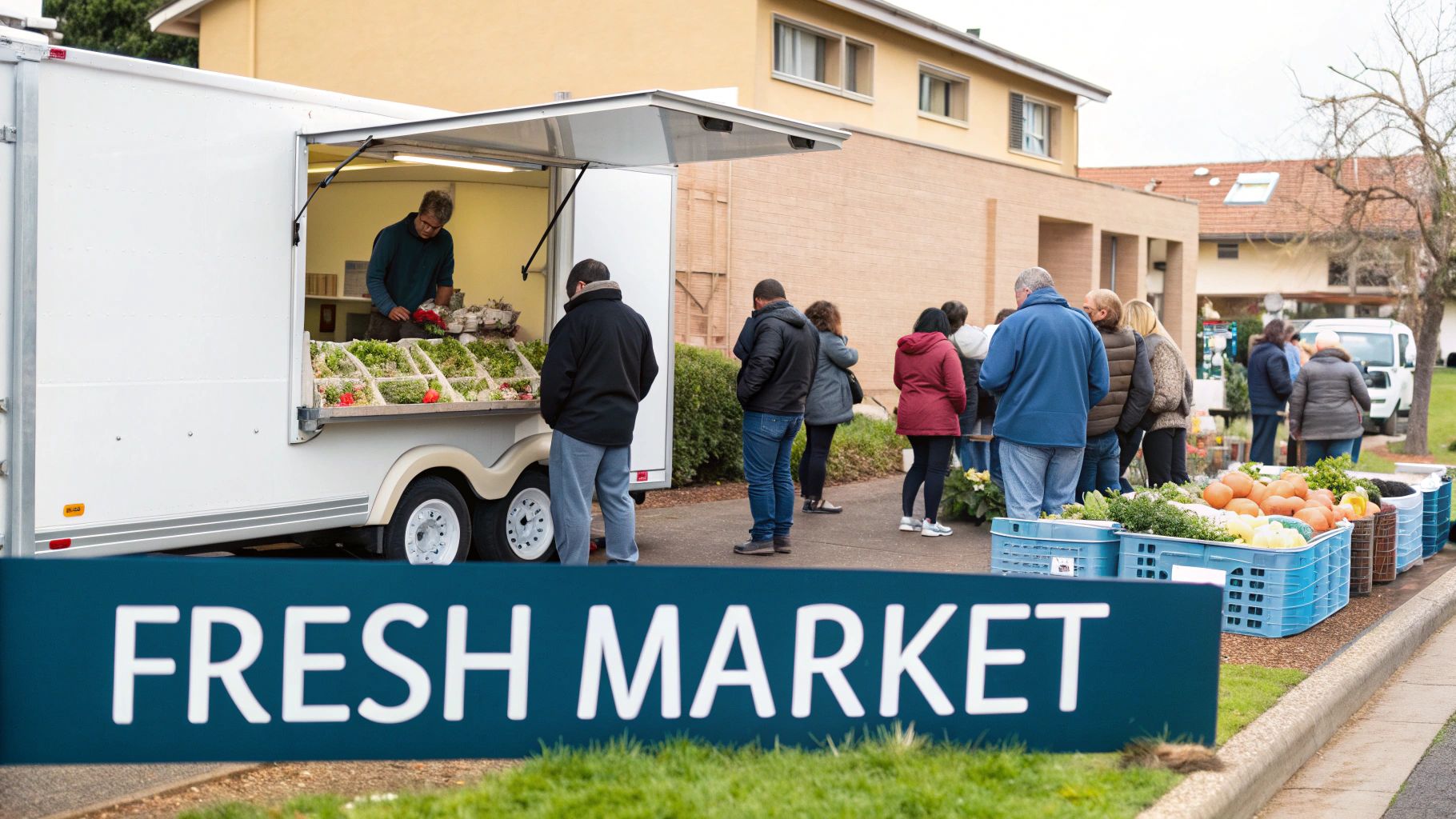
The Arcadia Mobile Market in Washington, D.C., provides a compelling case study. Their bus travels to low-income neighborhoods, accepting multiple forms of payment, including SNAP and WIC, and offering a “Bonus Bucks” program to double the value of federal benefits. An evaluation of their program found that 90% of customers reported eating more fresh fruits and vegetables. This directly improves community health while simultaneously supporting the regional economy by sourcing produce from local farms.
Strategic Breakdown
- Model Analysis: This approach combines agile, direct-to-consumer logistics with powerful financial incentives. By deploying mobile units, organizations can test locations, respond to shifting community needs, and serve multiple areas with a single asset. Subsidies act as a demand catalyst, ensuring financial viability for vendors while maximizing the social return on investment.
- Social Impact: Beyond nutrition, these markets become vibrant community hubs. The Detroit Food Academy’s mobile market, for example, is youth-led, providing valuable workforce development and entrepreneurship skills. Integrating nutrition education and cooking demos at market sites further empowers residents to make lasting healthy choices.
Key Insight: The true power of this model lies in its integration of economic, health, and community benefits. By linking federal nutrition benefits (SNAP) to local agriculture, it creates a closed-loop system where public funds simultaneously fight food insecurity, improve public health, and bolster local farm economies.
Actionable Takeaways
Program managers and community health directors can use these strategies to launch or enhance market programs:
- Leverage Geospatial Data Mapping: Use GIS tools to precisely identify and prioritize neighborhoods with the highest need based on income levels, access to grocery stores, and public transit routes.
- Integrate Incentive Programs: Implement SNAP-doubling or produce voucher programs. Partner with local health clinics or Managed Medicaid plans to offer “produce prescriptions” that can be redeemed at the market.
- Create Consistent and Visible Schedules: Build trust and steady traffic by maintaining a reliable schedule. Promote locations and times heavily through community partners, local media, and multilingual flyers to ensure residents know when and where to find the market.
This model is best suited for organizations focused on increasing fresh food access, supporting local agriculture, and fostering community economic development. For programs requiring pre-packaged kits or home delivery for medically tailored meals, you can explore solutions for complex distribution needs.
7. Meal-Sharing and Community Dining Programs
Beyond simply distributing food items, meal-sharing and community dining programs leverage the power of shared meals to combat hunger and social isolation simultaneously. These models create spaces where community members can gather to eat together, fostering social connection and mutual support. This approach is a powerful form of social impact food distribution because it addresses not just nutritional deficits but also the profound human need for community.
A compelling case study is The Sunday Supper, a program in Louisville, Kentucky, which brings together diverse community members for a shared meal to foster dialogue and connection. While addressing food needs, its primary social outcome is building bridges across socioeconomic and racial divides. In another example, organizations like Meals on Wheels not only deliver food to homebound seniors but also provide crucial social checks that have been shown to reduce feelings of loneliness and improve mental health outcomes for participants.
Strategic Breakdown
- Model Analysis: This model focuses on the experience of dining rather than just the logistics of food provision. It transforms food distribution from a transactional process into a relational one. By centralizing the dining experience, organizations can efficiently serve a hot, nutritious meal while creating a supportive environment that encourages social interaction and emotional well-being.
- Social Impact: The primary impact is the reduction of social isolation, a significant health risk, particularly for seniors and other vulnerable populations. These programs often incorporate workforce development elements by training community members in food service. Furthermore, by sourcing food locally, they can support local economies and provide a platform for cultural exchange through food.
Key Insight: The true value of community dining lies in its ability to build social capital. When people share a meal, they share stories and build trust, which are the foundations of a strong community. The meal is the vehicle, but the destination is connection and collective well-being.
Actionable Takeaways
Community program managers and faith-based leaders can use these strategies to create impactful dining experiences:
- Create Welcoming Environments: Design the space to feel like a restaurant or community cafe, not a charity line. Use tablecloths, play music, and train volunteers to act as hosts who greet and engage with guests.
- Partner with Service Providers: Co-locate services by inviting representatives from mental health, housing assistance, or job training organizations to be present during meals. This provides a low-barrier access point for critical support.
- Honor Cultural Food Traditions: Develop menus in collaboration with community members to ensure meals are culturally relevant and desired. This shows respect, increases participation, and reduces food waste.
This approach is best suited for organizations aiming to address the intertwined issues of food insecurity and social isolation. For those focused on large-scale logistics for home-based populations, you can explore solutions for complex distribution needs.
8. Universal Basic Income (Food-Focused Pilots) and Direct Cash Assistance
Direct cash assistance and food-focused Universal Basic Income (UBI) pilots represent a paradigm shift in social impact food distribution. Instead of providing physical goods, these models empower individuals by giving them direct financial resources to purchase the food that best meets their family’s cultural, dietary, and personal needs. This approach addresses the root economic cause of food insecurity, which is a lack of income.
The Stockton Economic Empowerment Demonstration (SEED) provides powerful data on this model’s social outcomes. The pilot gave 125 residents $500 per month for 24 months. After one year, recipients showed statistically significant improvements in mental health, and their spending on food increased by 12 percentage points more than the control group. Furthermore, the stable income enabled recipients to find full-time employment at more than twice the rate of non-recipients, demonstrating a clear link between direct cash distribution, community health, and workforce development.
Strategic Breakdown
- Model Analysis: This is a direct-to-consumer economic intervention model that bypasses the traditional food supply chain. It leverages digital payment systems for efficient, low-overhead distribution, allowing funds to be deployed quickly and securely to those in need. This eliminates logistical costs associated with sourcing, storing, and transporting physical food.
- Social Impact: The primary impact is the restoration of dignity and autonomy. Recipients can participate in the mainstream economy, supporting their health and workforce potential. Research from GiveDirectly’s cash transfer programs consistently shows recipients invest in food, education, and small business assets, creating a positive ripple effect on community development.
Key Insight: Direct cash assistance is not just about food; it’s a powerful tool for reducing financial volatility and stress. Providing predictable income allows families to plan, avoid high-interest debt, and make healthier, long-term decisions, which in turn reduces the strain on other social safety nets.
Actionable Takeaways
Program administrators and policy makers can leverage cash assistance with these strategies:
- Utilize Digital Payment Platforms: Implement secure, low-fee digital wallets or pre-paid debit cards to ensure funds are delivered efficiently and can be tracked for program evaluation and compliance reporting.
- Pilot with Rigorous Evaluation: Partner with economists and researchers to design pilot programs with clear control groups and key performance indicators (KPIs) to measure impact on food security, health outcomes, and local economic activity.
- Integrate Wraparound Services: Combine cash assistance with financial literacy training, benefits enrollment support, and healthcare navigation to provide a holistic support system that addresses interconnected challenges beyond immediate food needs.
This model is ideal for organizations and government agencies aiming to address the systemic economic drivers of hunger and empower individuals with choice. For those focused on distributing specific nutritional products or compliant meal kits, alternative models may be more suitable.
9. Farm-to-School and Food Systems Education Programs
Farm-to-school programs represent a powerful, integrated approach to social impact food distribution by connecting local agriculture directly to school cafeterias. This model goes beyond simple meal provision, embedding nutrition and food systems education into the student experience. It creates a virtuous cycle: schools gain access to fresh, healthy produce, local farmers secure a stable institutional market, and students develop lifelong healthy eating habits.
A standout case study is Georgia Organics’ partnership with school districts. Their efforts have led to millions of dollars in local food procurement, directly benefiting Georgia farmers and strengthening the state’s agricultural economy. Data from participating schools shows increased student willingness to try new fruits and vegetables and improved knowledge of nutrition. This demonstrates a clear link between the distribution model and positive outcomes for community health and the local economy.
Strategic Breakdown
- Model Analysis: This is a place-based, systemic model that tackles food access, economic vitality, and education simultaneously. By prioritizing local procurement, schools act as economic anchors, strengthening regional food systems. The educational component, from school gardens to farmer visits, builds food literacy and empowers students as informed consumers.
- Social Impact: The model yields measurable improvements in student health, reducing diet-related diseases and improving academic performance. It also fosters workforce development by exposing students to careers in agriculture, culinary arts, and nutrition. Oakland Unified School District’s program, for example, links cafeteria meals with hands-on learning, building a new generation of food advocates.
Key Insight: The most successful farm-to-school programs are not just procurement strategies; they are whole-school initiatives. Integrating food systems education across the curriculum in science, math, and social studies creates a culture of wellness and deepens the program’s long-term social impact.
Actionable Takeaways
School nutrition directors and program administrators can implement the following strategies to build or enhance their programs:
- Start with a Single Local Item: Introduce one popular, seasonal item like local apples or carrots to build momentum. This simplifies logistics and allows staff and students to adapt before scaling up.
- Invest in Staff and Kitchens: Provide professional development for cafeteria staff on scratch-cooking techniques and procure necessary equipment. This is critical for transforming fresh ingredients into appealing meals students will enjoy.
- Create School Gardens: Establish on-site gardens as living classrooms. This provides a hands-on connection to food production and can supplement cafeteria offerings, even on a small scale, reinforcing the educational mission.
This approach is best suited for institutions aiming to create deep, long-term change in community health and local economies. For organizations needing to manage complex procurement rules or kitting for specific populations, you can explore solutions for compliant distribution.
10. Emergency Food Assistance Programs and Food Voucher Systems
Government-led food voucher and electronic benefit transfer (EBT) systems are a powerful form of social impact food distribution, directly empowering recipients with purchasing power. Programs like the Supplemental Nutrition Assistance Program (SNAP) and the Special Supplemental Nutrition Program for Women, Infants, and Children (WIC) provide funds on an EBT card, allowing participants to buy eligible food items from authorized retailers.
This model shifts the distribution logic from a physical supply chain to a financial one, leveraging existing commercial grocery infrastructure. With over 42 million participants, SNAP is a primary line of defense against hunger in the U.S., infusing billions of dollars into local economies and supporting community health. The USDA estimates that every $1 billion in SNAP benefits supports nearly 9,000 full-time equivalent jobs, including in the agriculture, retail, and transportation sectors, highlighting its profound impact on workforce development and the local economy.
Strategic Breakdown
- Model Analysis: This approach is a client-empowerment model that prioritizes dignity, choice, and dietary autonomy. Instead of relying on a centralized food supply, it disburses benefits that can be redeemed at a wide network of retailers, from large supermarkets to local farmers markets. This decentralization makes it highly scalable and responsive.
- Social Impact: Beyond preventing hunger, these programs act as economic stabilizers. Every SNAP dollar spent generates an estimated $1.50 in economic activity. Initiatives like Double Up Food Bucks, which match SNAP dollars spent on fresh produce at farmers markets, further amplify this impact by supporting local agriculture and improving nutritional intake.
Key Insight: The true power of voucher and EBT systems lies in their integration with the commercial food system. This not only offers unparalleled choice and convenience for recipients but also creates a direct, measurable economic benefit for local grocers, farmers, and the broader community.
Actionable Takeaways
State administrators and program managers can enhance the effectiveness of these systems with targeted strategies:
- Simplify and Digitize Enrollment: Streamline application processes with online portals and mobile-friendly options to reduce barriers for eligible households, especially those in rural or underserved areas.
- Integrate Nutrition Incentives: Partner with local health organizations and farmers markets to implement SNAP-matching programs that encourage the purchase of fresh, healthy foods and support local producers.
- Expand Retailer Acceptance: Actively recruit and support smaller, independent, and culturally specific grocers to become authorized SNAP/WIC vendors, increasing access and food variety for diverse communities.
This model is ideal for large-scale, systemic hunger relief that leverages existing infrastructure. For organizations needing to supplement these benefits with specialized meals or address last-mile delivery gaps, you can find solutions for compliant kitting programs that meet specific dietary needs.
Social Impact Food Distribution: 10-Option Comparison
| Program / Model | Implementation complexity | Resource requirements | Expected outcomes | Ideal use cases | Key advantages |
|---|---|---|---|---|---|
| Food Banks and Food Pantries | Low–Moderate (logistics, inventory) | Warehousing, volunteers, transport, donor partnerships | Immediate food relief; reduced food waste; variable nutrition quality | Emergency assistance; short-term household support | Rapid response; low operating cost; scalable |
| Community Supported Agriculture (CSA) | Moderate (membership, distribution) | Farm capacity, upfront capital, pickup logistics | Regular fresh seasonal produce; farmer income stability | Committed households; supporting local farms | High-quality produce; strong farm-consumer link |
| School-Based Food Programs (Free/Reduced Meals) | High (compliance, procurement) | Federal/state funding, trained staff, kitchen equipment | Improved child nutrition, attendance, academic outcomes | Schools in high-poverty areas; universal meal policies | Large-scale reach; preventive health impact |
| Gleaning and Foodwaste Recovery Programs | Low–Moderate (coordination, volunteers) | Volunteers, transport, farm/retailer partnerships | Redirects surplus fresh produce; reduced waste; supply variability | Seasonal surplus recovery; community engagement projects | Low cost; environmental benefits; community involvement |
| Community Kitchen & Meal Preparation Programs | High (infrastructure, food safety) | Shared commercial kitchen, staff training, operational funding | Skills development, employment pathways, culturally appropriate meals | Workforce development, communal meal production, empowerment | Builds skills and social capital; nutritious culturally relevant meals |
| Mobile Food Markets & Subsidized Farmers Markets | Moderate (logistics, subsidy integration) | Market vehicles/space, vendors, subsidy funds (SNAP matching) | Increased fresh access in food deserts; local economic support | Underserved neighborhoods; SNAP incentive programs | Meets people where they are; supports local farmers |
| Meal-Sharing & Community Dining Programs | Low–Moderate (scheduling, volunteers) | Venue, volunteers, modest food supplies | Reduced isolation; regular communal meals; social support | Elderly, isolated individuals, faith-based communities | Builds community cohesion; low operational cost |
| Universal Basic Income / Direct Cash Assistance | Moderate–High (policy, evaluation) | Significant funding, digital payment systems, monitoring | Increased purchasing power; addresses root economic causes | Policy pilots, poverty reduction, flexible household support | Respects autonomy; reduces stigma; stimulates local economy |
| Farm-to-School & Food Systems Education | High (procurement, curriculum) | Local farm supply, curriculum resources, staff training | Improved meal quality; food literacy; local farm support | Schools aiming to improve nutrition and education | Educational impact; supports local agriculture |
| Emergency Food Assistance & Voucher Systems (SNAP/WIC) | High (eligibility systems, administration) | Government funding, EBT infrastructure, retailer networks | Wide-reaching, sustained food support; economic multipliers | National/state safety nets; emergency response | Established infrastructure; proven effectiveness |
From Strategy to Impact: Implementing Your Food Distribution Program
Throughout this guide, we have journeyed through the intricate landscape of social impact food distribution, deconstructing ten distinct models from community kitchens to medically tailored grocery programs. We’ve moved beyond surface-level descriptions to provide deep strategic analysis, tactical insights, and replicable frameworks. The core lesson is clear: effective food distribution is not merely about moving boxes from point A to point B. It is a sophisticated blend of community-centric design, operational precision, and a relentless focus on measurable outcomes.
The examples, from WIC vendor managers piloting online ordering to emergency logistics chiefs planning for disaster response, all underscore a universal truth. The success of any program hinges on mastering the details. This includes everything from developing culturally connected menus and compliant kitting SOPs to navigating the complexities of Buy American provisions and FDA 3PL requirements. Each decision has a ripple effect, influencing participant dignity, program efficiency, and ultimately, the depth of your social impact.
Synthesizing Strategy into Actionable Steps
As you move from planning to execution, remember that the most successful programs are built on a foundation of continuous learning and adaptation. The KPIs and reporting templates we’ve shared are not just for satisfying funders; they are vital tools for understanding what works, for whom, and why. This data-driven approach allows you to refine your model, improve participant experience, and demonstrate tangible social outcomes, whether it’s improved community health, local economic stimulation through farm-to-school partnerships, or enhanced workforce development opportunities.
To translate the strategies in this article into a successful program, consider these immediate next steps:
- Audit Your Current Operations: Use the SOPs and checklists provided to conduct a thorough review of your existing supply chain, kitting, and distribution processes. Identify bottlenecks, compliance gaps, and areas for improved efficiency.
- Engage Your Community Directly: Implement the survey templates and feedback mechanisms we outlined to gather direct input from the people you serve. Use their insights to refine everything from menu selection to delivery schedules, ensuring your program truly meets their needs.
- Prioritize Food Integrity and Safety: A critical aspect of implementing successful food distribution programs is maintaining the integrity and safety of food, which requires careful consideration of packaging. Choosing the right film packaging solutions for food safety and freshness is essential for preserving nutritional quality, extending shelf life, and preventing spoilage, especially when managing complex cold chains for multi-day meal kits.
- Build a Measurement Framework: Select 3-5 key performance indicators from our list that align directly with your program’s primary goals. Establish a baseline now so you can track progress and clearly articulate your impact to stakeholders, from state administrators to population health directors.
The Future of Food Distribution is Integrated and Impact-Driven
The future of social impact food distribution lies in breaking down silos and building integrated systems that address the root causes of food insecurity. It’s about seeing food not just as sustenance, but as a powerful lever for positive change in health, economic stability, and community resilience. Whether you are a CACFP sponsor managing hundreds of childcare sites or a Managed Medicaid director designing a “grocery not MTM” intervention, the principles remain the same: listen to your community, design with intention, execute with excellence, and measure what matters.
By embracing these strategies, you are not just distributing food; you are building a more equitable and resilient food system, one meal, one box, and one family at a time. The work is challenging, but the potential to foster healthier communities and create lasting social change is immense. The journey from a well-designed strategy to tangible, life-changing impact is within your reach.
Ready to scale your impact without scaling your operational burden? Umoja Health specializes in delivering culturally connected, compliance-driven food programs that meet the complex needs of healthcare, government, and community partners. Let us handle the logistics, from sourcing to kitting to last-mile delivery, so you can focus on your mission. Explore how we can help you build a more effective social impact food distribution program at Umoja Health.