At its core, telehealth nutrition counseling is simply about using technology to connect people with professional dietary advice, wherever they are. These programs link registered dietitians with clients through video calls, phone check-ins, or secure messaging. It’s all about providing personalized plans for managing health and improving wellness without anyone having to step into an office.
The Shift to Virtual Nutrition Care
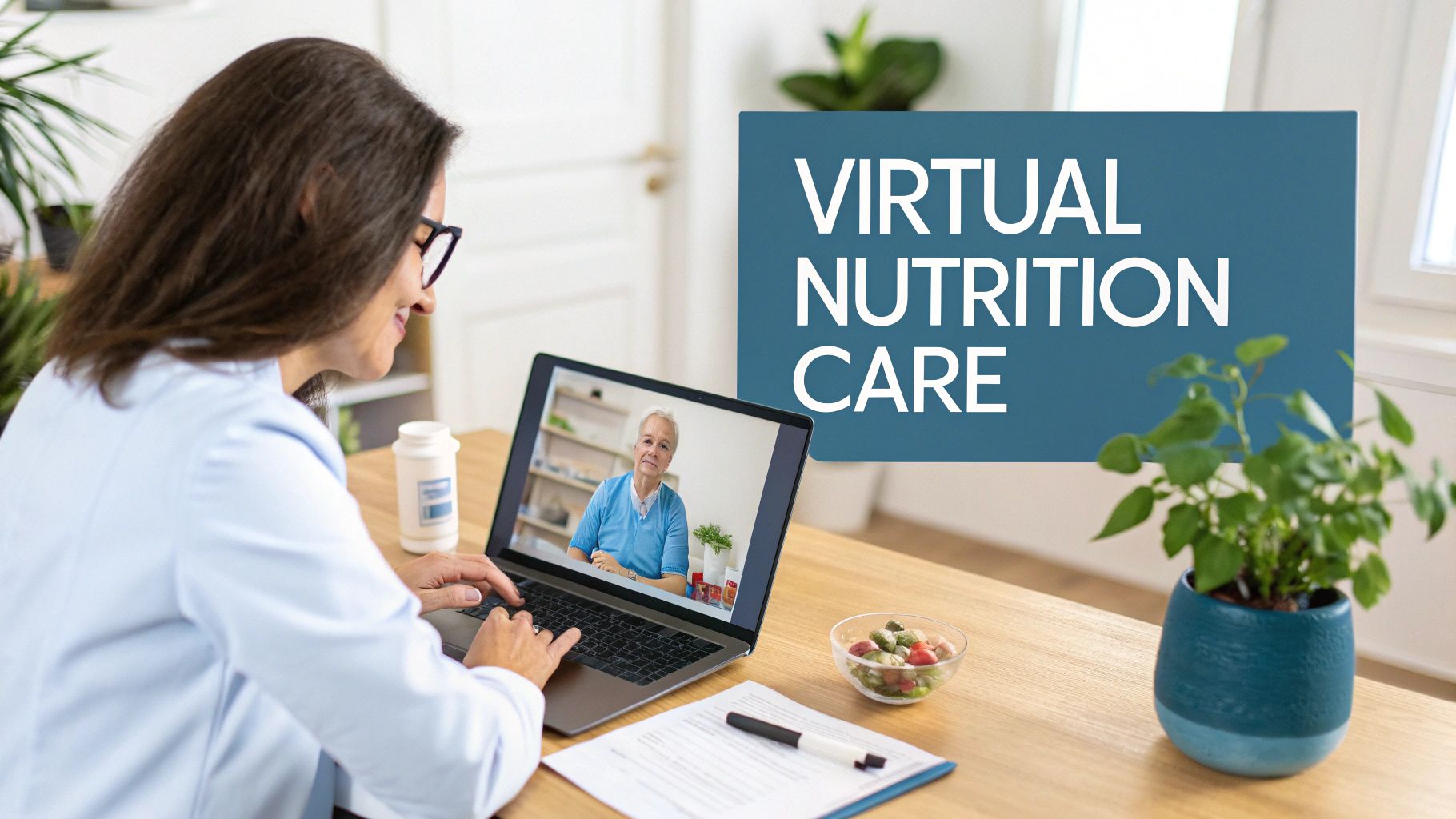
This move to virtual care isn't just a temporary fix; it's a fundamental change in how we deliver nutrition services. The whole movement is driven by a real need for greater efficiency and, most importantly, accessibility. As a result, telehealth nutrition counseling programs have quickly become an indispensable part of modern healthcare.
The change really kicked into high gear over the past few years. During the COVID-19 pandemic, the number of registered dietitian nutritionists (RDNs) using telehealth for clinical care shot up from around 37% to nearly 78%. That kind of rapid adoption just goes to show how vital these virtual services became for keeping care going when it mattered most.
Core Models for Virtual Success
The most successful programs I've seen are built on flexible, patient-first models. They understand that there's no one-size-fits-all approach to nutrition support.
Here are a few of the core strategies that are really working:
- One-on-One Video Consultations: This is the bedrock of most programs. It offers private, in-depth sessions that feel just like a traditional office visit, but with far more convenience.
- Interactive Group Workshops: Bringing people together who share similar goals—like managing diabetes or figuring out family meal planning—creates a powerful sense of community and shared learning.
- Asynchronous Messaging: This is a game-changer for providing support between appointments. It gives clients a direct line to ask quick questions or share progress updates through a secure chat, keeping them engaged and on track.
The real power of telehealth lies in its ability to meet people where they are. By removing barriers like transportation and time constraints, we can reach underserved communities and provide consistent support that drives meaningful, long-term health improvements.
Making a Real Difference
The evidence is clear: virtual programs are incredibly effective at helping people manage chronic diseases and improve their well-being. By integrating technology, dietitians can offer more frequent check-ins and tailored resources, which naturally leads to better accountability and engagement.
This isn't just about convenience. It’s a powerful tool for improving health outcomes. For a deeper dive into how virtual care is reshaping the industry—from patient interactions to data security—check out this a complete guide to video conferencing for healthcare.
This foundational shift is what allows us to build programs that truly meet patient needs. To see more innovative health strategies in action, feel free to explore our insights on community wellness at https://umojahealth.com/thought-leadership/.
Implementing Your Virtual Nutrition Program: A Step-by-Step Guide
Launching a successful virtual practice requires a rock-solid foundation of secure, reliable technology and compliant processes. This section walks you through the essential steps to get your telehealth nutrition counseling program off the ground, covering everything from tech requirements and privacy protocols to a seamless client workflow.
Step 1: Establish Your Tech and Compliance Foundation
Think of this as your practical checklist for assembling the right tech stack. You absolutely need a quality webcam and microphone for clear, professional conversations. A dependable computer and high-speed internet are non-negotiable—the last thing you want is a session freezing mid-sentence.
Choosing a HIPAA-Compliant Telehealth Platform
Your single most critical decision is selecting a HIPAA-compliant telehealth platform. This software is the backbone of your virtual practice, handling everything from video consultations to sensitive patient data. Avoid consumer-grade tools like FaceTime or a standard Zoom account.
Look for an all-in-one solution that includes:
- Secure Video Conferencing: End-to-end encryption is a must to protect patient privacy.
- Integrated Patient Scheduling: An online system saves countless administrative hours.
- Secure Private Messaging: Invaluable for quick check-ins and follow-up questions.
- Digital Intake and Consent Forms: Get paperwork out of the way electronically before the first appointment.
Ensuring Data Privacy and Security
Compliance with the Health Insurance Portability and Accountability Act (HIPAA) isn't optional. This involves several layers of security.
- Obtain Patient Consent: Get explicit consent for telehealth services, clearly explaining how patient information will be used, stored, and protected.
- Use Data Encryption: All data, whether "in transit" during a video call or "at rest" in your digital files, must be encrypted. Adhering to strict HIPAA compliant data transfer protocols is a cornerstone of protecting privacy.
- Secure Record Storage: Your platform must provide secure, cloud-based storage for all patient notes, records, and communications.
By prioritizing tech and compliance from day one, you build a program that is not only effective but also trustworthy and secure.
Essential Technology Checklist for Telenutrition Programs
| Component | Essential (For Launch) | Enhanced (For Scale & Engagement) |
|---|---|---|
| Hardware | Reliable computer, quality webcam & microphone, high-speed internet. | Second monitor, professional lighting, high-quality headset. |
| Telehealth Platform | HIPAA-compliant video conferencing, basic scheduling, secure messaging. | All-in-one platform with EHR integration, automated reminders, and group session capabilities. |
| Client Management | Digital intake and consent forms, secure record storage. | Client portal for self-scheduling, resource library, and progress tracking tools. |
| Billing & Payments | Simple online payment processor (e.g., Stripe, Square). | Integrated billing system that can generate superbills or handle direct insurance claims. |
| Communication | Secure patient messaging within the platform. | Automated email sequences for onboarding, newsletters, and follow-up engagement. |
Step 2: Design Your Virtual Counseling Workflow
An effective virtual workflow feels professional, welcoming, and seamless from the first click to the final follow-up.
Before the First Appointment (Onboarding)
The client experience starts long before you see them on screen. A smooth onboarding process reduces no-shows and ensures everyone is prepared.
- Use an Online Scheduler: Let clients book appointments without back-and-forth emails.
- Automate Digital Forms: Once booked, automatically send a link to secure, HIPAA-compliant intake and consent forms.
- Send Automated Reminders: An email or text reminder 24-48 hours before the appointment and another a few hours beforehand keeps the session top-of-mind.
- Provide a Tech Check Guide: Send a simple, one-page guide on how to join the video call, including a test link and troubleshooting tips.
This visual guide breaks down the core pieces you need for a compliant telenutrition setup.
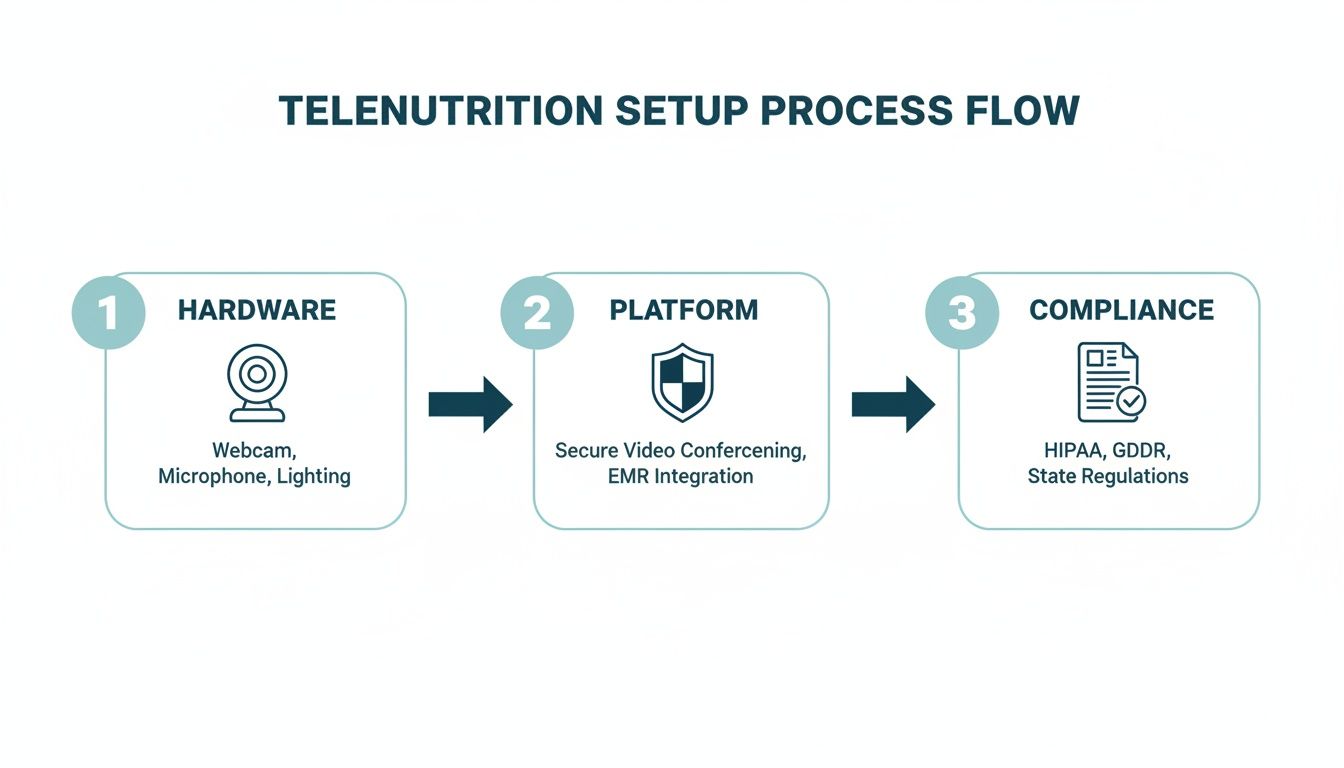
As you can see, a successful program stands on three connected pillars: reliable hardware, a secure platform, and airtight compliance.
During the Virtual Session (The Consultation)
The consultation is the heart of your work. Create a professional space with good lighting, a clean background, and no interruptions.
- Engage Visually: Look into the camera to create virtual eye contact.
- Use Interactive Tools: Use screen sharing to review food logs, pull up educational handouts, or build meal plans together.
- Build Rapport: Actively listen, ask open-ended questions, and use non-verbal cues like nodding to show you're engaged. The goal is to make the technology disappear.
After the Session (Follow-Up)
A structured follow-up reinforces your advice and keeps clients accountable. Send a summary email right after the session that includes:
- Key Takeaways: A bulleted recap of the main discussion.
- Actionable Goals: List the 1-3 specific, measurable goals you agreed upon.
- Helpful Resources: Include links to recipes, articles, or other materials.
- Next Steps: Clearly state when their next appointment is or how to book it.
This simple step turns your conversation into a practical plan they can actually use.
Boosting Patient Engagement in a Virtual Setting
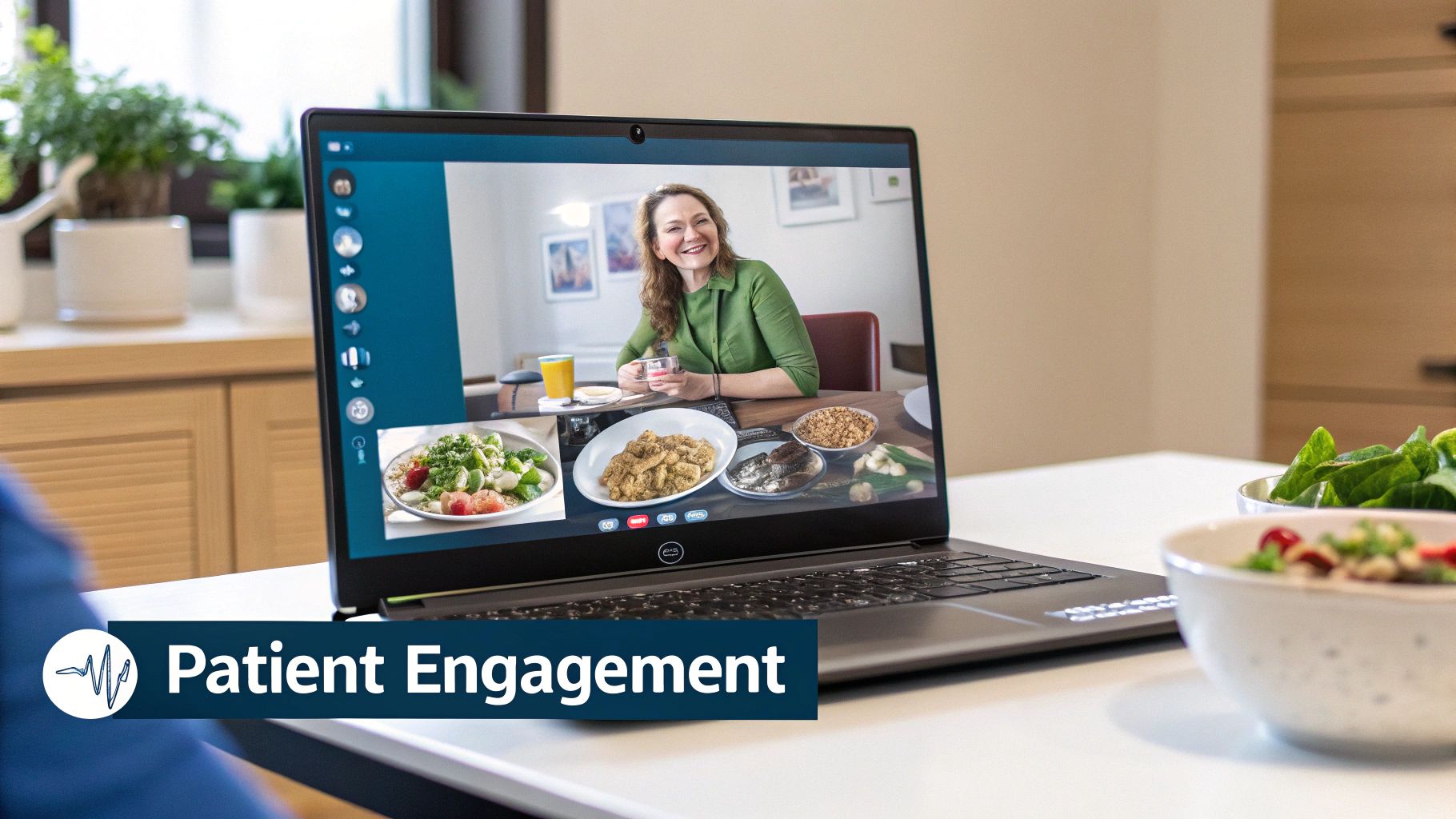
When you don't have the structure of an in-person visit, keeping clients motivated takes an intentional approach. Your success in a virtual setting boils down to building a supportive community that exists outside of scheduled video calls. Here are Umoja-tested engagement ideas with step-by-step setup guidance.
Umoja-Tested Idea #1: Create Engaging Group Workshops
Group workshops create an instant support system that boosts accountability. The trick is to keep them practical and interactive. Forget dry lectures; think of these as collaborative problem-solving sessions.
- Live Q&A on Seasonal Challenges: Host a session on "Navigating Holiday Eating" or "Healthy Summer Barbecues."
- Interactive Meal Prep Session: Guide a group through prepping a few simple, healthy meals for the week.
- Topic-Specific Deep Dives: Zero in on a specific area like "Decoding Nutrition Labels" or "Building a Better Breakfast."
These sessions don't just build community; they give clients value they can put to use immediately.
Umoja-Tested Idea #2: Develop High-Value, Sharable Content
In a virtual world, your content is a crucial touchpoint that offers ongoing support. The best content is practical, easy to digest, and made for a digital screen. Short-form video is especially powerful.
Pro Tip: Think in terms of "micro-learning." Build a library of short, actionable content like downloadable meal planners, grocery lists, or quick-tip infographics. These give clients tangible tools to turn your advice into action.
Every piece of content you create acts as an extension of your counseling, reinforcing key messages and providing practical help right when your clients need it most.
Umoja-Tested Idea #3: Implement Interactive Virtual Challenges
Challenges are a fantastic way to spark engagement and create a little fun. They nudge clients to apply what they've learned in a hands-on way.
How to Set Up a "Healthy Pantry Makeover" Challenge:
- Announce the Challenge: Use your secure messaging platform or email to kick off a week-long pantry makeover. Explain the goal: to spot and swap less-healthy staples with better alternatives.
- Provide a Simple Guide: Send out a one-page PDF with a "Swap This for That" list. For example, suggest swapping white rice for brown rice or quinoa, sugary cereals for oats, and vegetable oil for olive or avocado oil.
- Encourage Photo Sharing: Set up a secure, private space (like a dedicated channel in your messaging app) for participants to share "before" and "after" photos of their pantries.
- Offer Daily Tips: Throughout the week, send short, encouraging messages with tips on organizing shelves, reading labels for hidden sugars, or stocking up on healthy spices.
- Celebrate Success: At the end of the week, feature some of the best transformations (with permission!) and celebrate everyone's hard work. A small prize, like a free pass to a group workshop, can add an extra layer of motivation.
These challenges create active participation and reinforce healthy habits. They're also the perfect opportunity to integrate other services, like connecting participants with programs that provide healthy food boxes. You can explore how comprehensive nutrition kitting programs deliver shelf-stable, culturally relevant foods directly to families, bridging the critical gap between education and access. This approach makes healthy changes feel not just possible, but achievable.
Navigating Billing and Program Integration
Let's be honest: a brilliant telehealth nutrition counseling program can only create lasting change if it’s built on a sustainable financial model. This means rolling up your sleeves and getting into the nitty-gritty of billing, reimbursement, and smart program integration. For many organizations, this is where the overwhelm kicks in, but a clear plan is your ticket to long-term success and impact.
This financial piece is more critical than ever. The global telehealth market was valued at around USD 161.6 billion in 2024 and is expected to rocket to over USD 791.0 billion by 2032. This explosion shows a massive opportunity for programs that can get their operational and financial house in order. You can learn more about the growth of digital dietitian platforms to see where the industry is heading.
Cracking the Code on Billing and Reimbursement
Getting paid for your services starts with learning to speak the language of medical billing. That means getting comfortable with Current Procedural Terminology (CPT) codes—the universal codes used to report medical services to payers like insurance companies and Medicaid.
For medical nutrition therapy (MNT), you'll live and breathe a few key codes:
- 97802: The initial MNT assessment, done face-to-face, billed in 15-minute units.
- 97803: Follow-up appointments for re-assessment and intervention, also face-to-face and in 15-minute units.
- 97804: Group MNT sessions, billed in 30-minute units.
It is absolutely vital to check payer policies on a regular basis, as telehealth rules are constantly shifting. Some insurers require a specific flag on the claim—like modifier 95—to show the service was delivered remotely.
Your best defense against denied claims? Meticulous documentation. Your notes have to tell a clear story, justifying the medical necessity of the service and detailing every minute you spent with the client.
Think of your documentation as the story of the patient's care. It needs to be clear, concise, and complete. If an auditor reviewed the chart, they should be able to understand exactly what was discussed, what goals were set, and why the service was necessary.
Payer Policies and Credentialing
Getting set up with different payers is a major hurdle. Telehealth nutrition counseling policies can vary wildly between Medicaid, Medicare, and private insurance companies. Before you see a single client, you have to verify coverage for the specific CPT codes you plan to use.
Then there's credentialing. This is the process of officially becoming an in-network provider with an insurance plan. It's a deep dive, requiring you to submit detailed information about your practice and your dietitians for the payer to verify. Don't underestimate the timeline here; it can easily take several months, so start as early as you possibly can.
Being in-network is a game-changer. It dramatically lowers the out-of-pocket cost for your clients, making your services infinitely more accessible.
Integrating with Community Food Programs
This is where the magic really happens. Telehealth nutrition counseling becomes a powerhouse when you connect it with programs that solve for food access. Think of it this way: telenutrition provides the "how-to" of healthy eating, while community programs provide the "what-with." Put them together, and you have a truly holistic solution for community health.
Imagine partnering with a local food bank. A dietitian could host a virtual workshop for food bank clients, showing them how to build healthy, balanced meals using the exact items they typically receive in their food boxes. This isn't just abstract advice; it's practical, empowering education that families can use immediately.
Here’s what that integration looks like in the real world:
- Spotting the Need: A client in a WIC program is flagged as needing extra support for managing gestational diabetes.
- Connecting Virtually: She's connected with a registered dietitian for personalized MNT sessions via telehealth, all from the comfort and privacy of her home.
- Aligning Food and Advice: The dietitian coordinates with the WIC office to make sure the client's food package is tailored to her new dietary plan, prioritizing whole grains, lean proteins, and fresh produce.
- Real-Time Support: The client can use a secure messaging app to shoot the dietitian a quick question while she's at the grocery store, getting immediate advice on making healthy choices.
This kind of integrated approach doesn't just hand out information. It connects that knowledge directly to food access, closing the loop and building a supportive ecosystem that drives real, tangible health improvements. It transforms telehealth nutrition counseling programs from just another service into the central hub of community wellness.
Common Questions About Telenutrition Programs
Anytime you launch a new service, questions are going to pop up. It’s only natural. When it comes to telehealth nutrition counseling, a few key concerns seem to surface again and again. Getting clear, straightforward answers is the first step to building a program that’s not only effective but also completely secure.
How Do We Ensure Patient Privacy and HIPAA Compliance?
Let’s start with the big one: patient privacy. It's a completely valid concern—protecting sensitive health information isn’t just good practice, it’s the law. The only way to do this right is to build your program on a foundation of HIPAA-compliant technology from the very beginning.
This means choosing a telehealth platform built specifically for healthcare. You're looking for features like end-to-end encryption for all video calls, secure messaging, and protected data storage.
But the software is only half the battle. You also need iron-clad internal protocols for your team.
- Insist on a Business Associate Agreement (BAA): This is a non-negotiable legal contract with any tech vendor that touches protected health information (PHI), especially your telehealth provider. It legally binds them to protect your patient data just as you do.
- Train Your Staff Relentlessly: Every single person on your team, from the dietitians to the administrative staff, needs to understand the nuances of HIPAA in a virtual world. This means conducting sessions in private, secure locations and knowing exactly how to handle digital records.
- Get Specific Patient Consent: Before that first session, your patients need to sign a telehealth-specific consent form. This isn't just a box to check; it should clearly explain the benefits, any potential risks of virtual care, and how their information will be kept safe.
Embedding these practices into your daily workflow creates multiple layers of security. It’s how you build trust and stay compliant.
What is the Best Software for a Telenutrition Program?
The search for the "best" software can feel overwhelming, but it doesn't have to be. Instead of chasing a one-size-fits-all solution, focus on finding the right fit for your team's actual workflow. Steer clear of consumer-grade tools like the standard versions of Zoom or FaceTime—they simply don't have the required security features or the all-important BAA.
What you really want is an all-in-one platform that brings your operations under one roof. A great system does so much more than just host video calls.
A truly effective telehealth platform should simplify your entire operation. Look for integrated features like online scheduling, digital intake forms, a secure client portal for messaging, and options for billing. The goal is to find a single tool that can manage the entire patient journey.
This kind of integrated approach cuts down on administrative headaches and creates a seamless, professional experience for your clients. As you expand, a scalable platform can grow with you, whether you're bringing on more dietitians or launching group workshops.
How Do We Manage Billing and Reimbursement?
For many, navigating billing feels like the most intimidating piece of the puzzle. But the landscape is shifting. Reimbursement for virtual nutrition services is becoming much more common, you just need to be meticulous with your documentation and understand payer policies.
First, get familiar with the specific CPT codes for Medical Nutrition Therapy (97802, 97803, and 97804). Then, you have to verify telehealth coverage with every major payer you work with—Medicaid, Medicare, and private insurers included. Don't be afraid to ask them directly if they require specific modifiers (like modifier 95) for telehealth claims.
Think of proper documentation as your best defense against claim denials. Each session note has to clearly justify the medical necessity of the service, detail the time spent, and outline the patient's progress toward their goals. This creates a bulletproof record that will stand up to any audit.
At Umoja Health, we specialize in closing the gap between nutrition education and food access. We help organizations run compliant, impactful programs at scale by providing everything from culturally relevant food kits to operational support for WIC, food banks, and healthcare plans. Discover how we can support your mission at https://umojahealth.com.