
Culturally appropriate food programs are designed around the specific cultural traditions, dietary needs, and food preferences of the communities they serve. This is about so much more than basic nutrition—it’s about recognizing that food is deeply tied to our identity, our comfort, and our health.
When we offer food with dignity and respect, we see a dramatic increase in program participation and effectiveness.
Why Cultural Relevance In Food Programs Matters
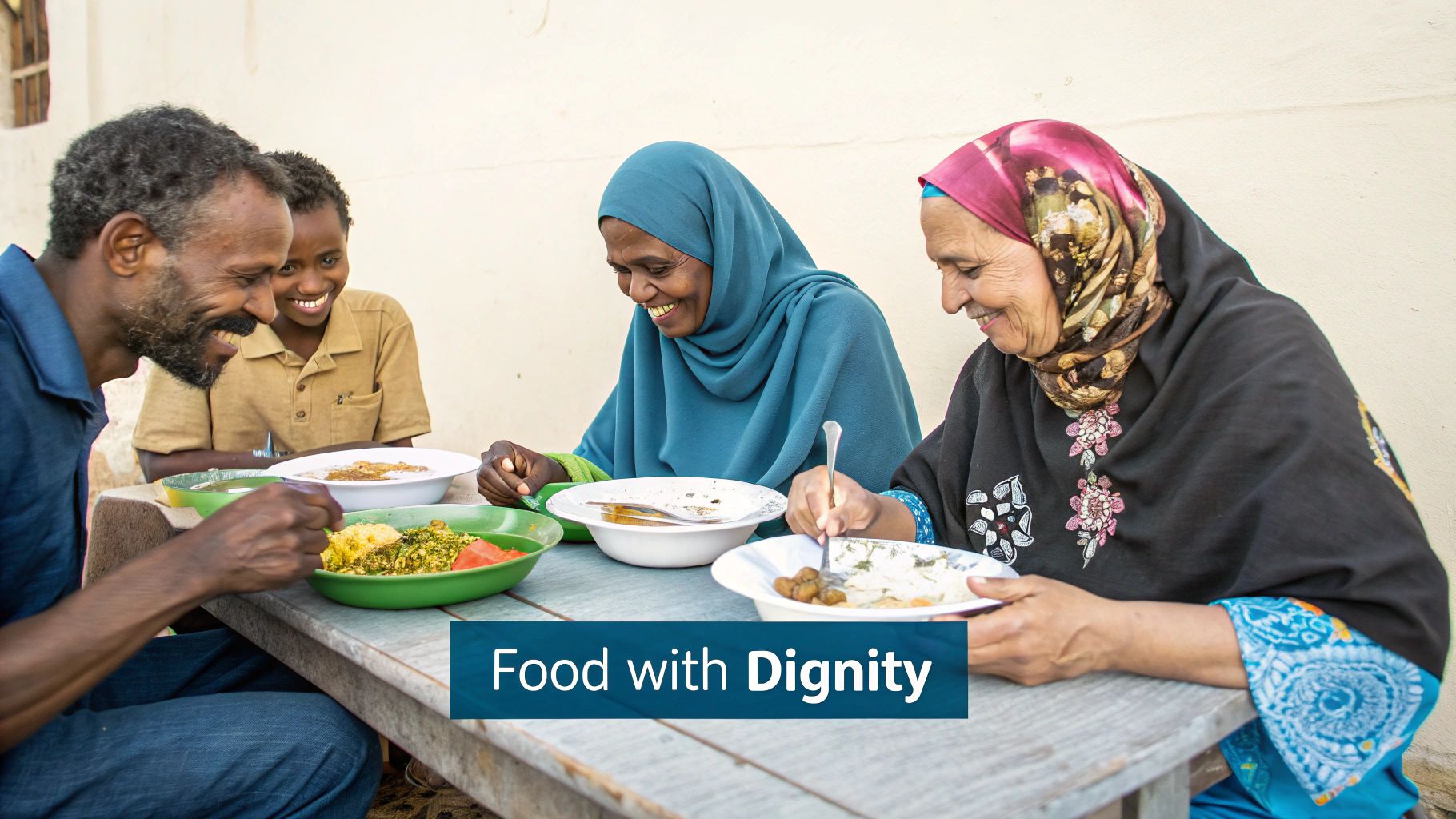
Food is far more than just calories; it’s a source of identity, community, and well-being. When a food assistance program provides familiar ingredients and meals, it sends a powerful message of belonging and respect.
Imagine a newcomer family receiving items like lentils, specific spices, or teff flour instead of unfamiliar canned goods. This simple act can make them feel seen and valued, easing the stress of an already difficult transition.
This is how you build immediate trust. People are far more likely to engage with a program that understands and honors their background. That connection is the first real step toward achieving better health outcomes and ensuring people get the nutrition they truly need.
The Consequences of a One-Size-Fits-All Approach
When we ignore cultural context in food distribution, we create a host of new problems. Unfamiliar or undesirable foods often go to waste, which means valuable resources are squandered and the core issue of hunger remains unsolved.
Worse, a lack of culturally appropriate options can deepen health inequities. People might be forced to choose between eating unfamiliar, less healthy items or simply not eating at all. For anyone managing a diet-related condition like diabetes or hypertension, this is incredibly dangerous. Access to familiar, healthy staples is absolutely essential for them to manage their health.
A food program's success isn't just measured by the number of boxes distributed. It's measured by how many people feel nourished, respected, and empowered to maintain their health and cultural traditions.
Fostering Dignity and Increasing Participation
The single greatest benefit of these programs is the preservation of dignity. Needing food assistance can be a vulnerable experience. But when that help includes foods that feel like home, it shifts the dynamic from a handout to a genuine gesture of care.
This focus on dignity has a direct line to program effectiveness. When people feel respected, they participate more consistently and are more open about their needs. This leads to higher engagement and better outcomes across the board.
That positive experience builds a foundation of trust that often extends to other supportive services, creating a more complete support system. Building true nutrition security requires this deep understanding—every meal must nourish the body and the spirit. This is the difference between simply feeding people and truly supporting community health.
A Framework for Designing Culturally Relevant Programs
Truly effective food programs are co-created with the community, not just for them. They are built on a foundation of genuine partnership and respect for lived experience. A successful framework rests on three core pillars: authentic engagement, culturally competent staffing, and thoughtfully designed menus. Let's explore each.
Pillar 1: Authentic Community Engagement
Effective programs begin long before a single meal is planned—they start with listening. To design a program that works, you must go to the source and build trust with the people you hope to serve. This is about co-creation, not consultation.
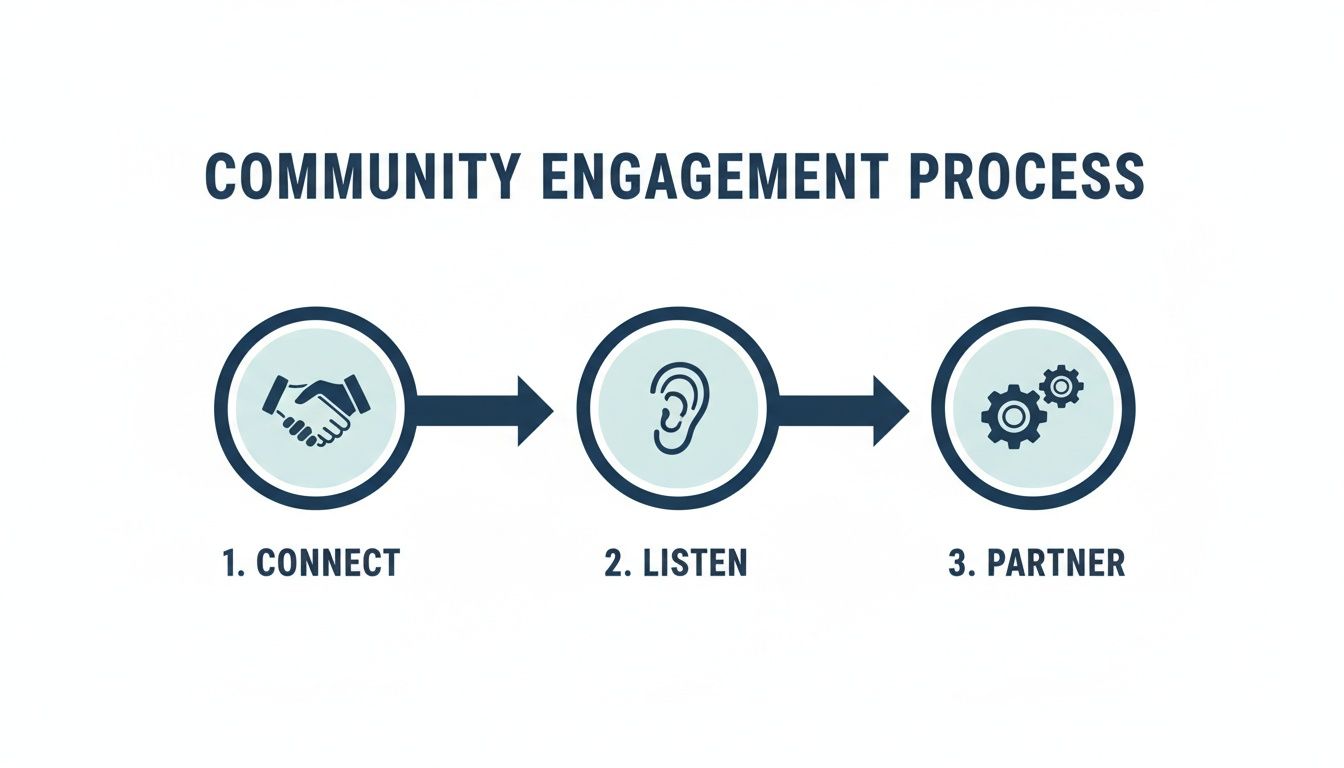
Step 1: Connect with Community Experts
Your first move is to respectfully find the people and organizations who are the true pulse of the neighborhood. This often means looking past formal titles to find the real centers of community life.
- Community Leaders and Elders: They hold the history, traditions, and trust of their communities. Their insight is invaluable.
- Cultural and Faith-Based Hubs: Mosques, temples, churches, and cultural centers are active support networks and powerful potential partners.
- Local Grocers: Owners of specialty food stores have a direct line to what people are actually buying and cooking.
Step 2: Listen and Make Space for Collaboration
Once you’ve made connections, create real opportunities for the community to lead the program's design. Form a compensated advisory council to show you value their expertise as equal partners. Host listening sessions in trusted community spots at accessible times, removing barriers like transportation and childcare.
Forget tokenistic feedback. The goal is to create a space where community members are the primary architects of the food program. Their knowledge of dietary patterns, cooking methods, and meal structures is the most valuable asset you have.
Pillar 2: Culturally Competent Staffing
A great food program is powered by people who reflect and understand the community. Building a culturally competent team is the engine that drives trust and boosts participation. Lived experience is a form of expertise.
Recruit from Within the Community:
The most direct route to a culturally aligned team is to recruit from the neighborhoods you serve. Staff who share the same language and cultural background can offer immediate, nuanced feedback and build a welcoming space where people feel safe and respected.
- Partner with Community Hubs: Share job and volunteer openings at local cultural centers and faith-based organizations.
- Create Entry-Level Roles: Offer paid positions that provide a pathway for community members to join your team and grow.
Train for Cultural Competence and Respect:
Equip your entire team with the skills for respectful engagement. Training should be a safe space to explore unconscious biases and learn practical communication skills, including understanding the impact of microaggressions. Every interaction should reinforce a message of dignity and belonging.
Pillar 3: Menus and Food Kits That Feel Like Home
This is where you translate community insight into delicious, nutritious meals. Effective menu design means understanding dietary patterns, favorite preparations, and meal structures to ensure the food is both nutritionally sound and comforting.
Source Ingredients with Intention:
Look beyond broadline distributors to local suppliers and culturally specific markets. This ensures you get the right products and also reinvests in the community's economy. In 2020, an analysis of global school meal programs and local sourcing showed that sourcing ingredients domestically led to a much more diverse range of foods. Think about:
- Specific Brands: People often have strong attachments to certain brands of rice, cooking oil, or spices.
- Cuts of Meat: Ensure any meat provided is prepared according to cultural or religious standards, like Halal or Kosher.
- Produce Varieties: Source the specific types of vegetables and fruits central to traditional dishes, like plantains, yuca, or bok choy.
Assemble Emergency Food Kits with Dignity:
A culturally appropriate food kit empowers people to cook their own traditional meals, providing a sense of agency during a crisis.
- Foundation: Start with a large bag of the preferred grain (e.g., long-grain rice, masa harina).
- Protein: Offer shelf-stable options like lentils, chickpeas, or canned fish.
- Flavor Base: Pack cooking oil, onions, garlic powder, and a culturally relevant spice blend (like adobo, garam masala, or berbere).
- Canned Goods: Choose items common in traditional recipes, such as diced tomatoes or coconut milk.
Organizations are increasingly adopting this model, as shown in these examples of themed nutrition kits built for diverse communities.
The Umoja Heritage Foods Initiative: A Step-by-Step Model
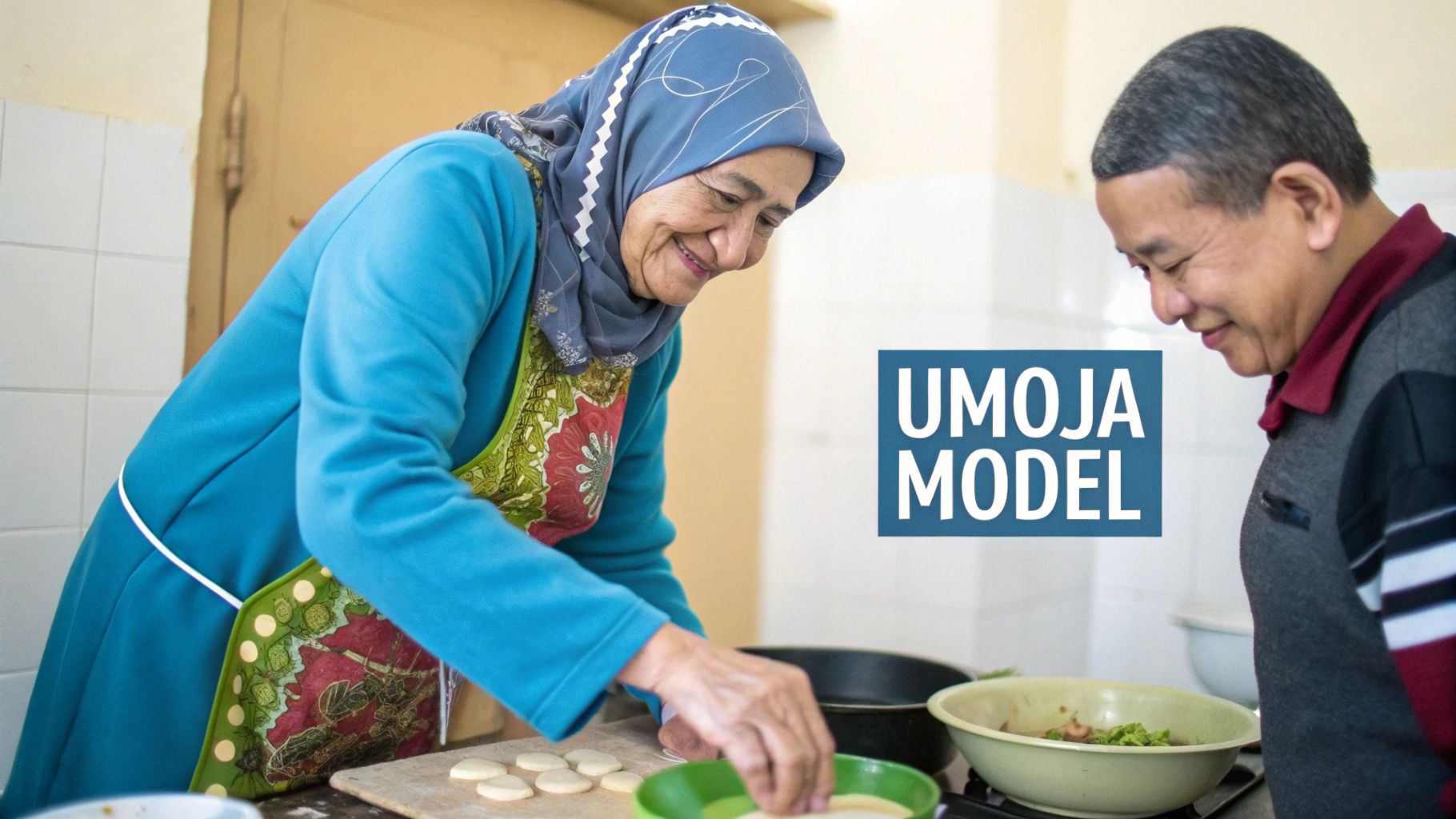
The Umoja Heritage Foods Initiative provides a powerful, real-world blueprint for putting this framework into action. Their model is built on the belief that food is medicine, memory, and community. Here’s a step-by-step guide to their implementation process.
Step 1: Lay the Groundwork Through Relationship Building
The first phase is about trust, not food. Before discussing menus, the Umoja team spends significant time embedded in the community, building genuine relationships without an agenda. They show up at events, meet with elders and leaders, and simply listen. This establishes the program as a partner from the inside, not an expert from the outside. Authentic engagement is the prerequisite for program success.
Step 2: Document Recipes Through Storytelling
Once trust is established, the focus shifts to culinary traditions. Instead of using surveys, Umoja hosts storytelling sessions where elders cook and share the history behind their traditional recipes. This method is profoundly respectful, capturing not just ingredients but the memories and cultural meaning attached to each dish. This turns recipe collection into an act of cultural preservation.
- Actionable Tip: Host small, intimate cooking demonstrations led by community members themselves to create a comfortable environment for sharing.
- Best Practice: With permission, record these sessions to create a living archive of recipes and stories for future generations.
By centering the voices and wisdom of elders, a food program can do more than feed people—it can actively work to keep cultural traditions alive and vibrant.
Step 3: Adapt Menus Collaboratively
With authentic recipes in hand, the next step is aligning them with nutritional guidelines without losing their soul. Umoja brings together a unique team: community elders, registered dietitians, and program staff. They work together to make healthy adaptations, such as using herbs for flavor instead of sodium or suggesting baking instead of frying. No changes are made without consensus, ensuring the final meal is both healthy and culturally cherished.
Step 4: Implement with a Continuous Feedback Loop
The newly adapted meals are introduced through a pilot program, often at a local senior center. But the launch is just the beginning. Umoja establishes a constant feedback loop through informal chats and taste tests, allowing the team to make real-time adjustments. This iterative process ensures the menu stays popular and relevant, proving the community's voice continues to shape the program long-term. This model is also highly adaptable for creating specialized culturally connected kitting programs for home delivery or emergency response.
Measuring What Truly Matters for Long-Term Success
How do you know if your program is working? Success isn’t just about the number of meals served. The real impact is measured in dignity restored, health improved, and cultural connections strengthened. To get the full picture, you need to look at both quantitative data (the numbers) and qualitative data (the stories).
Beyond Counting Heads: Defining Meaningful Metrics
Shifting your focus to outcome-based metrics demonstrates the real value of your work.
- Participant Satisfaction: Use simple surveys to ask people if the food meets their cultural and taste preferences.
- Dietary Diversity: Track the variety of traditional staples included in your menus.
- Reduced Food Waste: When people enjoy the food, waste naturally goes down. Tracking uneaten food is a practical way to prove your items are wanted.
The evidence is mounting that this approach gets results. Clinical interventions have shown that culturally relevant nutrition programs lead to measurable health improvements, including better clinical markers like reduced weight and fasting glucose. You can read the full research about these findings to see the data for yourself.
The Power of Stories: Capturing Qualitative Impact
Numbers can't capture the human impact of receiving food that feels like home. Collecting stories provides powerful, emotional proof of your program's success.
A single story of a grandmother being able to cook a traditional holiday meal for her family can be more persuasive to a funder than a page full of statistics. It demonstrates that the program is nourishing culture, not just bodies.
Gather these narratives respectfully through informal conversations, video testimonials (with consent!), or simple feedback forms. These personal anecdotes are gold for reports, grant applications, and community outreach.
Ensuring Long-Term Sustainability
A successful program is one that lasts. This requires a smart approach to funding, partnerships, and efficient operations. Using tools like inventory analytics specific to food can help reduce waste and cut costs, making every dollar go further.
Advocacy is also a huge piece of the puzzle. Use your data and stories to push for policy changes that make culturally appropriate food a standard requirement in large-scale systems like the Older Americans Act (OAA) nutrition programs and WIC. By building a strong case for your impact, you can help secure the funding and policy support needed to keep this vital work going.
At Umoja Health, we specialize in helping organizations run compliant, culturally connected food programs at scale. From disaster response kits to Food-is-Medicine grocery programs, we provide the shelf-stable foods and operational expertise you need to serve your community with dignity. Learn how we can support your mission.