
A well-run grocery voucher program lives and dies by its design. It’s all about building a framework that truly serves your participants while being airtight on the operational side. You need a system that’s easy for people to use but secure enough to ensure the aid goes exactly where it's intended, without friction or fraud. This means thinking through everything, from who is eligible to how they’ll actually redeem their voucher at the checkout line.
Building a Resilient Program Blueprint
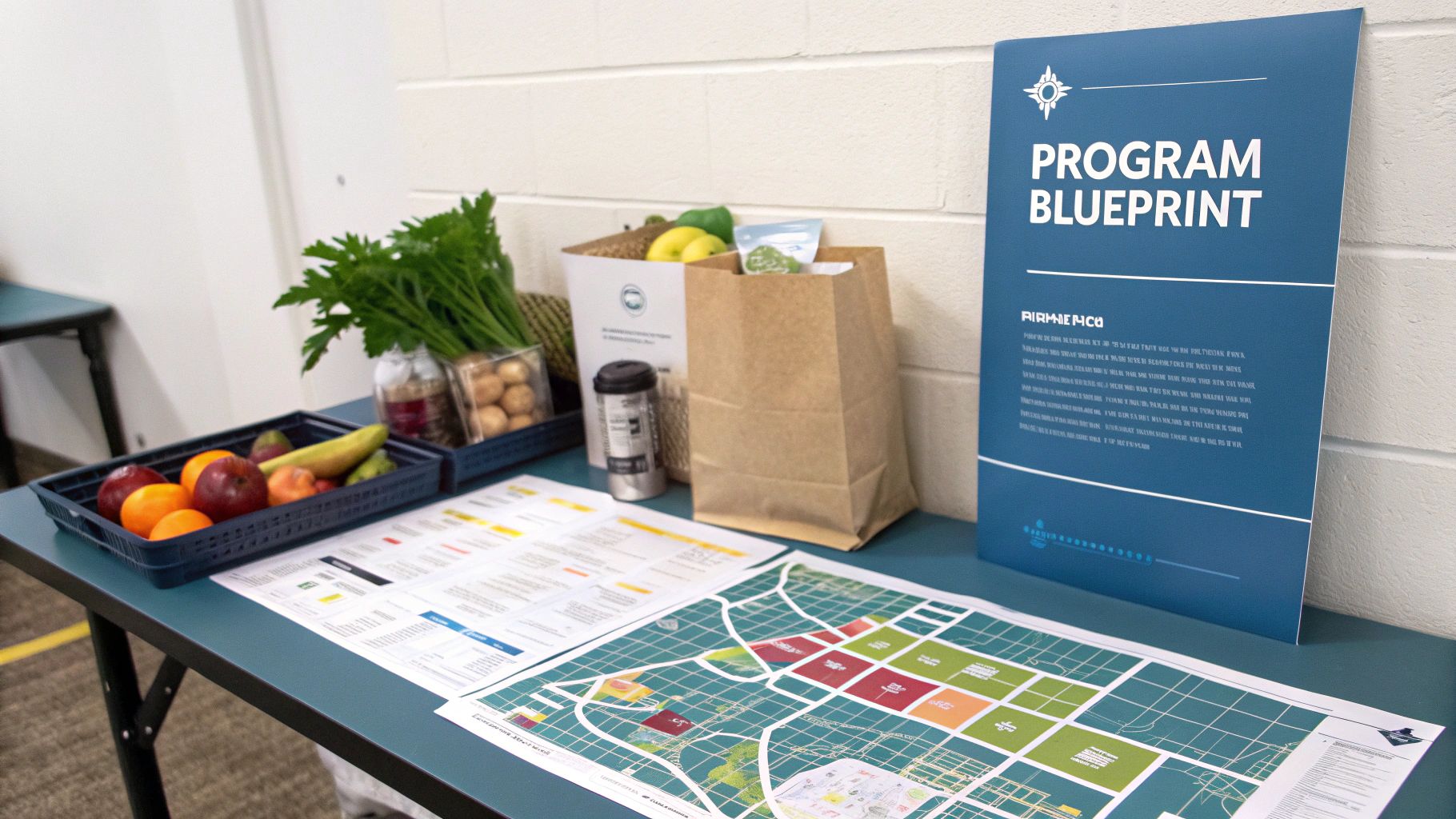
Long before the first voucher is printed, the real work begins. A successful program starts with a thoughtful design phase, laying the groundwork for everything that follows—enrollment, tracking, reporting, you name it. A solid blueprint ensures you’re not just distributing funds, but actually meeting your core objectives, whether that’s boosting nutrition security for families or providing targeted support for seniors.
This whole process starts with getting crystal clear on your goals and truly understanding the community you serve. Are you trying to get more fresh produce into people's hands? Or are you looking to bridge an emergency food gap after a local disaster? The answer will steer every single decision you make from here on out.
Designing a Cohesive Program
Effective grocery voucher program management starts with a clear design. This phase sets the stage for participant experience, operational efficiency, and overall impact.
Here is a practical workflow for designing your program:
graph TD
A[1. Community Needs Assessment] –> B[2. Define Program Goals & Eligibility];
B –> C[3. Calculate Voucher Value & Set Budget];
C –> D[4. Build a Retailer Network];
D –> E[5. Choose Technology & Platform];
E –> F[6. Develop Fraud Prevention Strategy];
Defining Program Goals and Participant Eligibility
First things first, you need specific, measurable objectives. A vague goal like "helping the community" isn't actionable. A better approach is to set a concrete target, like "providing 500 seniors in targeted zip codes with $50 monthly for fresh produce for six months." That level of clarity brings focus and guides every other choice.
Once you have a clear goal, you can define eligibility criteria that are both fair and verifiable. I've seen organizations get bogged down here, so keep it simple. Common criteria usually fall into a few buckets:
- Income Level: Often based on a percentage of the Federal Poverty Level (FPL).
- Geographic Location: Targeting specific neighborhoods, counties, or rural areas known to have limited food access.
- Household Status: Focusing on families with young children, seniors, or individuals with specific health conditions.
- Program Enrollment: Piggybacking on existing assistance programs like SNAP or WIC can be a smart move. Participants are already verified, which saves you a ton of administrative overhead. You can learn a lot from the structure of established child nutrition programs.
Whatever you choose, the key is to make the verification process as painless as possible. Don't create barriers for the very people you're trying to help.
The flow chart below breaks down how these initial design pieces connect to the participant's experience.
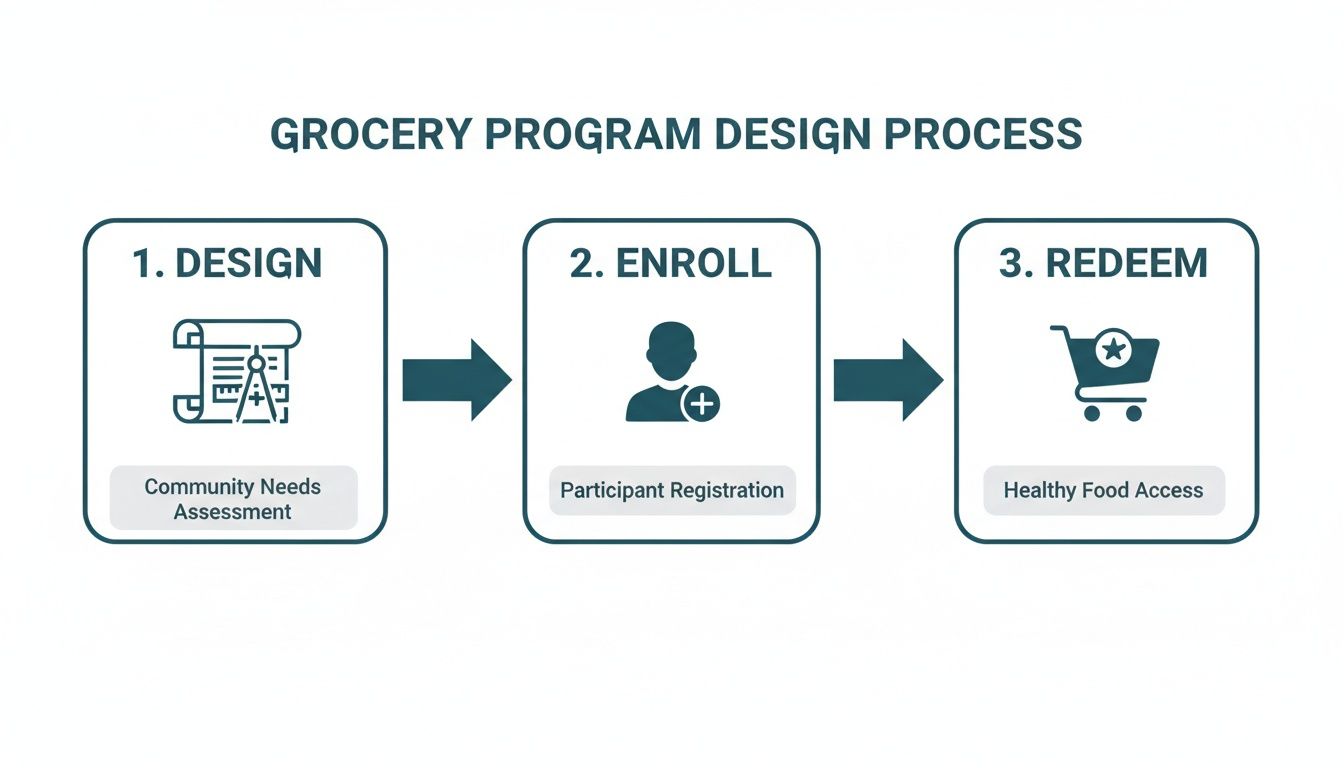
As you can see, a strong initial design makes for a much smoother enrollment and redemption process, creating a positive, empowering experience for everyone involved.
Calculating Voucher Value and Building a Retail Network
Figuring out the right voucher value is a delicate balancing act. It has to be enough to make a real difference for a family but also sustainable within your budget. With U.S. grocery prices jumping a staggering 23.6% between 2020 and 2024, you have to do your homework on local food costs. A $25 voucher might not stretch very far in an expensive city, but it could be a game-changer in a more affordable rural town.
The goal should always be to provide a dignified shopping experience. The voucher value needs to be high enough that participants can buy a meaningful amount of food without having to dig deep into their own pockets for basic necessities.
Next up is building your network of retail partners. This is non-negotiable. Aim for a mix of large supermarket chains and smaller, local grocers to give people plenty of accessible options. When you bring retailers on board, you have to give them crystal-clear guidelines on eligible items, redemption procedures, and your reimbursement schedule. This prevents chaos at the checkout and keeps the financial workflow clean. A strong, well-managed retail partnership is the backbone of a frictionless program.
Choosing the Right Technology for Voucher Management
If you're still managing your grocery voucher program with paper, it’s time to modernize. Let's be honest, paper systems are cumbersome, slow, and a headache for everyone involved. Today's technology—whether it's prepaid cards or mobile apps that use QR codes—does more than just get rid of paper. It fundamentally changes how you operate for the better.
These tools handle the tedious tasks automatically, get funds to people instantly, and make the checkout process a breeze for both your participants and the retail staff.
This isn't just a niche trend. The global meal voucher market, which is a close cousin to what we do, is expected to balloon to USD 153.7 billion by 2035. That growth is being fueled by digital platforms that make redemption simple and slash administrative costs. In fact, some organizations have reported saving up to 20% on overhead just by making the switch. You can dig deeper into these numbers by checking out the full research on digital voucher trends.
The Core Technology Components
When you get down to it, managing a grocery voucher program effectively comes down to a few key technology choices. Each one has its own strengths depending on who you're serving and how your program is set up.
- Prepaid Cards: These work just like a debit card and are incredibly flexible. They're a perfect fit for participants who might not have a smartphone or simply feel more comfortable with a physical card in their wallet.
- Mobile Apps: An app can deliver funds in seconds, let people check their balance on the fly, and even send push notifications with important program updates. This is your best bet for high engagement and rich data collection.
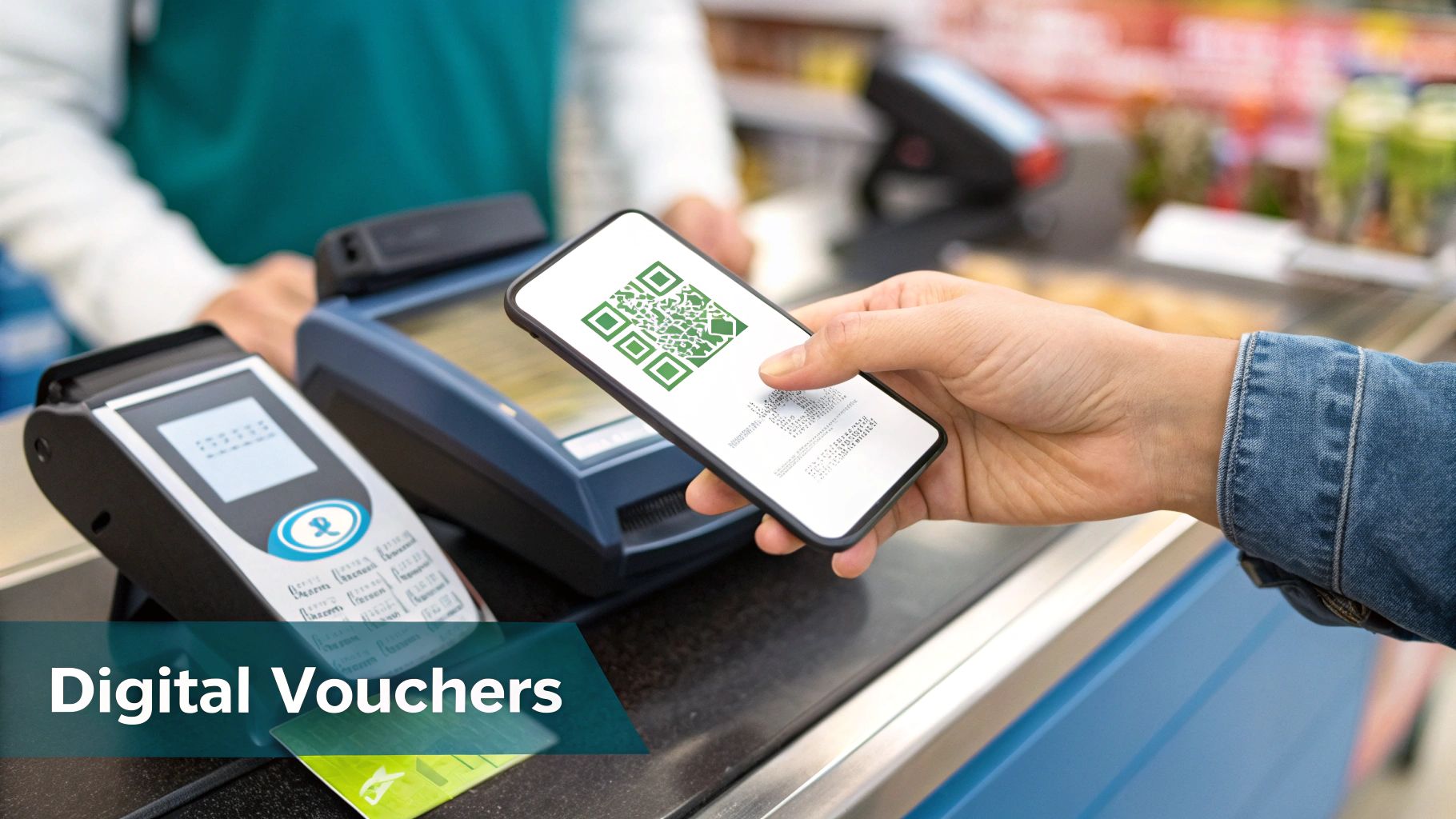
- Unique QR Codes or Barcodes: These single-use codes are a highly secure way to distribute benefits. You can send them via text or email, and they get scanned right from a phone at the register. The big win here is that there's nothing to lose or get stolen.
From my experience, a hybrid approach is almost always the way to go. Offering both a physical card and a mobile app makes your program accessible to everyone, no matter how tech-savvy they are. Inclusivity isn't just a buzzword; it's critical to making sure your program actually works.
Technology Integration for Seamless Operations
The real magic of modern voucher management happens when your systems talk to each other. When your voucher platform is integrated with your other essential software, you break down data silos and automate entire workflows, saving an incredible amount of administrative time.
Think of it as building a central nervous system for your program. A properly integrated platform connects all the moving parts into one cohesive operation, cutting down on manual errors and giving you a clear, real-time picture of everything that’s happening.
This level of connectivity makes for a powerful and efficient workflow. For instance, once a participant enrolls online, the system can automatically check their eligibility, set up a digital wallet, load their first round of funds, and shoot them a notification that their benefits are ready—all without a single person having to lift a finger.
Here's a look at what a common integrated workflow might look like:
graph TD
A[Participant Enrollment Portal] –> B{Voucher Management Platform};
B –> C[ERP/Financial System for Fund Allocation];
B –> D[Retailer POS System for Redemption];
C –> B;
D –> B;
B –> E[Reporting & Analytics Dashboard];
- Voucher Platform to Financial ERP: Connecting your voucher system to your Enterprise Resource Planning (ERP) software automates how funds are allocated and reconciled. Say goodbye to manually tracking spending and reimbursements in spreadsheets.
- Platform to Retailer WMS/POS: When your platform integrates with a retailer's Warehouse Management System (WMS) or Point-of-Sale (POS), it opens up possibilities like inventory-aware substitutions and makes checkout a non-event. The cashier's system knows which items are eligible and applies the voucher without a hitch.
Building a Robust Fraud Prevention Strategy
Let's be blunt: protecting the integrity of your grocery voucher program is non-negotiable. Without a solid defense, you're not just risking financial losses or a damaged reputation—you're risking failure for the very community you set out to serve. True grocery voucher program management involves building a system that actively sniffs out and blocks fraud before it can do any damage.
This means you have to get out of a reactive mindset. Security can't be an afterthought; it needs to be woven directly into your operational fabric from day one. Common schemes like voucher duplication, unauthorized selling on social media, and identity theft can bleed a program dry if you aren't prepared. A smart strategy brings together the right technology with clear, enforceable rules.
Proactive Fraud Detection and Prevention
The best defense is a good offense. Instead of playing whack-a-mole with illicit transactions after the money is gone, your system should be engineered to make them nearly impossible to pull off in the first place.
Here are a few tactics I’ve seen work incredibly well:
- Unique, Single-Use Digital Codes: Paper vouchers or static codes are an open invitation for trouble. The fix is simple: issue a unique QR code or barcode for every single transaction. Once it's used, it expires. Instantly.
- Automated Transaction Monitoring: You can't have eyes everywhere, but your software can. Set up rules-based alerts that flag suspicious activity. Think multiple, rapid-fire redemptions from the same device or an unusual spike in transactions at one store in a short window.
- Velocity Checks: This is a simple but powerful tool. Implement hard limits on how often a voucher can be redeemed. For instance, a rule could block a single participant from redeeming more than one voucher within a 15-minute window, which effectively kills attempts to use a batch of fake codes in quick succession.
A well-designed system doesn't just catch fraud; it deters it. When potential bad actors realize the system has built-in checks and balances, they are far more likely to move on to an easier target.
At its core, a strong fraud prevention plan for any grocery voucher program depends heavily on solid data governance and quality strategies. This ensures the information you're using to spot and stop fraudulent activity is actually reliable.
Integrating Compliance into Your Workflow
Beyond outright fraud, you're also navigating a maze of compliance mandates. Regulations like the Buy American Act or the Older Americans Act (OAA) have very specific rules about what can and can't be purchased. Trying to manage this at the checkout counter is a recipe for disaster.
The solution is to build these rules directly into your program software. When you do this, every transaction is automatically cross-referenced against federal and state mandates. No more relying on a busy cashier or program staff to police every shopping cart.
For example, your platform can be configured to:
- Restrict Product Categories: Easily program the system to approve only OAA-compliant food items for vouchers aimed at seniors.
- Enforce Geographic Boundaries: Use geofencing to make sure vouchers are only used at authorized vendors within your designated service area.
- Align with Federal Standards: For programs mirroring WIC, your platform absolutely must be able to handle a complex, constantly updated approved-product list. For a closer look at how technology can make this work, check out this guide on WIC mobile shopping and home delivery.
This kind of automated compliance check doesn't just keep you out of legal trouble. It frees up your team to focus on what really matters: serving participants, not policing their purchases. By baking fraud prevention and compliance into your program from the very beginning, you build a resilient, trustworthy system that can truly make a difference.
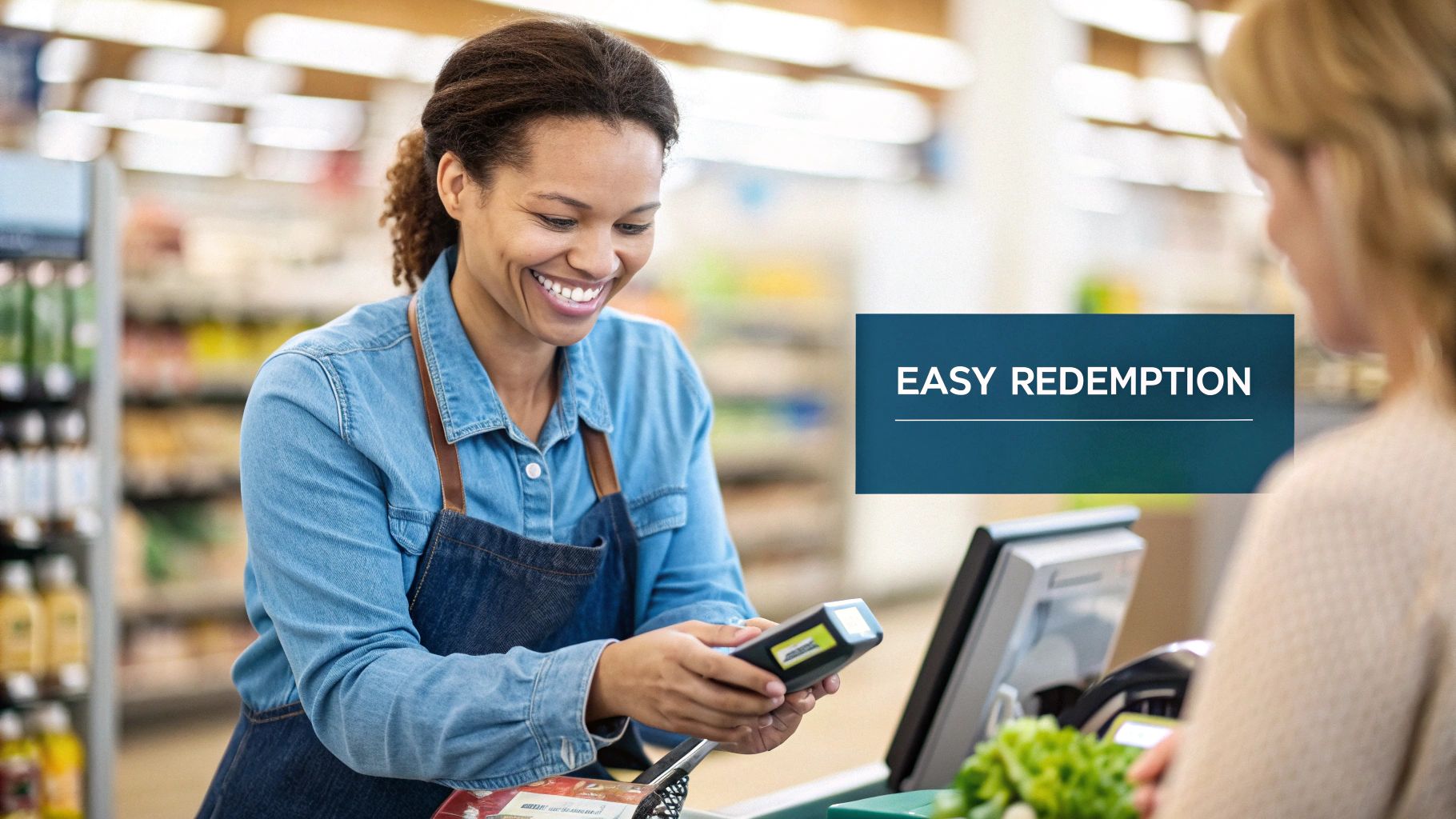
Creating a Redemption Experience That Just Works
The real test of any grocery voucher program happens at the checkout counter. You can nail enrollment and funding, but if that final step—the actual purchase—is clunky, confusing, or embarrassing for the participant, the whole program stumbles. Success in grocery voucher program management means designing a transaction so smooth it feels empowering, not like a handout.
The goal is simple: make using a voucher as easy and discreet as swiping a debit card. We have to strip away any friction or stigma that can sour the experience.
Building Workflows for the Real World
Every community is different, so a one-size-fits-all redemption process is doomed to fail. A workflow that’s perfect for a busy city supermarket will be completely wrong for a home-delivery service in a rural county. You have to build your redemption process around the lives of your participants and the realities of your retail partners.
Think about a common snag: out-of-stock items. A mom who has carefully planned her family’s meals around specific approved products can be left feeling totally stuck if those items aren’t on the shelf. This is where smart technology really shines. Your system can be set up with inventory-aware substitutions, offering pre-approved alternatives right on a mobile app or at the point-of-sale terminal.
The ultimate measure of a redemption workflow is whether it upholds the dignity of the participant. The process should be so seamless it’s practically invisible, letting people shop with confidence.
When you get this right, the impact is massive. During the height of the COVID-19 crisis, one program from the Public Health Institute distributed nearly $22 million in food cash cards to 30,000 families in just two months. The results were stunning: a 38.0% drop in food insecurity for larger households. This proves that a frictionless experience isn't just a nice-to-have; it's what makes the program truly work. You can discover more insights about this impactful program's findings and see how powerful great management can be.
Don't Forget to Train Your Retail Partners
You could have the most sophisticated tech on the planet, but it’s worthless if the cashier doesn’t know how to use it. Retailer training is one of the most overlooked—and most vital—parts of managing a voucher program. A poorly trained cashier can quickly turn a simple purchase into a stressful, public ordeal for your participant.
Your training needs to be simple, direct, and continuous. Just sending out a manual won't cut it.
- Create Simple Job Aids: Think one-page, laminated guides with pictures. Keep them right at the register to walk cashiers through different voucher types, like a QR code or a prepaid card.
- Do Hands-On Training: Run short, hands-on sessions (in-person or virtual) with store managers and cashiers. Walk them through common transactions and potential hiccups.
- Give Them a Lifeline: Make sure every store has a dedicated phone number or email they can use for immediate help if they hit a snag at the register.
A well-trained retail partner becomes the face of your program. When their team can handle vouchers confidently and help participants without missing a beat, they become a true extension of your mission. This partnership is what builds a program that doesn’t just hand out aid, but fosters trust and dignity in the community.
Redemption Model Comparison: In-Store vs. Delivery
Choosing between an in-store or home-delivery model has big implications for both your operations and your participants. In-store shopping offers familiarity and choice, but it can present transportation and time barriers. Home delivery, on the other hand, provides incredible convenience, especially for those with mobility issues, but it requires more complex logistics and can feel less autonomous.
Here’s a look at how these two models stack up across key areas.
| Feature | In-Store Redemption | Home-Delivery Redemption |
|---|---|---|
| Participant Choice | High. Participants can browse, compare products, and make spontaneous choices. | Moderate. Limited to the vendor's online catalog and available inventory. |
| Accessibility | Can be a challenge for those with mobility issues, lack of transportation, or time constraints. | Excellent. Removes barriers for homebound individuals, seniors, and rural residents. |
| Technology Needs | Requires POS integration and staff training. Participants may need a physical card or mobile app. | Requires a robust e-commerce platform, inventory management, and route planning software. |
| Logistical Complexity | Lower. Relies on existing retail infrastructure. | Higher. Involves order fulfillment, packing, last-mile delivery, and managing delivery windows. |
| Social Interaction | Provides an opportunity for community engagement and social connection. | Can feel isolating for some participants who value the social aspect of shopping. |
| Discretion & Privacy | Potential for stigma at checkout if the process isn't seamless. | High. The entire transaction is private and conducted from home. |
Ultimately, the best model depends entirely on who you’re serving. Many of the most effective programs actually offer a hybrid approach, giving participants the flexibility to choose the option that works best for their unique situation. This flexibility is key to meeting people where they are and ensuring your program has the greatest possible impact.
Using Data to Measure and Improve Your Program
Gut feelings don't scale—data does. When you're running a grocery voucher program, it’s easy to get caught up in the day-to-day distribution of aid. But to really make an impact, you have to move beyond just handing out vouchers and into the world of turning raw numbers into smarter, faster decisions.
This isn't about getting lost in endless spreadsheets. It's about zeroing in on the handful of key performance indicators (KPIs) that tell the true story of your program's health. By keeping a close eye on these vital signs, you can shift from reacting to problems to proactively spotting trends and fixing issues before they become major headaches.
Identifying Your Most Important KPIs
Before you can measure success, you have to define what it actually looks like for your program. Your KPIs need to be a direct reflection of your goals, giving you a clear, at-a-glance snapshot of how things are going.
From my experience, these are the essential metrics every program manager should have on their dashboard:
-
Voucher Redemption Rate: This is your headline number. It’s simply the percentage of vouchers you issue that actually get used. If you see a consistently low rate, say below 75%, it's a huge red flag. It could point to barriers like lack of transportation, too few participating stores, or just plain confusion about how the program works.
-
Average Redemption Value: Are people using the full value of their vouchers? If you issue a $50 voucher but the average redemption is only $35, something’s off. It might mean your eligible product list is too restrictive or that the voucher value doesn't align with what a typical shopping trip costs.
-
Geographic Redemption Hotspots (and Cold Spots): Mapping out where your vouchers are being redeemed is incredibly powerful. This data can visually expose "food deserts" where participants have nowhere convenient to shop. It can also shine a light on neighborhoods where your outreach just isn't landing.
-
Vendor Transaction Speed and Errors: How smoothly are transactions going at the register? If you see high error rates or painfully slow processing times at certain retail partners, it’s creating a frustrating experience for both cashiers and participants—one that can easily discourage people from using the program again.
Turning Reports into Actionable Insights
Data is useless if it just sits in a report. Your reporting process shouldn't be about creating a historical archive; it needs to be a roadmap for what to do next. The real goal is to generate reports that spark action, not just spit out numbers.
For instance, a report showing low redemption in a particular zip code isn't just a statistic—it’s a call to action. That single data point should trigger a series of questions. Is there a language barrier with our flyers in that area? Are the approved grocery stores too far for residents who rely on public transit?
Data-driven decisions are the most defensible. When you can walk into a budget meeting with a report showing that 95% of funds were successfully redeemed in high-need areas, you're not just asking for more funding—you're proving your program's effectiveness.
Using Data for Strategic Program Growth
Once you have a steady stream of reliable data coming in, you can start making some powerful strategic moves. This is where grocery voucher program management evolves from simple administration to true strategic oversight.
Here’s how you can put your findings to work:
- Justify Budget Requests: Nothing makes a stronger case for funding than hard numbers. Concrete data on redemption rates, participant growth, and geographic reach provides undeniable proof of impact.
- Reallocate Funds and Resources: If your data shows one community has significantly higher needs or is engaging with the program more effectively, you can confidently shift resources to where they’ll do the most good.
- Fine-Tune Outreach Strategies: By analyzing which channels and messages lead to the highest enrollment and redemption, you can stop wasting money on what isn't working and double down on your most effective tactics.
By consistently tracking, analyzing, and acting on your program data, you build a virtuous cycle of continuous improvement. You learn what works, you fix what doesn't, and you ultimately create a more resilient and impactful program for the people you serve.
What to Know Before Outsourcing Program Management
Handing off your grocery voucher program management to an outside vendor can be a massive win, but it’s a decision that’s absolutely loaded with potential traps. Remember, outsourcing operations should never mean outsourcing responsibility. At the end of the day, you're still on the hook for every dollar spent and every piece of participant data.
This means you’ve got to do some serious due diligence before you even think about signing a contract. A slick sales presentation just won’t cut it. You need to demand a live, interactive demo of the vendor’s platform where they walk you through real-world scenarios that match your specific program needs, from the first moment a participant enrolls to the final redemption scan.
Vetting Potential Partners
The right partner feels like an extension of your own team, not just another service provider. You need to verify their data security credentials, and a SOC 2 certification is non-negotiable when you’re dealing with sensitive participant information. If you're trying to get a clearer picture of the kinds of operations you can delegate, this list of common outsourced services is a great starting point.
Get your legal team to scrutinize the contract. You need to pay laser-sharp attention to three critical areas:
- Data Ownership: Make sure you retain full ownership of your data. It should be crystal clear that you can easily export it if you ever decide to part ways.
- Transparent Fees: Don't get blindsided by hidden costs. Demand a complete breakdown of all fees—setup, transaction, support, you name it.
- Exit Clauses: The contract needs a clear, straightforward process for ending the partnership without getting hit with massive penalties.
Choosing a vendor is a long-term commitment. A mismatch in technology, security, or service can jeopardize your program’s integrity and the trust you’ve built with your community.
Here’s a practical workflow I’ve seen work time and again for selecting the right partner:
- Initial Vetting: First, shortlist vendors based on their security certifications and, just as importantly, their experience with programs similar to yours.
- Live Demonstrations: Next, schedule those demos. Make them focus on your specific operational needs and the real journey your participants will take.
- Reference Checks: Don't skip this. Actually talk to their current clients to get the real story on their performance and how good their support team is when things go wrong.
- Contract Review: Finally, bring in legal counsel to pour over every detail, especially the terms around data, fees, and what happens if you need to terminate the agreement.
By following these steps, you can find a partner you can truly rely on. For organizations needing the whole package—from food-grade storage to last-mile delivery—looking into specialized third-party logistics solutions can give you a much better handle on managing those complex supply chains.
Common Questions About Grocery Voucher Programs
When you're in the trenches of managing a grocery voucher program, a lot of questions come up. Here are some of the most common ones we hear from organizations just like yours, along with some straight-to-the-point answers.
How Much Does a Digital Voucher System Cost?
The honest answer? It varies—a lot. The final cost really depends on the scale of your program and the specific features you need. Most pricing models you'll see have a setup fee, a monthly fee per participant, and sometimes a small cut of each transaction.
A smaller pilot program, say for around 500 participants, might get started in the low thousands for setup and monthly costs. On the flip side, a large-scale public assistance program can easily be a six-figure investment. My advice is to always ask for a detailed cost breakdown from any potential vendor so there are no surprises down the road.
What Is the Best Way to Handle Participant Data Privacy?
This is non-negotiable. You have to prioritize technology partners who have recognized security certifications like SOC 2 or are HIPAA compliant. All participant data needs to be encrypted, both when it's sitting on a server (at rest) and when it's being sent somewhere (in transit).
Your participant agreement has to be crystal clear about what data you're collecting and exactly how you plan to use it. Internally, you should use role-based access controls to make sure only the right people can see sensitive information. It’s about protecting privacy at every single step.
Protecting participant data isn't just a compliance task to check off a list; it’s the foundation of trust. One data breach can undo all the goodwill you’ve built in the community in an instant.
How Can We Ensure Our Program Is Accessible?
To make sure everyone who needs help can get it, you need to offer more than one way to redeem vouchers. A mobile app is fantastic for a lot of people, but you absolutely need physical prepaid cards for participants who aren't tech-savvy or don't have consistent internet access.
You also need real human support. A dedicated phone hotline or in-person help from community partners is critical for handling enrollment, fixing problems, and just answering questions. And if you are using a digital tool, the interface has to be simple and intuitive from the get-go.
At Umoja Health, we build compliant, scalable, and culturally connected food programs that actually work. Whether it's for disaster response or managing chronic disease, we bring the food, logistics, and program management expertise you need to make a real impact. Learn more about our approach to building healthier communities.