For organizations on the front lines of nutrition security, including food banks, government agencies, and community-based programs, the supply chain is more than just logistics; it is a lifeline. Managing the intricate flow of culturally connected foods, navigating complex compliance mandates like Buy American, and ensuring cold-chain integrity for vulnerable populations requires a specialized operational approach. Standard commercial supply chain tactics often fall short when mission, equity, and compliance are paramount.
This guide outlines 10 essential supply chain management best practices specifically adapted for the unique challenges of food-is-medicine initiatives, disaster response, and federal nutrition programs. We will move beyond theory to provide concrete strategies that you can implement immediately. Whether you are a State SFSP administrator developing non-congregate guidance, a food bank procurement manager planning forward-buys, or an e-commerce leader selecting a food-grade 3PL, this article delivers actionable insights.
From advanced EDI/WMS integration and resilient supplier diversity to kitting workflows and audit-ready governance, each section includes practical implementation steps and SOP snippets. We will equip you with the tools needed to build a supply chain that is not only efficient but also equitable and compliant. This is your blueprint for transforming logistical excellence into a powerful and reliable tool for community impact, ensuring the right resources reach the right people at the right time.
1. Just-In-Time (JIT) Inventory Management with Safety Stock Buffers
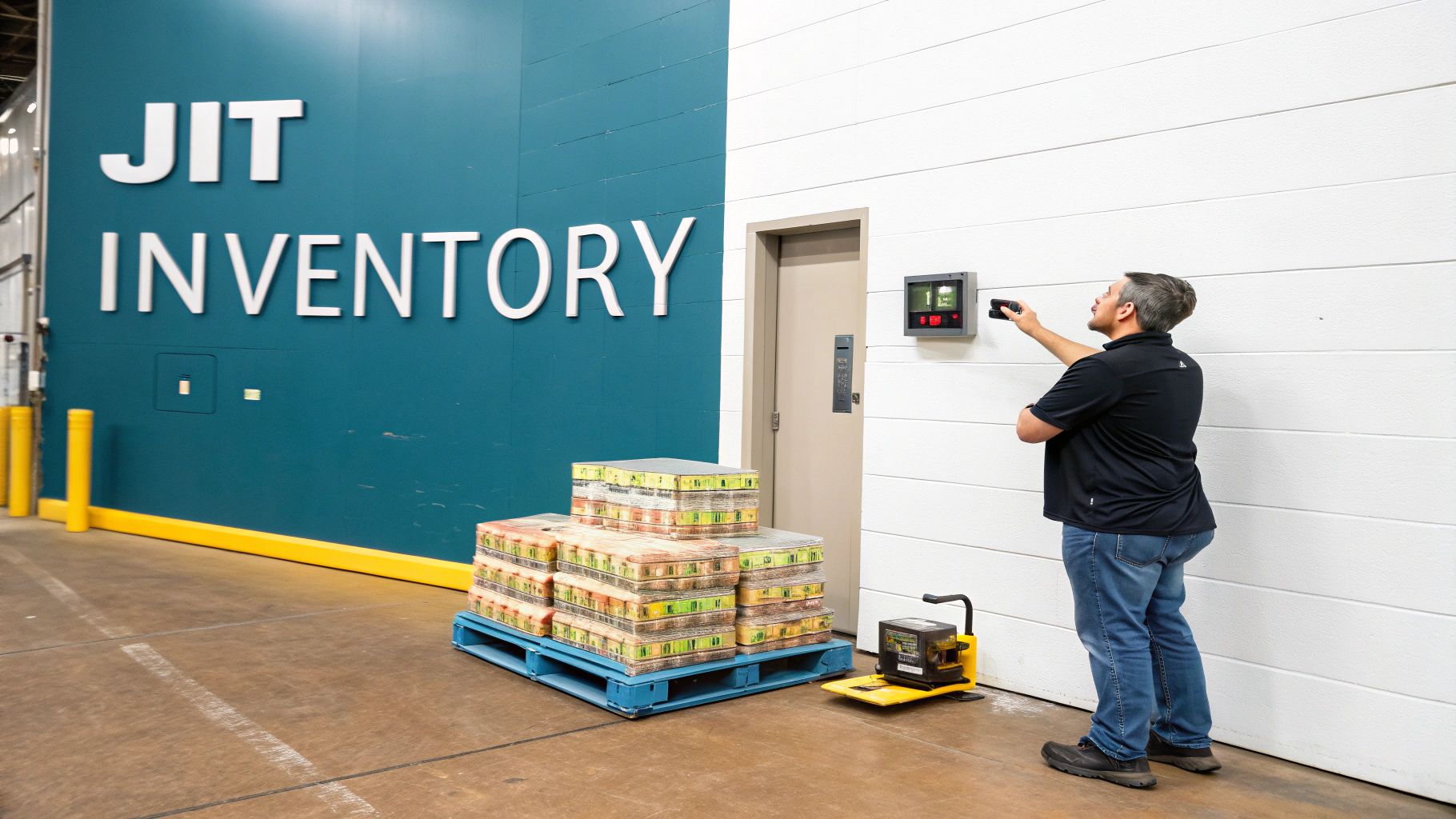
Just-In-Time (JIT) inventory management is a cornerstone of lean operations, designed to minimize warehousing costs by receiving goods only as they are needed for production or distribution. However, for mission-critical food programs serving vulnerable populations, a pure JIT model presents significant risks. The most effective supply chain management best practices adapt this model by integrating a crucial safety net: strategic safety stock buffers. This hybrid approach balances the cost-efficiency of JIT with the reliability required for food security initiatives and regulated programs like SFSP, CACFP, and WIC. It prevents stockouts of essential items while reducing waste from spoilage or expiration, a common challenge with perishable and shelf-stable goods.
How It Works in Practice
This model connects real-time demand signals directly to procurement and assembly workflows. Instead of holding vast quantities of all components, organizations hold minimal stock and trigger replenishment based on immediate distribution schedules.
- Umoja Health's CACFP Program: At its Woodland, CA hub, EDI feeds from program sponsors trigger kit assembly only 5-7 days before scheduled delivery windows. This JIT pull system dramatically reduces spoilage of critical cold-chain items like milk.
- WIC Home Delivery: State WIC programs can trigger home-delivery batch orders based on real-time benefit redemption data. As participants use their benefits online, the system automatically pulls the required inventory for packing and shipping, ensuring product availability without excessive backstock.
- Food Bank Senior Kits: Food banks align monthly senior kit builds with Older Americans Act (OAA) distribution cycles. They schedule bulk deliveries of components to arrive just before volunteer kitting events, optimizing warehouse space and volunteer time.
Implementation Tips
To successfully implement a JIT model with safety stock, segmentation and automation are key.
- Segment Inventory by Program Cadence: Align inventory pulls with program needs, such as weekly for CACFP, monthly for SFSP, and daily based on redemption triggers for WIC.
- Set Data-Driven Safety Stock: Establish a 2-3 week safety supply for non-negotiable items like milk, allergen-free products, and culturally significant staples to buffer against supply disruptions.
- Use Rolling Forecasts: Maintain a rolling 13-week demand forecast, updated weekly with data from state or sponsor reporting, to anticipate needs more accurately.
- Automate Reorder Points: Configure your Warehouse Management System (WMS) to automatically flag components when they drop below pre-set thresholds, ensuring timely replenishment.
For a comprehensive understanding of efficient stock management across all channels, explore these 10 Omnichannel Inventory Management Best Practices.
2. Vendor-Managed Inventory (VMI) and Supplier Relationship Management (SRM)
Vendor-Managed Inventory (VMI) is a collaborative strategy where suppliers take on the responsibility for a customer's inventory policy. In this model, the supplier monitors stock levels and automatically replenishes goods based on agreed-upon triggers, shifting the forecasting burden. When paired with robust Supplier Relationship Management (SRM), which builds transparent, long-term partnerships, this becomes one of the most powerful supply chain management best practices for food programs. For organizations serving food-insecure populations, VMI ensures the consistent availability of mission-critical items like milk and culturally connected foods, while strong SRM supports Buy American compliance and resilience during supply shocks.
How It Works in Practice
This approach transforms the traditional transactional buyer-seller dynamic into a strategic partnership. The supplier gains direct visibility into real-time inventory data, allowing them to proactively manage stock levels to prevent shortages and reduce holding costs for the organization.
- Culturally Connected Components: A nonprofit like Umoja Health partners with Hispanic and African American food producers. The VMI agreement ensures consistent availability of key ingredients for their culturally tailored meal kits, while the SRM framework supports food safety certifications and program compliance.
- CACFP Milk Supply: A CACFP sponsor works with a regional dairy on a VMI basis. The dairy supplier monitors milk consumption rates across hundreds of childcare sites and schedules deliveries to guarantee availability for multi-day kits, even during processing bottlenecks.
- WIC Produce Programs: State WIC agencies can negotiate VMI agreements with produce distributors. This allows the vendor to monitor redemption data and proactively stock approved, inventory-aware substitutions, ensuring participants always have access to fresh options.
Implementation Tips
Successful VMI and SRM implementation hinges on shared data, clear metrics, and consistent communication.
- Co-develop Demand Calendars: Build an 18-month demand forecast with key suppliers, updated quarterly to align with seasonal program cycles like SFSP in summer and holiday demand spikes.
- Establish VMI Targets: Set clear inventory goals: 2–3 weeks of supply for perishables and 6–8 weeks for shelf-stable specialty items to balance availability and freshness.
- Use Supplier Scorecards: Track performance with metrics like on-time delivery percentage, order accuracy, food safety audit scores, and Buy American compliance.
- Hold Formal Business Reviews: Schedule monthly SRM meetings with top-tier suppliers to review performance, address challenges, and align on future needs, escalating critical issues to executive sponsors when necessary.
- Formalize Contractual Agreements: Specify data access protocols, minimum/maximum inventory levels, pricing mechanisms, and exit clauses in your supplier contracts to ensure clarity and accountability.
3. Food Safety and Traceability Integration (Blockchain/Track-and-Trace Systems)
Robust food safety and end-to-end traceability are non-negotiable supply chain management best practices for organizations serving vulnerable populations. Integrating track-and-trace systems, which can range from serialized lot codes to sophisticated blockchain ledgers, provides a complete chain of custody from supplier to beneficiary. This is not just about compliance with regulations like FDA's FSMA Rule 204; it is a critical tool for building and maintaining community trust. For mission-driven models like those at Umoja Health, where food safety incidents can severely undermine confidence, integrated traceability ensures rapid recall response and program integrity.
How It Works in Practice
These systems create a digital record that follows a food item through every step of its journey. By capturing and connecting lot codes, expiration dates, and handling data at each touchpoint, organizations can pinpoint the exact location of any product at any time.
- Unidad Logistics' CACFP Program: The food-grade 3PL implements lot-level tracking for all CACFP milk and prepared meals. When a recall is necessary, the system can identify and isolate affected batches within two hours, preventing distribution to childcare sites.
- Umoja Health's Disaster Response: During the 2022 Texas freeze, a recall was issued for a batch of compromised self-heating meals. Kits tagged with serialized barcodes allowed the team to identify and halt the distribution of affected units within just four hours, protecting beneficiaries.
- WIC State Programs: Track-and-trace technology verifies that home-delivered items match prescribed substitutions and confirms cold-chain compliance upon delivery, ensuring infant and maternal nutrition safety.
Implementation Tips
Implementing a comprehensive traceability system requires a phased approach focused on risk and integration.
- Prioritize High-Risk Items: Begin implementation with the most vulnerable products, such as temperature-sensitive milk, items with high allergen risks, and culturally significant foods sourced from smaller suppliers.
- Start at the WMS Level: Before investing in blockchain, integrate lot code capture into your Warehouse Management System (WMS) during receiving and kit assembly processes.
- Automate Supplier Data: Mandate that suppliers include lot codes in their EDI transmissions. Configure your system to automatically match this data with physical receipts to eliminate manual errors.
- Develop Recall Drills: Conduct quarterly recall simulations with state agencies and program sponsors to test your system’s responsiveness and identify process gaps.
4. Demand Forecasting and Seasonal Planning with Program Cycle Integration
Sophisticated demand forecasting integrates rigid program calendars with historical data and external economic factors, creating a predictive model tailored for food security initiatives. Unlike retail, where demand is elastic, programs like SFSP, CACFP, and WIC serve vulnerable populations with predictable, inelastic needs tied to specific cycles. Effective supply chain management best practices for these programs require forecasting models that balance pinpoint accuracy with the necessity of buffer stock to ensure equity and program compliance. This approach moves beyond simple historical analysis to proactively manage procurement, inventory, and distribution around non-negotiable program timelines.
How It Works in Practice
This best practice involves creating a master forecasting calendar that aligns procurement activities with the unique cadence of each food program. By mapping demand signals to seasonal cycles, organizations can make strategic forward buys, secure culturally relevant items, and prevent stockouts during peak periods.
- Umoja Health's SFSP Preparation: For summer meal programs, Umoja begins its forecasting 16 weeks prior to the start date. This allows for the bulk purchase of culturally connected proteins and grains at favorable pricing, ensuring essential components are secured well before the summer rush when demand for items like milk increases by 40%.
- WIC Holiday Planning: State WIC programs can forecast demand for holiday kits up to 10 weeks out. This lead time is crucial for securing specialty items like tamales, fufu ingredients, or baklava from minority-owned suppliers, often at volume discounts.
- CACFP Rolling Forecasts: Sponsoring organizations use 13-week rolling forecast templates to project needs for milk and fresh-equivalent produce, adjusting weekly based on real-time site participation data.
Implementation Tips
Successful implementation requires a disciplined, data-driven approach that blends long-range planning with agile weekly adjustments.
- Establish a Program-Specific Calendar: Plan for SFSP 16 weeks prior, use a 13-week rolling forecast for CACFP, operate within 6-week windows for WIC, and conduct annual planning with monthly adjustments for OAA.
- Reconcile Data Weekly: Collect baseline demand data from sponsors or state agencies monthly, but reconcile it with actual shipment data weekly to refine and update rolling forecasts.
- Build In Supplier Lead Times: Use supplier lead times as a key constraint. If a specialty item requires an 8-week lead time, build your forecast and procurement cycle out to 12 weeks to create a buffer.
- Segment for Cultural Relevance: Ensure forecasts are segmented by region to account for cultural preferences, such as capturing Hispanic staples in the Southwest or soul food items in the Southeast.
5. Cold-Chain Compliance and Logistics Management for Temperature-Sensitive Products
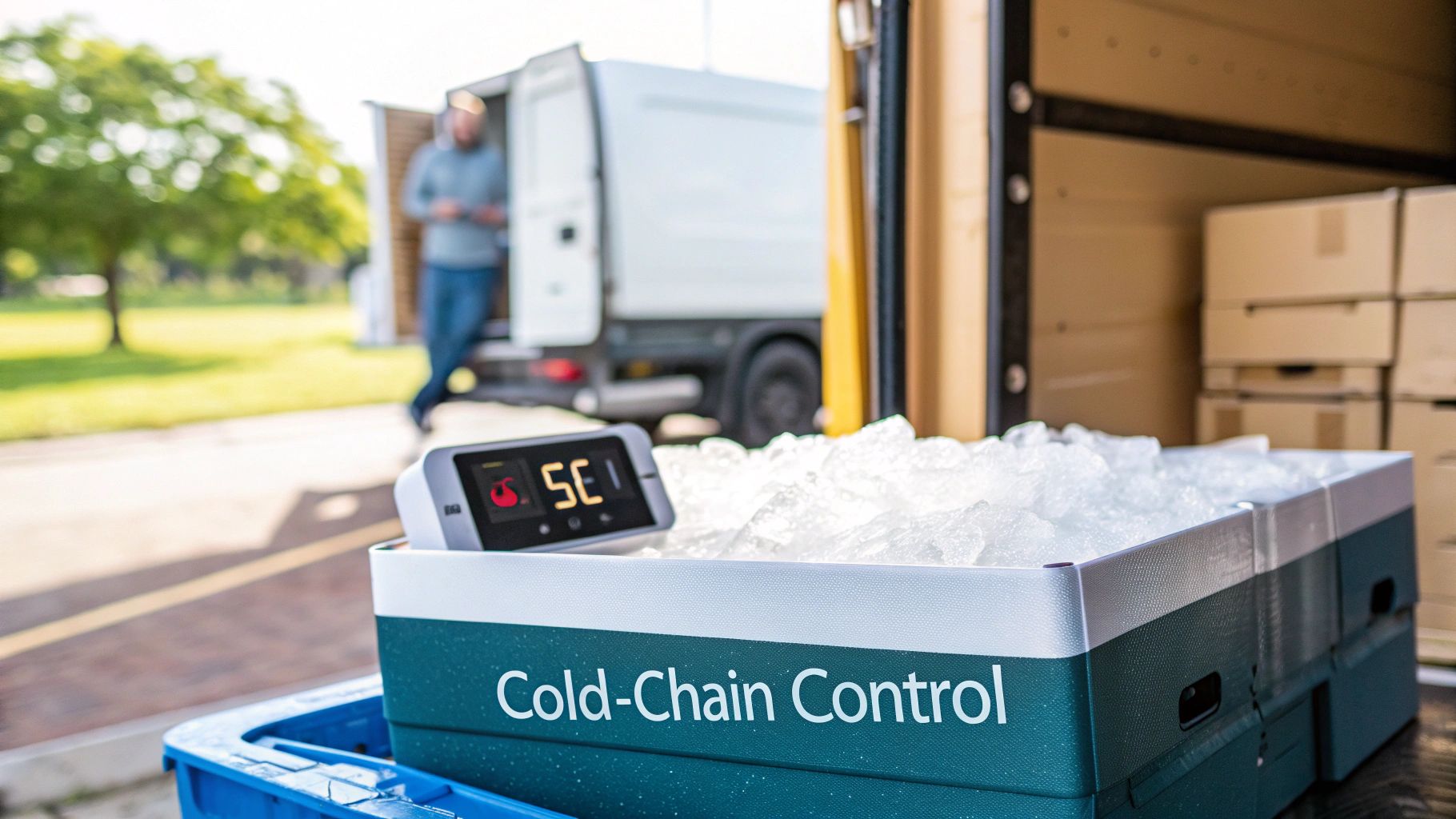
Maintaining end-to-end temperature integrity is a non-negotiable component of food security programs. For temperature-sensitive products like milk (requiring 38°F) or prepared meals (41°F per USDA), a single break in the cold chain can lead to food safety violations, waste, and program suspensions. Effective supply chain management best practices for programs like CACFP, WIC, and disaster response hinge on a sophisticated cold-chain infrastructure that protects products from supplier receipt through to final beneficiary delivery. This ensures compliance with FDA regulations and safeguards the health of vulnerable populations.
How It Works in Practice
A robust cold-chain system uses a combination of refrigerated warehousing, climate-controlled vehicles, and last-mile thermal packaging to maintain precise temperatures. The process is tracked and verified at every handoff point to guarantee product safety and quality upon arrival.
- Umoja Health's WIC Home Delivery: For its home delivery program, Umoja Health uses insulated boxes with cold gel packs designed to maintain product integrity. Deliveries are scheduled within a tight 2–4 PM window to minimize the time kits spend in unrefrigerated conditions at beneficiaries' homes.
- CACFP Multi-Day Kits: Kits are assembled with ice packs and delivered to childcare sites in refrigerated vans within 24 hours. This practice ensures that perishable items like milk and yogurt remain below the required 38°F threshold until they are properly stored by the program sponsor.
- Rural Non-Congregate Disaster Response: In remote areas without reliable sponsor refrigeration, logistics plans prioritize self-heating meals that do not require a cold chain. Temperature-sensitive ready-to-eat meals are routed only to staging areas with confirmed cold storage capabilities.
Implementation Tips
Successfully managing cold-chain logistics requires detailed planning, technology integration, and clear communication protocols.
- Map Cold-Chain at the Kit Level: Document the specific temperature requirements for every component in your kit SOPs, identifying which items need 38°F (milk, yogurt), 41°F (prepared meals), or ambient storage.
- Use Temperature Data Loggers: Equip every delivery route with temperature monitoring devices that provide real-time data and send alerts if temperatures exceed predefined safety thresholds.
- Negotiate Cold-Chain Exception Protocols: Work with program sponsors to define and document clear procedures in your contracts for handling temperature deviations, such as discarding any meal that exceeds 41°F for over two hours.
- Train Sponsors and Beneficiaries: Provide clear instructions on proper unboxing, immediate refrigeration or freezing of perishable items, and what to do if ice packs arrive melted.
For organizations seeking to enhance their temperature-controlled warehousing and distribution, discover how Unidad Logistics provides FDA-registered cold-chain solutions.
6. Buy American Sourcing and Compliance Documentation
Systematic procurement of U.S.-produced foods is a core requirement for federal nutrition programs like SFSP, CACFP, and WIC. The Buy American mandate is not just a regulatory hurdle; it's an economic development driver and a key component of resilient, localized supply chains. Effective supply chain management best practices embed these provisions directly into sourcing and documentation workflows. This ensures auditable compliance through supplier certifications and lot-level tracking, safeguarding program funding while supporting domestic agriculture and manufacturing.
How It Works in Practice
This approach integrates Buy American compliance into the entire procurement lifecycle, from supplier selection to inventory management. It involves verifying the domestic origin of food products and maintaining meticulous records to meet federal audit standards.
- SFSP State Guidance: A state agency might mandate that 80% of all food components in summer meal kits, by cost or volume, must be American-grown or -produced. This requirement is then written into all vendor contracts.
- Culturally Relevant Sourcing: Umoja Health sources American-grown staples like rice and beans while partnering with minority-owned suppliers in Texas and California to provide compliant cultural items, such as specific hot sauces and spices.
- WIC-Approved Substitutions: A state WIC program can configure its WMS to flag a non-compliant item selected for home delivery. The system then automatically suggests an approved Buy American substitute, ensuring participants receive their benefits without interruption.
- Food Bank OAA Kits: A food bank procures American-grown produce for its senior kits by partnering with regional aggregators like Imperfect Foods or local farm cooperatives. This strategy meets Buy American rules while managing costs and supporting local farmers.
Implementation Tips
To operationalize Buy American provisions effectively, organizations must combine strategic sourcing with robust documentation and system-level controls.
- Create a Buy American Supplier Scorecard: Evaluate suppliers based on their compliance rate (percentage of SKUs with valid affidavits), cultural alignment, and minority-owned status to prioritize partners who meet multiple objectives.
- Segment Your Sourcing Strategy: Categorize items as "always Buy American" (e.g., dairy, canned vegetables), "seasonal Buy American" (fresh produce), or "substitution-acceptable" (specialty items with limited U.S. sources).
- Negotiate Blanket Affidavits: Reduce administrative workload by securing a single, signed affidavit from key suppliers that covers all shipments for an entire contract year.
- Document Exceptions Clearly: For essential cultural items with limited U.S. availability (e.g., certain grains or sauces), document the exception rationale in program guidance and establish clear substitution protocols.
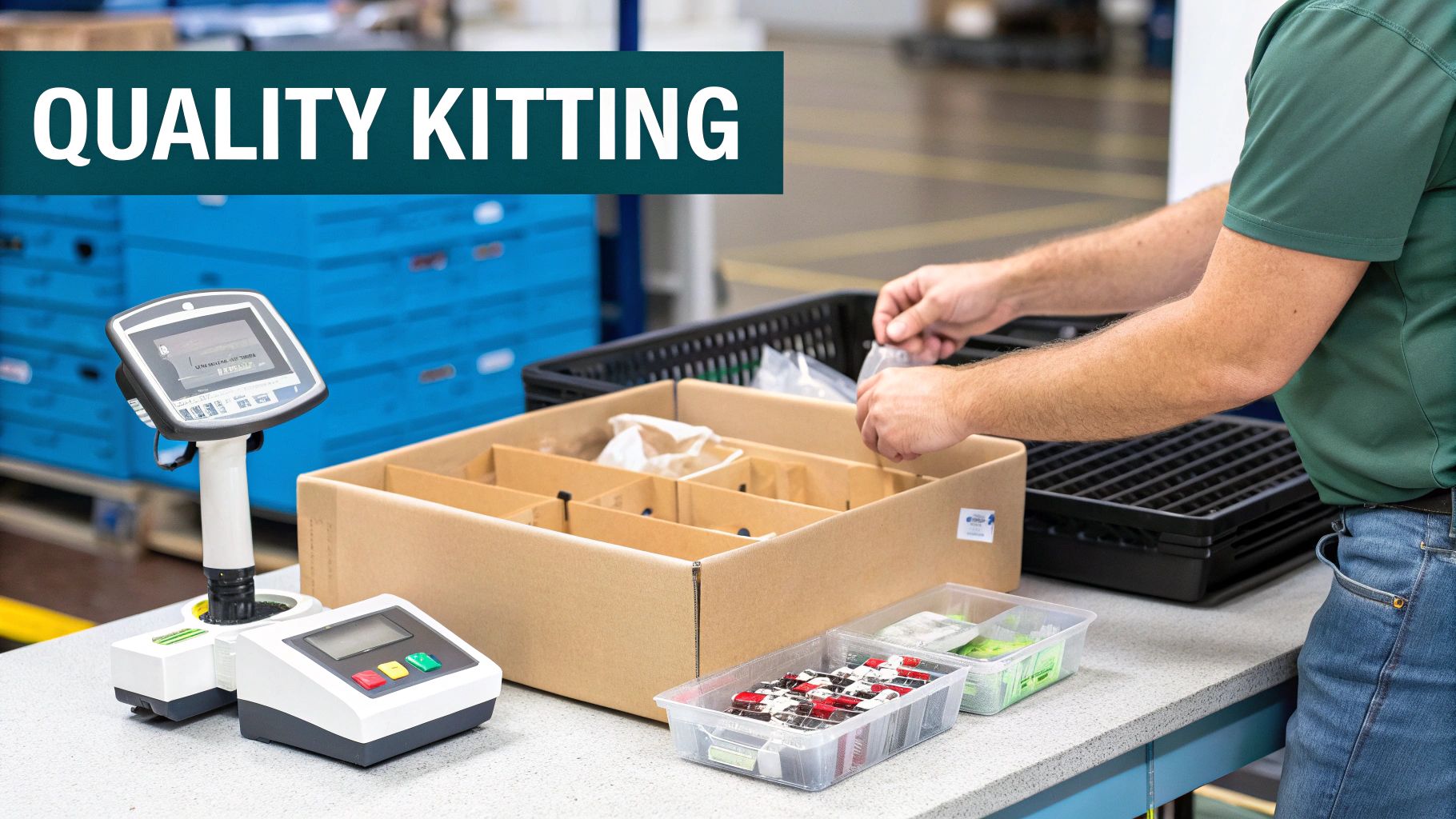
7. Kitting, Multipack, and Assembly Operations with Quality Control
Standardized processes for assembling food kits are a critical link between procurement and last-mile delivery. For programs like CACFP, OAA, and WIC, where individual components must be consolidated into compliant multipacks, a well-designed kitting operation ensures consistency, quality, and portion control. Effective kitting is one of the most vital supply chain management best practices for organizations serving 50 to 500+ sites, as any errors at this stage cascade directly to beneficiaries, risking non-compliance and compromising nutrition security.
How It Works in Practice
This practice formalizes the assembly process using structured workflows, technology, and rigorous quality checks to turn bulk inventory into distribution-ready units. The goal is to maximize throughput and accuracy while minimizing errors and waste.
- Unidad Logistics' CACFP Assembly Line: The Woodland, CA facility uses a three-station line for multi-day kits. It starts with WMS-guided picking, moves to a Quality Control station for weight and expiration verification, and ends with packing, where labels and allergen flags are applied. This model achieves over 99.7% accuracy while producing 500 kits per shift.
- Food Bank Senior Box Kitting: Volunteers use a "fill-a-box" system where components are pre-positioned in zones. They follow a checklist to pick items, and supervisors perform final QC checks for weight and compliance, enabling a team of 15 to assemble 200 OAA-compliant boxes in just two hours.
- WIC Home-Delivery Multipacks: Assembly is customized to beneficiary preferences. Each pack is barcoded with a household ID, filled with approved substitutions, and packed in an insulated box. A final QC scan ensures the contents precisely match the household's approved order.
Implementation Tips
To build a high-performing kitting operation, focus on standardizing processes, integrating technology, and setting clear performance targets.
- Design User-Informed SOPs: Develop kit Standard Operating Procedures (SOPs) with direct input from sponsors and beneficiaries to ensure portion sizes, cultural items, and allergen flags meet real-world needs.
- Segment Kitting by Program: Prioritize automation for high-volume, standardized kits like CACFP. Use semi-automated or manual workflows assisted by a WMS for more customized programs like OAA or WIC.
- Invest in WMS Integration: Use barcode-guided picking, real-time inventory deductions, and automated error alerts to significantly reduce rework and improve accuracy.
- Establish Strict Quality Targets: Set and track daily metrics such as pick accuracy (>99.5%), 100% expiration compliance, 100% allergen flag accuracy, and a cycle time of less than 30 seconds per kit.
For a deeper look into designing and managing these workflows, see these examples of Umoja Health’s kitting programs.
8. Real-Time Visibility and EDI/WMS Integration Across Supply Chain Partners
In complex food programs, success hinges on seamless communication between suppliers, 3PLs, state agencies, and sponsors. One of the most critical supply chain management best practices is creating a shared information ecosystem through a centralized Warehouse Management System (WMS) and Electronic Data Interchange (EDI). This integration provides real-time visibility from initial order to last-mile delivery, enabling rapid problem-solving, simplifying regulatory reporting, and fostering data-driven decisions. For organizations managing hundreds of distribution sites, this level of connectivity is not just an operational advantage, it's a compliance necessity.
How It Works in Practice
This practice replaces fragmented communication like phone calls and spreadsheets with automated, standardized data flows. A central WMS acts as the single source of truth, receiving demand signals and providing status updates to all partners via EDI or APIs.
- State SFSP and WMS Integration: State agencies can submit weekly non-congregate demand via EDI. A WMS like Unidad Logistics’ then auto-generates kit assembly schedules and feeds delivery tracking data back to a state reporting dashboard, reducing administrative time by up to 40% and boosting on-time delivery from 85% to 98%.
- WIC EBT and Inventory Sync: A state WIC program can integrate its Management Information System (WICMIS) with a provider's WMS. This allows for real-time inventory checks during online benefit redemption, ensuring substitutions are available before an order is confirmed and cutting 'out of stock' issues from 8% to less than 1%.
- CACFP Sponsor App Integration: A sponsor can use a simple app to submit weekly kit customization requests via an API. The WMS confirms component feasibility, schedules assembly, and sends a tracking link back to the sponsor, who receives an SMS alert 24 hours before delivery.
Implementation Tips
Building a fully integrated ecosystem is a phased process that prioritizes data quality and partner accessibility.
- Start Internally, Then Expand: First, master internal WMS visibility from receiving to kit assembly. Once baseline data quality is established, begin integrating key partners.
- Prioritize EDI Connections: Segment integrations by impact. Start with supplier ASNs (highest ROI), then state demand reporting (compliance), sponsor tracking (user experience), and last-mile delivery confirmation (mission-critical).
- Provide "Bridge" Options: Accommodate low-tech partners with simple web portals for manual order entry, email templates for data submission, or dedicated phone support for troubleshooting.
- Establish Data Governance: Implement role-based access to protect sensitive information, use encrypted transmissions, and establish service-level agreements (SLAs) for data uptime (e.g., 99.9%) and accuracy.
- Create Feedback Loops: Hold monthly check-ins with state and sponsor users to identify data gaps, improve usability, and prioritize new API feature enhancements.
9. Supplier Diversity and Resilience Planning (Multi-Source Sourcing and Regional Redundancy)
A resilient supply chain is built on a foundation of intentional diversity and strategic redundancy. For food programs serving diverse communities, this best practice moves beyond simple risk mitigation; it becomes an ethical imperative. By deliberately sourcing from multiple suppliers across different geographies, including minority-owned, woman-owned, and small businesses, organizations can ensure a stable supply of culturally relevant foods while preventing catastrophic disruptions from single-vendor failures. This multi-source strategy enhances flexibility, fosters economic equity, and strengthens community ties.
How It Works in Practice
This approach involves actively identifying, vetting, and contracting with a varied portfolio of suppliers. Instead of relying on one large national provider, the supply chain is decentralized to reduce dependency and increase agility. This model is crucial for maintaining authenticity and continuity in specialized food programs.
- Culturally Connected Sourcing: Umoja Health sources authentic food items for its programs from multiple minority-owned producers in both Texas and California. This avoids single-source gaps for critical cultural staples and ensures program participants receive familiar, high-quality products.
- Regional Backup Agreements: A food bank network establishes a contingency plan where if its primary Midwest grain mill faces an outage, a partner co-op in the Southeast is contractually obligated to step in and supply shelf-stable alternatives, preventing service interruptions.
- Supplier Development: To expand its network, a program operator partners with a promising small canner, providing technical assistance to help them obtain required food safety certifications and complete necessary USDA affidavits, thus qualifying them as a new, reliable supplier.
Implementation Tips
To effectively build a diverse and resilient supplier network, organizations need a structured, proactive approach.
- Define Supplier Tiers: Segment suppliers into primary, secondary, and tertiary tiers with clear performance metrics, volume expectations, and contractual terms for each level.
- Maintain a Dynamic Supplier Registry: Create and manage a registry of qualified minority-owned and small business suppliers, detailing their capacity, certifications, lead times, and key contact points.
- Conduct Quarterly Scenario Drills: Model potential supplier outages (e.g., natural disasters, quality control issues) and execute failover sourcing plans to test the responsiveness of your backup network. Explore how this readiness is crucial for effective disaster response logistics.
- Reserve Spend for Redundancy: Allocate a percentage of your procurement budget specifically for secondary and tertiary suppliers, even if their costs are slightly higher, to ensure they remain viable and ready for rapid substitution when needed.
10. Governance, Training, and Audit Readiness (Operational Controls and Contracting)
Effective supply chain management best practices are built on a foundation of strong governance, comprehensive training, and constant audit readiness. This framework of operational controls and contracting ensures that every partner, process, and system adheres to the strict compliance, safety, and performance standards required by regulated food programs. It involves creating and enforcing standard operating procedures (SOPs), maintaining clear audit trails, defining service-level agreements (SLAs), and delivering targeted training. This approach is critical for programs like SFSP, CACFP, and WIC, where accountability to state agencies, federal funders, and participants is non-negotiable.
How It Works in Practice
Robust governance translates regulatory requirements into daily operational workflows, ensuring consistency and minimizing risk. This is achieved through clear documentation, defined partner responsibilities, and systematic verification that builds a defensible record of compliance for audits.
- SFSP Contractual Compliance: State agencies embed specific clauses in sponsor contracts, such as requiring 80% of components to be Buy American compliant or mandating 24-hour recall notification SLAs to protect participant safety.
- Systematic Recall Drills: A food bank partner conducts quarterly recall drills with its sponsors and the state agency. They simulate a product recall to validate traceability from the warehouse to the final distribution site, documenting every step to refine their response workflows.
- Volunteer Onboarding for Kitting: A regional food bank uses a standardized training package with photos and short, mobile-friendly videos to quickly onboard temporary volunteer teams for packing senior food boxes, ensuring consistent quality and adherence to food safety protocols.
Implementation Tips
To build a culture of compliance and readiness, make governance tools accessible, training practical, and audits predictable.
- Standardize and Share Templates: Publish sample SOPs and contract clauses that sponsors and suppliers can easily adopt, including clear escalation paths for issue resolution.
- Bundle Training into Modules: Develop short, focused training modules (15–30 minutes) on critical topics like food safety and program compliance. Require periodic refreshers tied to annual audit cycles.
- Digitize Compliance Capture: Use mobile-friendly checklists and digital forms to capture quality control checks and cold-chain evidence at the point of service, creating an instant, time-stamped audit trail.
- Schedule Third-Party Audits: Proactively schedule annual third-party audits of critical systems, such as your WMS and data security protocols, and conduct tabletop exercises for emergency response plans.
Top 10 Supply Chain Best Practices Comparison
| Approach | Implementation complexity | Resource requirements | Expected outcomes | Ideal use cases | Key advantages |
|---|---|---|---|---|---|
| Just-In-Time (JIT) Inventory Management with Safety Stock Buffers | Medium–High — needs forecasting, EDI/WMS links | Forecasting tools, supplier VMI/EDI, safety-stock calculations, frequent transport | Lower holding/spoilage costs; faster kit freshness; higher stockout risk if forecasts fail | Perishables, distributed kit assembly, rapid disaster scaling | Minimizes waste; improves cash flow; supports rapid deployment |
| Vendor-Managed Inventory (VMI) and Supplier Relationship Management (SRM) | High — legal agreements and integrated data sharing | EDI/API access, KPIs/scorecards, joint planning, contractual SLAs | Fewer stockouts; optimized replenishment; stronger supplier compliance | Critical SKUs (milk, proteins); long-term supplier partnerships | Shifts replenishment burden to suppliers; improves transparency; reduces transport inefficiency |
| Food Safety and Traceability Integration (Blockchain/Track-and-Trace) | High — serialization, system upgrades, supplier participation | Lot-level traceability, WMS upgrades, sensors, staff training | Rapid recalls, regulatory compliance, improved beneficiary trust | High-risk items, regulated programs, recall-sensitive operations | Fast recall execution; audit-ready trails; supplier accountability |
| Demand Forecasting and Seasonal Planning with Program Cycle Integration | Medium–High — modeling + collaboration required | Forecasting software, program calendars, historical data, scenario tools | Right-sized inventory, fewer peak stockouts, better budget planning | Seasonal programs (SFSP, CACFP), holiday/ disaster planning | Predictive purchasing; improved kit customization; reduced spoilage |
| Cold-Chain Compliance and Logistics Management for Temperature-Sensitive Products | High — tight operational controls and monitoring | Refrigerated facilities/vehicles, IoT temp loggers, insulated packaging, trained staff | Maintains product safety/quality; enables multi-day kits; regulatory adherence | Milk, prepared meals, home delivery to vulnerable populations | Prevents foodborne illness; preserves quality; provides temperature audit logs |
| Buy American Sourcing and Compliance Documentation | Medium — procurement controls and documentation workflows | Supplier affidavits/certificates, procurement filters, audit trail systems | Meets Buy American mandates; supports regional resilience; audit readiness | Programs with domestic sourcing rules (SFSP, CACFP, WIC) | Ensures compliance; supports local producers; reduces import risk |
| Kitting, Multipack, and Assembly Operations with Quality Control | Medium–High — layout, SOPs, QC systems needed | WMS-guided picking, scales, barcode scanners, allergen segregation, QC staff | High pack accuracy, consistent portioning, traceable kits | Multi-day CACFP kits, OAA senior boxes, high-volume sponsor orders | Standardization at scale; audit trails; enables customization |
| Real-Time Visibility and EDI/WMS Integration Across Partners | High — integration, security, partner onboarding | Enterprise WMS, EDI/APIs, dashboards, middleware, security controls | Fewer data silos, faster decisions, improved compliance reporting | Multi-partner supply chains, state reporting, last-mile tracking | Unified visibility; faster problem resolution; automated compliance data |
| Supplier Diversity and Resilience Planning (Multi-Source Sourcing) | Medium — supplier management and contingency planning | Minority supplier registry, tiered contracts, regional backups, development programs | Reduced single-source risk; cultural authenticity preserved; community benefits | Cultural items, niche SKUs, risk-sensitive sourcing | Regional redundancy; mission alignment; builds local supplier capacity |
| Governance, Training, and Audit Readiness (Operational Controls) | Medium — documentation and ongoing maintenance | SOPs, contract templates, training materials, audit frameworks | Repeatable operations, faster audits, clearer partner responsibilities | Regulated programs and low-capacity rural/tribal partners | Reduces program risk; improves audit outcomes; simplifies onboarding |
Building a Resilient, Compliant, and Community-Focused Supply Chain
Navigating the complexities of modern supply chains, especially within regulated sectors like food programs, public health, and emergency response, requires more than just a list of tactics. It demands a holistic strategy that weaves together technology, partnerships, compliance, and a deep commitment to the communities you serve. The journey through these ten supply chain management best practices reveals a clear roadmap for transforming your operations from a series of disjointed tasks into a synchronized, resilient, and highly effective system.
We've explored everything from the delicate balance of Just-In-Time inventory with crucial safety stock buffers to the non-negotiable standards of cold-chain management and Buy American compliance. We detailed how integrating EDI and WMS systems creates a single source of truth, empowering real-time visibility for CACFP sponsors and WIC vendor managers alike. Furthermore, we emphasized that true resilience is built not just on internal processes but on external relationships, highlighting the strategic importance of Vendor-Managed Inventory (VMI), robust Supplier Relationship Management (SRM), and a commitment to supplier diversity.
From Theory to Action: Your Implementation Roadmap
Implementing these principles is not an overnight fix but a continuous cycle of assessment, adaptation, and improvement. The goal is to build a supply chain that is not only efficient but also agile enough to withstand disruptions and scalable enough to meet growing demand. A food bank's ability to execute a forward-buy for culturally connected SKUs, a state SFSP administrator's confidence in a compliant home-delivery model, and an emergency manager's successful deployment of first-72-hours load plans all depend on the foundational strength of these practices.
To begin your journey, consider these actionable steps:
- Conduct a Gap Analysis: Benchmark your current operations against the ten practices outlined in this article. Where are your most significant vulnerabilities? Identify one or two high-impact areas to prioritize first, whether it's enhancing traceability with a new system or formalizing your kitting and assembly workflows.
- Engage Your Partners: Meaningful change requires collaboration. Schedule meetings with your key suppliers, 3PL providers, and internal stakeholders. Discuss shared goals around visibility, quality control, and compliance to ensure alignment and foster a more integrated partnership.
- Invest in Your Foundation: Robust operations are built on solid infrastructure. This includes not only your WMS and EDI systems but also the physical tools and layouts of your facilities. To further explore how strategic equipment and planning contribute to a robust supply chain, consider leveraging a comprehensive logistics arsenal for warehousing and logistics to optimize your physical environment for efficiency and safety.
The True Impact of Operational Excellence
Ultimately, mastering these supply chain management best practices is about more than optimizing costs or improving efficiency metrics. It is about building trust with the people who depend on you. It's ensuring that a child in a rural area receives a safe, nutritious meal; that a senior receives their prescribed grocery box on time; and that a family displaced by a disaster has immediate access to life-sustaining supplies.
By embracing these principles, you are not merely managing inventory or logistics; you are building a lifeline. You are creating a strategic asset that directly fuels your mission, enhances your impact, and strengthens the health and well-being of your community. The path forward requires dedication, but the outcome is a more reliable, equitable, and resilient future for everyone you serve.
Ready to translate these best practices into a fully managed, compliant, and technology-driven solution for your food or health program? Umoja Health specializes in building and operating the complex supply chains required for Medicaid, WIC, and emergency response, ensuring every kit is delivered with care and precision. Visit Umoja Health to learn how we can become your dedicated operational partner.