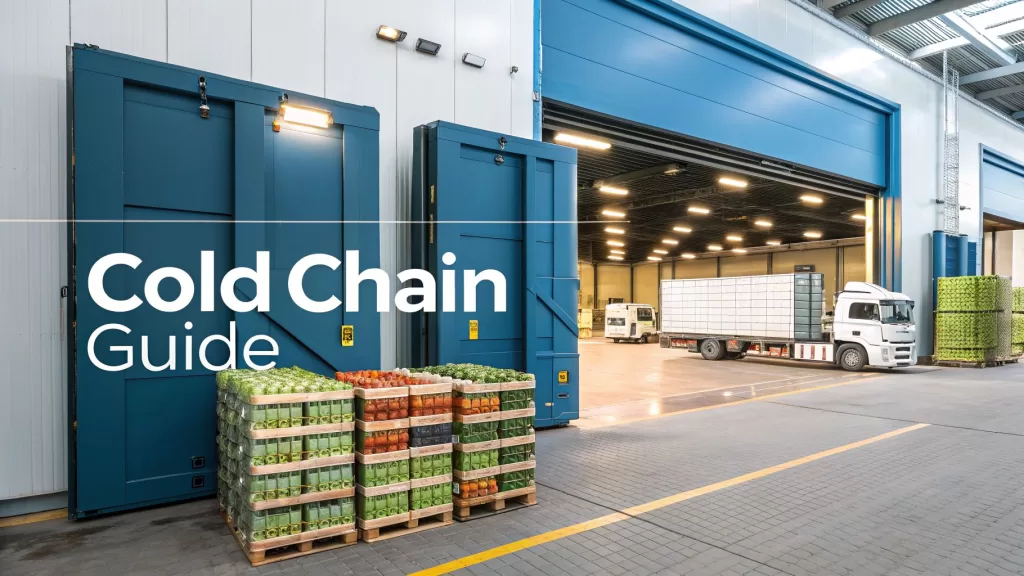
Think of the last time you had a fresh carton of milk or crisp salad greens. Their journey to your table was a quiet success story, made possible by a system that works around the clock, largely unseen: the cold chain food distribution network.
It’s essentially a temperature-controlled supply chain, an unbroken series of refrigerated steps from production to the moment of consumption. The best way to picture it is as a refrigerated relay race. The baton is the food, and the rule is simple: it can never, ever warm up.
The Foundations of Cold Chain Management
Let’s stick with that carton of milk. For it to arrive fresh and safe at a childcare center, it has to stay chilled through its entire journey. Even a small break in that cold environment can allow bacteria to multiply, leading to spoilage and creating a genuine health risk. The cold chain is the entire system of people, equipment, and processes designed to make sure that never happens.
This isn't just about sticking things in a fridge. It's a science of consistency, a sequence of precisely managed handoffs where temperature-sensitive products move from one controlled environment to the next without a single weak link.
Why Is the Cold Chain So Important?
The main goal is straightforward: preserve and protect food quality and safety. Whether it's fresh produce, dairy, frozen meats, or prepared meals, holding a specific temperature range slows down decay, stops harmful microorganisms from growing, and gives food a longer, safer shelf life. Without it, the fresh foods we depend on would spoil long before they ever reached our communities.
But it’s about more than just safety. A solid cold chain is one of our best weapons against global food waste. Poor temperature control is a primary reason for post-harvest losses, which can wipe out as much as 40% of the food supply in some regions. A well-managed cold chain ensures the water, land, and labor that went into growing that food aren’t wasted, which is a win for both economic stability and food security. To see more about the global impact, check out the work being done by GIZ.
A strong cold chain is the invisible shield protecting our food supply. It ensures that the journey from a farm or processing facility to a family's table doesn't compromise the safety or nutritional value of the food.
The Key Stages of the Cold Chain Journey
This "refrigerated relay race" has several key stages, each with a specific job to do. From the moment food is produced until it's consumed, it passes through a series of carefully controlled environments. Each handoff is a critical point where things could go wrong, so precision and monitoring are everything.
Here’s a simple breakdown of what that journey looks like:
| Stage | Primary Function | Example Temperature Range |
|---|---|---|
| Production & Processing | Harvesting and pre-cooling food to its optimal temperature immediately. | 34-38°F (1-3°C) for produce |
| Cold Storage | Holding products in specialized refrigerated or frozen warehouses. | 0°F (-18°C) for frozen goods |
| Transportation | Moving goods in refrigerated trucks, rail cars, or shipping containers. | 36°F (2°C) for dairy products |
| Distribution & Retail | Storing products at distribution centers and preparing for the "last mile." | <40°F (4°C) in retail coolers |
Each player in this chain—from the processor to the delivery driver—has a crucial role. They are all links in the chain, and if one breaks, the whole system fails. That’s why robust procedures and constant monitoring are non-negotiable.
From Supplier to Patient: A Cold Chain Journey Illustrated
The journey of a perishable food item is a carefully choreographed relay race, where each handoff is critical to keeping things cool. Let's follow a specialized meal kit, designed for a patient in a Food is Medicine program, to see how cold chain food distribution works from start to finish.
This isn’t just about moving something from point A to point B; it’s about maintaining a constant, chilly temperature every single step of the way.
The First Mile: From Supplier to Our Warehouse
The journey starts long before the food ever gets to us. We partner with a network of trusted domestic suppliers who understand our strict temperature protocols.
- Sourcing & Pre-Cooling: A supplier of fresh, pre-portioned chicken breasts—a key part of the meal kit—cools the product immediately after processing to a strict 36°F (2°C). It's then loaded onto a refrigerated truck locked at that same temperature. This "first mile" is one of the most critical links.
- Digital Handoff: Before the truck arrives, we receive an Advance Shipping Notice (ASN) via Electronic Data Interchange (EDI). This tells our Warehouse Management System (WMS) precisely what’s coming, allowing us to prepare for a rapid, temperature-safe unload.
- Dockside Inspection: The moment the truck docks with our refrigerated bay, our team verifies the truck’s temperature logs and uses infrared thermometers to check the pallet's surface temperature. This ensures the cold chain was never broken in transit.
This diagram shows the basic flow of a product through the cold chain—from the farm, through transit, and finally to the store or distribution point.
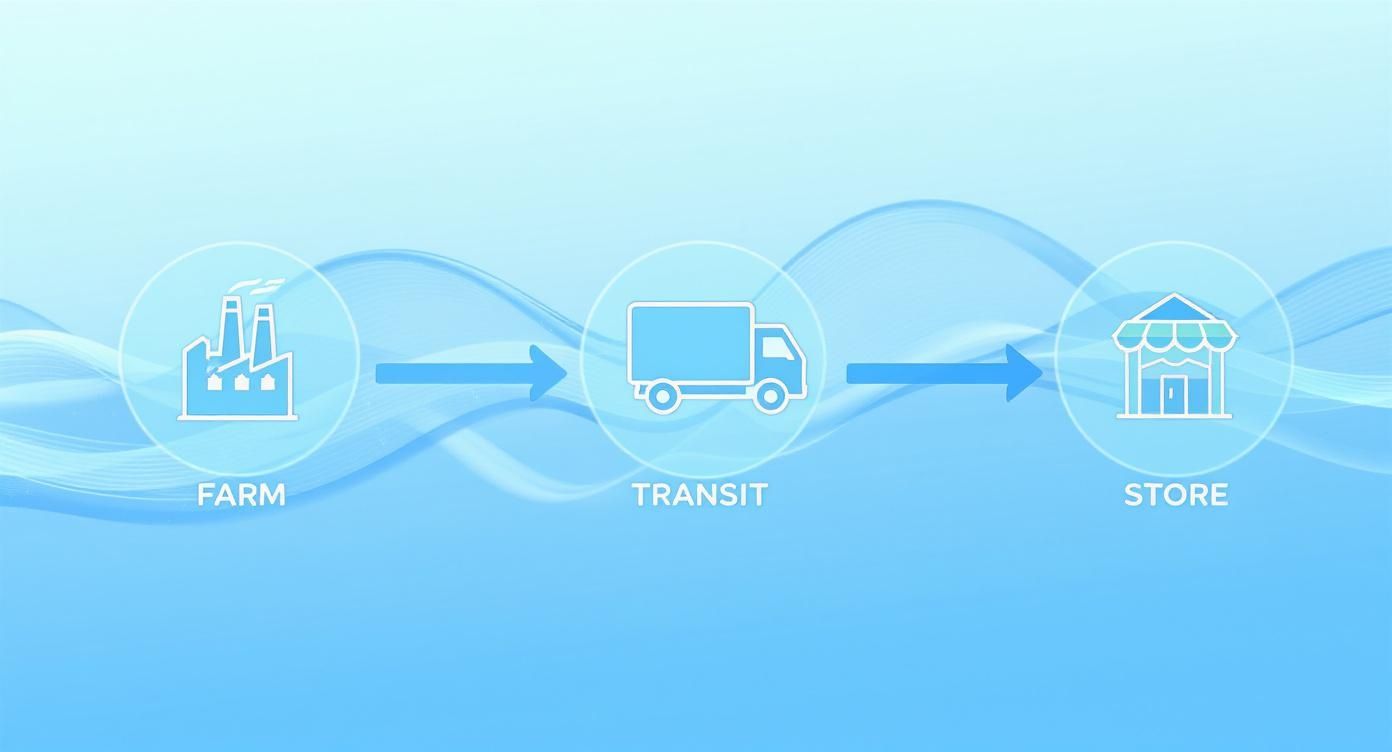
As you can see, each stage is its own unique environment. Production, transit, and retail are all connected, but each requires its own specialized handling to keep the chain strong.
Mid-Chain: Storage, Kitting, and Assembly
Once inside, the chicken is moved into our refrigerated storage zone. The WMS assigns it a specific location and tracks its shelf life.
When a meal kit order is received, our process kicks into high gear within a temperature-controlled environment:
- The Pick & Pack Flow: The WMS sends a pick list to our team. They gather the chicken from the refrigerated zone, rice from the ambient area, and fresh produce from the chilled section.
- Chilled Assembly: The entire kit is assembled in a dedicated refrigerated room. This prevents temperature-sensitive items from ever being exposed to warmer air, even while being handled.
- Smart Packaging: The finished kit is placed in a multi-layered insulated box with gel packs calculated to maintain a safe temperature for over 48 hours. A small, disposable temperature logger is activated and placed inside before the box is sealed. To add another layer of security and traceability, many organizations now explore QR code tracking features for supply chain visibility.
The Final Mile: Delivery to the Patient’s Door
The distribution center acts as the final hub before the "last mile"—the ultimate delivery to a grocery store, a food bank, or directly to someone’s home. This is often the most complex part of the journey. For our partners trying to manage large-scale food logistics, mastering these details is what makes or breaks a program. You can see how we put these principles into practice through our specialized food-grade 3PL services.
- Seamless Carrier Handoff: Our WMS integrates directly with parcel carriers, automatically printing the correct shipping label and scheduling the pickup.
- End-to-End Tracking: From the moment the box leaves our warehouse, we track its journey. The temperature logger inside creates a complete record, ensuring that if a temperature deviation occurs, we know exactly when and where.
- The Final Handoff: The patient receives the meal kit at their door with instructions on how to check the temperature indicator and store the food. This final step completes the journey, delivering not just healthy food but also total peace of mind.
Optimizing Your Cold Chain Operations
Just keeping your cold chain unbroken is the baseline. The real challenge—and where the pros stand out—is optimizing it for rock-solid reliability and efficiency. Truly effective cold chain food distribution is about more than just keeping things cold. At Umoja, we implement a finely tuned operational design that slashes risk, cuts down on waste, and makes every single step, from warehouse to doorstep, run like clockwork.
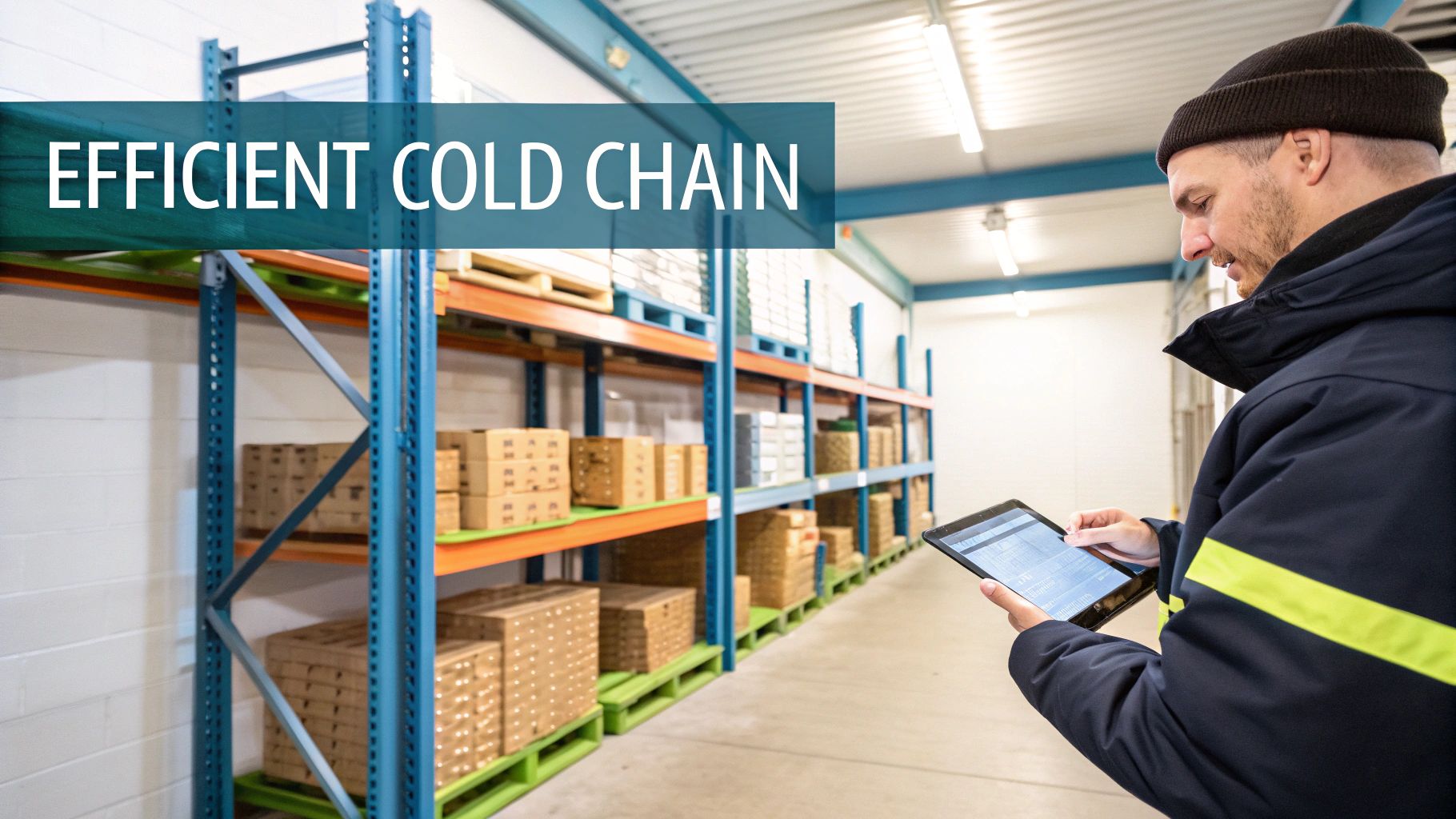
Nailing this operational design is becoming more critical by the day. The global food cold chain market was valued around USD 65.8 billion in 2025 and is expected to rocket to USD 205.3 billion by 2032. That's not just a number; it reflects a huge shift in consumer demand for fresh food and tighter safety rules. Optimization isn't a "nice-to-have" anymore—it's a core business need. You can discover more about these market trends to see where the industry is heading.
Umoja's Optimization Strategies
- Temperature Segmentation: Our warehouses use multiple climate zones under one roof. We maintain a Frozen Zone (0°F/-18°C), a Chilled/Refrigerated Zone (34-40°F/1-4°C), and a controlled Ambient Zone. This prevents cross-contamination and ensures every product is stored in its ideal environment, maximizing shelf life.
- Integrated Technology: Our Warehouse Management System (WMS) and Electronic Data Interchange (EDI) systems are the digital backbone of our operation. The WMS tracks every item to ensure First-In, First-Out (FIFO) stock rotation, while EDI automates communication with partners, cutting out manual errors and speeding up the entire supply chain.
- Specialized Workflows: Many food programs require kitting and multipack assembly. At Umoja, these complex workflows are performed inside temperature-controlled rooms to maintain the cold chain. This is crucial when building multi-day meal kits for CACFP or SFSP programs, ensuring sensitive items like milk and yogurt never warm up. Our guide on private label packaging setup gets into more detail on how we manage these custom solutions.
- Route and Load Optimization: Our logistics software analyzes delivery routes to minimize travel time and the number of door openings. For freight shipments, we use load optimization to ensure refrigerated trucks are packed efficiently, maintaining consistent airflow and temperature stability throughout the trailer.
Choosing the right logistics path—parcel for direct-to-home or freight for bulk shipments—is a critical decision. We often use a hybrid approach to best serve the diverse needs of programs across different communities.
How to Monitor and Measure Cold Chain Integrity
In cold chain food distribution, you can't manage what you don't measure. Just hoping everything stays cold isn’t a strategy; it’s a gamble. Data is the backbone of any successful cold chain. It gives you the proof needed to verify performance, ensure food safety, and protect every single meal from the risk of spoilage.
Without solid monitoring, the whole system is just running on guesswork. Modern logistics demands precision, and that comes from collecting and analyzing real-time information at every single point in the food's journey. This shift turns the cold chain from a series of hopeful handoffs into a transparent, fully accountable process.
Leveraging Technology for Real-Time Insights
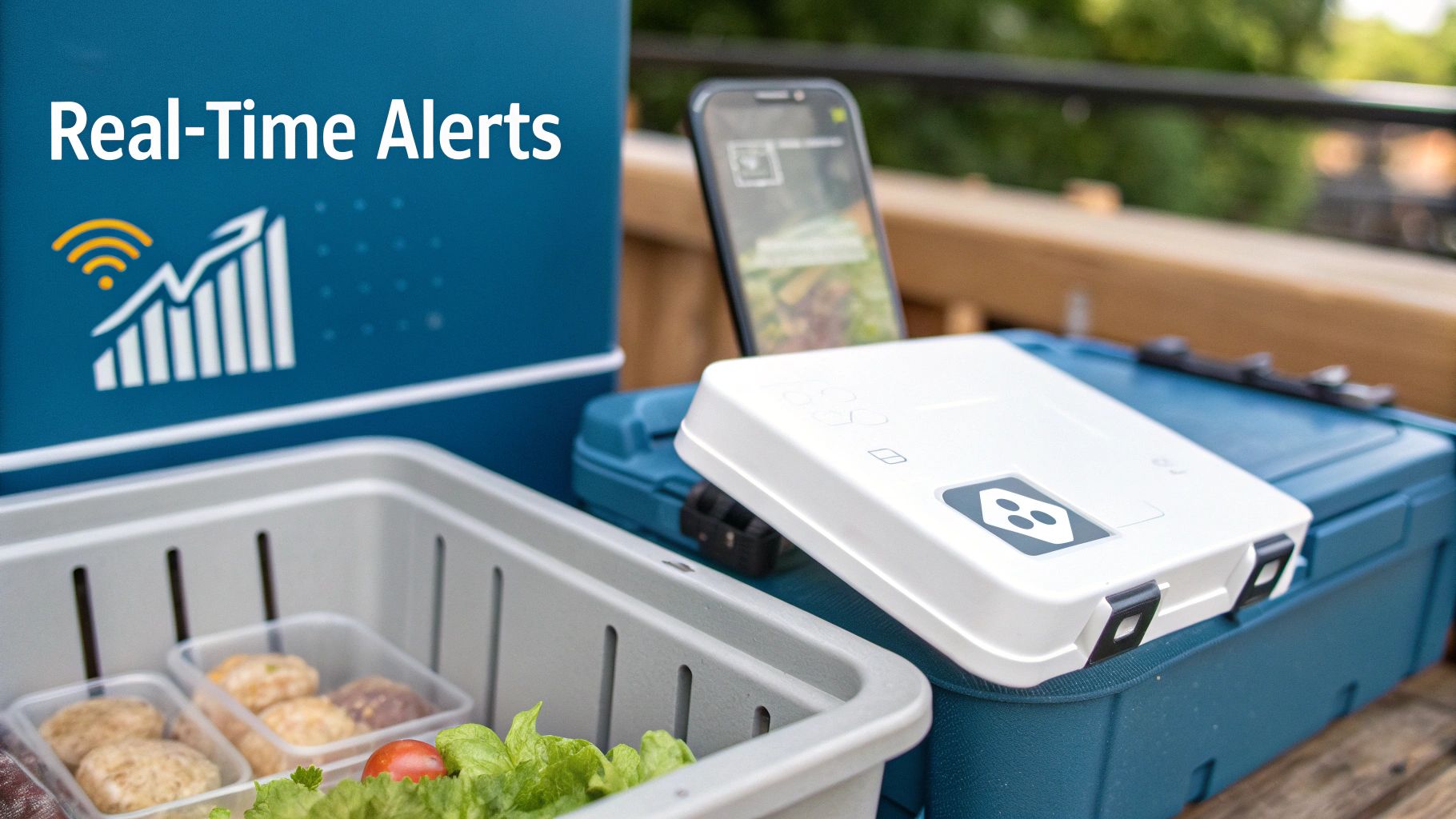
The days of just passively checking temperatures are long gone. Today, we rely on active technologies that give us a live window into every shipment. IoT (Internet of Things) temperature loggers are small but powerful sensors we place inside pallets, totes, or containers to constantly track and send back data.
Think of these devices as the sentinels of the cold chain. They provide a continuous stream of information on temperature, humidity, and even location. If a refrigerated truck's cooling unit malfunctions or a pallet gets left on a warm loading dock for too long, the system fires off an instant alert to our logistics team. This lets us step in before a small hiccup becomes a major loss.
Key Metrics Beyond Just Temperature
While temperature is obviously the star of the show, a truly effective monitoring program looks at a much wider set of Key Performance Indicators (KPIs). These metrics paint a complete picture of our operational health and help us zero in on areas that need improvement. Keeping temperatures stable is critical, and being able to quickly solve problems like troubleshooting a non-cooling refrigerator is vital for cold chain integrity.
A temperature log tells you what happened. But a full suite of KPIs tells you why it happened and how to keep it from happening again. That’s the difference between just reacting to problems and proactively building operational excellence.
To truly understand how well our cold chain is performing, we track several core metrics. The table below outlines the essential KPIs that give us a clear view of our operations from start to finish.
Essential Cold Chain Monitoring Metrics
| Metric | What It Measures | Importance |
|---|---|---|
| Temperature Deviation Rate | The percentage of shipments that go outside the acceptable temperature range. | This is a direct red flag for cold chain breaks and potential food safety risks. |
| Spoilage & Waste Percentage | The volume of product lost due to temperature issues or other handling mistakes. | It measures the real financial and resource cost when things go wrong. |
| On-Time, In-Full (OTIF) | The percentage of deliveries arriving on schedule with the right items in perfect shape. | This reflects the overall efficiency and reliability of our entire supply chain. |
| Client Satisfaction Score | Direct feedback from partners and recipients on the quality of the food when it arrives. | This gives us crucial qualitative data on how well the cold chain works from a human perspective. |
Each of these metrics provides a different piece of the puzzle, helping us maintain a high standard of quality and safety for every community we serve.
Standard Procedures for Handling Deviations
Even with the best tech in the world, things can go wrong. A successful cold chain isn't defined by a lack of problems, but by how quickly and effectively you handle them when they pop up. That’s why having clear Standard Operating Procedures (SOPs) for temperature deviations is non-negotiable.
When a temperature alert gets triggered, our process is immediate and systematic:
- Isolate & Assess: We immediately quarantine the affected product to make sure it doesn’t get distributed.
- Investigate the Root Cause: Using data from our loggers and WMS, we figure out exactly where, when, and why the temperature went out of range.
- Document & Report: Every detail gets recorded for compliance and quality control. A central platform is key here, and our partners can track these outcomes using our reporting tools. To see how we manage this, you can learn more about data and reporting on Umoja's UCloud platform.
- Implement Corrective Actions: We take real steps—like retraining staff or changing shipping routes—to make sure the same failure doesn't happen twice.
This structured response turns a potential crisis into a learning opportunity, making the entire cold chain stronger for the future.
Navigating Food Distribution Regulations
Keeping the cold chain intact is a huge operational lift, but the real non-negotiable is making sure every single step complies with federal regulations. For any organization in cold chain food distribution—especially those serving government-funded programs—compliance isn't just a good idea. It's the law.
These rules are in place for a reason. They ensure fairness, support American producers, and guarantee that the people in these programs receive safe, high-quality food. Getting a firm grip on this regulatory landscape is absolutely essential for keeping your funding and building trust with the communities you serve.
Understanding the Buy American Provision
The Buy American provision is a cornerstone of how federal food programs work. At its core, the rule is simple: if you’re using federal funds to buy food, you have to prioritize products that are grown and processed right here in the U.S.
This means that, as much as practically possible, the food you source—from apples to chicken—must be domestic. The whole point is to support America's farmers and food manufacturers, which in turn strengthens our national agricultural economy.
Sure, there are a few limited exceptions, like when a domestic product is wildly more expensive or just isn't available in the amounts you need. But even then, you'll need thorough documentation and a solid justification to back it up.
The Buy American provision is more than a purchasing rule; it's a commitment to supporting the domestic food system. For partners like Umoja, this means building strong relationships with U.S. growers and processors to ensure a compliant, resilient supply chain from farm to fork.
Nutrition Program Specifics: Older Americans Act
The Older Americans Act (OAA) is the engine behind vital nutrition programs for seniors, including both congregate meals and home-delivered services. Food purchased for these programs has to meet specific dietary guidelines designed for the health needs of older adults.
A few key OAA compliance points to know:
- Nutrient Targets: Meals must follow the Dietary Guidelines for Americans and provide at least one-third of the Dietary Reference Intakes.
- Food Safety: Protecting a vulnerable population means strict adherence to food safety standards is mandatory, especially proper temperature controls during storage and delivery.
- State and Local Rules: On top of federal guidelines, state and local health departments often have their own set of requirements you have to follow.
Rules for SFSP, CACFP Milk, and WIC Packages
Programs that serve children and families—like the Summer Food Service Program (SFSP), the Child and Adult Care Food Program (CACFP), and WIC—have incredibly specific food requirements.
Take milk in SFSP and CACFP programs. The rules are precise:
- Only pasteurized, fluid milk that meets state and local standards counts.
- For kids ages two and older, you must serve unflavored low-fat (1%) or fat-free milk. Whole milk is required for children age one.
WIC food packages are even more prescriptive, with strict rules on the brands, sizes, and types of foods that families can redeem. For instance, substitutions for essentials like milk or formula are tightly controlled to ensure nutritional value isn't compromised—a critical detail for any home delivery or mobile shopping model.
Getting these details right is why the entire industry is growing. The cold chain sector, valued at around USD 405 billion in 2024, is projected to shoot past USD 1.6 trillion by 2035, all driven by the need for this kind of precision logistics. Learn more about the cold chain market forecast and its trends.
The Umoja Approach to Ensuring Compliance
At Umoja Health, we don't treat regulations as hurdles to jump over. We see them as blueprints for building safe and effective nutrition programs, so we build compliance directly into our operations from day one.
Our strategy is proactive and powered by technology:
- WMS Integration: Our Warehouse Management System is configured with specific program rules built-in. It automatically flags non-compliant items and ensures only approved products are packed for programs like WIC or OAA.
- Sourcing and Procurement: We cultivate a deep network of domestic suppliers to guarantee we meet the Buy American provision, and we keep the documentation to prove it.
- Kitting and Assembly SOPs: Our kitting processes have multiple verification checkpoints. For example, when our teams assemble CACFP meal kits, they follow strict checklists to make sure the right type of milk for the right age group goes into every box.
By embedding these requirements into our daily work, we help our partners confidently navigate the maze of food distribution regulations. That frees them up to focus on what they do best: feeding people.
Appendix: A Quick Compliance Guide
Compliance isn't an afterthought; it's built into every step we take. Here’s a quick reference for the key regulations mentioned in this guide that are vital for our partners.
- Buy American Provision: This requires that food bought with federal funds must be sourced domestically whenever possible. It's a core rule for programs like SFSP and CACFP and supports U.S. agriculture.
- Older Americans Act (OAA): The OAA sets the nutritional bar for meals served to seniors. It requires meals to meet specific dietary guidelines and follow strict food safety rules.
- SFSP/CACFP Milk Rules: These rules are very specific, dictating the type of milk (like unflavored 1% or fat-free for kids over two) that has to be served. This ensures every child gets the right nutrition.
- WIC Food Packages: These regulations prescribe the exact types, sizes, and sometimes even brands of foods that WIC families can receive. The rules are designed to deliver targeted nutritional benefits to women, infants, and children.
At Umoja Health, we manage every single link in this chain so you don't have to. We blend deep operational expertise with a serious commitment to compliance, making sure your community gets safe, high-quality, and culturally connected food, every single time. See how we can help you run compliant programs at scale by visiting us at https://umojahealth.com.