
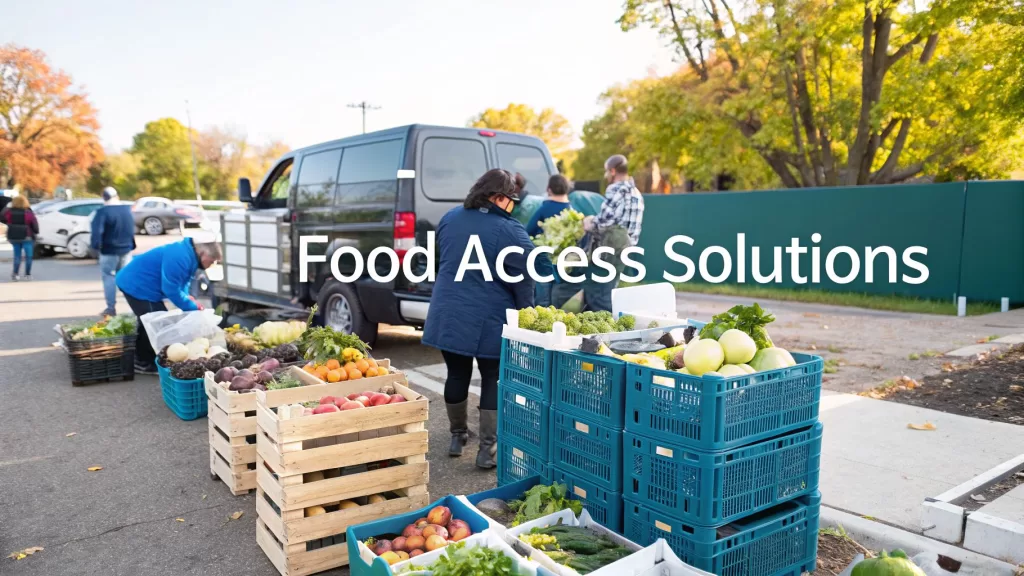
In the ongoing effort to combat food insecurity, communities are moving beyond traditional models and embracing innovative, systemic approaches. The challenge is not just about providing meals; it’s about building equitable, sustainable systems that empower residents and create lasting change. This article explores 10 powerful food access solutions communities are using to transform their local food landscapes, moving far beyond the scope of a standard food bank.
We will provide a comprehensive roadmap for a diverse range of stakeholders. Whether you are a state SFSP administrator developing rural non-congregate guidance, a CACFP sponsor managing childcare sites, or a WIC vendor manager piloting mobile shopping, this guide offers actionable insights. It is also designed for managed care directors evaluating Food-is-Medicine programs, emergency management chiefs planning disaster response, and even e-commerce leaders navigating food-grade logistics.
We’ll delve into diverse models, from hyper-local community gardens and urban farms to strategic corner store partnerships and regional food hubs, offering practical implementation advice for each. Drawing on real-world examples, including insights from Umoja’s successful community partnership stories, we’ll equip you with the specific tools you need. Expect detailed program models, compliance considerations for initiatives like Buy American, and operational workflows for kitting and no-fee delivery. These solutions are designed to be adapted and scaled, providing tangible pathways to ensure every family has reliable access to nutritious, culturally connected food.
1. Community Gardens and Urban Farms
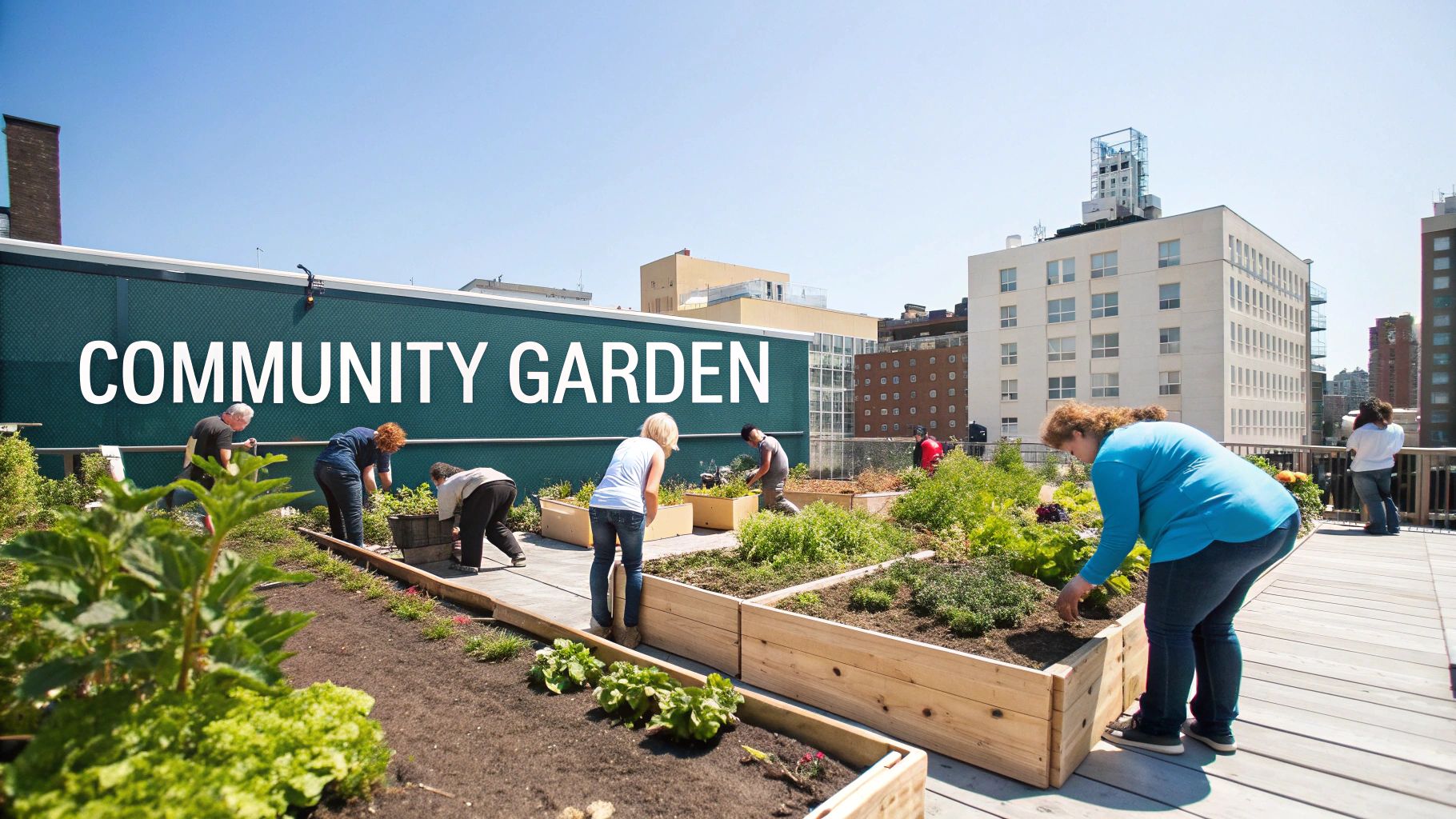
Community gardens and urban farms are collaborative projects where individuals collectively grow fresh produce on shared land. These initiatives represent a powerful grassroots approach among food access solutions communities, transforming underutilized spaces like vacant lots, rooftops, or public parks into vibrant, productive green areas. Beyond just growing food, they foster social connection, provide educational opportunities, and empower residents with greater control over their food supply, a concept known as food sovereignty.
How It Works and Implementation Tips
The model is adaptable, ranging from small neighborhood plots with a few raised beds to large-scale urban farms. For example, a partnership Umoja supported in an urban “food desert” helped a local non-profit transform a vacant lot into a thriving community garden. The project now provides fresh produce for over 50 families and serves as an outdoor classroom for a nearby school. This demonstrates how a simple plot of land can become a nexus of health, education, and community pride.
To implement a successful garden, consider these practical steps:
- Secure Land Tenure: Before investing significant resources, secure a long-term lease or land use agreement to ensure the project’s longevity.
- Build Community Buy-In: Host community meetings to gauge interest, understand cultural food preferences, and recruit volunteers. A strong, engaged group is the most critical asset.
- Start with Accessible Infrastructure: Begin with simple structures like raised beds, which are easier to manage and can be built by volunteers. For those new to growing, there are many easy tips for starting a vegetable garden that can help build confidence and skills.
- Foster Sustainability: Implement a composting system to create nutrient-rich soil from food scraps, reducing waste and operational costs. Connect with local food rescue groups to source compostable materials.
2. Food Hubs and Corner Store Partnerships
Food hubs and corner store partnerships are strategic models that bridge the gap between local food producers and community retailers. A food hub acts as a central aggregator, managing the collection, distribution, and marketing of source-identified food products primarily from local and regional producers. Corner store partnerships, often called “healthy corner store initiatives,” equip these small, neighborhood-based retailers with the resources and fresh inventory needed to offer healthier options in underserved areas. Together, they create powerful food access solutions communities can use to build a more resilient and equitable local food economy.
How It Works and Implementation Tips
Umoja facilitated a powerful partnership between a rural food hub and a network of urban corner stores. The food hub provided small family farms with a consistent buyer, while Umoja managed the logistics to deliver fresh produce to the stores. This created a new market for farmers and brought fresh, local food into neighborhoods that previously only had access to processed goods. The corner stores saw increased foot traffic, and residents gained convenient access to nutritious options.
To implement this model, consider these strategies:
- Conduct a Needs Assessment: Identify key gaps. Do local farmers need market access? Do corner stores lack fresh food suppliers? This data will guide your model.
- Build Trust with Store Owners: Approach corner store owners as partners. Offer support with marketing, refrigeration units, and inventory management to make the transition to selling fresh food economically viable.
- Establish Reliable Logistics: For a food hub, efficient aggregation and delivery are crucial. Start with a few committed producers and retailers to perfect the system before scaling.
- Leverage Technology: Use simple inventory and ordering systems to streamline communication between the hub, farmers, and stores. You can learn more about food kitting programs which can be a valuable service for hubs to offer retail partners.
3. Community Supported Agriculture (CSA) Programs
Community Supported Agriculture (CSA) programs build a direct, mutually beneficial relationship between local farmers and consumers. In this model, members purchase a “share” of a farm’s harvest at the beginning of the growing season, and in return, receive a regular box of fresh, seasonal produce. This approach provides farmers with crucial upfront capital and income stability while offering communities a consistent supply of high-quality, locally grown food. For food access solutions communities, CSAs can be adapted to overcome economic barriers and connect residents directly to their food source.
How It Works and Implementation Tips
A CSA model ensures that the risks and rewards of farming are shared, creating a resilient local food system. Programs like Added Value Farm in Brooklyn, NY, specifically focus on low-income communities, demonstrating how the model can be tailored for equity. They partner with community organizations to establish convenient pickup locations and accept various payment methods, including SNAP/EBT. This direct farm-to-consumer pipeline cuts out intermediaries, often making fresh produce more affordable and accessible than in traditional retail settings.
To launch a successful CSA focused on food access, consider these strategies:
- Offer Flexible Payment Structures: Implement sliding-scale pricing, like the model used by Zeke’s CSA in Oregon, or allow members to pay in installments to reduce the upfront financial burden.
- Partner for Subsidized Shares: Collaborate with nonprofits, healthcare providers, or local businesses to create subsidized memberships for low-income households, increasing program accessibility.
- Provide Culinary Education: Include recipe cards or host cooking demonstrations to help members utilize unfamiliar vegetables, reducing food waste and building confidence in the kitchen.
- Foster Community Engagement: Host farm tours and member events to strengthen the connection between consumers and their food source, creating a powerful sense of community ownership and support for local agriculture. You can find many examples of successful programs through resources like the LocalHarvest CSA database.
4. Mobile Farmers Markets and Food Trucks
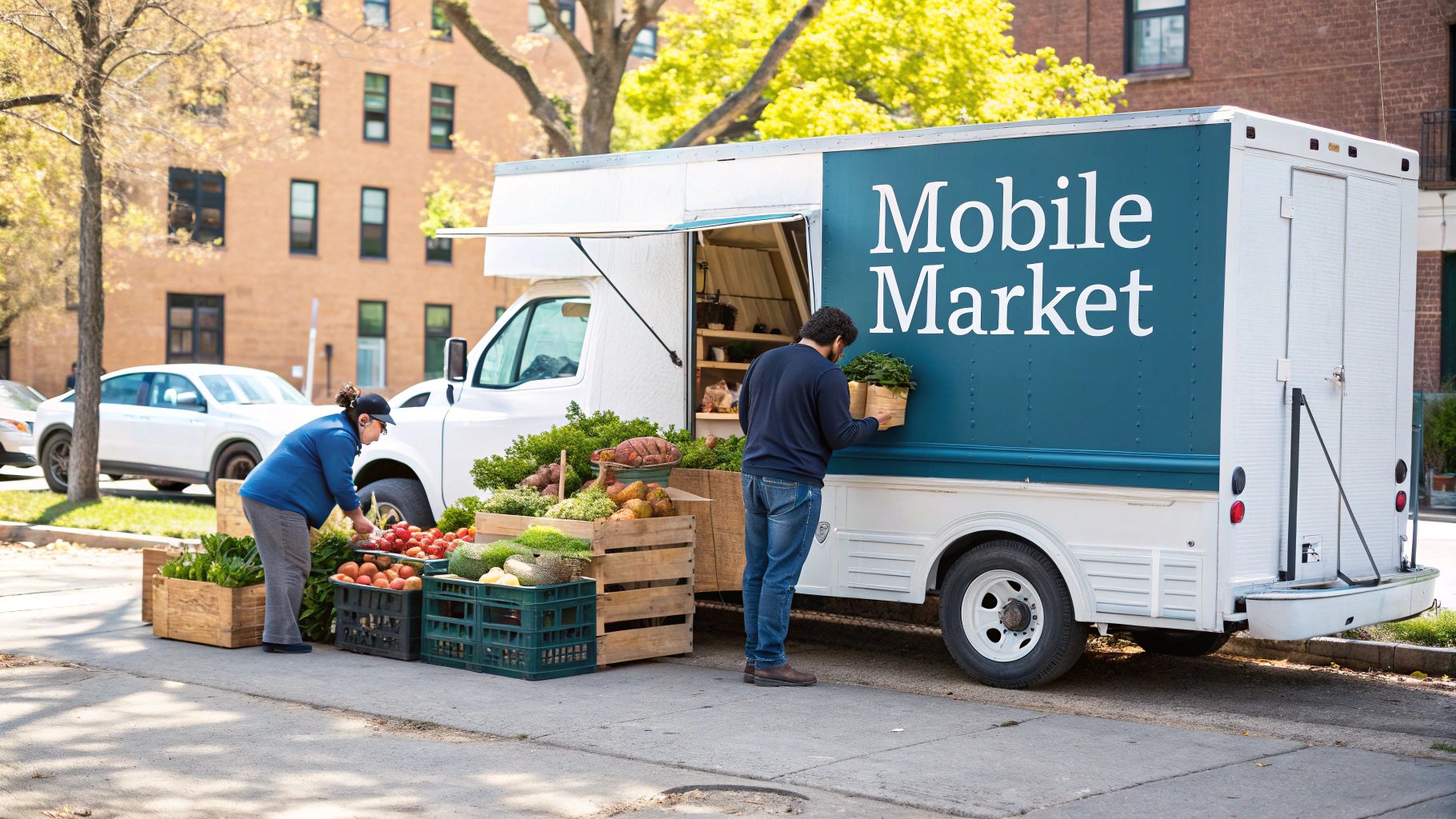
Mobile farmers markets and food trucks are innovative, vehicle-based initiatives that bring fresh produce and healthy meals directly to neighborhoods with limited access. This model is a cornerstone of food access solutions communities, effectively bridging the transportation gap for residents in food deserts, particularly seniors, individuals with disabilities, and low-income families. By meeting people where they are, these programs dismantle a significant barrier to nutritious food and foster a more equitable local food system.
How It Works and Implementation Tips
These programs operate on wheels, ranging from retrofitted buses and trucks to specialized food-service vehicles. For example, Boston’s Mobile Farmers Market specifically targets senior housing and low-income communities, making it a reliable source of fresh food for vulnerable populations. The Detroit Food Academy takes this further by integrating youth employment and education into its mobile market operations, creating a multi-faceted community benefit. For mobile food vendors like food trucks, efficient operational solutions for food trucks are crucial for expanding reach and impact in diverse neighborhoods.
To launch a successful mobile market, consider these key steps:
- Establish Reliable Routes: Create a fixed, predictable schedule and route that residents can depend on. Consistency builds trust and ensures the market becomes a regular part of community life.
- Cultivate Strategic Partnerships: Collaborate with local government health departments, community development organizations, and nonprofits for funding, promotion, and site locations like community centers or clinics.
- Ensure Financial Accessibility: Accept multiple payment methods, including SNAP/EBT, and consider offering incentive programs like Double Up Food Bucks to make healthy choices more affordable.
- Promote Cultural Relevance: Employ bilingual staff and stock products that reflect the cultural preferences of the communities you serve to ensure the offerings are both appealing and useful.
- Communicate Effectively: Use a mix of social media, community bulletin boards, and local newsletters to keep residents informed about schedules, locations, and special offerings.
5. School Meal Programs and Food Education Initiatives
School meal programs and food education initiatives are vital community infrastructures that provide students with consistent access to nutritious meals, such as breakfast, lunch, and snacks. These programs are a frontline defense against childhood hunger and are among the most effective food access solutions communities can leverage. More than just a meal service, these initiatives often integrate nutrition education and hands-on learning, connecting students to their food sources and helping to establish lifelong healthy eating habits.
How It Works and Implementation Tips
The scope of these programs can vary, from federally supported initiatives like the USDA National School Lunch Program, which serves nearly 30 million children daily, to localized farm-to-school models. For example, the Los Angeles Unified School District has a comprehensive farm-to-school model that not only sources local produce but also integrates garden-based learning into the curriculum. These efforts connect the cafeteria to the classroom, enriching both academic and nutritional outcomes for students. The most impactful programs create a synergy between feeding children and educating them.
To launch or enhance a school-based nutrition program, consider these steps:
- Implement Universal Free Meals: Adopt a universal free meal model to eliminate stigma and administrative hurdles, ensuring every child has access to food without singling anyone out.
- Partner with Local Farms: Establish procurement relationships with local farmers through Farm to School networks. This boosts the local economy and provides students with fresh, seasonal produce.
- Integrate Food Education: Work with teachers to incorporate garden programs or nutrition lessons into the standard curriculum, making healthy eating a core part of education. For more insights, you can explore detailed information on various child nutrition programs on umojahealth.com.
- Extend Programs Year-Round: Develop summer meal programs to bridge the nutrition gap when school is not in session, preventing seasonal food insecurity.
6. Meal Sharing and Community Kitchen Programs
Meal sharing initiatives and community kitchens are collaborative programs that bring people together to cook, share, and distribute food. These efforts are powerful food access solutions communities can use to transform commercial kitchens or shared spaces into hubs of connection and nourishment. By organizing shared meals, potlucks, and cooking classes, they address food insecurity while simultaneously building social cohesion, celebrating cultural diversity, and sharing valuable culinary skills.
How It Works and Implementation Tips
The model can range from simple neighborhood potlucks to structured programs like Cooking Matters, which offers cooking and nutrition education. Initiatives like The People’s Supper use shared meals as a platform for difficult but necessary community conversations, demonstrating food’s power to foster dialogue and healing. Similarly, Detroit SOUP hosts community dinners where attendees vote on funding micro-grants for creative local projects, blending food access with grassroots philanthropy.
To launch a successful meal sharing program, consider these practical steps:
- Secure Kitchen Space: Partner with community centers, schools, or houses of worship to gain low-cost access to certified kitchen facilities.
- Prioritize Food Safety: Develop and clearly communicate health and safety protocols for all volunteers and participants, covering everything from food handling to allergen management.
- Embrace Cultural Diversity: Actively incorporate recipes and dietary preferences from community members, making the space inclusive and celebratory of different heritages.
- Use Meals for Organizing: Frame shared meals as opportunities for more than just eating. They can be powerful spaces for community organizing, resource sharing, and collective problem-solving.
- Document and Share Knowledge: Create a community cookbook or a digital archive of recipes used in the program. This preserves cultural knowledge and empowers participants to replicate meals at home. Explore resources from organizations like Share Our Strength for program ideas and best practices.
7. Cooperative Grocery Stores and Food Cooperatives
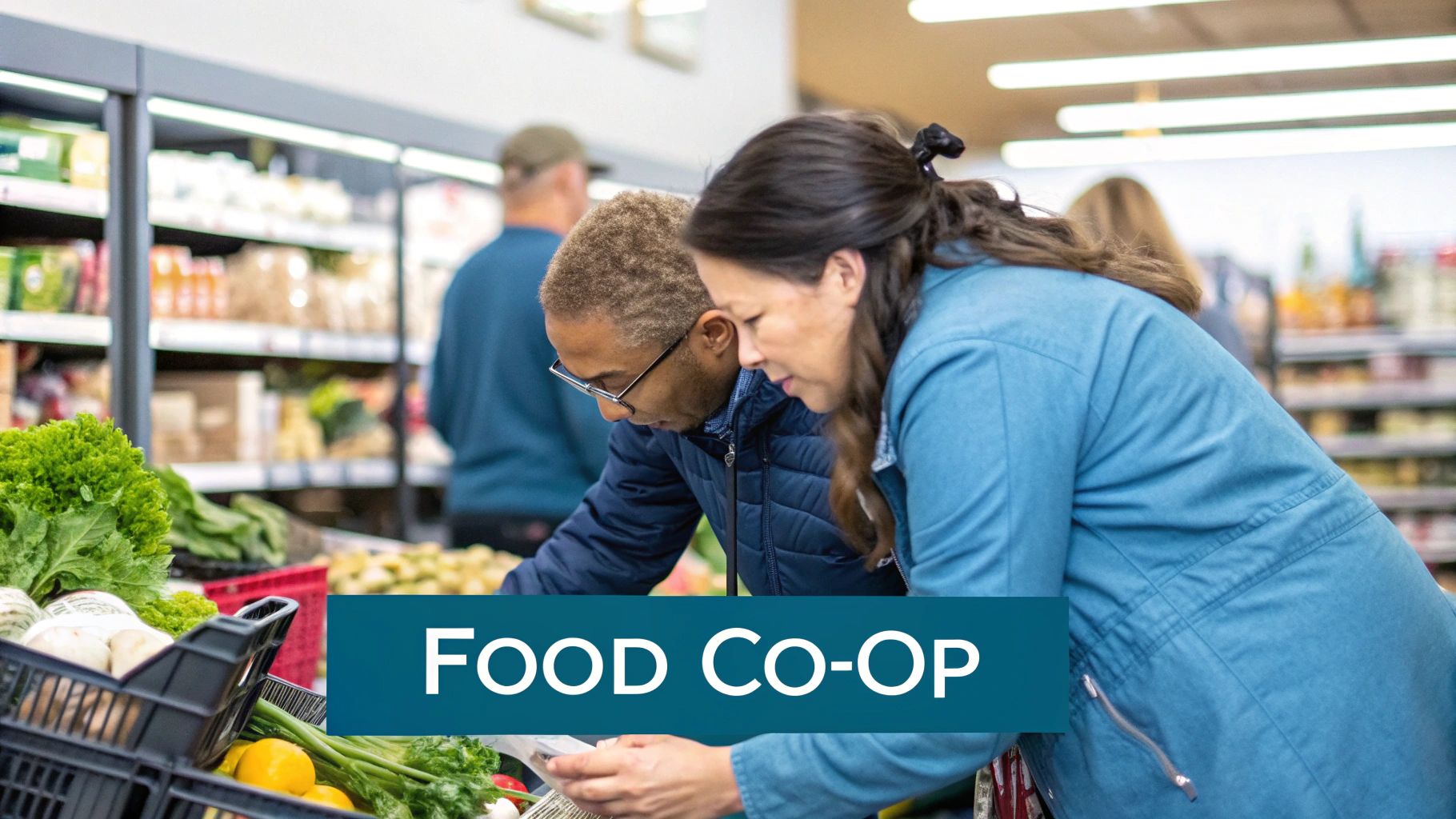
Cooperative grocery stores, or food co-ops, are retail stores owned and governed by their members, the same people who shop there. This democratic business model prioritizes community benefit over profit, making it a cornerstone among food access solutions communities. By leveraging collective purchasing power, co-ops can offer high-quality, affordable, and often locally sourced food. They empower communities by giving them direct control over their food supply, ensuring that decisions about what products are stocked and how the business operates reflect the values and needs of the neighborhood.
How It Works and Implementation Tips
Food co-ops operate on a one-member, one-vote principle, where community members purchase a share to join. The model is highly adaptable, seen in the large-scale Park Slope Food Coop in Brooklyn with over 17,000 members, and in initiatives like Mandela Marketplace in Oakland, which specifically serves lower-income communities. Some co-ops require members to volunteer a few hours a month in exchange for discounts, fostering a deep sense of ownership and keeping operational costs low. This model directly addresses gaps left by traditional grocery chains, which may not serve certain neighborhoods.
To launch a successful food cooperative, consider these key steps:
- Start with Strong Community Organizing: Conduct a market study and needs assessment to confirm community support and economic viability before launching. Host informational meetings to build a core group of founding members.
- Develop Clear Governance: Establish transparent bylaws, a decision-making structure, and a board of directors. Clear rules are essential for smooth operations and member trust.
- Ensure Equitable Access: Offer sliding-scale membership fees or subsidized shares to ensure low-income households can join and benefit from the co-op.
- Build Local Producer Relationships: Forge partnerships with local farmers and producers to provide fresh, high-quality food and support the regional economy. The National Cooperative Grocers Association is a valuable resource for best practices.
8. Nutrition Assistance and SNAP Benefits Programs
Nutrition assistance and SNAP (Supplemental Nutrition Assistance Program) benefits are foundational government-funded programs providing direct food purchasing power to low-income individuals and families. These initiatives, including SNAP, WIC (Women, Infants, and Children), and CACFP (Child and Adult Care Food Program), form the backbone of national food security policy. They are crucial among food access solutions communities because they directly supplement household food budgets, enabling participants to purchase groceries at authorized retail stores and, increasingly, at farmers markets.
How It Works and Implementation Tips
These programs operate by providing eligible households with electronic benefits (EBT) that function like a debit card for purchasing food. The scale is immense; SNAP serves nearly 42 million Americans monthly, while WIC supports over 6 million mothers and young children. Community-level innovation enhances their impact. For instance, Double Up Food Bucks programs, now active in numerous states, match SNAP dollars spent on fresh produce at participating farmers markets, doubling the purchasing power for healthy foods and supporting local growers.
To maximize the effectiveness of these vital programs, organizations can take several key steps:
- Simplify Access and Outreach: Partner with community centers, libraries, and healthcare providers to offer application assistance, reducing paperwork barriers and reaching eligible individuals who may not be aware of the programs.
- Integrate with Local Food Systems: Actively promote SNAP and EBT acceptance at farmers markets and farm stands. Offering incentive-matching programs can drive traffic and make local, fresh food more affordable.
- Expand Healthy Food Options: Advocate for policies that allow benefits to cover a wider range of nutritious items, such as community-supported agriculture (CSA) shares or hot meals at authorized locations. You can explore how some government programs, like WIC, are modernizing to meet diverse needs and learn more about WIC pilot programs.
- Improve Retailer Accessibility: Work with small, independent grocers and corner stores in underserved areas to help them become authorized SNAP retailers, increasing redemption points within food deserts.
9. Food Rescue and Gleaning Programs
Food rescue and gleaning programs are critical logistical models that intercept perfectly edible, surplus food before it is discarded. These initiatives represent one of the most resourceful food access solutions communities can adopt, redirecting food from farms, grocery stores, restaurants, and manufacturers to those experiencing food insecurity. Gleaning specifically refers to the practice of harvesting leftover crops from fields after the main harvest, a tradition that turns potential agricultural waste into a valuable community asset.
How It Works and Implementation Tips
The operational model involves coordinating the collection, transport, and redistribution of surplus food. Technology-driven platforms like Copia use AI to match businesses with excess food to nearby nonprofits in real time, streamlining the entire process. On a larger scale, organizations like Food Rescue US have built national networks that have rescued over 100 million pounds of food. These efforts not only fight hunger but also significantly reduce methane emissions from landfills, providing both a social and environmental benefit.
To establish an effective food rescue program, consider these key actions:
- Build Strong Donor Relationships: Cultivate reliable partnerships with local farms, retailers, and restaurants. Consistent communication and demonstrating impact are key to maintaining these connections.
- Prioritize Food Safety: Implement robust training and handling protocols for volunteers and staff to ensure all rescued food is safe for consumption, especially when managing cold-chain requirements.
- Leverage Technology for Coordination: Use apps or software to manage pickup schedules, track inventory, and connect volunteers with donation opportunities efficiently.
- Establish Regular Gleaning Schedules: Work directly with farmers to schedule gleaning events immediately after their primary harvest to maximize the quality and quantity of recovered produce. A great resource for understanding the legal protections for food donation is the Bill Emerson Good Samaritan Food Donation Act.
10. Community Food Policy and Planning Initiatives
Community food policy and planning initiatives are systematic, high-level strategies where communities assess their entire food system to develop and implement policies that address food access, equity, and sustainability. These initiatives are a cornerstone of long-term food access solutions communities, coordinating diverse stakeholders like government agencies, non-profits, businesses, and residents to create lasting change. Instead of focusing on a single program, they work to reshape the underlying rules, regulations, and resource allocations that govern how food is produced, distributed, and accessed.
How It Works and Implementation Tips
These initiatives often begin by forming a Food Policy Council (FPC), a dedicated body that serves as a central hub for food system coordination. For example, the Baltimore Food Policy Initiative has successfully integrated food access goals into the city’s sustainability and comprehensive plans, influencing everything from urban agriculture zoning to public procurement standards. Similarly, the Los Angeles Food Policy Council has driven significant reforms across the regional food system by bringing together hundreds of partner organizations to advocate for shared goals.
To launch a successful policy initiative, consider these practical steps:
- Conduct a Community Food Assessment: Begin by mapping your local food system to identify assets, gaps, and key challenges. This data-driven foundation is crucial for building a case for policy change.
- Build a Diverse Coalition: Engage a wide range of stakeholders, including farmers, food bank operators, health officials, and community members with lived experience of food insecurity. This ensures policies are comprehensive and equitable.
- Establish Clear, Shared Goals: Develop a clear vision and actionable goals aligned with community values. The Oakland Food Policy Council, for instance, centers its work on a food justice framework to guide its priorities.
- Integrate Equity from Day One: Ensure that principles of racial and economic equity are not an afterthought but are foundational to all planning, advocacy, and policy recommendations.
Community Food Access: 10-Solution Comparison
| Program | Implementation complexity | Resource requirements | Expected outcomes | Ideal use cases | Key advantages |
|---|---|---|---|---|---|
| Community Gardens and Urban Farms | Medium — land agreements and coordination | Land or rooftop, soil, tools, volunteers, modest funding | Local fresh produce, green space, community engagement | Vacant lots, food deserts, school partnerships | Builds community, low-cost fresh food, health benefits |
| Food Hubs and Corner Store Partnerships | Medium — logistics and partner management | Warehouses, cold storage, staff/volunteers, retail relationships | Strengthened local food economy, improved retail access | Linking rural producers and urban markets, food deserts | Scalable support for small farms, utilizes existing retail |
| Community Supported Agriculture (CSA) Programs | Low–Medium — farmer coordination and membership management | Farm infrastructure, distribution logistics, upfront subscriptions | Stable farmer income, regular seasonal produce for members | Supporting local farms, consumers seeking fresh seasonal food | Predictable supply, farmer support, reduced transport |
| Mobile Farmers Markets and Food Trucks | Medium–High — vehicle operations and routing | Vehicles, refrigeration, fuel, staff, permits | Improved geographic access and convenience | Underserved neighborhoods, seniors, mobility-limited residents | Brings food to people, flexible deployment |
| School Meal Programs and Food Education Initiatives | High — regulatory compliance and multi-agency coordination | Significant funding, kitchen staff, procurement systems, training | Improved child nutrition, attendance, and lifelong habits | Schools, child nutrition priorities, low-income districts | Large reach to children, integrates education with meals |
| Meal Sharing and Community Kitchen Programs | Medium — kitchen access and food-safety management | Commercial kitchen space, equipment, volunteers, food supplies | Affordable culturally relevant meals, cooking skills development | Community cohesion, food entrepreneur incubation | Strengthens social bonds, skill building, inclusive meals |
| Cooperative Grocery Stores and Food Cooperatives | High — startup capital and governance setup | Capital, retail space, inventory, active member base | Community-owned retail, affordable local products | Communities seeking local control of food retail | Democratic governance, local procurement, member benefits |
| Nutrition Assistance and SNAP Benefits Programs | High (policy level) / Low (user level) — policy & admin heavy | Government funding, administration, retailer integration systems | Increased purchasing power, reduced food insecurity | Low-income households, broad population-level support | Direct financial aid, scalable, supports local economies |
| Food Rescue and Gleaning Programs | Medium — logistics, safety, coordination | Transport, cold chain, volunteers, donor partnerships | Diverts surplus, supplements food supplies, reduces waste | Redistributing surplus from farms/retail to communities | Cost-effective waste reduction, cross-sector partnerships |
| Community Food Policy and Planning Initiatives | High — long-term multi-stakeholder coordination | Staff expertise, data collection, coalition building, funding | Systemic, equitable food system changes and coordinated programs | City or regional food system reform, long-term planning | Addresses root causes, sustainable and scalable policy solutions |
Weaving the Threads: Your Role in Building a Food-Secure Community
The journey through the landscape of food access solutions for communities reveals a powerful truth: there is no single, monolithic answer to food insecurity. Instead, the path forward is a mosaic, constructed from the diverse, innovative, and deeply human strategies we’ve explored. From the foundational work of transforming vacant lots into thriving community gardens to the logistical precision of mobile farmers markets reaching isolated neighborhoods, each solution represents a vital thread in a stronger social fabric.
We have seen how Community Supported Agriculture (CSA) programs forge direct, resilient bonds between producers and consumers, and how school meal initiatives do more than feed children-they educate the next generation of conscious eaters. The power of these models lies not in their isolation, but in their potential to interconnect, creating a layered, robust safety net.
Key Takeaways: From Concept to Action
The most critical takeaway is that sustainable change is built on collaboration and adaptation. The success stories, like those from Umoja’s community partnerships, consistently highlight initiatives that are not just located in a community but are built by and with it. They reflect local culture, leverage existing assets like corner stores or community kitchens, and respond directly to the articulated needs of residents.
Consider these core principles as you move forward:
- Context is King: A solution that thrives in a dense urban center may need significant adaptation for a rural community. Before implementing, conduct a thorough needs assessment.
- Dignity is Non-Negotiable: The most effective programs, from cooperative grocery stores to food rescue operations, prioritize a dignified experience for participants, offering choice and respect.
- Policy is a Powerful Lever: While grassroots efforts are essential, lasting change often requires systemic support. Engaging with community food policy councils can amplify the impact of on-the-ground work.
Your Next Steps: Building a More Nourished Future
Mastering these concepts is not just an academic exercise; it is the key to unlocking tangible, positive outcomes for the people you serve. For the CACFP sponsor, this means designing multi-day meal kits that families will actually enjoy. For the managed care director, it means proving that a “grocery, not MTM” model can demonstrably improve health outcomes for members with chronic conditions.
Your role now is to be a weaver. Start by identifying the most pressing gaps in your community’s food system and a corresponding solution from this list that excites you.
- Convene Stakeholders: Bring together local leaders, potential partners, and community members. Use the examples and models discussed as a starting point for a conversation.
- Pilot Small, Dream Big: You don’t need to launch a city-wide program overnight. Start with a pilot project-a single corner store partnership, a small-scale meal-sharing event-to test your model, gather feedback, and build momentum.
- Measure What Matters: As you implement, track key metrics. Go beyond “meals served” to include participant satisfaction, health outcomes, and economic impact. This data is crucial for refining your approach and securing future support.
By weaving together these diverse food access solutions for communities, we move beyond simply providing food. We begin to build sovereign, resilient, and nourished communities where every individual has the opportunity to thrive. The work is complex, but as each new community garden is planted and every new partnership is forged, we take another meaningful step toward a food-secure future for all.
Ready to translate these solutions into compliant, scalable, and impactful programs for your community? Learn how Umoja Health provides the operational backbone-from kitting and logistics to compliance and reporting-that turns ambitious food access strategies into reality. Visit Umoja Health to see how we help partners build healthier, more equitable food systems.