
Food grade warehousing is much more than just a clean place to store food. These are highly specialized services for storing and handling products meant for people to eat, and they have to meet incredibly strict standards for sanitation, safety, and government regulation. Unlike your average storage facility, these warehouses run on a tight ship of protocols for cleanliness, pest control, and environmental management to make sure products like medical meals are always safe.
Defining Food Grade Warehousing for Medical Meal Programs
When you're managing the logistics for medically tailored meals, understanding the difference between standard storage and a true food grade warehouse is the foundation of a safe supply chain. It’s not just about appearances; it’s about an absolute commitment to preventing contamination and protecting the integrity of every single product. These facilities are controlled environments, governed by serious federal rules.
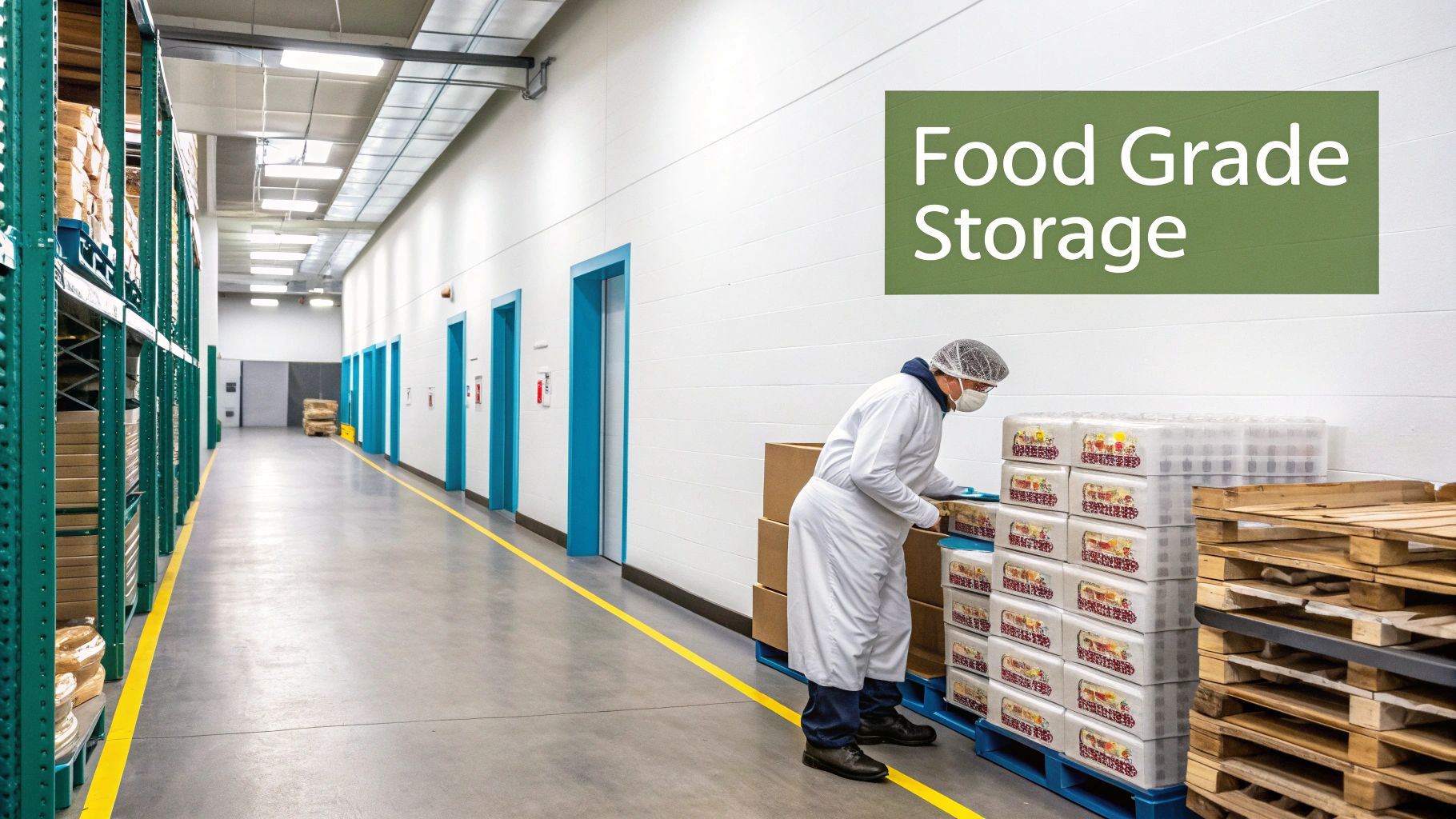
At its heart, a food grade warehouse is built on a few non-negotiable pillars:
- Enhanced Sanitation: This means having documented cleaning schedules and using only food-safe materials and sanitizers. The goal is to eliminate any chance of cross-contamination.
- Integrated Pest Management: A proactive, comprehensive program to keep pests out is essential. This is often a major weak point in standard warehouses.
- Traceability and Documentation: Modern Warehouse Management Systems (WMS) are used to track every product by its lot number. This is critical for managing inventory and executing recalls if needed.
- Climate Control: The ability to precisely control temperature and humidity is key for preserving the quality of sensitive items, whether they're shelf-stable, refrigerated, or frozen.
To give you a clearer picture, here’s a quick breakdown of what separates a standard warehouse from a food grade facility.
Key Differences Between Standard and Food Grade Warehouses
| Feature | Standard Warehouse | Food Grade Warehouse |
|---|---|---|
| Sanitation | General cleaning, often undocumented. | Documented, scheduled sanitation with food-safe chemicals. |
| Pest Control | Reactive; may only address visible issues. | Proactive and preventative Integrated Pest Management (IPM) program. |
| Regulations | Governed by general safety (OSHA) and local codes. | Must comply with FDA, FSMA, and local health department rules. |
| Documentation | Basic inventory and shipping records. | Detailed lot code tracking, recall procedures, and sanitation logs. |
| Climate Control | Often ambient temperature only. | Precise temperature and humidity controls for refrigerated, frozen, and dry goods. |
| Employee Training | General warehouse safety. | Specialized training in food handling, hygiene (GMPs), and allergen control. |
As you can see, the requirements are worlds apart. A food grade warehouse isn't just an upgrade; it's a completely different operational model designed from the ground up to protect the food supply.
The Importance of Specialized Handling
This kind of specialized approach is essential for any sensitive supply chain, especially those dealing with government nutrition programs or managed care meal delivery. Just think—improper storage could lead to spoilage or allergen cross-contact, creating huge health risks for already vulnerable people.
The sheer scale of this sector, with a global market valuation of USD 221.3 billion, shows just how vital it is for food safety and meeting public expectations for quality. You can explore more data on the global food grade warehousing market to see what's driving this growth. Ultimately, these services guarantee that every meal, particularly those for medical recovery, receives the highest standard of care from the moment it arrives to its final delivery.
Navigating Food Safety and Compliance Protocols
When you're dealing with medical meals, food safety is far more than just a best practice—it's a critical part of patient care. Every single item that passes through a food-grade warehouse has to meet uncompromising safety standards, which requires a solid framework of protocols, certifications, and checklists. This foundation is built on regulations from agencies like the U.S. Food and Drug Administration (FDA) and is constantly being reinforced by modern legislation.
The Food Safety Modernization Act (FSMA) completely changed the game, shifting the industry from a reactive stance to a preventive one. Instead of just responding after contamination happens, facilities now have to proactively identify and shut down potential hazards. For a warehouse handling medically tailored meals, that means a detailed Food Safety Plan is non-negotiable, and it must be managed by a Preventive Controls Qualified Individual (PCQI) who is trained to oversee the entire system.
Core Compliance Pillars for Medical Meal Safety
At the center of it all is the Hazard Analysis and Critical Control Points (HACCP) plan. This is a systematic, day-to-day approach for identifying potential biological, chemical, and physical hazards and putting controls in place to manage them. Keeping these standards high demands strict adherence to protocols, and that includes routine checks like a regular warehouse racking inspection to prevent structural failures that could put products at risk.
A "Day in the Life" of a quality manager often starts before a single box is moved. The first hour might be spent verifying temperature logs for all cold storage units, reviewing the night shift's sanitation records, and walking the floor to spot any potential hazards—like a slightly damaged pallet or a door that didn't seal properly—before they snowball into real problems.
This kind of hands-on vigilance is essential. For example, a quality manager might define the receiving dock as a "critical control point." They would then implement a strict protocol: every refrigerated shipment must be checked with an infrared thermometer before it's even unloaded. If a delivery is just a few degrees outside the safe zone, it’s rejected on the spot to protect the integrity of the entire inventory.
Another manager might be overseeing a kitting line for diabetic meal boxes, making sure that high-sugar and sugar-free items are never stored on adjacent pallets to prevent dangerous mix-ups. This level of detail in kitting and packaging is absolutely vital for patient safety, highlighting why a meticulous private label packaging setup is so crucial to supporting these compliance efforts.
For government nutrition programs, the rules go even further. The Buy American Act often requires that food products bought with federal funds must be sourced domestically. This adds another layer of procurement verification to the warehousing process. When you're serving vulnerable populations, there's simply no room for error—these protocols are not optional.
So, What Do All These Certifications Actually Mean?
In food-grade warehousing, certifications aren't just fancy plaques on the wall. They are hard-earned proof that a facility is deadly serious about safety and quality. When you're dealing with medical meal logistics for vulnerable people, these credentials give you the assurance you need—they tell you a partner has invested the time, money, and training to get it right.
Think of them as a baseline for trust. Understanding what they stand for helps you quickly sort through potential partners and find the ones who operate at the highest possible standard. While a whole alphabet soup of credentials exists, a few are considered the gold standard across the globe.
Global Food Safety Initiative (GFSI) Standards
First off, the Global Food Safety Initiative (GFSI) isn't a certification you can get. Instead, it's a benchmarking organization that gives its stamp of approval to other food safety programs. If a warehouse holds a GFSI-recognized certification, you know they meet an internationally accepted bar for food safety management. This is a huge deal for any organization working at scale or dealing with clients who have incredibly strict compliance needs.
Two of the most common GFSI-benchmarked certifications you'll run into are:
- SQF (Safe Quality Food): This one is highly respected and built around a systematic approach to managing risk. It demands a detailed food safety plan, constant hazard analysis, and continuous monitoring, which makes it a perfect fit for facilities handling medically tailored meals.
- BRCGS (Brand Reputation Compliance Global Standards): What started as a British standard is now recognized everywhere. BRCGS puts a heavy emphasis on quality management systems and operational controls, making sure everything is consistent and reliable from storage to shipping.
Imagine a "Day in the Life" of a quality manager in one of these facilities. They might start their morning reviewing sanitation logs required by SQF, then pivot to an internal audit of allergen segregation to meet BRCGS rules for a new gluten-free meal kit. Every single checklist they sign off on is a direct application of these principles in the real world.
Other Key Certifications and Systems
Beyond the big GFSI umbrella, a few other certifications are absolutely critical in the food warehousing world, especially for specialized products.
- ISO 22000: This international standard lays out the requirements for a food safety management system. It's built on the principles of HACCP (Hazard Analysis and Critical Control Points) and meshes perfectly with the ISO 9001 standard for quality management.
- USDA Organic Certification: If your program involves organic products, this one is completely non-negotiable. It guarantees the facility follows the National Organic Program (NOP) standards to the letter for handling, storage, and preventing any mix-ups with non-organic items.
When it comes down to it, these certifications provide a clear, transparent framework for trust. They show you that a warehousing partner has the proven chops to handle the complex safety, quality, and documentation that come with the territory of medical meal logistics.
Mastering Cold Chain Logistics for Medical Meals
When you're dealing with medically tailored meals, a break in the cold chain is more than just a quality issue—it can flat-out compromise the food's safety and therapeutic value. Getting cold chain logistics right is a non-negotiable for any serious food grade warehousing services provider. It’s about creating an unbroken line of temperature control, ensuring sensitive products stay in their safe zone from our dock to the end user's door.
This isn’t a one-and-done task. A solid cold chain is built on a mix of technology, iron-clad protocols, and constant watchfulness. The process kicks off the second a refrigerated or frozen truck hits our receiving dock. Before a single box is unloaded, our team is verifying the truck's temperature logs to confirm there were no blips during the journey.
Once inside, products are hustled to designated temperature-controlled zones. These zones are monitored 24/7 by sophisticated systems that log data continuously. They’re programmed to fire off instant alerts via text or email if temperatures even hint at nearing a warning threshold. It’s about catching potential problems before they become actual problems.
Core Components of a Robust Cold Chain
Maintaining an unbroken cold chain is a process, not a single action. It involves a series of carefully planned steps at every point in the warehousing journey. Auditing and certifying these steps is fundamental for both compliance and safety.
This is the basic flow for a food safety audit, a process that validates these very protocols.
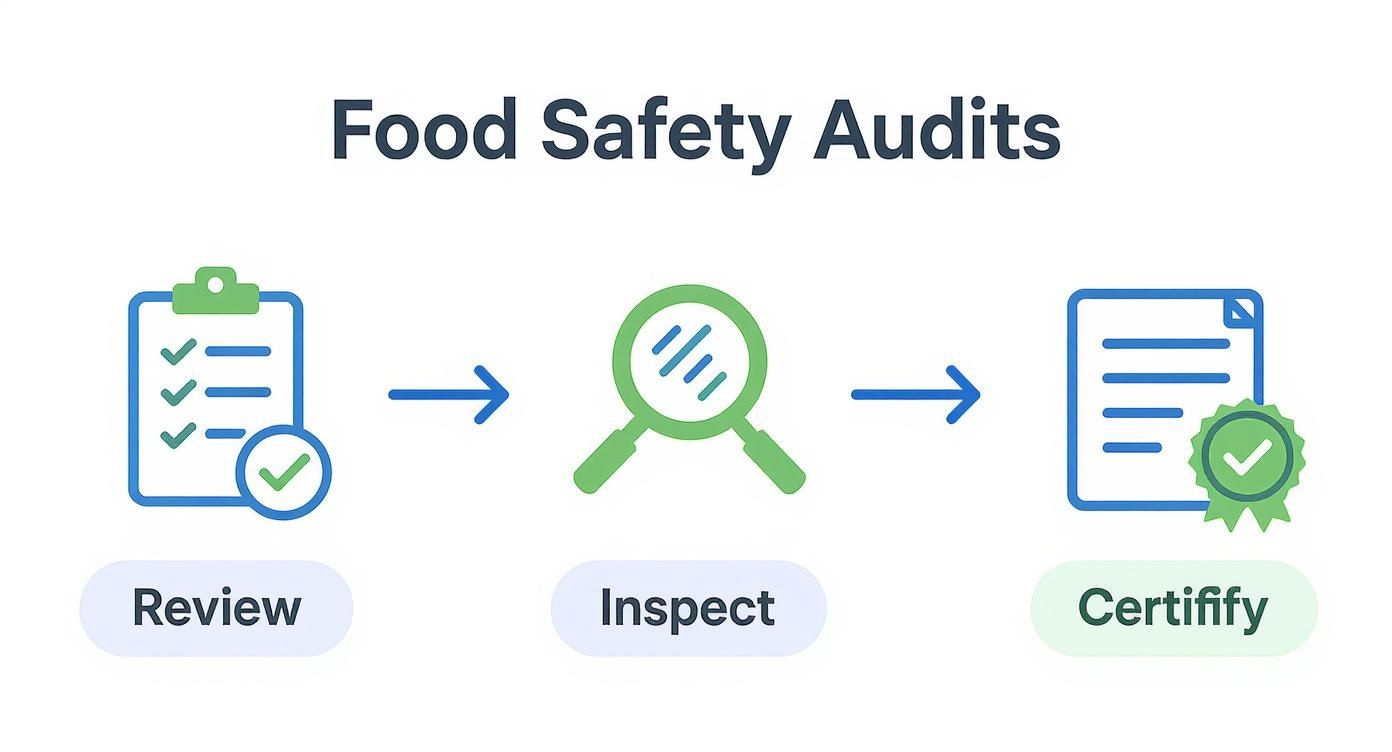
As the visual shows, it’s a constant cycle: review the procedures, physically inspect the operations, and certify the results. That same level of rigor is what we apply to managing cold storage, where every step is logged and verified.
For a Quality Manager, the cold chain is a huge part of the day. Their morning starts with a fine-tooth-comb review of the overnight temperature logs for every single freezer and cooler. They're not just scanning for alarms; they’re digging into the data, looking for trends that might point to a compressor working just a little too hard—a tell-tale sign of a potential future failure.
Handling Temperature Deviations and Outbound Shipping
Even with the best tech in the world, things can go wrong. That's why a strong cold chain plan absolutely must include a detailed Corrective and Preventive Action (CAPA) protocol for any temperature excursion. This is a pre-approved game plan that lays out exactly what to do:
- Isolate: The first move is to immediately quarantine any product that might be affected.
- Investigate: Next, you have to dig in and find the root cause of the deviation.
- Document: Every single detail of the incident and the response gets recorded.
- Resolve: Finally, a decision is made based on strict safety guidelines: can the product be salvaged, or does it need to be disposed of?
The final leg of the journey—outbound shipping—is just as critical. Products have to be packed in validated insulated containers with the right amount and type of coolant, whether that’s gel packs or dry ice, to hold the temperature for the entire delivery route. Every part of the process, including complex workflows like medical meal assembly, is carefully managed. You can learn more about how these precise workflows come together by exploring our guide on specialized food kitting programs. This is how we ensure the last mile is every bit as secure as the first.
A Day in the Life of a Warehouse Quality Manager
To really get how food safety protocols work on the ground, let’s walk a mile in the shoes of a Quality Manager in a warehouse that handles medical meal logistics. This job isn’t about sitting behind a desk crunching numbers. It’s a constant, hands-on cycle of verification, inspection, and prevention where abstract rules from FSMA and HACCP become real-world actions that protect people's health.
The day usually kicks off before the first truck even backs into the dock. It starts with a deep dive into the overnight data, checking the digital logs from every single temperature-controlled zone—refrigerated, frozen, and ambient. The manager isn’t just scanning for red flags; they’re hunting for trends. They might spot a freezer compressor working just a bit too hard, an early warning sign of equipment fatigue that needs attention before it becomes a problem.
Morning Inspections and Receiving Protocols
By 8 AM, the manager is on the floor for the daily GMP (Good Manufacturing Practices) walkthrough. They’re observing staff for proper hygiene, making sure sanitation stations are stocked, and scanning for any physical hazards like a loose bolt on a rack or condensation dripping near an electrical panel. This isn’t about playing cop; it’s about nurturing a culture where everyone is vigilant.
When inbound shipments start arriving, the manager is there, overseeing the receiving team. A truck carrying frozen, low-sodium meals for a cardiac patient program gets temperature-probed before the seal is even broken. If that reading is off by a single degree from the critical limit, the whole shipment is rejected on the spot. Everything is documented, and the client gets a call immediately. This is what food grade warehousing services are all about—uncompromising standards.
"My job is to see the invisible risks. It’s not just about what is wrong, but what could go wrong. A small detail, like an undocumented cleaning of a forklift before it enters the allergen segregation zone, can have massive consequences for the people we serve."
Afternoon Audits and Kitting Oversight
The afternoon brings a shift in focus to process oversight. Today’s big project is a critical kitting run for a managed care client, putting together 12-week diabetes-friendly meal boxes. The manager’s checklist is long and detailed:
- Allergen Control: Making sure that products with wheat are kitted on a completely separate, sanitized line from any gluten-free items. No exceptions.
- Lot Code Traceability: Verifying that the Warehouse Management System (WMS) is capturing the lot number of every single component going into every single box.
- Label Verification: Physically double-checking that the final packaged kit has the right nutritional facts and expiration dates, all clearly visible.
The day winds down with signing off on sanitation logs, reviewing any corrective action reports, and mapping out the audits for tomorrow. For a Quality Manager in the medical meal world, every checklist initialed and every protocol followed is a direct line to a patient's health and safety.
How to Choose the Right Warehousing Partner
Picking the right partner for your food-grade warehousing is a decision that goes way beyond a simple price sheet. This isn't just about finding shelf space. When you're managing medical meals or mobilizing for disaster response, the stakes couldn't be higher. A proper, thorough evaluation is the only way to ensure your partner can protect the integrity of your products and nail every single compliance requirement.
You should approach your evaluation like a full-blown audit. Use a detailed checklist during your site visits and interviews. This is your chance to physically verify their certifications, get your eyes on their sanitation procedures, and really challenge their operational readiness. A potential partner’s ability to give you clear, documented answers on the spot is one of the strongest indicators of their competence.
The Essential Evaluation Checklist
When you're walking through a potential facility, you need to focus on tangible evidence, not just talk. Don’t just ask if they have a pest control program; demand to see the logs, the trend reports, and the map of their bait stations. This is the kind of detail that separates the truly qualified partners from everyone else.
Use these key areas as a starting point for your deep dive:
- Certifications and Compliance: Get current copies of their GFSI-recognized certifications (SQF or BRCGS are common), FDA registration, and any organic certifications. Actually verify them—check the dates and authenticity.
- Sanitation and Pest Control: Ask to review their Master Sanitation Schedule (MSS) and their Integrated Pest Management (IPM) records. A top-tier provider won't hesitate to show you detailed logs and will be able to explain exactly what corrective actions they took for any past issues.
- Training and Staff Expertise: Dig into their employee training programs. How often do they run GMP and food safety refreshers? Who on their team is a Preventive Controls Qualified Individual (PCQI)?
- Recall and Traceability Readiness: Put them to the test. Ask them to run a mock recall on a sample lot code right then and there. A warehouse that knows its stuff should be able to trace a product’s entire history—from the moment it hit their dock to its current spot on the shelf—in just a few minutes.
A critical question that often gets missed is about their direct experience with specific programs. You have to ask them point-blank: "Have you ever managed the logistics for OAA senior meal boxes or executed a rapid deployment for a disaster response contract?" Their answer, and how they answer it, will tell you everything you need to know about their real-world experience.
Questions for High-Stakes Programs
For specialized programs like medically tailored meals, your questions need to be even more precise. Grill them on their allergen segregation protocols. How do they physically separate gluten-free products from those with wheat during both storage and kitting? Ask to see their temperature logs and any deviation reports for their cold chain storage; this will reveal their transparency and how quickly they respond to problems.
Ultimately, choosing a partner comes down to trusting their ability to execute flawlessly, every single time. A provider with proven, hands-on experience in these demanding areas offers more than just storage—they offer peace of mind. To see how these specialized capabilities come together, you can learn more about our comprehensive logistics and warehousing solutions designed to meet these exact challenges.
Vendor Selection Checklist for Food Grade Warehousing
Choosing a partner is a major decision, and it helps to have a structured way to compare your options. This scorable checklist provides a framework for objectively evaluating and comparing potential food grade warehousing partners. Assign a weight to each category based on what's most critical for your program, then score each vendor during your evaluation.
| Evaluation Criteria | Weighting (1-5) | Vendor A Score | Vendor B Score | Notes |
|---|---|---|---|---|
| Certifications & Compliance (FDA, GFSI) | 5 | Verified current SQF Level 2? PCQI on staff? | ||
| Sanitation & Pest Control Program | 5 | Reviewed IPM logs and MSS? Facility clean? | ||
| Traceability & Mock Recall Performance | 5 | Time to trace a lot? Accuracy of report? | ||
| Allergen Segregation Plan | 4 | Clear physical separation? Color-coded zones? | ||
| Cold Chain Management & Temp Monitoring | 4 | Redundant systems? Deviation reports available? | ||
| Staff Training & Expertise | 3 | Regular GMP training? Low turnover? | ||
| WMS/EDI Capabilities & Integration | 3 | Can they integrate with our systems? Real-time visibility? | ||
| Experience with Similar Programs (Gov/Medical) | 5 | Provided specific examples and references? | ||
| Facility Security & Access Control | 3 | Fenced perimeter? Monitored access points? | ||
| Kitting & Value-Added Service Quality | 4 | Observed kitting line? Checked for accuracy? | ||
| Customer Service & Responsiveness | 4 | Dedicated account manager? Clear communication? | ||
| Scalability & Flexibility | 3 | Can they handle seasonal spikes or program growth? | ||
| Total |
Once you've completed your site visits and scored each potential partner, the data will speak for itself. The highest score doesn't always win—your notes on their specific strengths and weaknesses are just as important. This process ensures you're making a data-driven decision based on capability, not just cost.
Frequently Asked Questions
Getting into the weeds on food grade warehousing is critical for making sure your products are safe and your program stays compliant. This is especially true when you're dealing with something as sensitive as medical meals. Here are some of the most common questions we hear from program managers on the ground.
What Disqualifies a Warehouse from Being Food Grade?
A facility can lose its food-grade status—or fail to ever earn it—for a handful of critical failures. You’ll often see issues like cracks in the walls or floors where pests can hide, sloppy or inconsistent sanitation routines, and no real, documented pest control plan.
But the biggest red flag? An inability to maintain and prove temperature integrity. If a warehouse can't produce detailed, verifiable temperature logs for their cold storage spaces on demand, they are immediately out of the running for handling perishable foods. It's a non-starter.
How Are Allergens Handled in a Shared Facility?
Smart allergen management is the bedrock of any legitimate food grade operation. It’s not just about good intentions; it’s a disciplined system that relies on a strict allergen control plan, which uses both physical separation and rock-solid procedural rules.
- Physical Segregation: This is pretty straightforward. Warehouses use designated, clearly marked storage areas for the major allergens—think peanuts, tree nuts, dairy, and wheat—to keep them far away from everything else and prevent cross-contact.
- Procedural Controls: This is where the process really shines. It involves using dedicated equipment and tools just for allergen-containing products. It also means implementing and documenting thorough "clean-in-place" sanitation protocols on shared lines between runs. For a quality manager, verifying these clean-downs isn't just a task, it's a daily priority.
What Is a Mock Recall and Why Does It Matter?
A mock recall is exactly what it sounds like: a drill. A quality manager will randomly pick a specific product lot code and challenge the warehouse team to trace its entire journey—from the moment it was received to its current location in the building. The goal is to account for every single unit, usually within a tight timeframe of under two hours.
This drill is absolutely vital. It’s a real-world stress test of the facility’s traceability system and shows how ready the team is to act if a real safety event happens. A fast, accurate result proves you have a robust Warehouse Management System (WMS) and a team that knows what they're doing. For food grade warehousing services supporting medical meal programs, this isn't just nice to have; it's non-negotiable.
At Umoja Health, we provide FDA-registered, GFSI-certified warehousing and logistics solutions built to handle the most demanding compliance and safety challenges. Learn how our expertise can support your program.