
For a food pantry to be effective, its sourcing pipeline must be both strategic and diverse. Relying on a single channel is a recipe for inconsistency. To truly meet community needs, you must move beyond passively collecting donations and start actively building a multi-faceted plan. This guide will step you through the essential components: strategic sourcing, building partnerships, implementing smart inventory systems, and ensuring regulatory compliance, with actionable guidance on leveraging digital tools to maximize your impact.
Step 1: Building a Diversified Food Sourcing Pipeline
A pantry's success hinges on a consistent, varied supply of food. Banking solely on unpredictable, one-off donations creates constant uncertainty, making it nearly impossible to plan distributions or meet the specific dietary needs of the people you serve. The goal is to build a balanced portfolio of sources that can withstand supply chain hiccups and inevitable seasonal gaps.
This requires a proactive, multi-channel sourcing plan that doesn't just wait for food to show up but actively seeks it out. It comes down to building relationships, understanding your local food systems, and creating an operation that can consistently provide for those who depend on you. A solid framework is vital for ensuring long-term nutrition security, a cornerstone of a healthy community.
Moving Beyond Traditional Donations
Community food drives are valuable, but they often yield a mountain of canned goods while leaving you short on fresh, nutritious options. A diversified pipeline is your tool for intentionally targeting and filling those gaps. It means forging direct connections with sources that can provide fresh produce, protein, and dairy.
Think of it like an investment portfolio; you'd never put all your cash into one stock. Your sourcing should be spread across different channels to minimize risk. Building out this pipeline is also critical for managing supply chain disruptions—it ensures you have a steady flow of food even when one of your channels unexpectedly dries up.
Key Sourcing Channels to Explore
To build this resilient network, you need to focus on establishing relationships across a few key sectors. Each one offers unique benefits and requires its own tailored approach.
- Grocery Retail Partnerships: Get in touch with your local grocery store managers and set up a regular pickup schedule for near-expiry items. This "retail rescue" model is a win-win. The store reduces its food waste, and your pantry gets a steady stream of baked goods, produce, dairy, and meat.
- Local Farm Collaborations: Reach out to farmers, especially at the end of their market season or during a big harvest. Many are more than willing to donate surplus produce that’s perfectly good but might not meet the cosmetic standards for a retail shelf. This is an invaluable source of fresh, healthy food.
- Wholesale and Distributor Connections: Set up accounts with food wholesalers or distributors. While this usually means purchasing food, you can access bulk items at a significantly lower cost. It’s the perfect way to stock up on high-demand staples like rice, beans, and pasta.
A great first step is to create a "pitch sheet" for potential partners. Keep it to one page. It should clearly state your mission, how many families you serve each week, your 501(c)(3) status, and exactly what you're asking for—whether that's a weekly produce pickup or access to bulk purchasing discounts.
Initiating and Nurturing Partnerships
Making that first call is often the biggest hurdle. Start by identifying the key decision-makers, whether that’s the store manager, the farm owner, or a corporate social responsibility lead at a larger company.
When you make contact, be professional, prepared, and persistent. Clearly explain the mutual benefits of a partnership. For a retailer, you're helping them meet sustainability goals. For a farmer, you're preventing good food from going to waste.
Once you have a partnership, reliability is everything. Show up on time for every single pickup and consistently express your gratitude. This is how you build strong, long-lasting relationships that allow your food pantry sourcing solutions to grow and adapt over time.
Step 2: Forging Strong Community and Corporate Partnerships
Effective sourcing is rarely a solo mission. It’s about building a robust network of support that extends deep into your community and beyond. To create a truly sustainable pipeline of food, you have to move beyond one-off food drives and start cultivating powerful, long-term partnerships with local businesses, schools, corporations, and farms.
Think strategically. Instead of generic donation requests, why not organize themed drives that boost engagement and target your most pressing needs? A "Back-to-School Breakfast Drive" with a local school can bring in cereals and shelf-stable milk. A "Winter Warm-Up Drive" with a nearby office can focus on hearty soups and stews. This approach makes donating more tangible and ensures you get items you actually need.
This visual breaks down the primary channels—retailers, farms, and dedicated partners—that form a comprehensive sourcing strategy.
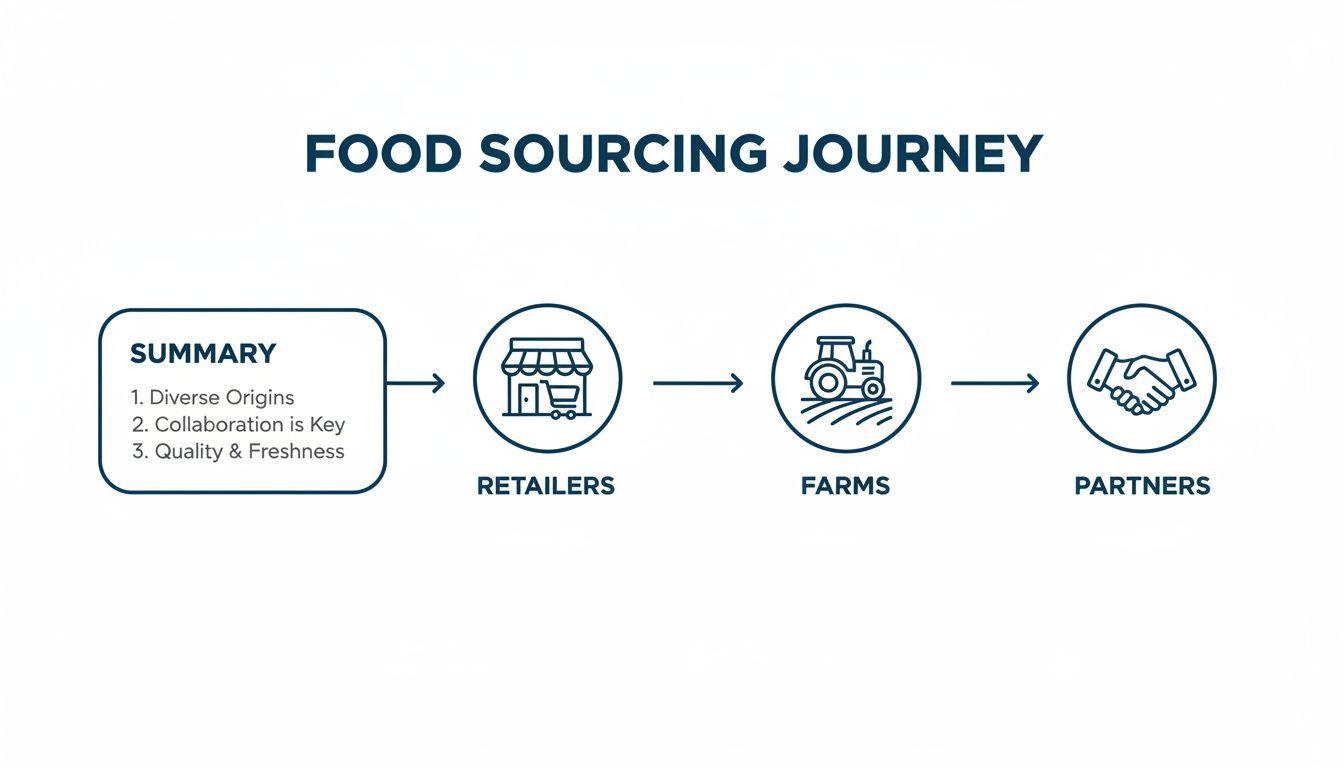
As you can see, a balanced strategy that pulls from multiple sources is the key to building a reliable and resilient food pipeline.
Comparing Key Food Sourcing Channels
Navigating the world of food sourcing means understanding that not all channels are created equal. Each one offers unique benefits but also comes with its own set of challenges. Below is a quick breakdown to help you compare the most common options and figure out where to best focus your partnership efforts.
| Sourcing Channel | Primary Benefits | Potential Challenges | Best Practice for Partnership |
|---|---|---|---|
| Retailers | Consistent access to a wide variety of goods, including non-perishables, dairy, and baked goods. | Inconsistent donation volumes; logistical hurdles with pickup schedules and storage for near-expiration items. | Establish a regular pickup schedule with a designated store contact. Offer to provide data on pounds rescued to support their CSR reporting. |
| Wholesalers/Distributors | Large, pallet-sized donations that can quickly stock shelves. Access to bulk quantities of staple items. | Requires significant storage capacity (including cold storage) and equipment like pallet jacks or forklifts. | Cultivate a relationship with the warehouse manager. Be clear about your capacity and what you can realistically accept. |
| Local Farms | Direct access to fresh, nutritious, and locally grown produce. Great for promoting healthy eating. | Seasonality of produce; transportation and labor needed for gleaning or pick-up; short shelf-life of fresh items. | Connect with farmers before planting season to plan for surplus. Organize volunteer gleaning events to provide the necessary labor. |
| Corporate Partners | Can provide financial sponsorships, in-kind donations of their products, and organized employee volunteer groups. | Requires a professional, data-driven pitch. Aligning with their specific CSR goals can be time-consuming. | Research their community involvement and tailor your proposal. Propose sponsoring a specific program (e.g., a mobile pantry route). |
Ultimately, a diversified sourcing portfolio is your best defense against disruption. By building strong relationships across several of these channels, you create a more stable and predictable flow of resources for your community.
Engaging Corporate Partners
When you're ready to approach corporations, you need a compelling proposal that speaks their language—one that aligns with their corporate social responsibility (CSR) goals. Large companies are actively looking for meaningful ways to give back, but they need to see a clear plan and measurable impact before they’ll get on board.
Start by researching local or regional companies with a track record of community involvement or sustainability initiatives. Your proposal shouldn't be a simple request for a check; it should present a true partnership opportunity.
- Financial Sponsorship: Propose their sponsorship of a specific program, like a weekend backpack initiative for kids or a mobile pantry route. This gives them a tangible, marketable project to support.
- Employee Volunteer Events: Offer to host a corporate volunteer day. This is a fantastic team-building activity for them and provides you with a surge of much-needed help.
- In-Kind Donations: Think outside the box. A local food manufacturer might donate products directly, while a logistics company could offer pro-bono transportation services.
Your pitch has to be backed by data. Clearly state how many families you serve, the nutritional gaps you're trying to fill, and exactly how their contribution will move the needle. This professional, results-oriented approach is what secures both food and crucial financial backing.
The Power of Agricultural Recovery
One of the most impactful food pantry sourcing solutions is rescuing surplus produce directly from farms. These agricultural recovery programs, often called gleaning, are a powerful tool against food waste and provide a direct line to fresh, healthy options for your clients.
Partnering with farmers allows you to tell a compelling story to donors and volunteers. It’s not just about feeding people; it's about rescuing perfectly good food, supporting local agriculture, and providing nutritious produce that is often out of reach for families on a tight budget.
This model has seen incredible growth. Agricultural recovery programs have exploded, with organizations now partnering with food banks to source nearly 147 million kilograms of products directly from the agriculture sector—that’s more than double the amount from just five years ago.
Currently, 35 member food banks, representing 65% of the network, operate these programs. This effort ensured that 26% of all recovered food came from agricultural sources, with fruits and vegetables making up 41% of total distributions.
Forging these partnerships—whether with the corner store, a corporate headquarters, or a local farm—transforms your sourcing from a daily struggle into a collaborative community effort. It builds a diverse, reliable, and compassionate network dedicated to fighting hunger.
Step 3: Implementing Smart Inventory and Logistics Systems
Sourcing food is only half the battle; effective inventory and logistics management is what ensures it reaches families safely and efficiently. Without strong systems, you risk spoiled food, disorganized storage, and chaotic distributions. A well-oiled logistics operation turns potential chaos into measurable impact, forming the backbone of your entire pantry.
Smart systems don't require a massive budget. Umoja recommends starting with simple, accessible tools. Cloud-based spreadsheets, basic barcode scanners, and clear intake protocols can transform your day-to-day operations. This actionable guidance will help you gain a crystal-clear view of your stock, slash spoilage, and make data-driven decisions that better serve your clients.
From Receiving Dock to Pantry Shelf
Every item should follow a standard path from the moment it arrives. This starts with a structured receiving process. Without one, you’re just guessing what's on your shelves.
The first step is creating a simple intake log—digital or physical, consistency is key. Every delivery must be documented with a few data points:
- Date of Receipt: The day the food arrived.
- Source: Which partner donated the items (e.g., local grocer, farm partner).
- Food Category: Broad buckets like canned goods, fresh produce, dairy, or frozen meat.
- Quantity: An estimated weight or case count.
- Expiration or "Best By" Date: Critical for prioritizing distribution.
This data capture is the foundation of your inventory system. It helps you thank donors accurately, track partner contributions, and implement a First-In, First-Out (FIFO) system to prevent food from expiring on the shelves.
Embracing Digital Tracking Solutions
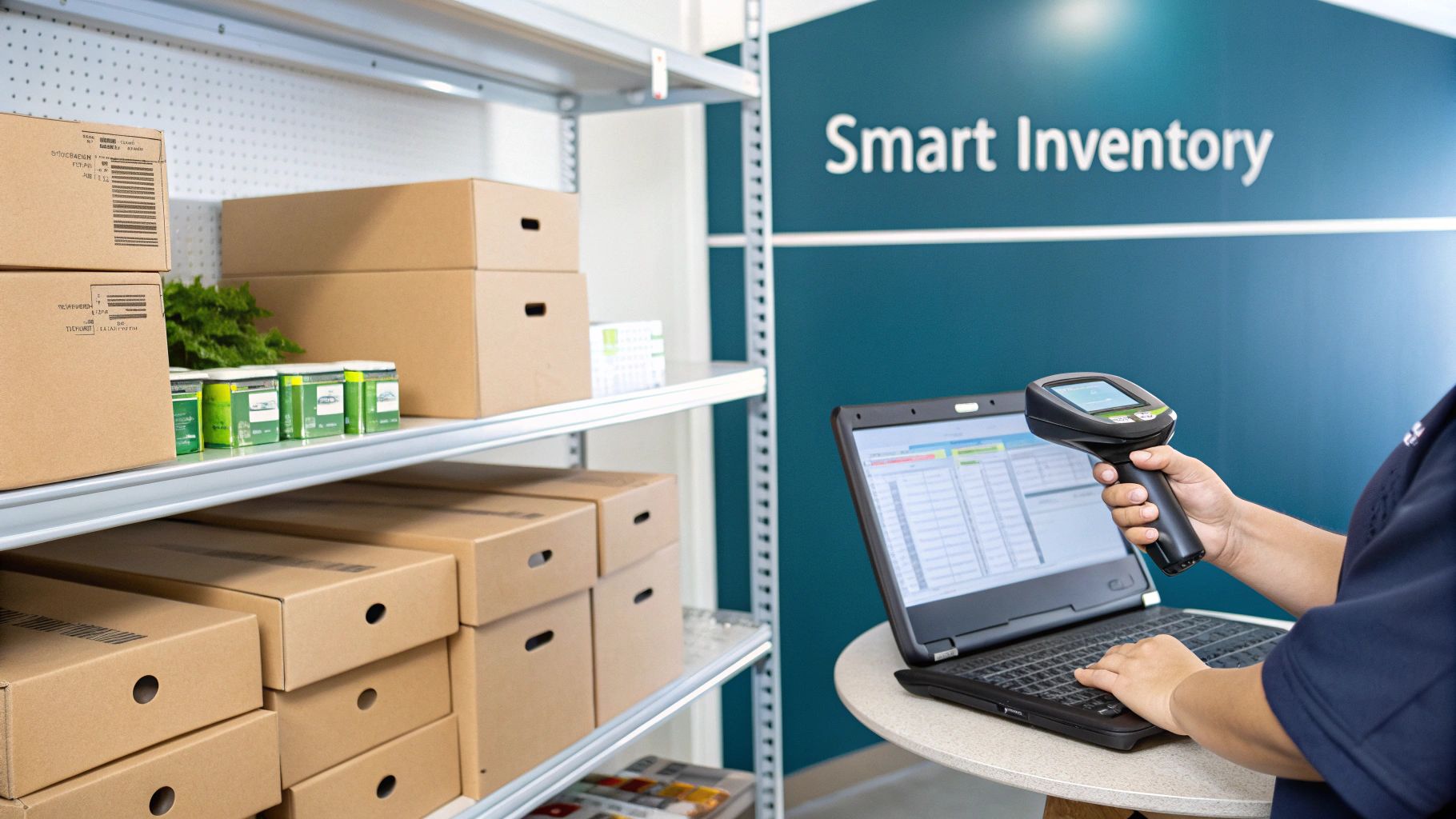
While paper systems work, digital tracking is a game-changer for efficiency and insight. Umoja’s primary digital tracking recommendation is to start with accessible, powerful tools. A shared cloud spreadsheet (like Google Sheets) is a fantastic first step, allowing multiple team members to access and update inventory in real-time.
As your operation grows, consider a simple inventory management app or a low-cost barcode system. Scanning items as they come in and go out provides pinpoint accuracy. This level of detail helps you spot trends, like realizing you consistently run out of peanut butter by the third week of the month. That's powerful, actionable information that directly informs your future sourcing requests.
For organizations ready to explore comprehensive systems that handle everything from warehousing to kitting, you can learn more about Umoja’s food-grade 3PL logistics and inventory solutions.
An effective inventory system isn’t just about counting cans. It's about generating insights. When you know you're distributing 250,000 pounds of food monthly, digital tracking helps you prove your impact to funders and optimize every square foot of your storage space.
Mastering Cold-Chain Management
For perishable items like dairy, meat, and fresh produce, temperature control is non-negotiable. A broken cold chain means spoiled food and a potential health risk for your clients.
Start with the basics: install thermometers in all refrigerators and freezers and assign a volunteer to log temperatures twice a day. This simple checklist ensures your equipment is working and that food is stored safely. When transporting perishables, always use insulated coolers or refrigerated vehicles, especially in warmer months.
Choosing Your Distribution Model
How you get food into the hands of your clients is the final piece of the logistics puzzle. The two primary models each come with their own operational pros and cons.
Pre-Packed Kits vs. Client-Choice Model
| Distribution Model | Logistical Pros | Logistical Cons | Best For… |
|---|---|---|---|
| Pre-Packed Kits | Faster distribution, easier for volunteers to assemble, ensures every client gets a balanced set of staples. | Can lead to waste if clients receive items they can't use; less dignified for clients. | Pantries with limited space, high-volume drive-thru distributions, or a focus on speed and efficiency. |
| Client-Choice | Reduces food waste, provides a more dignified shopping experience, and allows clients to select culturally relevant foods. | Requires more space for a "store" layout, longer client visit times, and more volunteer support for restocking. | Pantries focused on client dignity, reducing waste, and serving diverse communities with varied dietary needs. |
Your choice of model directly impacts your inventory flow and how you deploy volunteers. Many pantries find a sweet spot with a hybrid approach—offering pre-packed bags of staples alongside a client-choice section for fresh produce and personal care items. This strikes a great balance between efficiency and empowerment.
Step 4: Navigating Food Safety and Regulatory Compliance
Your community trusts you to provide not just food, but safe food. This responsibility is the heart of your mission, making compliance a non-negotiable pillar of your operation. The web of federal guidelines, local health codes, and donor protections can seem overwhelming, but it's manageable with clear procedures and a team-wide commitment to safety.
Getting this right is a core part of building effective food pantry sourcing solutions. It gives your partners confidence, keeps your clients safe, and protects your organization from risk. When you break these rules down into simple, actionable steps, compliance shifts from a hurdle into a streamlined part of your daily workflow.
Understanding Key Federal Guidelines
Several federal programs and acts directly impact how you source and distribute food. While your local and state health departments have their own specific rules—which you must know inside and out—understanding the federal framework is the foundation for a compliant operation.
For instance, programs like The Emergency Food Assistance Program (TEFAP) come with specific storage and handling requirements. These guidelines often dictate things like temperature controls for perishables and proper warehousing practices to ensure food provided through federal aid is handled with the same care as food in a grocery store.
The Bill Emerson Good Samaritan Food Donation Act
This is one of the most important pieces of federal legislation for any food pantry. The Bill Emerson Good Samaritan Food Donation Act provides crucial liability protection for individuals, businesses, and nonprofits that donate and distribute food in good faith. It shields your pantry and your donors from liability if someone gets sick from donated food, as long as the food was handled with reasonable care.
This act is designed to encourage food donation by removing the fear of legal repercussions. But it's not a free pass. It protects you for "apparently wholesome food" and "apparently fit grocery products." Your job is to always practice due diligence and safe food handling.
This means you still need to train your team to identify and discard anything that is clearly spoiled or compromised. Documenting your food handling procedures is your best evidence that you’re operating in good faith and taking that responsibility seriously.
Developing Actionable SOPs for Food Safety
Standard Operating Procedures (SOPs) are your playbook for safety. They are simple, written instructions that ensure everyone handles food the exact same safe way, every time. For a deeper dive, check out this practical guide to risk and compliance.
Your SOPs should be clear, posted visibly, and integrated into regular training. A great place to start is by creating checklists for these critical areas:
- Receiving and Inspection: A checklist for arriving donations, including checking for damaged packaging, signs of pests, and verifying "use by" or "best by" dates.
- Temperature Logging: A basic log sheet posted on every refrigerator and freezer. Volunteers should log the temperature at the beginning and end of each shift.
- Volunteer Hygiene: Clear, visual guidelines on handwashing, wearing gloves, and what to do if a volunteer feels unwell. Post these near sinks and food prep stations.
- Cleaning and Sanitization: A schedule outlining daily, weekly, and monthly cleaning tasks for shelves, floors, carts, and any food-contact surfaces.
These documented procedures are your first line of defense against foodborne illness. They turn abstract rules into concrete actions, solidifying your pantry’s role as a trusted, reliable resource for the entire community.
Putting Technology to Work in Your Pantry Operations
In the fight against hunger, technology is one of our strongest allies. It’s all about making smart, practical changes that save time, reduce waste, and ultimately, help you reach more people. From using simple data to anticipate client needs to installing sensors that ensure food safety, technology offers real-world ways to magnify your impact. Even the smallest pantries can adopt these tools to serve their community with more efficiency and a deeper level of care.
Use Data to Truly Understand Community Needs
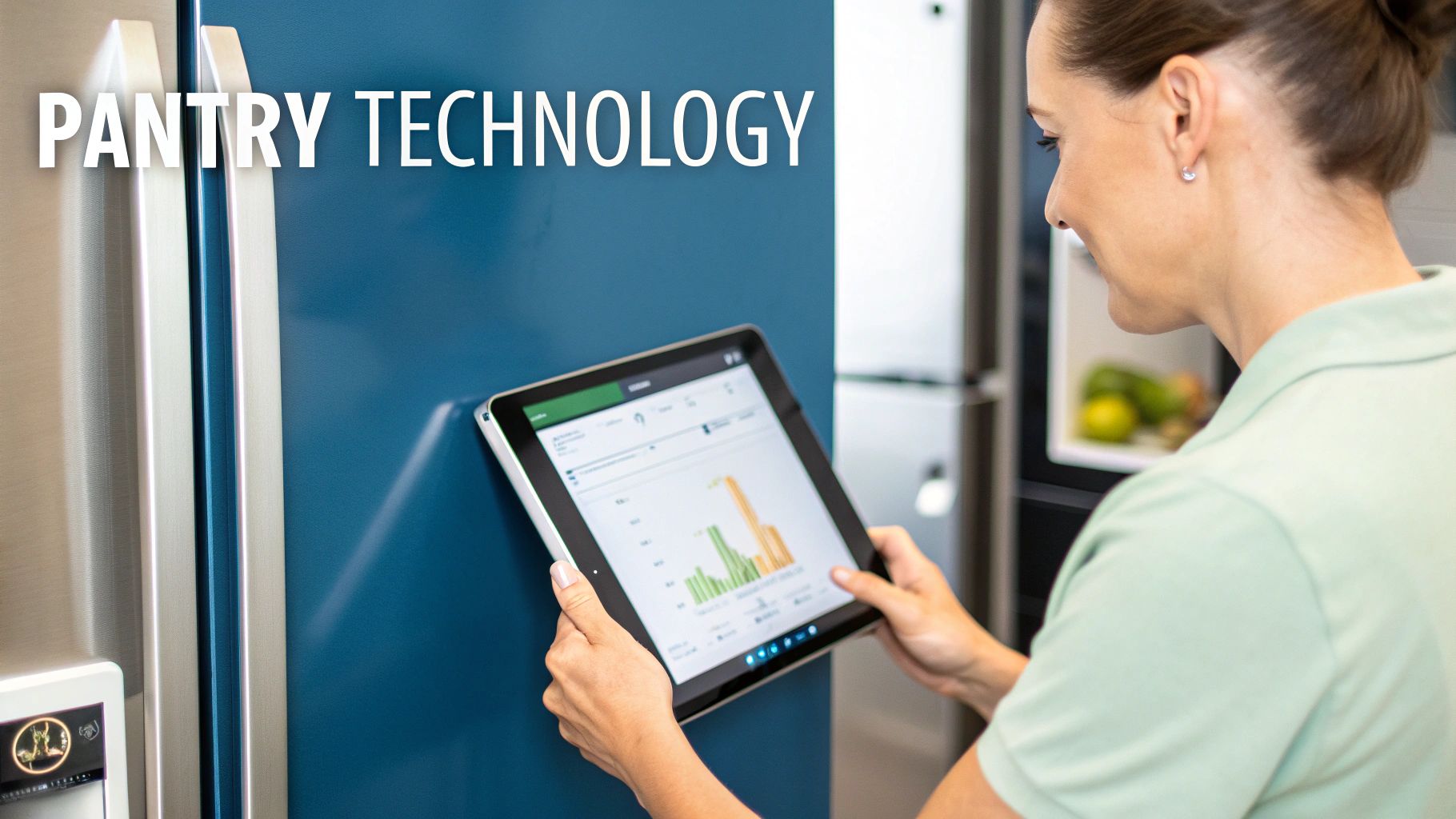
One of the toughest parts of sourcing is simply knowing what to ask for. This is where demand forecasting—powered by some basic data collection—can completely change the game. When you start tracking which items your clients pick up most often, you can shift from a reactive "take what we can get" model to a proactive, needs-based strategy.
This doesn't have to be complicated. A simple digital check-out system, even just a basic form where volunteers tally items as they go out, can reveal some incredibly powerful trends. You might find a huge demand for culturally specific foods that you hadn't considered, or a constant need for things like infant formula. Armed with this information, your conversations with sourcing partners become much more strategic. You can ask for exactly what you know your community is waiting for.
Ditch the Clipboard: Automate Your Inventory
As we've touched on, tracking inventory by hand is a recipe for headaches and mistakes. At Umoja, we recommend accessible digital tools that bring some much-needed clarity and efficiency to your stockroom. A cloud-based spreadsheet or an affordable inventory app gives you a live, real-time look at everything you have on hand.
Making this digital jump unlocks a few critical benefits:
- Pinpoint Accuracy: You know exactly what you have and what you're missing, which makes your purchasing and donation requests far more precise.
- Less Spoilage: It’s so much easier to track expiration dates and manage a First-In, First-Out (FIFO) system. This ensures older items get distributed first, saving food and money.
- Effortless Reporting: Need to generate a report for a grant application or a major donor? You can pull real numbers with just a few clicks, backing up your impact with solid data.
This single move—from clipboards to cloud-based tools—is one of the most foundational steps you can take to modernize your food pantry sourcing solutions.
Technology isn't just about making things run faster; it's about restoring dignity and choice. Digital tools are the key to building a client-choice model that empowers people to select foods that fit their family's health needs and cultural traditions. This leads to less waste and a much more respectful and humane experience for everyone.
Bolster Food Safety and Stay Compliant
Food safety and compliance are absolutely non-negotiable, and technology offers some simple but incredibly effective ways to strengthen your protocols. For example, you can get affordable Internet of Things (IoT) sensors and place them in your refrigerators and freezers to monitor temperatures around the clock.
If a freezer temperature ever creeps out of the safe zone, these devices can send an instant alert straight to your phone. This helps you catch a potential disaster before it happens, preventing catastrophic spoilage. It's a simple, automated layer of protection that provides peace of mind well beyond what manual temperature logs can offer.
Looking ahead, technology is reshaping the entire sourcing landscape. AI-driven forecasting is getting smarter at matching supply with local demand, while IoT sensors and real-time tracking are drastically cutting down on spoilage across the supply chain. Globally, these tools are helping pantries source more effectively from retailers, farms, and manufacturers, which means less waste and more nutritious food getting to high-need areas. You can dig into the global impact of these trends in recent market reports.
By thoughtfully weaving these tools into your operation, you can transform your pantry from a simple distribution point into a responsive, data-driven organization that’s truly ready to meet the needs of your community.
Common Questions About Food Pantry Sourcing
Running a food pantry means you're constantly juggling logistics, and sourcing is right at the heart of it all. We get a lot of questions from program operators on the front lines, so we’ve put together some straightforward answers to the most common ones. Think of this as quick, actionable advice on everything from building partnerships to keeping your food safe.
How Can a Small Food Pantry Partner with a Large Grocery Chain?
The secret is to think local, not corporate. Forget about calling some distant headquarters; your best bet is to build a real relationship with the manager of a nearby store.
Walk in with a simple, one-page summary of what your pantry does. Include key details like the number of families you serve each week and proof of your 501(c)(3) status. Frame your pitch as a win-win: you’re offering them a simple, reliable way to cut down on food waste and meet their community engagement goals. Suggest an easy first step, like a single weekly pickup of near-expiry baked goods or produce. Your professionalism and consistency will be what turns that small trial run into a steady, long-term supply chain.
What Is the First Step for Setting Up an Inventory System?
Before you even think about software or scanners, you have to nail down one thing: a standard process for receiving donations. Nothing should hit your shelves until it's been logged the same way, every time.
Create a simple intake form or logbook. For every single donation that comes through your doors, you need to capture four key pieces of information:
- The date it was received
- The source of the donation (e.g., grocery partner, community food drive)
- The type of food (canned goods, fresh produce, dairy)
- The quantity (a weight estimate or case count works great to start)
You can start with a basic spreadsheet or even a dedicated notebook. This initial data capture is the bedrock of any good inventory system. It’s what lets you track stock levels, spot trends in your sourcing, and properly manage a First-In, First-Out (FIFO) flow to keep food fresh.
Your inventory data does more than just count cans—it tells a powerful story. Knowing you distribute 10,000 pounds of produce a month is a compelling statistic for grant applications and solid proof of your impact for potential corporate partners.
What Are Some Low-Cost Digital Tools for Pantry Management?
You don't need a huge budget to get organized. In fact, many powerful digital tools are available for free or at a significant discount for nonprofits. Programs like Google Workspace or Microsoft 365 for Nonprofits are fantastic places to start.
A simple Google Sheet can become a flexible, collaborative inventory tracking system. You can use Google Forms to streamline everything from volunteer sign-ups to client feedback surveys. When you're ready for something more specialized, platforms like PantrySoft or FoodBank Manager often have free or low-cost plans designed specifically for smaller organizations. These are the kinds of accessible, high-impact tools that can professionalize your operations without costing a fortune.
How Do We Ensure Produce Sourced Directly from Farms Is Safe?
When you’re getting produce straight from a farm, food safety starts with clear communication and solid procedures. Before that first pickup, have a conversation with the farmer to set expectations and get a clear picture of their own handling practices.
Once that produce is in your hands, its safety is your team's responsibility.
- Train your volunteers to do a quick visual inspection of everything that comes in. They should be looking for signs of spoilage, pests, or any kind of contamination.
- Establish clear handling protocols. This means using clean, sanitized containers for transport and storage, every single time.
- Reinforce good hygiene practices with everyone who handles the food, like consistent handwashing and using gloves when sorting.
Always remember the simple rule: when in doubt, throw it out. The Bill Emerson Good Samaritan Act offers vital liability protection for good-faith donations, but that protection hinges on your ability to handle all food safely and responsibly once it’s in your care.
At Umoja Health, we provide the culturally relevant food, compliant program guidance, and logistics support that food banks, agencies, and community organizations need to fight hunger effectively. Learn how we can help you scale your impact at https://umojahealth.com.