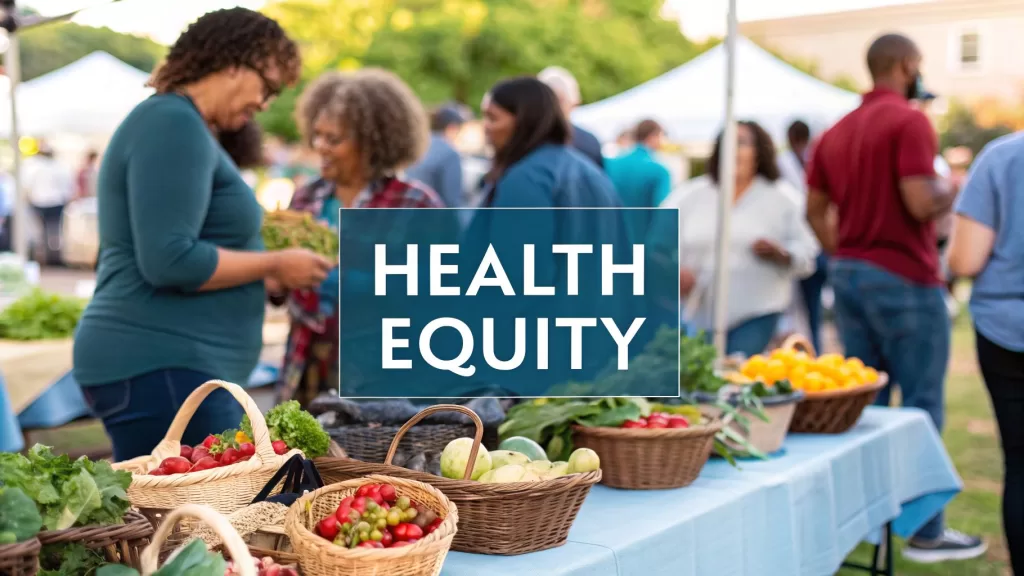
Health equity food programs are more than just a service; they are systemic solutions designed to correct deep-seated imbalances in food access, nutrition, and choice. This guide examines food programs through an equity lens, highlighting actionable improvements.
Instead of putting a bandage on hunger, these programs focus on building genuine, long-term community health and resilience. The goal is to dismantle the root causes of food insecurity, ensuring everyone has a fair and just opportunity to be as healthy as possible.
Beyond Charity: Understanding Health Equity in Food
Think about a community with a water shortage. You could deliver bottled water every day—a necessary, but temporary, fix. Or, you could help that community build its own well, creating a sustainable, self-sufficient source of clean water for the long haul.
Traditional food aid often looks like the first approach. Health equity food programs are about building the well.
They shift the entire conversation from simply distributing calories to creating genuine nutrition security. This means people have consistent access to foods that are not only affordable and healthy but also culturally familiar and desirable. That last part is critical. It’s about restoring dignity and choice, recognizing that food is tied to our identity, our culture, and our overall well-being.
From Temporary Relief to Long-Term Empowerment
The sheer scale of food insecurity in the U.S. shows why a new model is so urgently needed. In 2023, about 13.5% of U.S. households—that’s nearly 47 million people—didn't know where their next meal was coming from. Children and seniors are hit the hardest, with a shocking 20% of kids living in food-insecure homes. You can explore the full data on food insecurity from Feeding America.
This is where a community-led organization like Umoja can make a real difference. By working hand-in-hand with communities, Umoja helps design programs that actually reflect what people need and want. It’s a move away from the one-size-fits-all handout model toward a system where your zip code or background doesn't dictate your health.
This visual really captures the shift from a traditional aid model to a health equity approach—moving from just canned goods to fresh, community-focused produce.
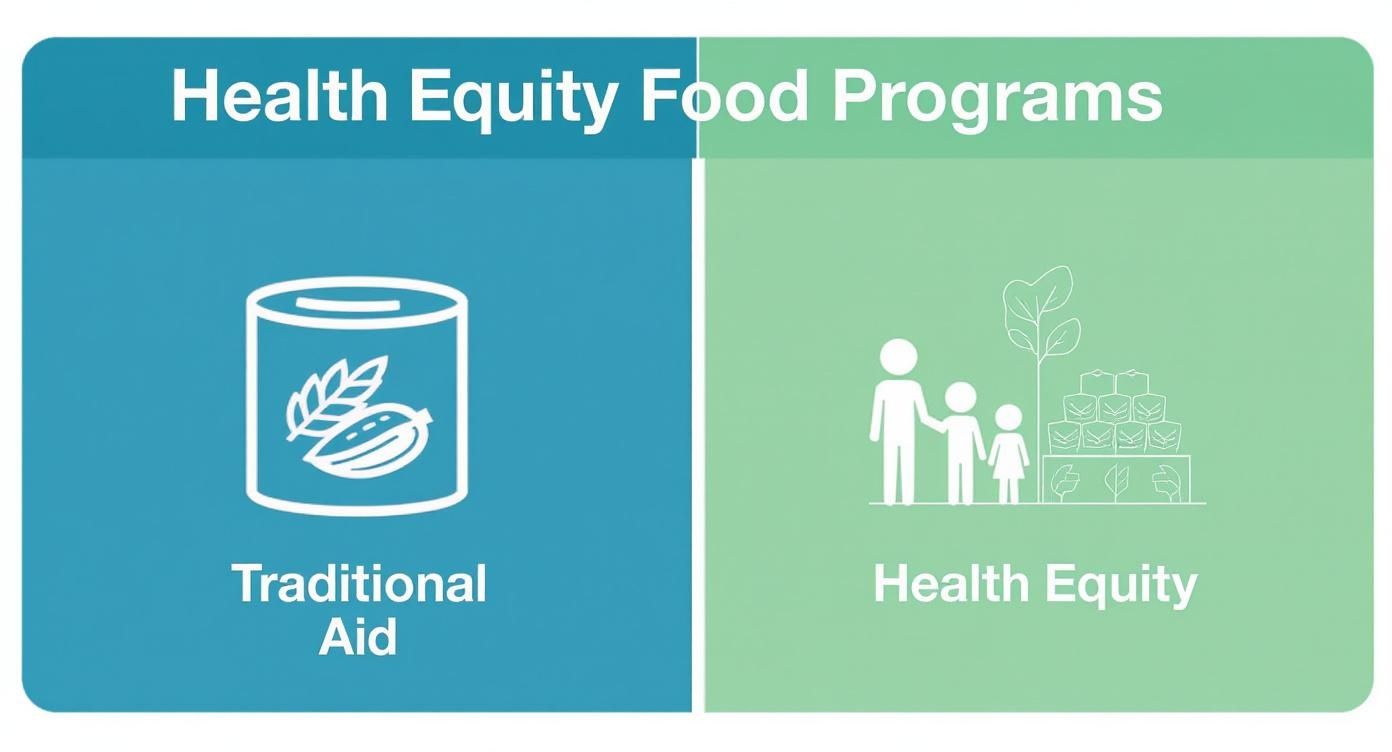
It’s clear that health equity isn't just about feeding people. It’s about empowering them with choice, dignity, and nutrition that truly means something to them.
Key Differences in Approach
The core philosophy of health equity food programs is what truly sets them apart. They are built on partnership, not patronage. An equity lens reveals that traditional charity can sometimes create a power imbalance, positioning one group as givers and another as receivers. Health equity seeks to flatten this hierarchy.
"Food matters when it comes to… outcomes, and not just any food: Nutrient-dense food. Food insecurity in the US manifests as a lack of access to nutrient-rich food, and our study finds that among cancer survivors, this increases one’s risk of mortality."
This insight nails why the quality and cultural appropriateness of food are so vital for health. The mission isn't just to fill stomachs but to nourish lives, and that requires a much deeper understanding of what a community actually needs.
Let's break down how these two models really stack up against each other. The table below highlights the fundamental differences in their goals, methods, and what they ultimately hope to achieve.
Traditional Food Aid vs Health Equity Models
| Dimension | Traditional Food Aid Model | Health Equity Food Program Model |
|---|---|---|
| Primary Goal | Alleviate immediate hunger. | Address root causes of food insecurity. |
| Method | Distribute standardized, non-perishable items. | Provide access to nutritious, culturally connected foods. |
| Community Role | Passive recipients of aid. | Active partners in program design and implementation. |
| Outcome Focus | Pounds of food distributed. | Improved health, economic stability, and empowerment. |
As you can see, the shift is from a transactional approach focused on volume to a relational one focused on holistic, lasting well-being. It's about empowering communities to build a healthier future for themselves.
Designing Food Systems with Community at the Core
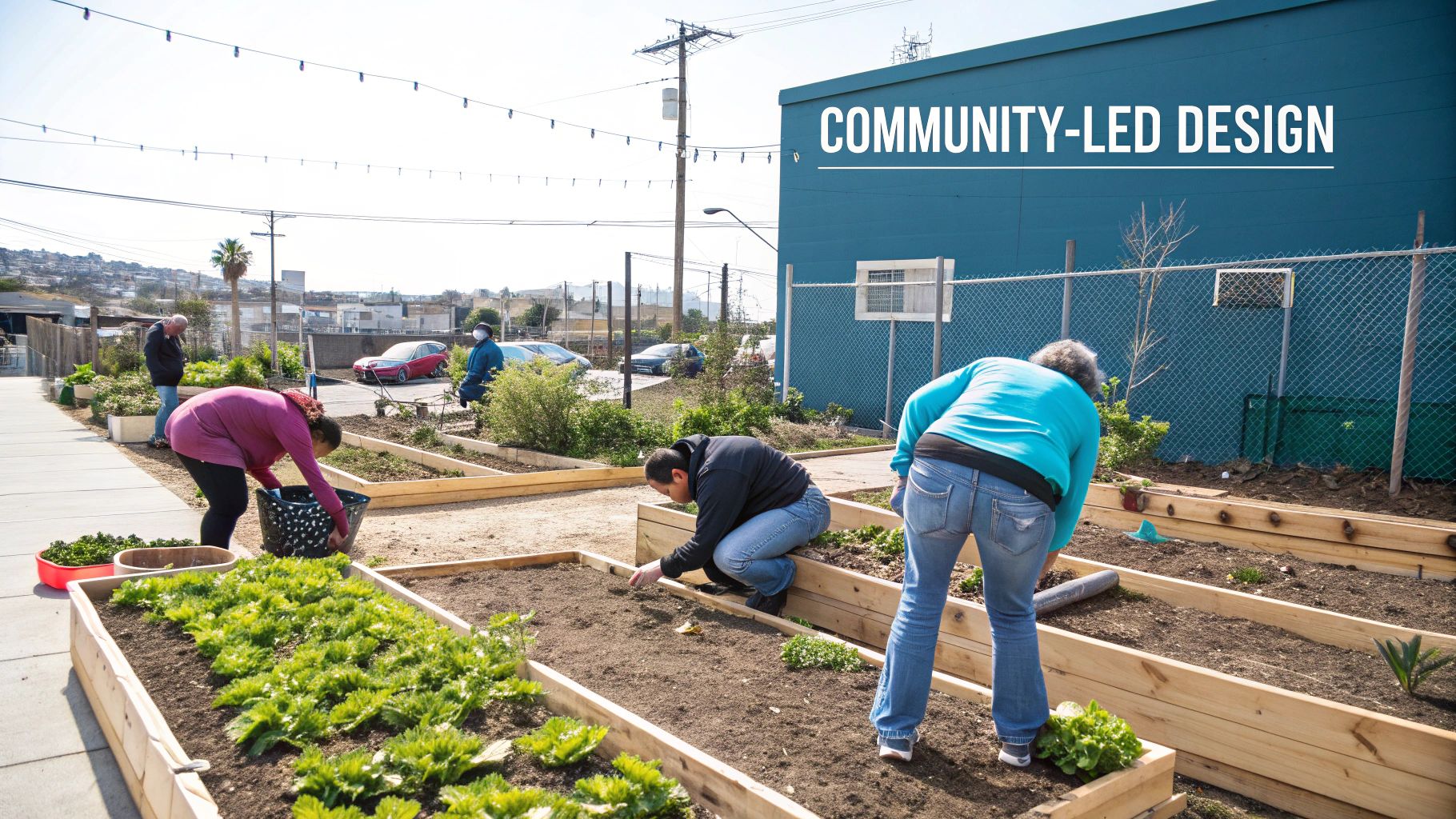
The most effective health equity food programs all share one foundational secret: they are built with, not for, the communities they aim to serve. This is what we call community-centered design, and it goes way beyond just asking for feedback. It means giving people a real seat at the decision-making table, empowering them as co-creators of the very systems meant to support their health.
Think about a community garden for a moment. A top-down approach might involve dropping off pre-packaged boxes of vegetables—kale and rutabaga, perhaps—at every household. While the intention is good, this model completely falls apart if those vegetables are unfamiliar or have no place in local cooking traditions. What you end up with is wasted food and people who feel misunderstood, not helped.
Now, imagine a community-centered approach. It starts with a conversation, bringing residents together to decide what to plant. They might choose tomatoes, cilantro, and jalapeños because they love making fresh salsa, or bitter melon and long beans that are staples in their family recipes. In this model, the community doesn't just get the food; they own the entire process and its success.
Shifting from Beneficiaries to Partners
The heart of this philosophy is a fundamental shift in perspective. We must stop seeing community members as passive recipients of aid and start recognizing them as active partners who hold invaluable expertise. They are the true experts on their own lives, their needs, and their cultural realities. To ignore that expertise is a massive missed opportunity that can doom a program before it even starts.
This is exactly where organizations like Umoja shine. By embedding themselves deeply within the communities they work with, they make sure every food kit and every program directly reflects what people actually want and need. This partnership isn't just a strategy; it's how you build trust and create solutions that aren't just accepted, but truly embraced.
"When people have a say in the food they receive, it's about more than nutrition—it's about dignity. It acknowledges their culture and respects their choices, turning a simple meal into a statement of belonging and respect."
This collaborative spirit is what transforms a food distribution line from a transactional handout into a genuine community resource. It's the critical difference between a temporary fix and a sustainable, empowering solution that lasts.
Actionable Strategies for Community Engagement
So, how do you actually put this into practice? Real community engagement isn't a one-off event; it requires intentional, consistent effort to build channels for authentic dialogue and shared power.
Here are a few ways to get started:
- Form a Community Advisory Board: Create a paid board made up of program participants and local community leaders. Crucially, this group needs to have real authority to influence program design, from menu selection to distribution logistics.
- Conduct Listening Sessions and Surveys: Go deeper than a basic needs assessment. Ask open-ended questions about favorite family meals, traditional holiday foods, and the real-world barriers people face. This rich, qualitative data is gold for shaping your offerings.
- Implement Pilot Programs: Before you roll out a program at full scale, test new ideas with a small group of participants. Get their direct, unfiltered feedback and be prepared to make adjustments. This iterative process ensures your final program is vetted and approved by the people who matter most.
The Umoja Model: A Case Study in Partnership
Umoja’s success is a powerful, living example of community-centered design. Their entire process is built on a foundation of listening. They don't walk in assuming they know what a community needs; they ask, and then they act on what they hear. This approach has led them to develop culturally connected food kits that resonate deeply with the diverse populations they serve.
For example, by partnering with local leaders, they might identify a need for specific staples that just aren't available through traditional aid channels. Sourcing these items directly does more than just provide food; it honors cultural traditions and leads to a significant boost in program participation and satisfaction.
This unwavering dedication to partnership proves a simple truth: the most successful health equity food programs are the ones that transfer power to the people. When a community sees itself and its culture reflected in a program, that program becomes more than just a service—it becomes a source of pride and a catalyst for real, lasting change.
Turning Policy Hurdles into Equity Opportunities
At first glance, the maze of federal and state regulations can feel like a major roadblock for health equity food programs. But what if we saw these policies not as barriers, but as frameworks with built-in flexibility waiting to be unlocked? With the right strategy, these rules can become powerful tools for creating a more just and effective food system.
Many programs are built on guidelines from massive federal initiatives. While these rules are crucial for ensuring safety and nutritional standards, their one-size-fits-all approach can sometimes clash with the very heart of health equity—providing culturally connected, community-driven food.
This friction often shows up in procurement rules that favor huge distributors over local, minority-owned farms, or in nutritional requirements that don't account for diverse dietary traditions. The challenge, then, is to work within these systems while pushing their boundaries to better serve our communities.
Finding Flexibility in Federal Programs
Let's take a look at key players like the Child and Adult Care Food Program (CACFP) and programs funded by the Older Americans Act (OAA). On the surface, their regulations might seem rigid. But with a creative and informed approach, there’s often more room for equity-focused action than you might think.
Here are a few ways to make these programs more equitable:
- Prioritize Local Procurement: Many federal guidelines, including the "Buy American" provision, have exceptions. If local or specific cultural foods aren't available from a macro-distributor, you have an opening. This is your chance to partner with local growers and minority-owned businesses that can supply the culturally relevant foods your community actually wants and needs.
- Rethink Menu Planning: Instead of starting with a sterile nutritional checklist, start with your community's food preferences. From there, work backward to align those beloved meals with USDA guidelines. This simple shift ensures meals are both compliant and genuinely desirable.
- Advocate for Policy Adjustments: Don't be afraid to engage with state and federal agencies. Share direct feedback on how current policies are impacting your community on the ground. Your real-world experience is invaluable for shaping more equitable regulations down the road.
This is exactly the kind of strategic navigation that's central to Umoja's mission. By mastering the complexities of programs like CACFP and OAA, we help partners unlock critical funding while making sure their food kits meet both compliance standards and cultural needs. It’s this practical expertise that turns policy hurdles into pathways for real impact.
School Meals: A Global Equity Initiative
The power of policy-driven food programs is felt far beyond any single community. Globally, school meal programs have become a cornerstone of health equity, serving over 407 million children in 2022. But even here, these initiatives highlight stark disparities.
Programs in higher-income countries, for instance, provide greater access to dairy (96%) and fruits (94%), but often include more processed foods. In contrast, programs in low-income nations rely heavily on legumes (83%) and oils (89%), a reflection of entirely different nutritional and economic realities. The Global Child Nutrition Foundation offers a deeper look into the global state of these programs.
By understanding these global trends, we can better appreciate the nuances of crafting policies that are both broadly effective and locally responsive. The goal is to create systems that nourish children everywhere, respecting their diverse dietary landscapes.
For programs supporting mothers and young children, understanding the specific guidelines is absolutely critical. WIC, for example, has unique requirements that can be a real challenge to manage. Umoja offers WIC-compliant solutions for government partners, providing the focused support needed to turn complex policy into tangible benefits for families.
By working creatively within existing frameworks, we can build health equity food programs that are compliant, culturally responsive, and truly empowering.
Creating Menus That Reflect Culture and Dignity
Food is so much more than fuel. It’s a powerful expression of culture, comfort, and connection. This is the point where health equity food programs move from theory to the dinner plate, where the mission truly comes to life.
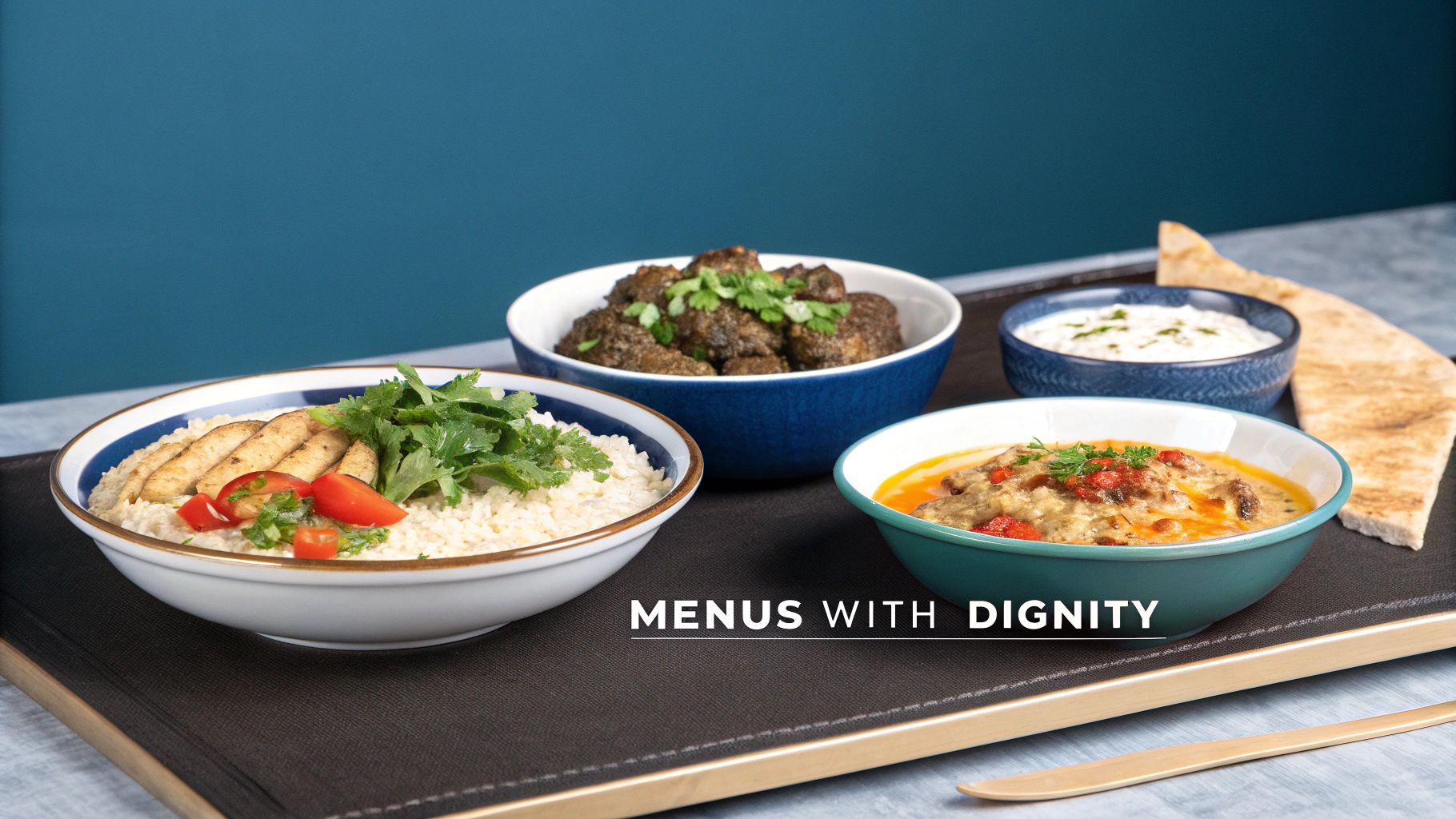
Offering familiar foods isn't just a nice gesture—it's a profound act of respect. This simple acknowledgment directly boosts program participation and improves health outcomes by sending a clear message: "We see you, we respect you, and we value your traditions." It can completely transform a person's experience, replacing feelings of stigma with a sense of dignity and belonging.
Beyond Calories to Cultural Connection
For too long, food assistance has focused almost exclusively on providing calories, often with little regard for whether the food is familiar, desirable, or even usable for the people receiving it. This narrow view can lead to heartbreaking waste, like when a family gets a box of food but lacks the cultural know-how or kitchen tools to prepare it.
A health equity approach flips that script. It starts by recognizing that food has a story. The ingredients in traditional recipes connect people to their history, their families, and their identity. When programs honor these connections, they offer nourishment for the whole person, not just a meal.
This is where the real work of organizations like Umoja begins. Our mission is to build procurement strategies that prioritize ingredients resonating with a community's heritage. This focus on cultural relevance builds the trust and engagement that successful, large-scale programs need to thrive.
A Blueprint for Building a Culturally Connected Supply Chain
Crafting menus that meet genuine community needs demands an intentional, proactive approach. It means looking beyond the standard catalogs of large-scale distributors and actively building a supply chain as diverse as the people it serves. This isn't just about what food is offered, but how it's sourced.
Here’s a practical guide for creating a supply chain that truly nourishes:
- Conduct a Community Food Assessment: This is the essential first step. Go beyond simple surveys and host listening sessions or focus groups. Ask about cherished family recipes, holiday staples, and the specific ingredients that make a meal feel like home. This provides the qualitative data needed to inform your procurement decisions.
- Forge Local Partnerships: Seek out and build relationships with small, local growers, ethnic grocery stores, and minority-owned food businesses. These partners are often the best—and sometimes only—source for authentic, culturally specific ingredients. These partnerships also reinvest resources directly back into the community.
- Prioritize Choice and Variety: Whenever possible, structure your program to offer choice. A market-style setup or a menu with selectable options empowers individuals and ensures they receive food they will actually use and enjoy. This simple shift from a pre-packed box to a personalized selection is a powerful way to restore dignity.
How Umoja Puts This into Practice
Umoja’s procurement process is a real-world case study in building an equity-focused supply chain. We don't just order from a catalog; we actively seek out the foods our community partners tell us are most needed.
This could mean sourcing specific types of beans for a Latinx community, particular spices for a South Asian population, or familiar grains for an African immigrant community.
By prioritizing these culturally connected items, we help our partners deliver food kits that are not only nutritionally sound but also emotionally resonant. This commitment to detail is what turns a box of groceries into a source of comfort and cultural affirmation.
Our approach proves it is entirely possible to run compliant, large-scale programs that also celebrate diversity. It shows that health equity food programs can create a system where food doesn't just prevent hunger but actively promotes well-being, honors heritage, and builds stronger, more resilient communities from the ground up.
Improving Access Through Thoughtful Logistics
How food gets to people can be just as important as the food itself. A truly equitable food program looks beyond the menu and gets into the weeds of the participant's experience. The logistics of distribution—the where, when, and how—can either build dignity or create barriers, making it a critical piece of successful health equity food programs.
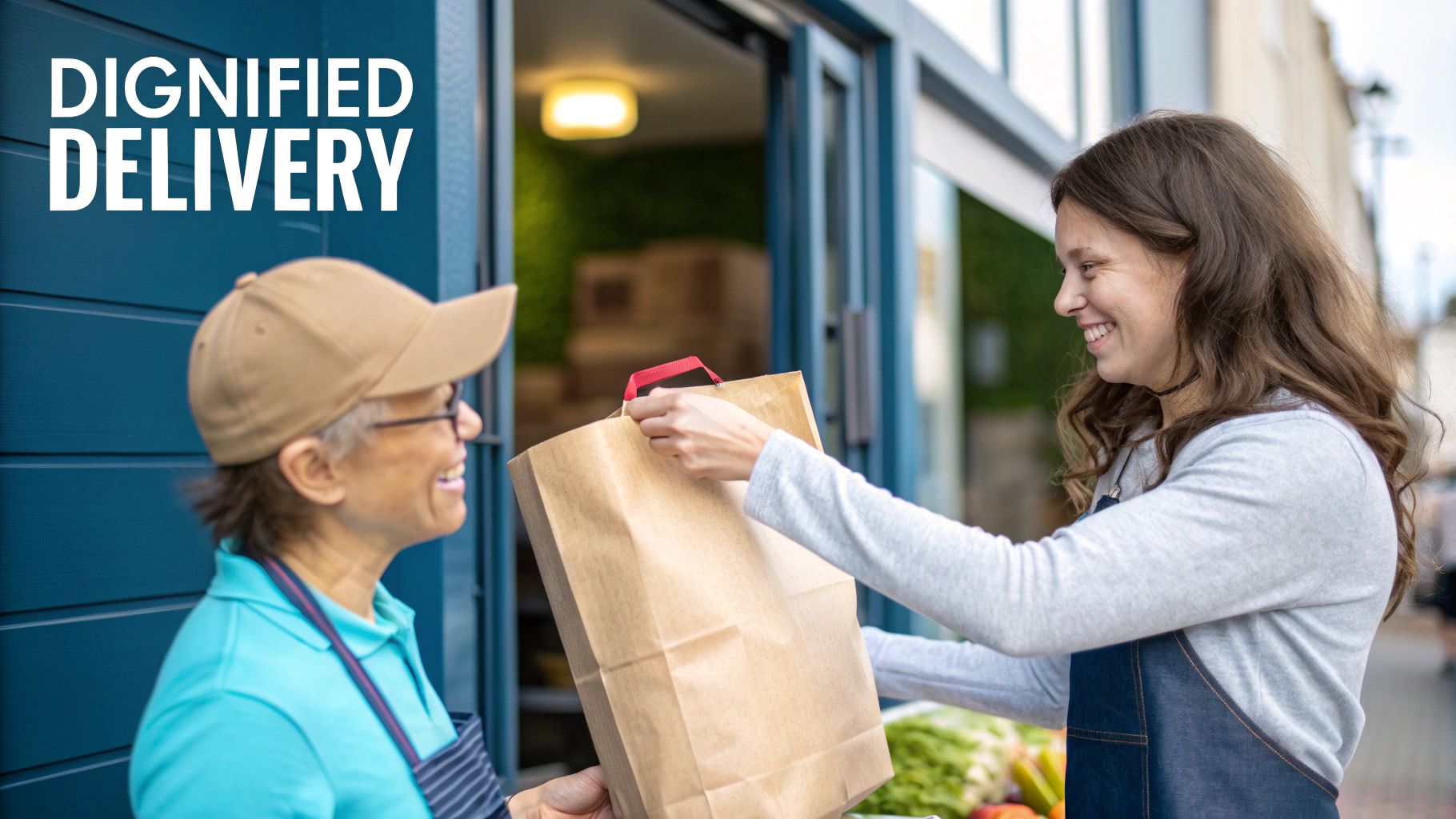
Think about the difference between waiting in a conspicuous, public line versus receiving a discreet home delivery. Or contrast a pre-packed, one-size-fits-all box with a welcoming, market-style pickup where people can choose their own items. One experience can feel stigmatizing; the other is empowering and respectful.
This focus on logistics isn't a minor detail; it's a direct reflection of a program's real commitment to equity. Organizations like Umoja build their systems around this very principle, ensuring that receiving support is always a positive, dignified experience.
Beyond the Box: Practical Considerations
Thoughtful logistics means asking practical, empathetic questions that get to the heart of real-world accessibility. A program's design has to account for the challenges participants face every single day. Simply having food available isn't enough if people can't reasonably get to it.
Here are a few key questions to consider:
- Accessible Hours: Are distribution times convenient for working parents or those who depend on public transportation schedules? Offering evening or weekend options can make all the difference.
- Packaging and Portions: Is the packaging suitable for both single-person households and large families? Providing the right portion sizes prevents food waste and ensures the aid actually matches the need.
- Kitchen Requirements: Do the provided items require special kitchen equipment that participants might not have? Offering a mix of fresh ingredients and ready-to-eat options ensures usability for everyone.
Answering these questions honestly allows programs to design distribution models that remove barriers instead of accidentally creating new ones.
Umoja’s Flexible and Dignified Delivery
Umoja's approach shows how flexible logistics can directly improve health equity outcomes. By offering multiple delivery models, from confidential home delivery to community-based pickup sites, we meet people where they are. Our innovative food kitting programs are designed to be both compliant and incredibly user-friendly, accommodating diverse needs and living situations.
This commitment to logistical excellence is a core part of viewing food access through an equity lens. When we remove logistical hurdles, we increase participation, reduce stress for families, and ensure that nutritious food actually makes it to the dinner table.
The global need for such well-designed systems has never been more urgent. Acute food insecurity has hit unprecedented levels, with over 295 million people in 53 countries facing severe hunger—an alarming rise for the sixth year in a row. This crisis, driven by conflict, economic shocks, and climate change, disproportionately affects the most vulnerable populations. You can discover more insights about this global challenge from the World Food Programme.
By refining the mechanics of food distribution, we create systems that are not only efficient but also deeply compassionate. Thoughtful logistics are a powerful, tangible way to put equity into action, ensuring that every step of the process honors the dignity of the individuals and families being served. This is how we build trust and foster lasting community resilience.
Measuring What Matters Beyond Pounds of Food
For too long, food programs have measured success in one simple, but deeply flawed, way: pounds of food distributed. While it's an easy number to track, it misses the entire point of health equity. It’s like judging a school’s success by the number of textbooks it hands out, without ever asking if the students are actually learning.
The real measure of success is found in the quality of people’s lives.
To truly capture the value of these programs, we have to move beyond volume. We need a framework that tracks meaningful outcomes in health, economic stability, and community well-being. It’s about understanding the human impact behind every single meal.
Shifting to Holistic Outcomes
A holistic approach is about painting a full picture. It combines hard numbers with human stories to show what's really changing. This blend of quantitative and qualitative data is essential for proving the deep, lasting value of your work to funders, partners, and the community.
This means we have to expand our view of what counts as a valid metric. The goal isn't just to feed people, but to capture changes that matter to the participants themselves.
Here are a few key areas to start measuring:
- Dietary Health: Instead of just counting calories, try using a Dietary Diversity Score. It’s a straightforward tool that assesses the variety of food groups a person is eating, giving you a much clearer window into their nutritional health.
- Economic Stability: How does the program affect a family's budget? Track whether participants are saving money on groceries that can now go toward medicine, rent, or utilities. This demonstrates a direct link between food access and reduced financial stress.
- Reduced Stress and Improved Well-being: Use simple surveys or informal chats to ask about mental and emotional health. When a participant shares that they feel less anxious about feeding their family, that's a powerful indicator of success.
The Power of Qualitative Data
Numbers are crucial, but stories are what bring those numbers to life. The real magic happens in the qualitative data—the experiences, feelings, and personal accounts of the people you serve. These aren't just feel-good anecdotes; they are critical evidence of your program's impact on dignity and empowerment.
"When people have a say in the food they receive, it's about more than nutrition—it's about dignity. It acknowledges their culture and respects their choices, turning a simple meal into a statement of belonging and respect."
Collecting these stories can be as simple as conducting short interviews or asking for written testimonials. Learning that your program helped a senior reconnect with their cultural heritage through familiar foods is a profound outcome that "pounds of food" could never, ever capture.
By measuring what truly matters, we can better advocate for and improve health equity food programs. This comprehensive view proves that their value extends far beyond the pantry, creating healthier, more resilient, and more connected communities.
Your Questions on Health Equity Food Programs Answered
Putting these powerful ideas into practice can feel overwhelming. Let's break it down. This final section tackles some of the most common questions that program managers, community leaders, and volunteers run into when building and running food programs centered on health equity.
How Do We Get Community Buy-In for a New Program?
Genuine buy-in always starts with listening, not telling. Instead of showing up with a fully baked plan, your first move should be hosting community forums, sending out surveys, and inviting the very people you hope to serve to be part of the planning process from day one.
When the community co-designs the program alongside you, their support is already built-in. This simple shift changes the entire dynamic from a top-down consultation to a true partnership. The end result is a program they don't just use, but one they feel real ownership over.
What Is the First Step to Making Our Pantry More Equitable?
A great place to start is with what we call a "dignity audit." The best way to do this is simply to ask participants about their experience. Are the distribution hours impossible for working families to make? Do they feel respected and welcomed when they walk in the door? Do the food options actually reflect their cultural traditions and dietary needs?
You'll quickly discover that small changes can have a massive impact. Something as simple as shifting to a market-style setup where people choose their own items, or just adjusting pickup times, can be powerful first steps toward a more dignified and respectful service.
How Can a Small Organization Afford Culturally Relevant Foods?
Sourcing culturally connected foods doesn't automatically mean you need a bigger budget. Often, the key is to think locally and start building strategic partnerships right in your own backyard.
Building a network of local suppliers is about more than just finding the right ingredients; it’s about creating a sustainable ecosystem where resources are reinvested directly back into the community you aim to serve.
Try connecting with community gardens, local farmers, or the small, family-owned ethnic grocery stores in your area. These partners not only provide access to the right kinds of foods but also help create a powerful cycle of mutual support. You'll be strengthening the local economy while nourishing the community at the same time.
Ready to build a food program that prioritizes dignity, culture, and health? Umoja Health provides the expertise and resources to help you run compliant, community-centered programs at scale. Learn more about our solutions at https://umojahealth.com.