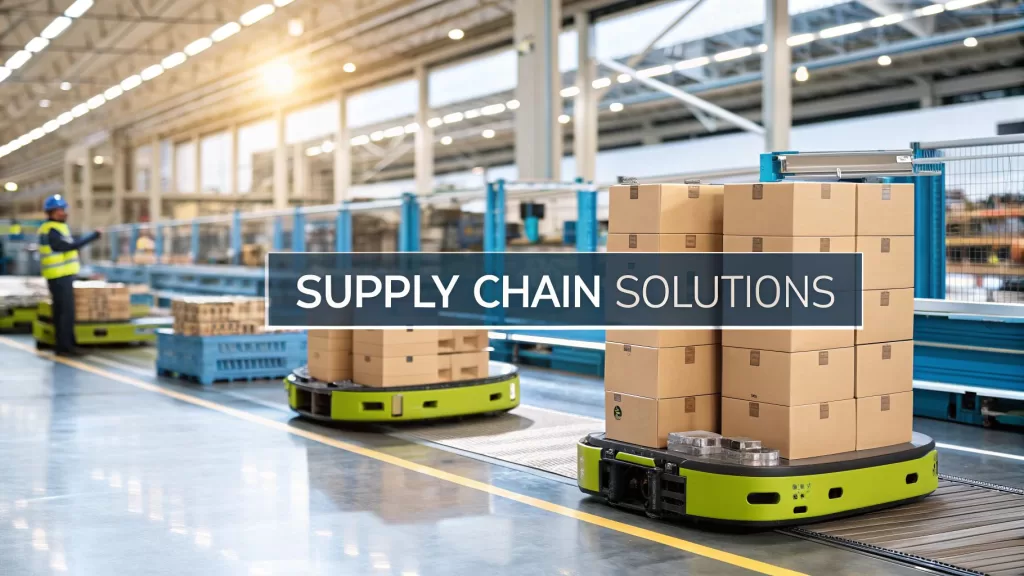
When we talk about healthcare supply chain solutions, we're really talking about the intelligent network that gets medical goods, food, and supplies from point A to point B. It's the system that ensures everything from surgical kits to nutritionally-sound meals for programs like SFSP and WIC land in the right hands, right when they're needed. This isn't just about moving boxes anymore; it's a proactive, tech-driven piece of the patient care puzzle.
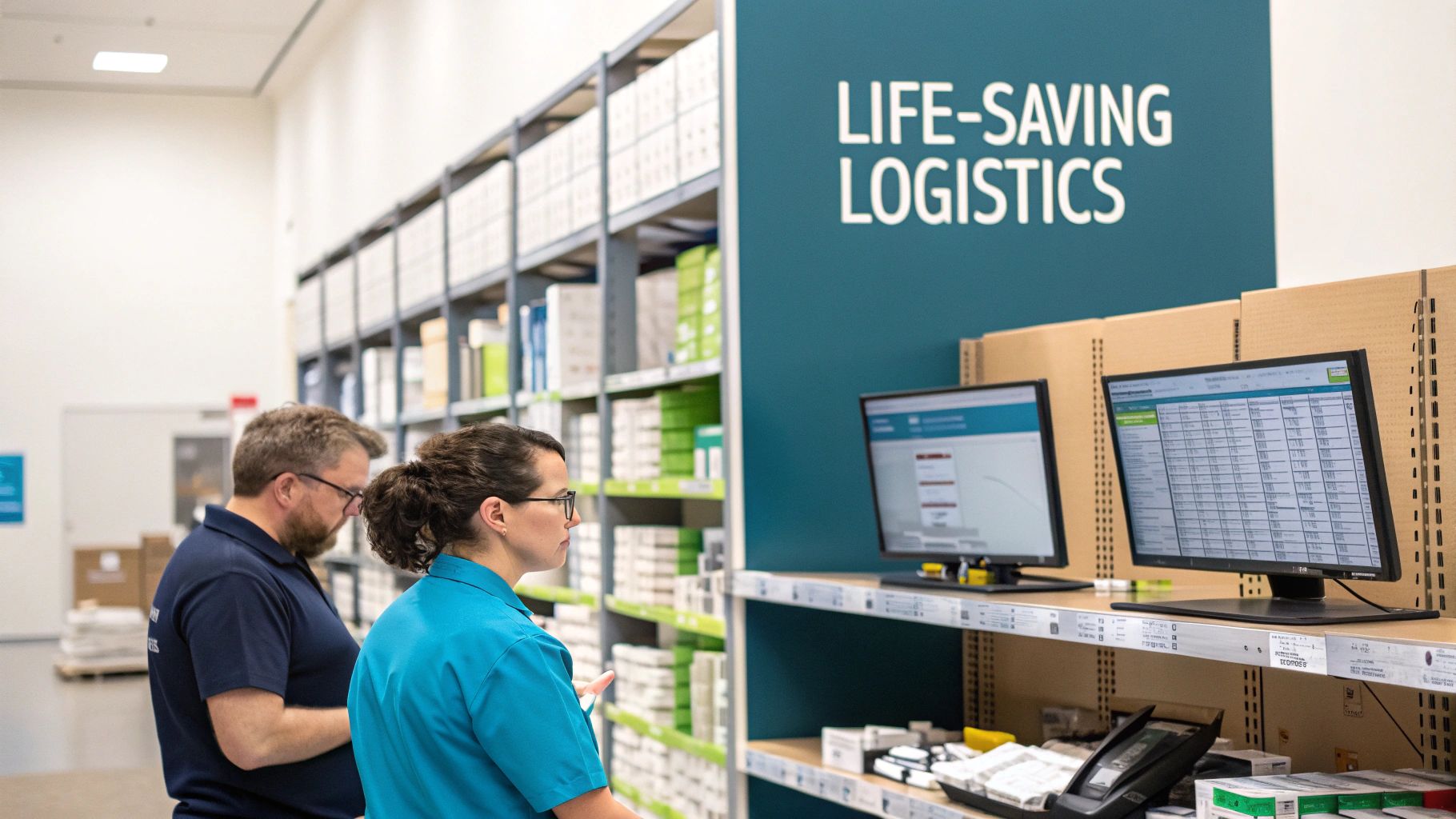
Rethinking Healthcare Logistics Post-Pandemic
The COVID-19 pandemic laid bare just how fragile traditional healthcare supply chains were. That crisis sparked urgent changes that are still reshaping the industry today.
Critical shortages showed us all the danger of relying too heavily on single-source suppliers, which led to massive disruptions. The big shift since then has been toward decentralized warehousing and bringing in a more diverse group of sources. Today's logistics operations weave in advanced freight forwarding and much stricter compliance to keep deliveries moving smoothly. If you're looking to build a more resilient system from the ground up, getting a handle on the basics of logistics support and supply chain success is a great starting point.
The Shift to Proactive Systems
What really separates modern healthcare and food supply chains from the old way of doing things is the smart use of automation and data. Instead of just reacting when an order comes in, the best providers now use predictive analytics to see what's coming. They can forecast needs, which helps prevent stockouts and cut down on waste. This is particularly crucial in modern healthcare food supply chains, where automation trends are enabling just-in-time kitting and delivery for programs serving vulnerable populations.
This forward-looking approach is absolutely vital when you're managing perishable goods for programs like CACFP or getting emergency meal kits out the door where every second counts. These systems give you a kind of foresight that the older, reactive models just can't touch.
Transparency and Reporting as a Core Function
One of the biggest differences you'll see between an agile provider like Umoja and large, older incumbents is in transparency and reporting. Legacy systems from large providers often operate like a black box, spitting out data that’s slow and hard to understand, leaving program managers guessing.
Umoja's approach, in contrast, is built on radical transparency. Modern solutions provide a real-time view of everything through easy-to-use dashboards. You can track inventory levels, check delivery statuses, and see the whole picture instantly. This level of on-demand reporting builds complete accountability and trust.
This kind of detailed, on-demand reporting isn't a nice-to-have feature anymore. It's a fundamental requirement for staying compliant and building trust with partners in government and healthcare programs.
This level of detail means every single stakeholder has the information they need to make smart, data-driven decisions. For any organization juggling complex food programs, that transparency is what proves you're meeting requirements and making a real impact. It turns the supply chain from a simple cost center into a powerful strategic tool.
The Building Blocks of an Agile Supply Chain
A solid healthcare supply chain isn’t one single thing; it’s a whole system of connected pieces all working together. When you get these parts humming, especially for the specific needs of healthcare food logistics, you build a tough, flexible network. One that guarantees safety, compliance, and reliability from the first step to the very last.
It’s a lot like building a high-performance engine. Every single part has to be perfectly made and fitted just right for the whole machine to run without a hitch. In logistics, these parts are the individual jobs that, when combined, create a smooth flow of goods.
Strategic Sourcing and Procurement
The real work of a successful food program starts way before any food gets packed. Strategic sourcing is all about finding and vetting the right suppliers. We’re not just looking for providers of high-quality, culturally familiar foods. We need partners who can meet the tough nutritional and government rules for programs like WIC or CACFP.
This first step is absolutely crucial for compliance. It means making sure every product follows rules like the Buy American provision or meets the dietary needs of different groups, like low-sodium options for senior meal boxes. A mistake here can put the whole program at risk.
Advanced Warehousing and Cold Chain Logistics
Once you have the right products, they need to be stored properly. Today’s warehousing for healthcare is much more than just sticking boxes on a shelf. It demands sophisticated inventory control and special environments. This is where cold chain logistics becomes non-negotiable, especially for perishables like the milk in SFSP kits.
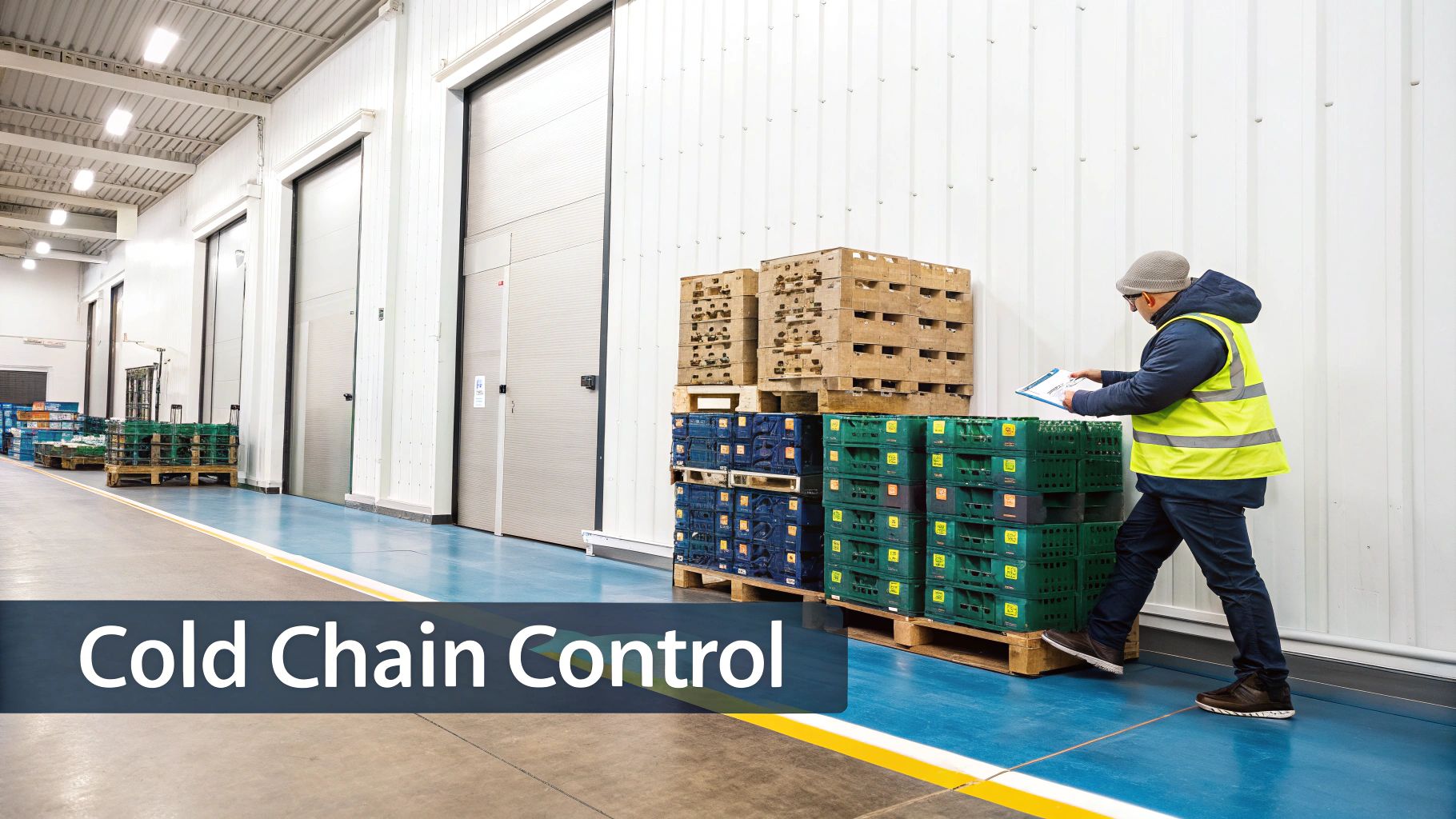
The cold chain is simply an unbroken, temperature-controlled supply line. It uses refrigerated trucks and storage to keep products safe and sound. For healthcare food solutions, this means:
- Temperature-Monitored Zones: Specific areas in a warehouse held at exact temperatures for refrigerated or frozen foods.
- Insulated Packaging: Special containers and cold packs that protect perishable items while they’re on the move.
- Real-Time Tracking: Tiny sensors that log temperatures during the entire trip, creating a clear audit trail for compliance.
Keeping the cold chain intact isn't optional—it's the only way to prevent spoilage and make sure the food delivered is safe to eat.
A single break in the cold chain can wipe out a huge amount of product and, even worse, create a serious health risk. That's why verifiable temperature logs and strict protocols are the mark of any logistics partner you can trust.
Centralized Data and Warehouse Management Systems
To keep all these moving parts in check, you need one central command center. A Warehouse Management System (WMS) is the digital brain of the operation. It gives you a real-time look at every single item in your inventory.
This central hub tracks it all, from the moment a shipment arrives to the second it’s sent out. For program managers, that means you can instantly check inventory levels, see order statuses, and trace lot numbers for full accountability. It’s a huge leap from older, disconnected systems where information was always late and hard to find.
Specialized Kitting and Last-Mile Delivery
Often, the final steps are the trickiest. Kitting and assembly is the process of building the ready-to-go packages, like multi-day meal kits for SFSP or specific grocery boxes for Food is Medicine programs. This takes precision, speed, and sticking to exact pack lists.
Then comes the final handoff: last-mile transportation. This is all about getting those kits to the right people, on time, and in perfect shape. It involves smart route planning, confirmed deliveries, and managing the unique challenges of distributing to hundreds or thousands of different homes or sites. From rural non-congregate meal drops to massive disaster response efforts, the final mile is where all the planning pays off. Together, these pieces form the core of modern healthcare supply chain solutions built for the real-world needs of today.
How Automation and Data Are Driving Efficiency
In a modern healthcare supply chain, technology isn't just a helpful tool—it’s the central nervous system. The days of hunting through paper records, manually entering orders, and reacting to problems after they happen are fading fast. They're being replaced by smart, automated systems that boost efficiency, slash errors, and ultimately lead to better outcomes for the people we serve.
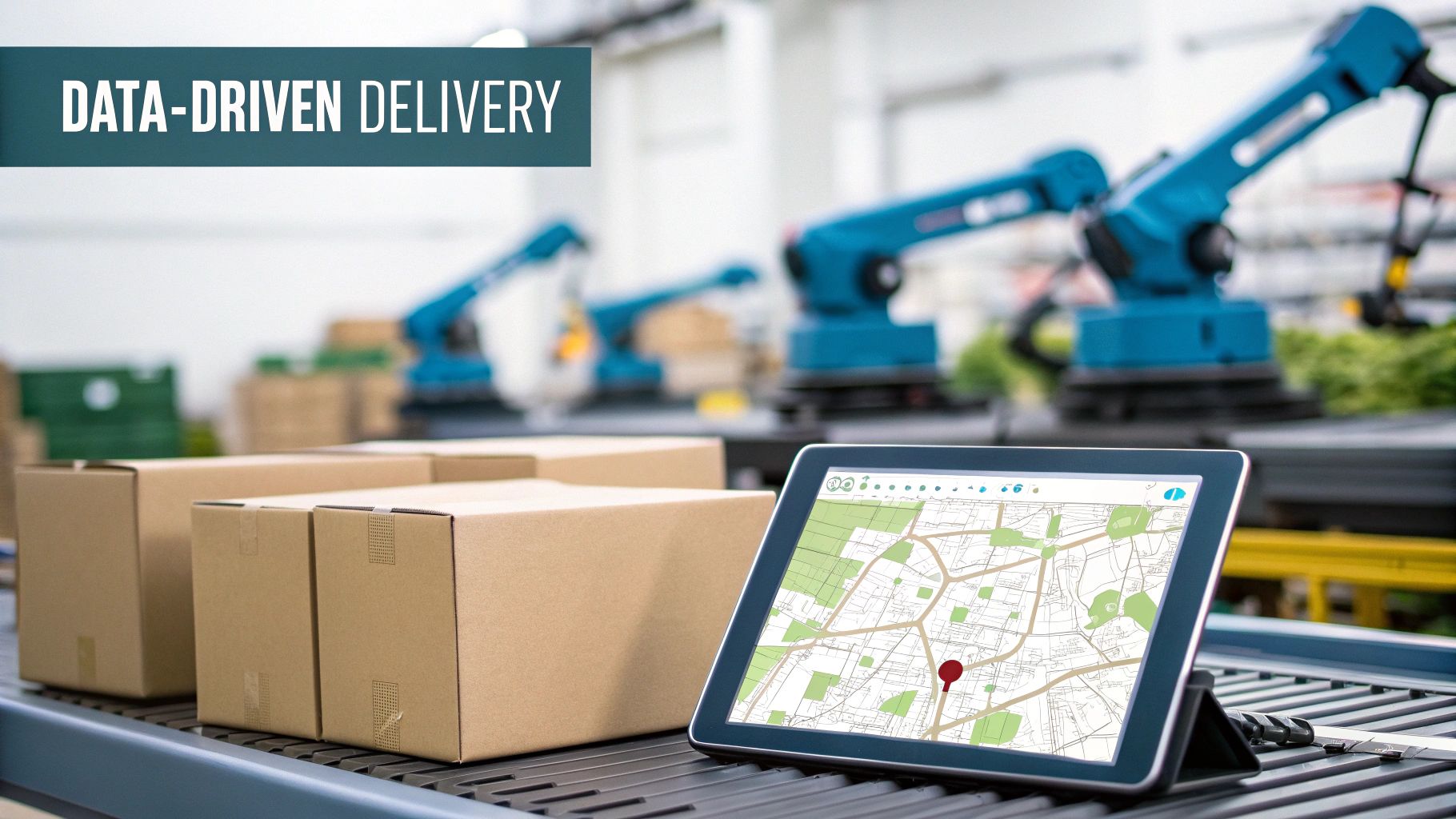
This isn’t just about getting new software. It's a fundamental shift in how we think about and manage logistics. By putting automation and data to work, organizations can build a more dependable, transparent, and responsive supply chain. This is non-negotiable for healthcare and food programs where timing and accuracy can make all the difference.
The Rise of Smart Automation
Automation is all about tackling the repetitive, time-sucking tasks that are often magnets for human error. When you automate, you free up your team to focus on the strategic work that really matters.
In a healthcare food supply chain, the benefits are immediate and tangible. Think of Robotic Process Automation (RPA). It can process thousands of orders, check them against program rules, and schedule shipments without a single person having to click a button.
Meanwhile, AI-powered route optimization software acts like the world's best navigator, making sure delivery vehicles take the quickest, most fuel-efficient paths. For perishable goods in programs like SFSP, that's a game-changer. These systems analyze traffic, weather, and delivery windows in real-time to make sure everything arrives on schedule. This digital shift is catching on, with nearly 70% of U.S. health organizations expecting to move their supply chain management to the cloud by 2026.
This level of automation does more than just save time and money. It builds a foundation of reliability that program managers and patients can count on, ensuring that essential meals and medical supplies arrive exactly when and where they are needed.
Data-Driven Forecasting and Decision-Making
Maybe the biggest leap forward is the shift from reacting to problems to predicting them. Today's healthcare supply chain solutions use predictive analytics to forecast demand with incredible accuracy. By digging into historical data, seasonal trends, and even public health reports, these systems can see a need coming long before it becomes an emergency.
This kind of foresight is a game-changer for food programs, helping to prevent both stockouts and wasteful over-ordering. Instead of guessing how many meal kits you'll need for a holiday, you're making decisions based on solid data. It’s no surprise the entire healthcare supply chain management market is exploding, projected to hit USD 6.32 billion by 2034. That growth is all about the demand for better security and traceability fueled by data. If you’re curious about the technical nuts and bolts, a great place to start is learning about automating data pipelines for robust, efficient workflows.
The table below breaks down how specific technologies are solving some of the oldest headaches in logistics.
Impact of Technology on Healthcare Supply Chains
| Technology | Traditional Challenge | Modern Solution & Benefit |
|---|---|---|
| Predictive Analytics | Guesswork-based forecasting, leading to stockouts or waste. | Analyzes historical data to accurately predict demand, optimizing inventory and reducing costs. |
| Robotic Process Automation (RPA) | Manual order entry, invoicing, and scheduling are slow and error-prone. | Automates repetitive tasks, increasing speed and accuracy while freeing up staff for strategic work. |
| AI-Powered Route Optimization | Inefficient delivery routes waste fuel and cause delays. | Calculates the most efficient routes in real-time, factoring in traffic and weather to ensure on-time delivery. |
| Real-Time Inventory Tracking | Lack of visibility into stock levels, causing confusion and delays. | Provides a live, accurate view of all inventory, preventing shortages and enabling proactive management. |
As you can see, technology isn't just an add-on; it directly addresses core operational weaknesses, making the entire supply chain stronger and more reliable.
Umoja's Approach: Transparency and Reporting
This is where agile providers like Umoja really part ways with the big, traditional incumbents. The old guard often relies on rigid, one-size-fits-all systems that spit out reports that are already out of date by the time you read them. This leaves program managers in the dark, unable to get a clear, real-time picture of their own operations.
Our approach is built on radical transparency. We designed our systems to give you instant access to actionable data through simple, real-time dashboards. For our partners, this means you can:
- Track Inventory Live: See exact stock levels for everything, from a single can of beans to a fully assembled meal kit.
- Monitor Deliveries in Real-Time: Follow every shipment from our warehouse to its final destination with pinpoint accuracy.
- Generate Instant Compliance Reports: Pull detailed documentation for audits with a single click, proving you’ve met every program requirement.
This commitment to clear data and honest reporting is the bedrock of our partnership model. With tools like the UmojaCloud platform, we give organizations the visibility they need to manage complex programs with confidence, ensuring total accountability and driving constant improvement.
Finding the Right Partner: Agile Providers vs. Incumbents
Choosing a logistics partner for your healthcare or food program is one of the most critical decisions you'll make. Not all healthcare supply chain solutions are built the same, and the partner you pick directly shapes your program's efficiency, compliance, and ultimate success.
The field is pretty much split between two camps: the large, traditional incumbents and the smaller, tech-forward agile providers. Getting the fundamental differences between them is key. Incumbents often bring sheer scale and established networks to the table, but that size can also mean rigid, one-size-fits-all service that struggles to adapt. Agile providers, on the other hand, build their entire operation around flexibility, technology, and a deep focus on your specific program needs.
Customization vs. Rigidity: The Core Difference
If you're managing a complex program like WIC, SFSP, or an emergency food bank, the ability to tailor a solution isn't a luxury—it's everything. Each program has its own unique compliance rules, participant needs, and operational headaches. This is where the contrast between agile partners and incumbents becomes crystal clear.
Big, legacy providers often lean on standardized processes built for mass-market shipping. Ask them to handle specialized kitting for a "Food is Medicine" grocery box or the precise cold chain for an SFSP milk delivery, and you might hit a wall of long lead times and extra costs. Their systems are built for volume and repetition, not nuance.
An agile provider like Umoja is built differently. We start with your program's mission and design a workflow to match.
- Tailored Kitting: We can create custom meal kits that hit the specific nutritional guidelines of CACFP or honor the cultural preferences of a tribal community.
- Flexible Delivery Models: Whether it's last-mile home delivery for Rural Non-Congregate meals or bulk shipments to a central food bank, our transportation plans adapt to you.
- Program-Specific Compliance: We bake the unique rules of each program, like Buy American provisions or WIC-approved product lists, directly into our warehouse management system.
This approach means you get a solution that truly fits your mission, instead of trying to jam your program into a pre-made logistics box.
The Power of Data-Driven Improvements
Modern healthcare food supply chains run on data. The ability to collect, analyze, and act on real-time information is what separates a smooth, proactive operation from a reactive, inefficient one. Agile providers use data as a central tool for constant improvement, a world away from the often murky and delayed reporting from legacy systems.
For instance, by analyzing delivery route data, an agile partner can use AI-powered tools to find faster, more fuel-efficient paths, making sure perishable goods arrive fresh and on schedule. In the same way, tracking inventory turnover helps predict demand, preventing stockouts of critical items and cutting waste from over-ordering. This turns logistics from a simple service into a strategic asset.
In today's world, a logistics partner who doesn't provide clear, real-time data is leaving you to manage in the dark. True partnership is built on shared information and complete operational visibility.
Transparency and Reporting: The Umoja Approach
This brings us to the biggest difference-maker: transparency. Traditional incumbents can feel like a black box. You place an order, and maybe you get a report a week or a month later, often in a format that’s hard to make sense of. This lack of visibility makes it nearly impossible to manage your program proactively or feel ready for an audit.
At Umoja, we believe radical transparency is the foundation of trust. Our technology platform was designed from the ground up to give you a live, unobstructed view into every piece of your supply chain. With our real-time dashboards, you can instantly see:
- Live Inventory Levels: Know exactly what you have in stock, right down to the last item.
- Real-Time Order Status: Track every order from the moment it's placed to the second it's delivered.
- Instant Compliance Documentation: Pull audit-ready reports on demand, providing a clear and verifiable trail for every single transaction.
This commitment to open access and immediate reporting empowers you. You can make smarter decisions, ensure accountability, and confidently show your program's impact to stakeholders. It’s a modern approach for a modern need.
How to Select Your Ideal Supply Chain Partner
Choosing the right supply chain partner is one of the most critical decisions you'll make for your food and medical programs. This isn't just about hiring a logistics vendor; it's about finding an operational extension of your team—a partner who genuinely understands your mission and has the chops to execute it perfectly, day in and day out.
Getting this right requires a clear, methodical approach. You need to dig deep to find a partner who can truly deliver on their promises, especially when dealing with the strict demands of programs like SFSP, Medicaid, or WIC.
https://www.youtube.com/embed/JShQ8BX08rs
A strong selection process starts with a detailed evaluation. This goes way beyond comparing price sheets. It’s about vetting the real-world capabilities, the on-the-ground experience, and the technological backbone of any potential partner.
Your Partner Evaluation Checklist
Before you even start taking calls, it helps to have a structured checklist ready. This forces you to cover all the critical bases—from compliance know-how to tech proficiency—and allows for a true apples-to-apples comparison.
You'll quickly find there are two main types of providers out there: the agile, modern partners and the old-guard, traditional incumbents. They operate on fundamentally different philosophies.
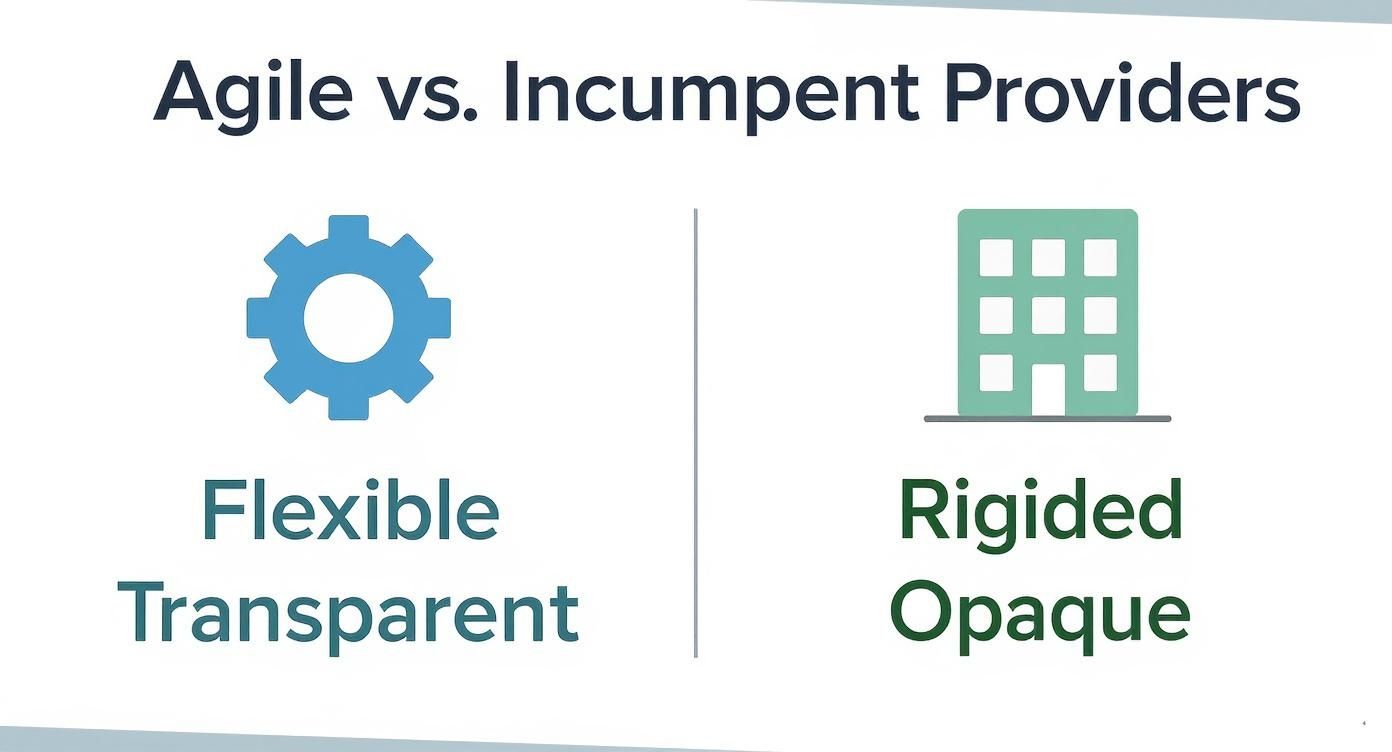
As you can see, agile partners are built for the kind of flexibility and real-time visibility that complex, compliance-heavy programs demand. When every detail matters, you need a partner who can adapt on the fly.
To help you vet potential partners, we've put together a checklist of key questions and ideal attributes. Think of this as your guide to separating the contenders from the pretenders.
3PL Partner Evaluation Checklist
| Evaluation Category | Key Questions to Ask | Ideal Partner Attributes |
|---|---|---|
| Proven Program Experience | Can you share case studies or references from SFSP, CACFP, or Medicaid programs you've managed? How do you handle their specific compliance and reporting needs? | Deep, verifiable experience with government-funded food and health programs. They can "speak the language" of your specific program. |
| Technological Capabilities | What does your client dashboard look like? Can we see real-time tracking and inventory levels? Tell us about your WMS and EDI capabilities. | A modern, user-friendly tech stack with client-facing portals, real-time data, and seamless integration options. No more waiting a week for reports. |
| Cold Chain Integrity | Walk us through your cold chain protocols from receiving to final delivery. Can you provide verifiable temperature logs for past shipments? | Robust, documented cold chain procedures with end-to-end temperature monitoring and instant alerts for any deviations. |
| Compliance & Audit Support | How do you prepare for and support client audits? Can you produce all necessary compliance documentation on demand? | Proactive compliance management. They should be able to pull audit-ready documentation in minutes, not days. |
| Flexibility & Scalability | How would you handle a sudden 50% increase in our volume? What if we need to change our kitting specifications mid-program? | A flexible operational model that can scale up or down with your needs without sacrificing quality or speed. |
| Kitting & Assembly | Can you manage complex, multi-component kits with variable items? What are your quality control checks during the kitting process? | In-house, high-speed kitting capabilities with multi-point quality control to ensure order accuracy every time. |
This checklist isn't exhaustive, but it provides a solid foundation for your conversations. A truly capable partner will have confident, detailed answers for every one of these questions.
Mapping Your Implementation Journey
Once you’ve found a partner that ticks all the boxes, the next phase is creating a smart implementation roadmap. A successful transition is a phased process, not a flip of a switch. Breaking the launch into manageable stages is the best way to reduce risk and ensure a smooth start.
The demand for specialized logistics is growing fast. The global healthcare supply chain BPO market was valued at USD 2.68 billion in 2024 and is on a steep upward trend, driven by the need for more efficient and tech-forward operations. This just highlights how important it is to choose a partner who is a strategic asset, not just a service provider. You can read the research on healthcare BPO trends to see the full market analysis.
A smart implementation roadmap usually looks something like this:
- Initial Needs Assessment: Get granular. Document every single requirement, from specific kitting instructions and delivery windows to the exact data points you need in your reports.
- System Integration: Map out how your systems and your partner’s systems (like their WMS) will talk to each other. The goal is a seamless flow of orders and data.
- Pilot Program: This is a must. Start with a small, controlled pilot to test the entire workflow. This is where you iron out the kinks and refine processes before going big.
- Full Launch & KPI Monitoring: Once the pilot is successful, go live with the full program. From day one, you should be closely tracking your key performance indicators to measure performance against your goals.
A partner’s willingness to run a phased pilot is a huge green flag. It shows they are confident in their abilities and are committed to getting it right for the long haul.
Measuring Success With The Right KPIs
You can't manage what you don't measure. Establishing clear Key Performance Indicators (KPIs) from the very beginning is the only way to ensure your partner is meeting your expectations and holding them accountable.
For mission-critical programs like the Umoja PackHope initiative, tracking these metrics with precision is what ensures every single kit is delivered exactly as it should be.
Here are a few of the most important KPIs for healthcare food logistics:
- On-Time In-Full (OTIF) Rate: What percentage of orders were delivered on schedule, with all items included, and in perfect condition? You should be aiming for 98% or higher.
- Order Accuracy: The percentage of orders that were picked, packed, and shipped without a single error.
- Inventory Accuracy: How closely does the partner's system inventory match a physical count? This is a key indicator of their operational discipline.
- Cold Chain Compliance: The percentage of refrigerated or frozen shipments that maintained the required temperature from warehouse to doorstep. Anything less than 100% is a problem.
Frequently Asked Questions About Healthcare Supply Chains
As organizations look to improve their logistics, a few key questions always seem to surface. It's easy to get lost in the weeds of modern healthcare supply chain solutions, but getting clear, direct answers is the first step toward building a better system for your programs.
Below, we tackle the most common questions we hear from partners managing everything from SFSP and WIC programs to large-scale disaster response.
What Is the First Step to Improve Our Healthcare Food Supply Chain?
Start with an honest, thorough internal audit. Before you can fix anything, you need a crystal-clear picture of what’s working and what isn’t. Map your entire process—from the moment you source products to when they reach the final person you're serving.
Get specific about your biggest pain points. Are late deliveries derailing your schedule? Is the lack of real-time inventory visibility causing stockouts or waste? Do compliance reports feel like a constant scramble? Documenting these challenges gives you a concrete set of problems to solve and a solid benchmark to measure improvement with a new partner.
How Does a 3PL Partner Ensure Compliance for Programs Like SFSP or WIC?
A modern 3PL doesn’t just tack on compliance as an afterthought; they build it directly into their technology and day-to-day operations. It's a multi-layered approach that takes the guesswork out of the equation and dramatically cuts down on human error.
- Technology-Driven Controls: A sophisticated Warehouse Management System (WMS) is the foundation. It's configured with specific program rules, like WIC-approved product lists or Buy American provisions. The system automatically flags non-compliant items before they can become a problem.
- Documented Procedures: Every critical process, especially something like cold chain management, is guided by strict, documented Standard Operating Procedures (SOPs). This creates a verifiable audit trail for every single shipment, which is exactly what you need when auditors come knocking.
- Real-Time Monitoring: For temperature-sensitive items, live data loggers are non-negotiable. They track conditions from the warehouse shelf all the way to the final delivery point, providing undeniable proof that you met all safety and compliance standards.
What Reporting Should We Expect From a Modern Supply Chain Partner?
You should expect total transparency and on-demand access to data you can actually use. The days of waiting for a month-end report that’s already ancient history are over. A modern partner should give you a real-time window into your entire operation.
The standard today is a client-facing dashboard that offers instant visibility. This isn't just a nice-to-have feature—it's a fundamental requirement for accountability and effective program management in the healthcare and food logistics space.
This means you can log in anytime and see live inventory levels, track the exact location of every delivery, and pull up detailed reports on key metrics like order accuracy and on-time performance. This level of insight empowers you to make smarter decisions, prove your program's impact, and drive continuous improvement.
Ready to build a more transparent, compliant, and efficient supply chain for your program? The team at Umoja Health specializes in creating logistics solutions that meet the complex needs of government, healthcare, and community-based organizations. Learn more about our mission and solutions.