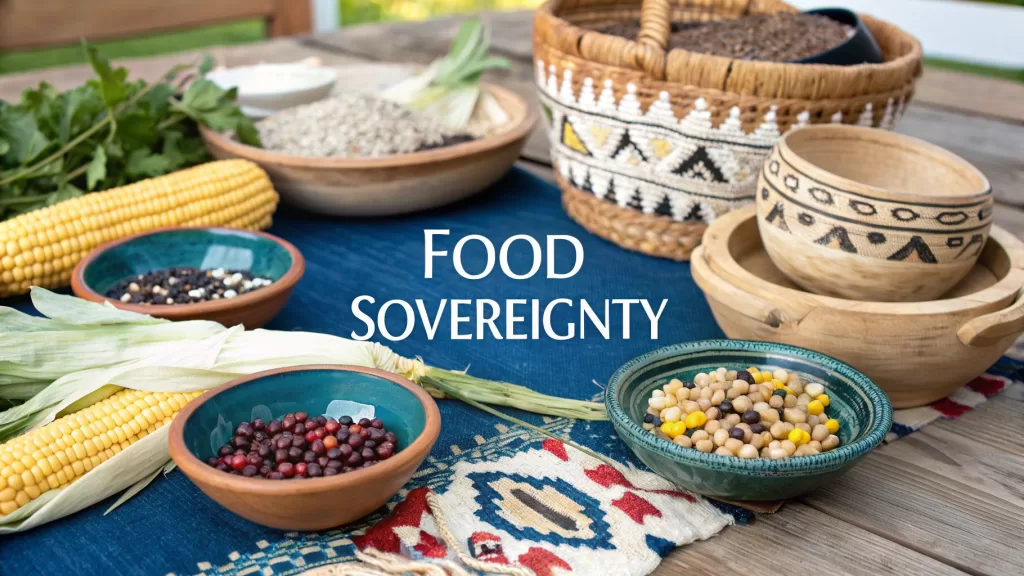
Navigating the landscape of food security and nutrition within Indigenous communities requires a deep understanding of both federal frameworks and tribally-led, culturally-grounded solutions. This guide is built for program administrators, managed care teams, and logistics professionals seeking to implement or enhance native american food programs. We provide a comprehensive breakdown of key initiatives, from large-scale federal aid like the Food Distribution Program on Indian Reservations (FDPIR) to innovative, community-based models like Umoja Health's culturally sustaining meal kits. The goal is to move beyond mere distribution and toward genuine food sovereignty.
Each entry in this listicle offers a strategic analysis, dissecting the operational, logistical, and cultural components that define success. Readers will find actionable takeaways and replicable strategies, including detailed case studies, menu examples, and compliance checklists. We explore critical topics such as USDA procurement guidelines, cold-chain exceptions for rural delivery, and integrating traditional foods into modern distribution systems. For instance, we will document Umoja's experience in building culturally relevant meal kits from the ground up, incorporating community voices to ensure the food not only nourishes but also honors heritage.
This article is designed to be a practical toolkit. You will find direct links to program websites, screenshots illustrating key features, and specific insights into eligibility, funding streams, and packaging. These examples are crucial for state administrators drafting non-congregate guidance, food bank managers planning procurement, or WIC vendor managers exploring online benefit redemption. Beyond programs specifically for Native American communities, many state-led initiatives to boost local food access reflect a similar commitment to food security, providing a broader context for these targeted efforts. This guide equips you with the detailed information needed to build effective, respectful, and sustainable food support systems.
1. Umoja Health
Umoja Health stands out as a comprehensive, mission-driven partner for organizations seeking to implement scalable and compliant native american food programs. As an NMSDC-certified minority-owned enterprise, Umoja integrates nutrition, healthcare, and logistics to deliver turnkey solutions nationwide. Their expertise spans a wide array of federal and tribal initiatives, making them a formidable ally for program administrators who need reliable execution and culturally attuned food solutions.
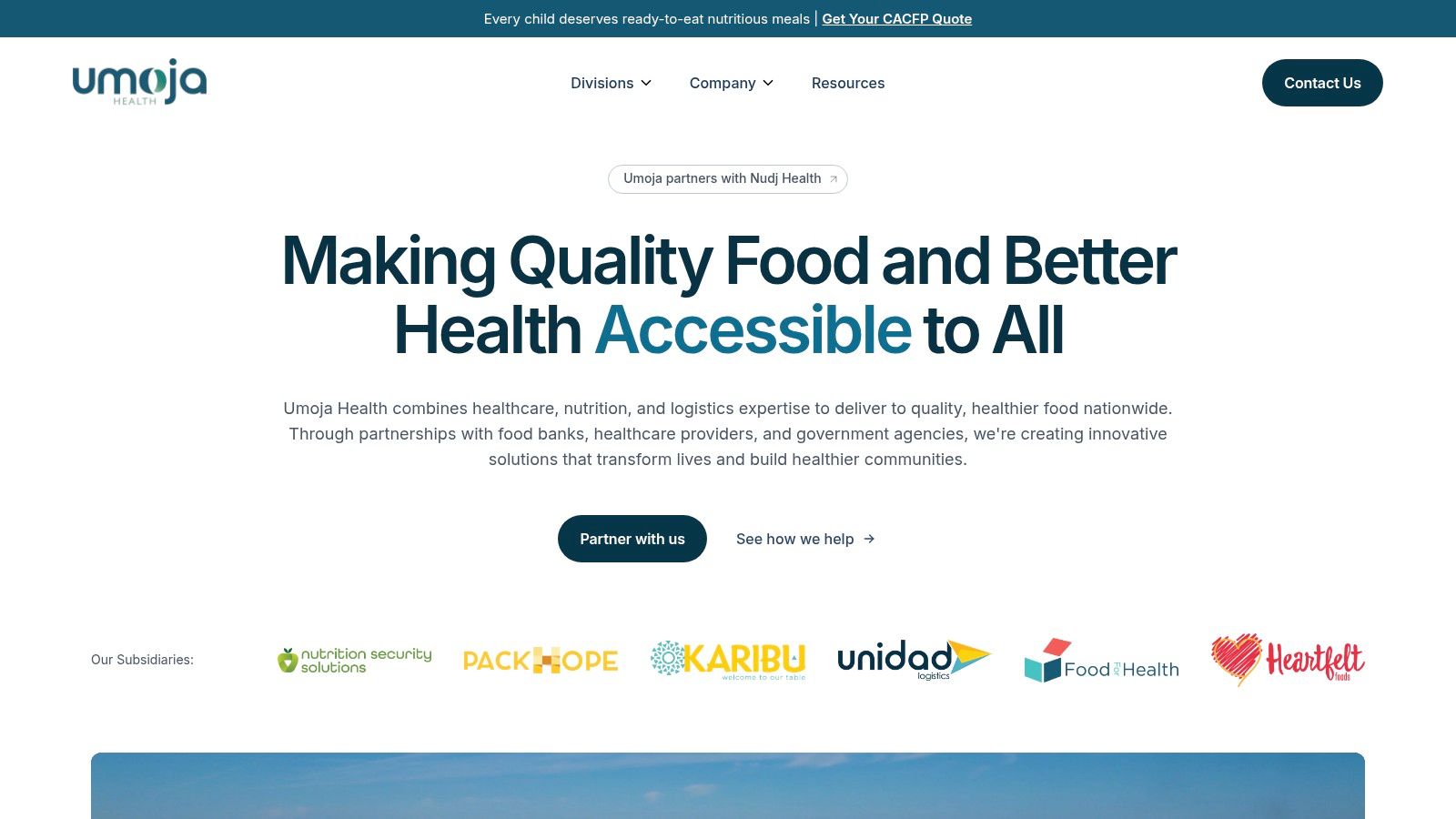
The platform is not merely a food supplier but a full-service program operator. Their core strength lies in designing and deploying pre-kitted, program-compliant meal boxes tailored to specific needs, from child nutrition (SFSP/CACFP) and senior support (OAA) to clinical Food is Medicine interventions. This turnkey approach removes significant administrative and logistical burdens from tribal program leads, state agencies, and healthcare partners.
Case Study: Umoja's Best Practices in Culturally Sustaining Food Assistance
Umoja's strategic advantage is its vertically integrated model, which serves as a best practice in delivering culturally sustaining food assistance. Their in-house, FDA-registered 3PL, Unidad Logistics, provides an audit-ready backbone for complex food programs. This control over the supply chain allows for exceptional flexibility and compliance.
- Audit-Ready Compliance: Unidad Logistics offers temperature-segregated storage, real-time inventory management via EDI/WMS, and allergen-segregated workflows. This is critical for programs with stringent food safety and reporting requirements.
- Culturally Sustaining Menus: Umoja actively sources and incorporates culturally connected SKUs into its kits. For one tribal partner in the Southwest, this meant replacing standard canned goods with specific varieties of beans, corn, and squash that are staples in traditional diets. This simple but powerful adaptation significantly increased program acceptance and dignity.
- Scalable Kitting Operations: Their standard operating procedures (SOPs) for kitting are designed to be volunteer-friendly, enabling food banks and community partners to efficiently scale up distribution for holiday programs or disaster response without extensive training.
Community Voice: A tribal health director noted, "Working with Umoja meant we weren't just checking a box for food distribution. We were providing our elders with familiar foods that nourished them in body and spirit. Their willingness to source blue corn meal and dried chokecherries made all the difference."
Actionable Insights for Program Leads
For administrators of native american food programs, Umoja offers replicable strategies that prioritize both compliance and community connection.
- Leverage Turnkey Kits for Rural Access: For non-congregate SFSP or OAA meal delivery in remote tribal areas, Umoja’s multi-day kits are a proven solution. They handle the complexities of procurement, cold-chain logistics (including milk for CACFP), and Buy American documentation, allowing program leads to focus on enrollment and outreach.
- Pilot a Food is Medicine Program: Managed care teams can partner with Umoja to launch 12-week grocery programs for members with diabetes or hypertension. Umoja provides the food, dietitian-led education, and outcome reporting (enrollment, adherence, health metrics) needed to demonstrate ROI and secure sustainable funding.
- Enhance WIC Accessibility: WIC directors can explore Umoja’s partnership with JPMA to offer no-fee mobile shopping and home delivery. This model overcomes transportation barriers common in rural tribal lands, increasing benefit redemption and improving maternal and child health outcomes.
While Umoja does not publish pricing online and requires a consultation for custom quotes, their ability to deliver compliant, culturally relevant, and logistically sound food programs at scale makes them a premier choice for tribal nations and the agencies that serve them.
Website: https://umojahealth.com
2. USDA Food Distribution Program on Indian Reservations (FDPIR)
The official USDA portal for the Food Distribution Program on Indian Reservations (FDPIR) serves as the definitive source of information for one of the most vital native american food programs. Unlike a direct service provider, this website functions as a central hub for program rules, eligibility standards, and administrative guidance. It is an essential resource for both Tribal households seeking to access benefits and the Indian Tribal Organizations (ITOs) or state agencies that administer the program locally.
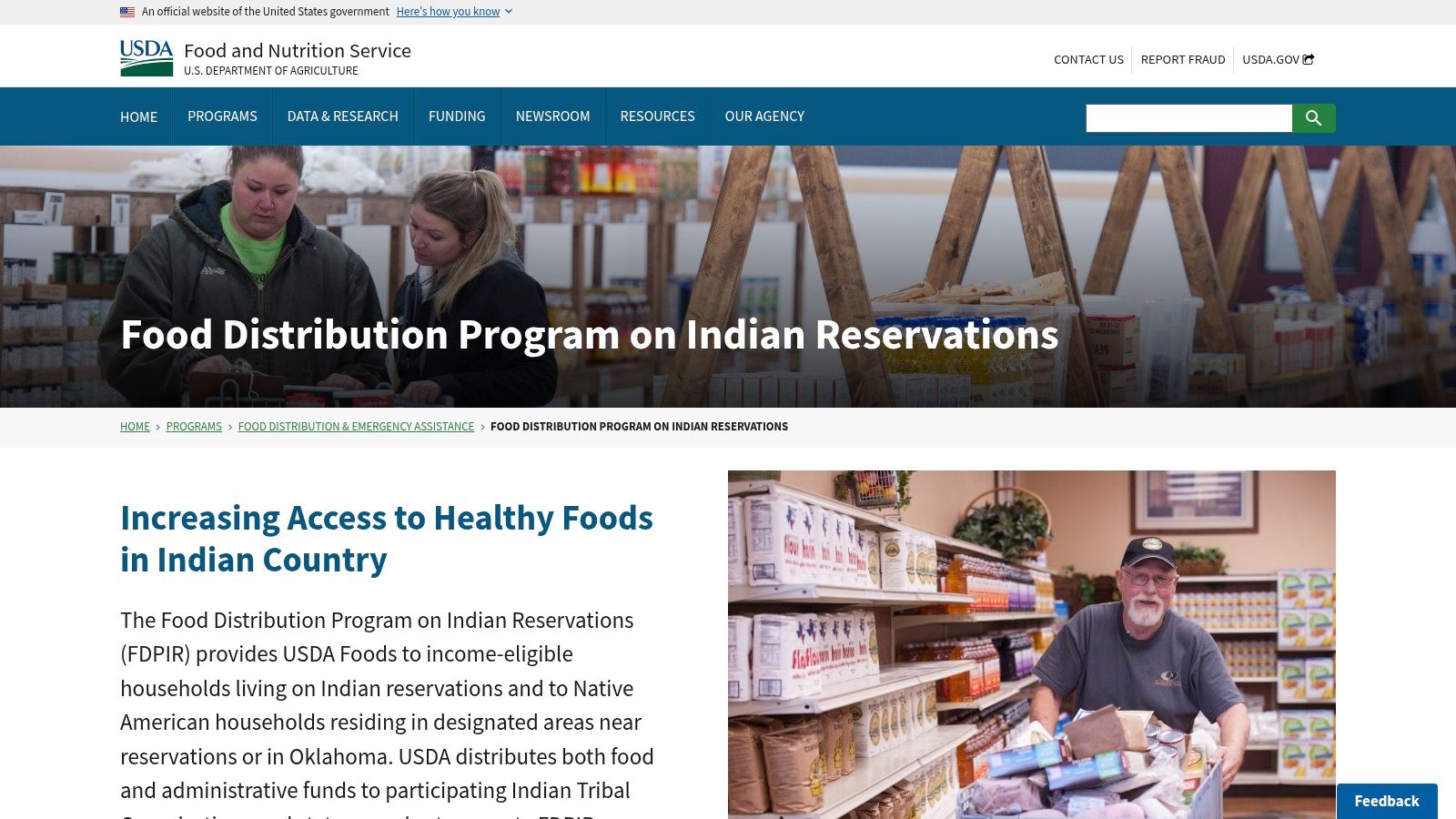
The FDPIR website provides low-income households on or near Indian reservations with a direct path to understanding how to receive a monthly package of nutritious, American-grown USDA Foods. The program is a critical alternative to the Supplemental Nutrition Assistance Program (SNAP), as households cannot participate in both programs simultaneously.
Strategic Breakdown and Analysis
This platform's primary strength lies in its authoritative nature. For program administrators, it is the go-to source for the most current policy updates, handbooks, and allocation information. For families, it demystifies the enrollment process and provides transparency about the foods they can expect to receive.
Key Strategic Insight: The USDA FDPIR site is designed as an operational and informational clearinghouse, not a direct-to-consumer application portal. Its value is in providing the official framework that enables local Tribal agencies to execute the program effectively, ensuring compliance and consistent service delivery across diverse geographic regions.
A significant feature, representing a best practice in federal food assistance, is the "USDA Foods Available List." It details the specific products available each fiscal year, including traditional foods like bison, wild rice, and blue cornmeal. This reflects the program's commitment to cultural relevance. Each product is linked to a detailed information sheet, nutrition facts, and even recipes, empowering recipients to make the most of their food packages.
Actionable Takeaways for Program Leaders
State administrators and tribal program leads can leverage this site to streamline operations and enhance participant experience.
- For State/Tribal Administrators: Use the "Administering Agencies" section to access policy memos, forms, and financial management resources. This ensures your local program remains compliant with federal regulations. The interactive map is a crucial tool for directing potential applicants to the correct local office.
- For Food Bank & Procurement Managers: The publicly available food lists can inform your procurement strategy for culturally connected foods. Analyzing the FDPIR package provides a model for developing your own distribution kits, and you can learn more about how these kitting programs can enhance nutrition security.
- For Applicants: The "Are You Eligible?" and "How to Apply" sections provide clear, step-by-step guidance. Before visiting a local office, you can review the income standards and understand what documents you will need, which can significantly speed up the enrollment process.
Website: https://www.fns.usda.gov/fdpir/food-distribution-program-indian-reservations
3. Tocabe Indigenous Marketplace
Tocabe Indigenous Marketplace stands out as a pioneering, Native-owned e-commerce platform that directly connects consumers and program administrators with Indigenous-sourced foods. Moving beyond the framework of government assistance, this website offers a direct-to-consumer and business-to-business model for purchasing authentic, ready-to-heat meals and pantry staples. It represents a vital link in the Indigenous food supply chain, empowering Native producers while making culturally significant foods accessible nationwide.
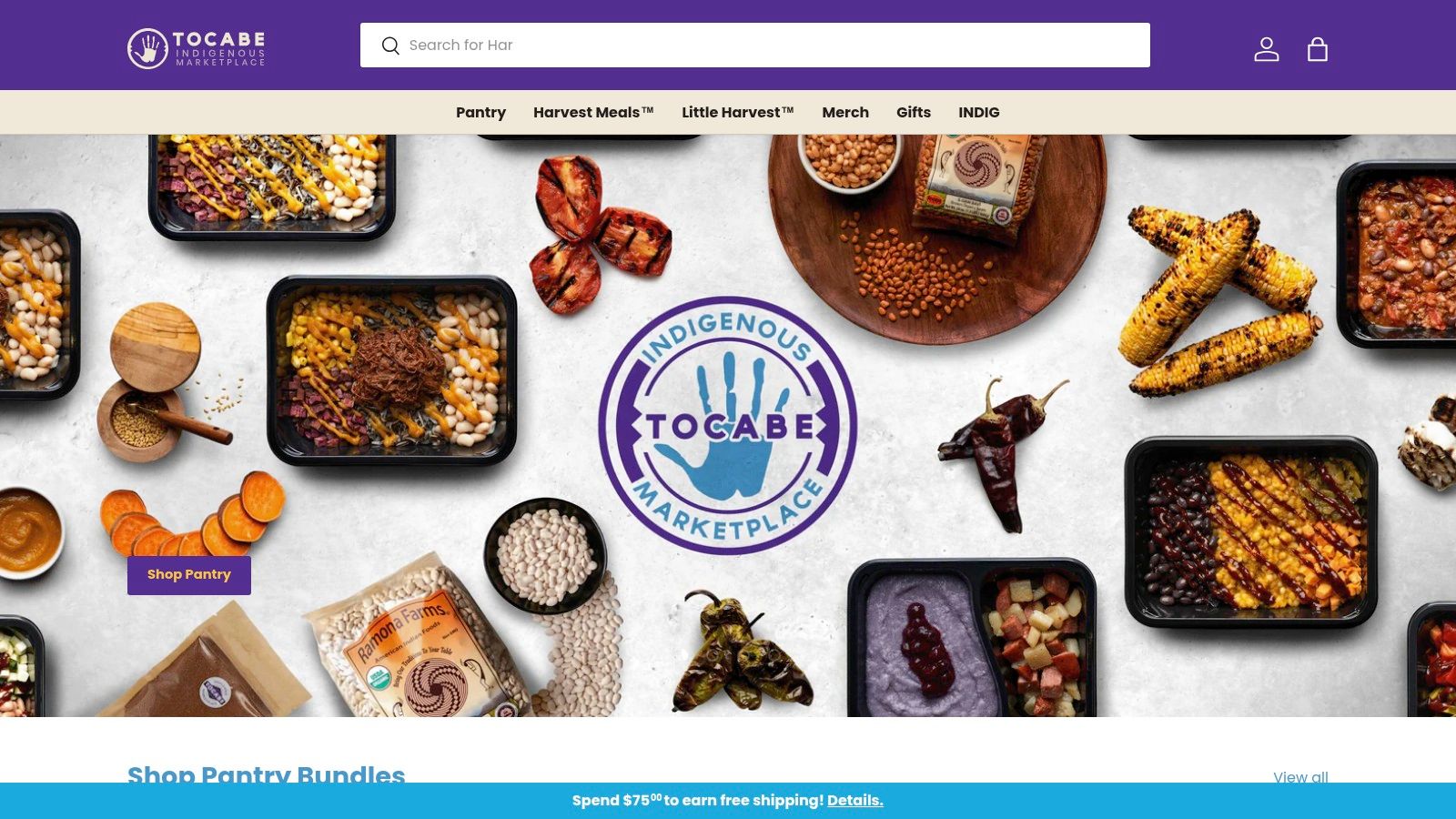
The platform functions as both a retail storefront for individual households and a procurement source for tribal programs. Users can purchase items like bison chili, wild rice bowls, and blue corn mush, all crafted with ingredients from Native farmers, ranchers, and producers. This model serves as a powerful example of how native american food programs can evolve to incorporate tribal economic sovereignty and direct support for Indigenous agriculture.
Strategic Breakdown and Analysis
Tocabe's primary strength is its seamless integration of cultural preservation with modern e-commerce. It provides a replicable model for how tribal enterprises can build and control their own food distribution networks. The site’s clear categorization into "Harvest Meals," "Pantry," and "Gifts" simplifies the user experience, while transparent per-item pricing makes it easy for both families and program managers to budget.
Key Strategic Insight: Tocabe Indigenous Marketplace is more than a store; it is an active demonstration of food sovereignty. By creating a commercial outlet for Native-produced goods and a scalable "Direct-to-Tribe" ready-meal program, it provides a powerful, market-based solution for enhancing nutrition security and supporting economic development within Indian Country.
A key feature is its partnership network, which showcases and supports a wide array of Native producers. This not only ensures the authenticity of the products but also reinvests capital directly into Indigenous communities. The curated ready-meal options are particularly impactful, offering a convenient, nutritious, and culturally affirming food source for tribal elder programs, childcare centers, and households.
Actionable Takeaways for Program Leaders
Administrators and managers can use Tocabe as both a direct vendor and a strategic blueprint for developing their own initiatives.
- For Tribal Program Leads: Explore the "Direct-to-Tribe" meal program as a compliant and culturally relevant option for elder nutrition services (OAA), childcare food programs (CACFP), or emergency food assistance. This can be a practical solution for providing high-quality, easy-to-prepare meals.
- For Food Bank & Procurement Managers: Use the marketplace as a direct source for acquiring culturally connected SKUs that are often hard to find through mainstream distributors. The product selection provides an excellent template for what to include in food boxes intended for Native populations. Understanding their model can inform your efforts to achieve greater nutrition security.
- For State/Tribal Administrators: Analyze Tocabe’s supply chain as a case study in fulfilling Buy American and Buy Indian Act procurement preferences. The model demonstrates how to build and sustain a network of local and Indigenous producers to create compliant and appealing food kits.
Website: https://shoptocabe.com
4. Ramona Farms (Akimel O’odham)
Ramona Farms represents a critical link in the supply chain for native american food programs by providing direct access to culturally significant, heirloom foods. As the online storefront for a Native-owned farm on the Gila River Indian Community, this platform is not just a retailer but a powerful resource for program administrators and health directors seeking to integrate traditional, diabetes-friendly staples into their menus and food packages. The website specializes in Akimel O’odham heritage crops, most notably the highly nutritious tepary bean, along with various corn products and wheat berries.
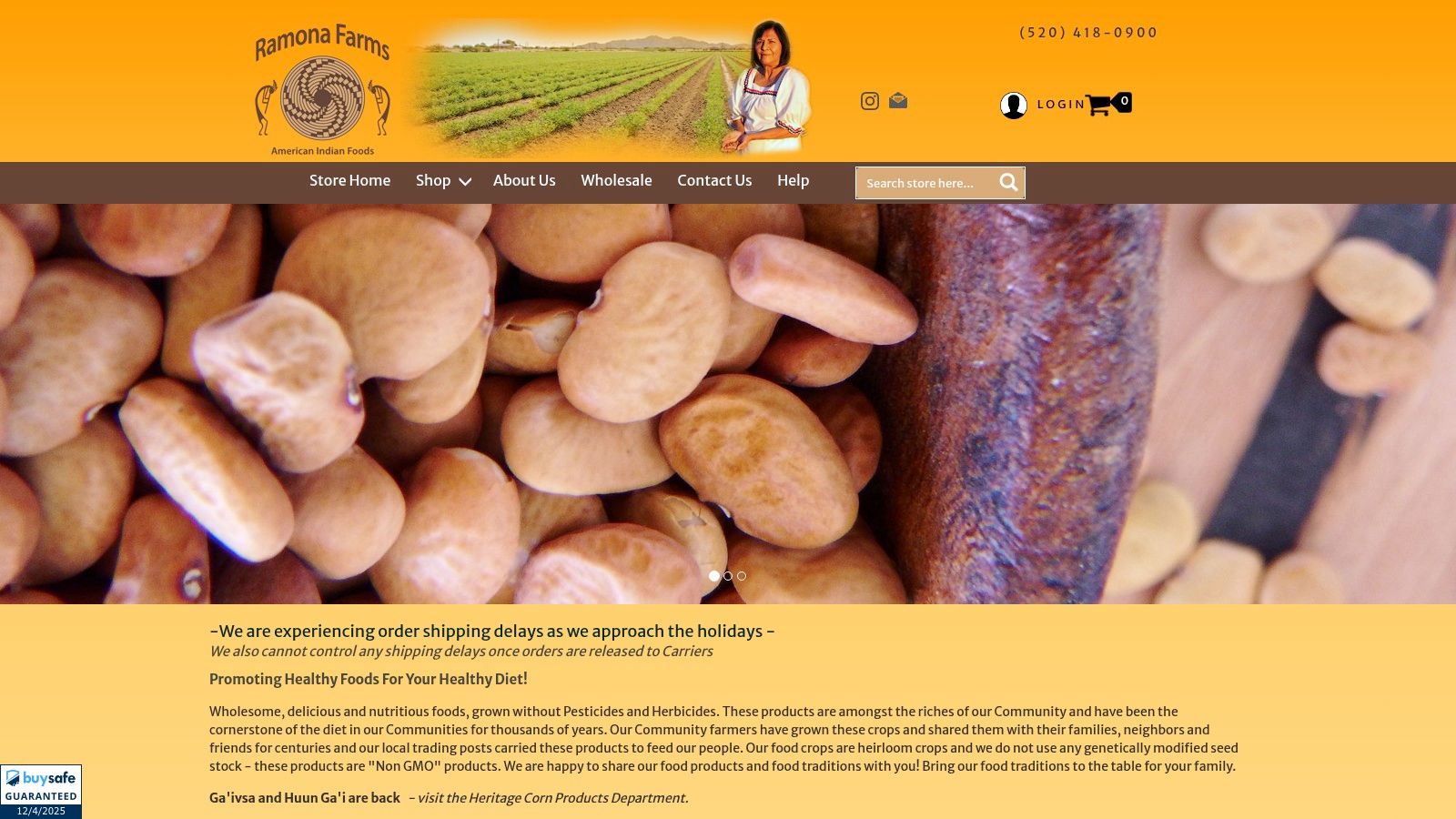
This platform stands out by offering unparalleled sourcing transparency and cultural provenance for every product. For programs focused on food sovereignty and nutrition, Ramona Farms provides a direct-from-the-grower model that ensures authenticity and quality. The farm’s commitment to preserving these heirloom seeds and traditional farming practices makes it an invaluable partner for health-focused initiatives.
Strategic Breakdown and Analysis
The primary strength of Ramona Farms' online store is its role as a direct supplier of high-quality, culturally-provenanced foods that are otherwise difficult to source at scale. For managed care organizations creating "food as medicine" programs or tribal programs developing culturally sustaining food assistance kits, the farm provides a reliable source for key ingredients that connect directly to Indigenous heritage and health.
Key Strategic Insight: Ramona Farms functions as a strategic procurement partner for health and nutrition programs. Its value extends beyond e-commerce; it is a case study in how direct sourcing from Indigenous producers can enhance the cultural relevance and nutritional impact of food assistance, directly supporting community health goals and food sovereignty.
The website provides detailed product education, including the history of the crops and recipes, which program leads can use for participant engagement and nutrition education. The clear distinction between retail and wholesale ordering options makes it accessible for both small-scale pilots and larger institutional purchasing.
Actionable Takeaways for Program Leaders
Administrators can use this site to directly procure key ingredients for specialized food programs and to model best practices in culturally connected food sourcing.
- For Managed Care & Health Directors: Use Ramona Farms as a primary supplier for diabetes prevention and management programs. The low-glycemic tepary beans are an ideal staple for "grocery not MTM" models. The farm's story and recipes can be integrated into patient education materials to encourage adoption.
- For Food Bank & Procurement Managers: When planning forward-buys for culturally connected SKUs, consult the wholesale catalog. Ramona Farms products can serve as the cornerstone for senior food boxes or emergency kits designed for Native populations, ensuring nutritional and cultural needs are met.
- For Tribal Program Leads: Feature Ramona Farms' products in food demonstrations and nutrition workshops. The accessibility of their online store empowers community members to continue incorporating these healthy, traditional foods into their diets beyond the scope of a specific program.
Website: https://store.ramonafarms.com
5. Bow & Arrow Brand (Ute Mountain Ute Tribe)
The Bow & Arrow Brand website represents a powerful model of tribal food sovereignty and a key resource for sourcing authentic ingredients for native american food programs. Operated by the Ute Mountain Ute Tribe’s Farm & Ranch Enterprise, this platform showcases a vertically integrated agricultural business that grows, mills, and packages non-GMO corn products directly on the reservation. It serves as a vital connection point for institutional buyers, food distributors, and program managers seeking high-quality, culturally significant foods.
Unlike a direct-to-consumer storefront, the website functions primarily as a business-to-business (B2B) portal. It details the tribe’s sustainable farming practices and history, offering products like blue and yellow cornmeal, grits, and polenta. This enterprise provides a consistent, high-volume supply chain for schools, food banks, and other large-scale programs aiming to incorporate traditional foods into their menus.
Strategic Breakdown and Analysis
The primary strength of the Bow & Arrow platform is its demonstration of a successful, tribally owned food system from farm to package. It offers a tangible example of economic development and food security rooted in cultural heritage. For program administrators, it provides a reliable source for ingredients that meet both nutritional standards and cultural preferences, a critical element in designing effective and respectful food assistance.
Key Strategic Insight: Bow & Arrow Brand’s website is not just a product catalog; it is a case study in tribal enterprise and agricultural self-sufficiency. Its value for program leads lies in providing a scalable, procurement-ready source for authentic Indigenous foods that supports a tribal economy, making it an ideal partner for initiatives focused on culturally sustaining food assistance.
The website clearly outlines the product specifications for its cornmeal, grits, and polenta, which is essential information for procurement managers. By controlling the entire process from planting to milling, the enterprise ensures consistent quality and adherence to non-GMO standards. This vertical integration is a powerful best practice, offering a replicable model for other tribal communities aiming to build their own food enterprises.
Actionable Takeaways for Program Leaders
Administrators and procurement specialists can use this site to enhance their food programs by sourcing directly from a Native producer.
- For Food Bank & Procurement Managers: Use the "Our Products" and "Contact Us" sections to initiate large-volume purchases. Sourcing from Bow & Arrow helps meet "Buy American" provisions while directly investing in a tribal economy. This is a practical way to diversify your supply chain with culturally connected SKUs.
- For CACFP/WIC/School Meal Sponsors: The consistent quality of the corn products makes them ideal for creating culturally relevant menu items like cornbread, tortillas, or porridge. The large-volume packaging is well-suited for institutional kitchens, simplifying meal preparation for hundreds of participants.
- For Tribal Program Leads: The business model serves as an inspiration and a potential partner. You can use the site to understand how a tribal agricultural enterprise can be structured and explore potential collaborations for regional food distribution or processing.
Website: https://bowandarrowbrand.com
6. Native Harvest (White Earth Nation)
Native Harvest serves as the e-commerce storefront for the White Earth Land Recovery Project, a nonprofit dedicated to restoring the land base and culture of the White Earth Ojibwe (Anishinaabe) people. This website is more than just a place to buy food; it's a direct channel to support food sovereignty and cultural preservation. It provides a vital resource for individuals and organizations seeking to source authentic, culturally significant foods like hand-harvested wild rice (manoomin), maple syrup, and traditional teas.
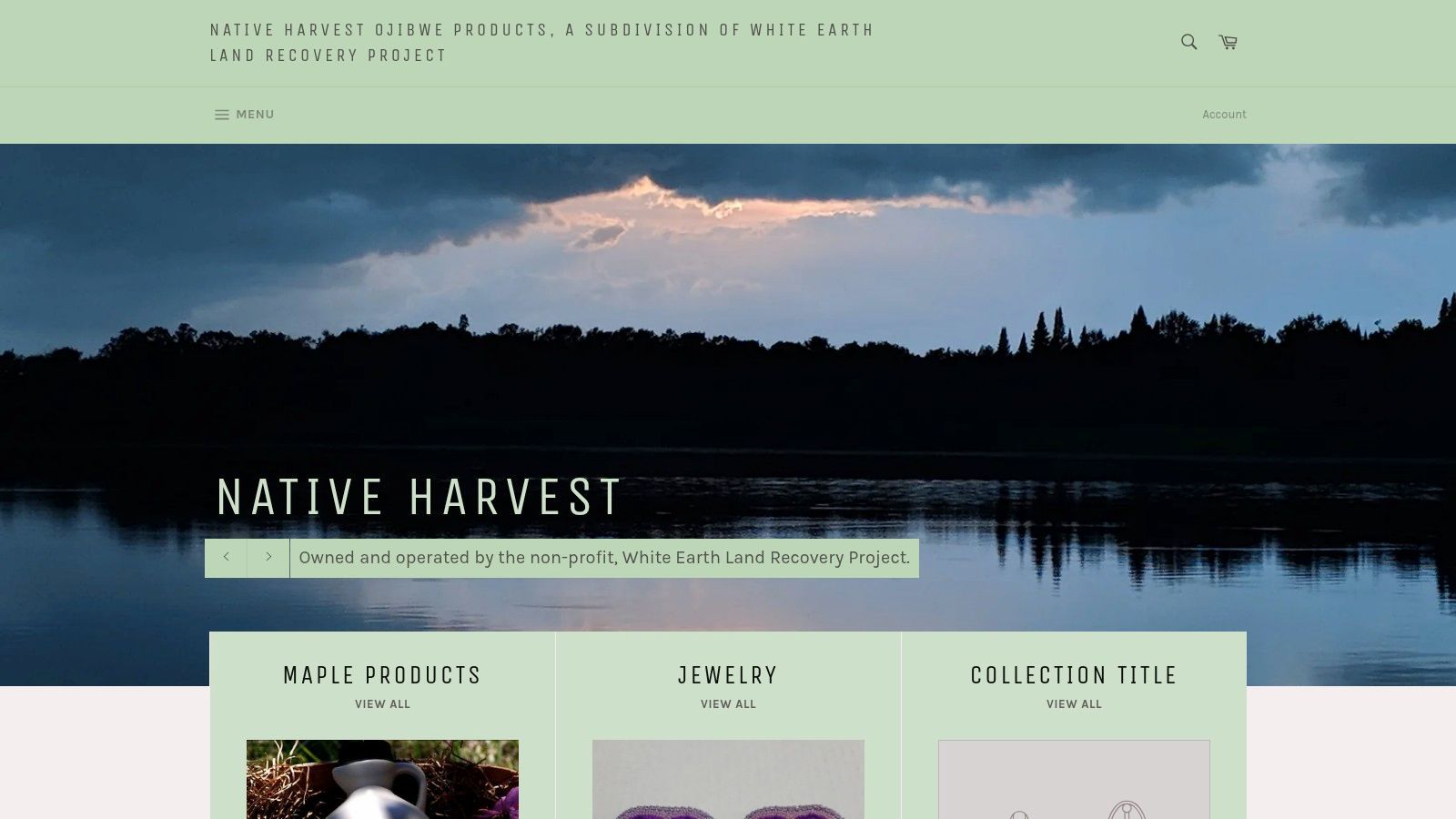
Unlike federal portals, Native Harvest offers a direct-to-consumer model where proceeds are reinvested into community programs. This platform demonstrates a replicable model for other Tribal nations looking to market their traditional foods, creating economic opportunities while strengthening cultural practices. It stands out by guaranteeing the provenance and traditional harvesting methods of its products, a critical factor for many native american food programs focused on authenticity.
Strategic Breakdown and Analysis
The primary strength of Native Harvest is its direct link between consumer purchase and community impact. Every sale of their genuine, hand-harvested wild rice supports the restoration of traditional foodways and the protection of the land. This creates a powerful narrative that resonates with consumers and institutional buyers alike who are looking to align their spending with social and environmental values.
Key Strategic Insight: Native Harvest is a case study in leveraging e-commerce for food sovereignty. It transforms cultural assets into a sustainable revenue stream that directly funds the organization's mission, bypassing traditional retail systems and connecting consumers directly to the source. This model provides a blueprint for how tribal enterprises can control their narrative and economic destiny.
The website transparently showcases its products with clear pricing and detailed descriptions of their cultural importance and harvesting process. While the product assortment can be seasonal and variable due to reliance on natural cycles, this limitation reinforces the authenticity of their offerings. This seasonality is a key feature, not a flaw, highlighting a deep connection to the land and traditional ecological knowledge.
Actionable Takeaways for Program Leaders
Procurement managers and program leads can use Native Harvest as both a direct source and an inspirational model for culturally relevant food distribution.
- For Food Bank & Procurement Managers: Source high-quality, authentic manoomin and other staples directly from Native Harvest for culturally specific food boxes. This fulfills the "Buy American" provision while supporting a Native-led nonprofit. The model can inform your own efforts to partner with and purchase from local Indigenous producers.
- For Tribal Program Leads: Analyze the Native Harvest website as a template for developing your own e-commerce platform. Study their product descriptions, branding, and mission-driven marketing to create a similar enterprise that supports your community’s food sovereignty goals and connects with a national audience. These initiatives can complement existing child nutrition programs by making traditional foods more accessible.
- For Applicants & Consumers: Use the online store to purchase authentic staples you may not find locally. By buying directly, you ensure your money supports the White Earth Nation's land recovery and language revitalization efforts. Be sure to check the site for seasonal availability and plan purchases accordingly, as some items are only available at certain times of the year.
Website: https://nativeharvest.com
7. Nawapo (Marketplace for Red Lake Nation Foods & KC’s Best Wild Rice)
Nawapo, an e-commerce platform from Red Lake Incorporated, represents a significant step in food sovereignty by providing direct-to-consumer access to authentic, tribally produced foods. It consolidates products from renowned brands like Red Lake Nation Foods and KC’s Best Wild Rice into a single, user-friendly online storefront. This marketplace serves not just as a retail outlet but as a digital hub connecting consumers and program managers with the agricultural heritage of the Red Lake Band of Chippewa Indians.
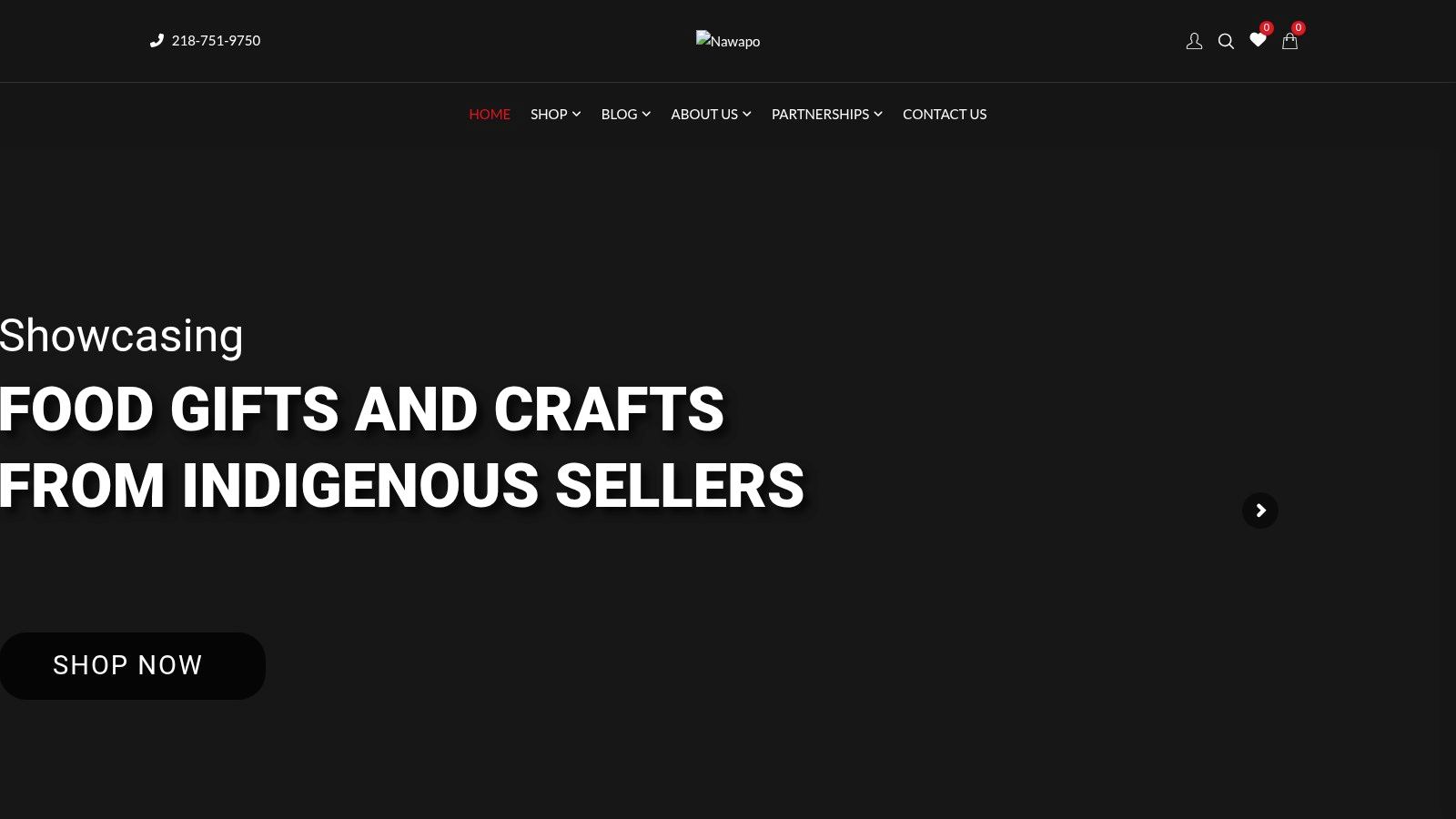
The platform is a prime example of how native american food programs are evolving to include economic development and self-determination. By creating a modern e-commerce experience with features like customer accounts and order tracking, Nawapo makes it easier for individuals and organizations nationwide to purchase high-quality, culturally significant products like hand-harvested wild rice, fruit jams, and pancake batters.
Strategic Breakdown and Analysis
Nawapo’s primary strength is its consolidation of iconic Indigenous food brands, simplifying the procurement process for everyone from individual buyers to large-scale food program administrators. The website replaces older, separate online stores, creating a more efficient and professional purchasing journey. This model of an Indigenous-run marketplace ensures brand authenticity and directs revenue back to the community.
Key Strategic Insight: Nawapo functions as both a retail channel and a sourcing tool for culturally sustaining food assistance. For program leaders, it provides a replicable case study in building a reliable supply chain for traditional foods that meets modern logistical standards, including compliance, packaging, and fulfillment.
A key challenge for many tribal food producers is scaling to meet institutional demand. Nawapo addresses this by creating a centralized system that can handle larger orders and provide consistent product information. While product availability can fluctuate with harvest cycles- a reality of traditional food systems- the platform provides transparency. The frequent positive feedback on product quality and shipping speed highlights its operational effectiveness.
Actionable Takeaways for Program Leaders
Administrators and procurement managers can use Nawapo as a direct source for authentic foods and as a model for their own initiatives.
- For Food Bank & Procurement Managers: Use Nawapo to source culturally connected SKUs like wild rice and berry jams for senior boxes (OAA) or emergency food kits. The platform offers a clear example of products that meet "Buy American" provisions while supporting tribal economies. Monitor seasonal availability to plan your forward-buys effectively.
- For State/Tribal Administrators: Analyze Nawapo's e-commerce structure as a potential model for distributing tribal products within your own food programs. This could be particularly relevant for home-delivery or mail-order components of SFSP or WIC, providing a compliant pathway to get traditional foods to participants.
- For CPG/E-Commerce Leaders: The site demonstrates a successful niche marketplace that maintains cultural integrity. It serves as an excellent example of how to build an authentic brand story and customer loyalty around unique, high-quality products rooted in tradition.
Website: https://nawapo.com
7-Program Comparison: Native American Food Initiatives
| Provider / Product | Implementation complexity | Resource requirements | Expected outcomes | Ideal use cases | Key advantages |
|---|---|---|---|---|---|
| Umoja Health | Moderate–High (custom program setup, ~60‑day lead time) | Program funding, coordination with 3PL, tech integration, dietitian support | Scalable, compliant meal programs with measurable health and program outcomes | State SFSP/CACFP, WIC, managed Medicaid, disaster response, CPGs needing food‑grade 3PL | Turnkey compliant programs, FDA‑registered 3PL, U‑Cloud integrations, culturally tailored SKUs |
| USDA FDPIR | Low for applicants, Moderate for Tribal admins (administrative setup) | Local Tribal/state office enrollment capacity, program administration resources | Access to USDA food packages, authoritative policy and local contacts | Eligible households on/near reservations, Tribal administering agencies | Official federal guidance, comprehensive program resources and contacts |
| Tocabe Indigenous Marketplace | Low (direct e‑commerce purchase) | Consumer budget, shipping logistics | Quick access to ready‑to‑heat Indigenous meals, supports Indigenous producers | Consumers seeking convenient Indigenous meals, program support via purchases | Curated heat‑and‑eat options, transparent pricing, supports Native supply chains |
| Ramona Farms (Akimel O’odham) | Low (online retail/wholesale ordering) | Purchase budget, shipping; bulk order management for programs | Access to heirloom staples (tepary beans), culturally provenanced foods | Nutrition initiatives needing heritage crops, consumers seeking diabetes‑friendly staples | Provenance and product education, high‑quality heirloom staples |
| Bow & Arrow Brand (Ute Mountain Ute) | Moderate (B2B orientation, may require vendor contact) | Institutional procurement processes, bulk ordering capacity | Consistent reservation‑grown and milled corn products for foodservice and schools | Schools, bakeries, manufacturers, institutional buyers | Vertically integrated tribal supply, consistent quality, sustainability emphasis |
| Native Harvest (White Earth) | Low (online storefront; seasonal availability) | Consumer budget, seasonal ordering, shipping | Access to hand‑harvested wild rice and maple, supports land/food sovereignty | Buyers of culturally significant staples, nonprofit supporters, program purchasers | Clear provenance, supports community programs, reliable source for traditional staples |
| Nawapo (Red Lake Nation marketplace) | Low–Moderate (e‑commerce with account features) | Consumer/wholesale budget, account setup for repeat or large orders | Consolidated ordering and tracking for Red Lake brands | Shoppers wanting multiple Red Lake products, repeat customers, institutional buyers | One storefront for multiple brands, account/order tracking, brand authenticity |
Putting It All Together: Building Sustainable and Dignified Food Systems
This comprehensive exploration of native american food programs has showcased a wide array of tools, strategies, and case studies, from federal initiatives like FDPIR to tribally-led enterprises such as Tocabe Indigenous Marketplace and Ramona Farms. The common thread weaving through each example is the powerful shift from mere food distribution to the intentional cultivation of food sovereignty, cultural dignity, and community health. We've seen how organizations are not just feeding people but revitalizing traditional foodways, strengthening local economies, and empowering Indigenous communities to define their own nutritional futures.
The key takeaway is that success in this space requires a multifaceted approach. It is not enough to simply provide calories; the most effective programs integrate cultural relevance, logistical precision, and a deep respect for the communities they serve. This means sourcing traditional foods, adapting delivery models for rural and remote areas, and designing programs that honor the wisdom and preferences of tribal members. As one Umoja Health partner shared, "It's not just about a box of food. It's about a box of connection, of saying 'we see you, we honor your traditions'."
From Insight to Action: Your Next Steps
Moving forward, your organization’s primary challenge is to translate these insights into tangible action. The path you choose will depend entirely on your specific role and objectives. Whether you are a state administrator, a tribal program lead, or a food bank procurement manager, the goal is the same: to build a more resilient, equitable, and culturally responsive food system.
To guide your implementation, consider these critical factors:
- For State and Federal Program Administrators (SFSP, CACFP, WIC): Your focus should be on flexibility and partnership. How can you adapt federal guidelines to support tribal sovereignty? This involves creating clear pathways for non-congregate meal service, simplifying Buy American waivers for traditional foods, and actively soliciting input from Tribal partners when drafting state plans. The case studies from FDPIR and adapted summer meal programs highlight the importance of listening first.
- For Tribal Program Leads and Food Sovereignty Advocates: Your strength lies in community connection. Prioritize sourcing from Indigenous producers like Bow & Arrow Brand or Ramona Farms to keep resources within the community. Leverage models like Native Harvest to pair food distribution with educational initiatives that revitalize traditional agricultural knowledge.
- For Food Banks and Emergency Responders: Logistics and procurement are your domains. Think beyond standard emergency rations. Can you establish forward-buy agreements for culturally relevant staples? Develop volunteer-friendly kitting SOPs for traditional meal kits? Your planning can ensure that dignity is not a casualty of crisis.
- For Managed Care Teams and Health Providers: Frame food as medicine. The "grocery not MTM" model is a powerful intervention. When designing programs, focus on measurable health outcomes tied to the provision of ancestral foods, recognizing that cultural connection is a key component of wellness.
Ultimately, building sustainable native american food programs is about weaving together the strands of policy, logistics, culture, and health. The most successful initiatives are those that operate as a true ecosystem, where federal funding supports tribal enterprise, health plans partner with local food producers, and every meal delivered reinforces a legacy of resilience and sovereignty. By embracing this holistic vision, we can move beyond transactional food assistance and co-create systems that nourish for generations to come.
Ready to streamline the logistics of your culturally connected food program? Umoja Health provides the specialized technology and operational expertise to manage complex kitting, last-mile delivery, and compliance reporting for health plans, government agencies, and community organizations. Visit Umoja Health to learn how our platform can help you scale your impact and deliver dignity with every meal.