
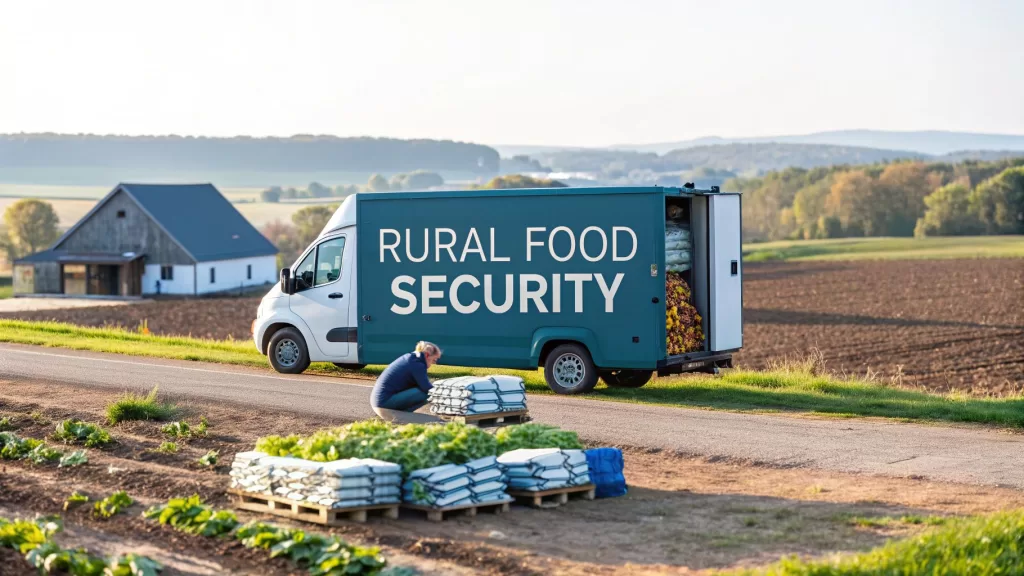
Addressing food insecurity in rural areas requires more than just stocking shelves; it demands innovative distribution, targeted programming, and a deep understanding of unique local challenges. The traditional food pantry model, while essential, often falls short in communities where transportation is a significant barrier and infrastructure is limited. This article moves beyond surface-level descriptions to provide a strategic breakdown of effective rural food insecurity programs, offering a practical toolkit for state administrators, program managers, and logistics professionals.
We will dissect the operational mechanics of cornerstone initiatives like SNAP, WIC, and TEFAP, but with a specific focus on their rural applications. The analysis will explore creative solutions that overcome common obstacles, such as the mobile delivery models pioneered by organizations like Umoja to reach isolated households. You will find detailed examples of non-congregate meal delivery, parent pick-up protocols, and multi-day kit templates that comply with stringent federal guidelines, including Buy American provisions.
For program operators and procurement leads, this guide offers actionable takeaways on everything from cold-chain logistics and culturally relevant menu planning to volunteer-friendly kitting procedures. We will examine specific case studies, providing replicable strategies for everything from managing WIC online benefit pilots to implementing "food as medicine" grocery models for Medicaid populations. This is a comprehensive playbook designed to help you build, scale, and optimize impactful food security solutions tailored to the distinct needs of rural America.
1. SNAP (Supplemental Nutrition Assistance Program)
The Supplemental Nutrition Assistance Program (SNAP) is the cornerstone of the United States' food security safety net. Administered by the USDA's Food and Nutrition Service (FNS), SNAP provides monthly benefits to low-income households, which they can use to purchase groceries at authorized retailers using an Electronic Benefits Transfer (EBT) card. While national in scope, SNAP is particularly vital in non-metropolitan areas, where poverty rates are often higher and economic opportunities are more limited. Its effectiveness lies in its direct-to-consumer model, empowering participants with the dignity of choice in their food purchasing.
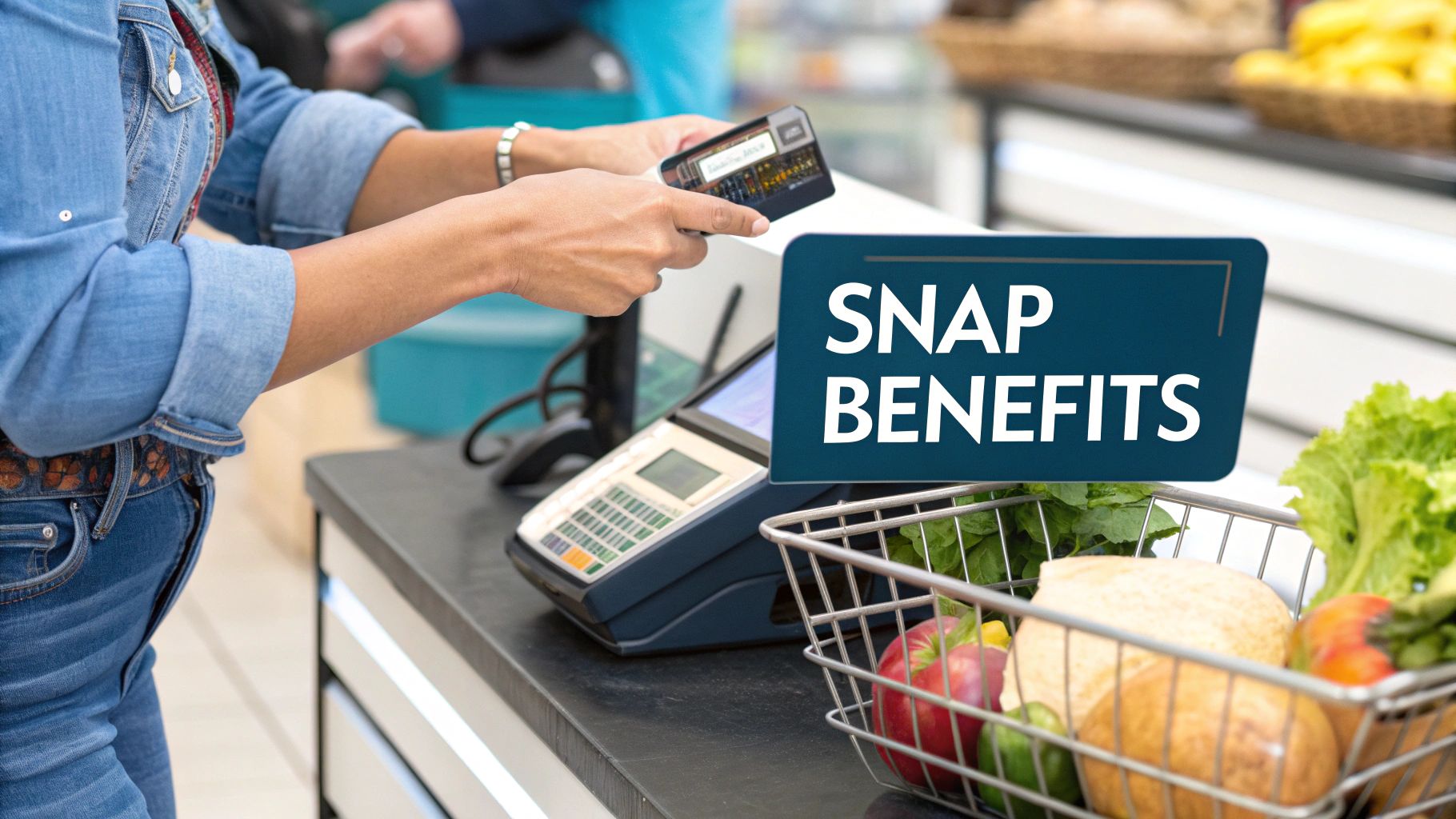
Strategic Analysis: Overcoming Rural Barriers
The primary challenge for SNAP in rural settings isn't program availability but access. Limited transportation, a lack of authorized grocery retailers, and poor internet connectivity can create significant hurdles for enrollment and benefit redemption. For instance, in sprawling states like Montana and Wyoming, remote tribal communities may be dozens of miles from the nearest SNAP-accepting store, making benefit use a logistical and financial challenge.
Organizations like Umoja Hunger Alleviation Project have demonstrated innovative solutions. By partnering with local agencies, they help deploy mobile outreach units that travel to isolated communities, providing on-site application assistance and technology support. This direct engagement model effectively bridges the "last mile" gap, bringing vital services directly to residents who cannot easily travel.
Key Strategic Insight: For SNAP to be a truly effective rural food insecurity program, state and local agencies must move beyond passive availability. Proactive outreach, mobile enrollment services, and partnerships that expand redemption points are essential to overcome the unique geographical and infrastructural barriers of rural America.
Actionable Takeaways for Program Managers
To maximize SNAP's impact in rural regions, state administrators, CACFP sponsors, and community partners should focus on integrated access strategies:
- Expand Retailer Networks: Actively recruit and support smaller, independent rural grocers, farmers' markets, and mobile markets to become SNAP-authorized retailers. This increases redemption options and keeps federal dollars within the local economy.
- Integrate Eligibility Screening: Train staff at WIC clinics, rural healthcare facilities, and senior centers to screen for SNAP eligibility. This "no wrong door" approach ensures that individuals interacting with one social service are connected to all benefits for which they qualify.
- Leverage Technology for Access: Promote and support the SNAP Online Purchasing Pilot, which allows participants to use their benefits for online grocery orders. This is a game-changer for individuals with transportation or mobility issues, though it requires parallel efforts to address rural broadband gaps.
2. CSFP (Commodity Supplemental Food Program)
The Commodity Supplemental Food Program (CSFP) is a USDA-administered initiative that directly addresses nutritional needs by providing monthly food packages to low-income individuals, primarily seniors over 60. Unlike cash-based benefits, CSFP delivers a pre-selected assortment of nutritious, shelf-stable commodity foods. This direct provision model is a critical intervention in rural areas where access to full-service grocery stores is limited or nonexistent, ensuring that vulnerable populations receive essential food items regardless of retail infrastructure. Its reliability makes it a cornerstone of many rural food insecurity programs.
Case Study: Umoja Hunger Project in Livingston County, IL
Barrier: In sprawling, rural Livingston County, the core challenge for CSFP was distribution logistics. Many low-income seniors lacked reliable transportation to travel to a central distribution point to pick up a heavy, 30-40 pound food box. This "last mile" gap meant that the most isolated and vulnerable residents were often unable to access the program.
Solution: The Umoja Hunger Alleviation Project implemented a creative, multi-pronged solution. Instead of a single pickup site, they established a network of decentralized "pantry pop-ups" at trusted community hubs like local senior centers and churches, drastically reducing travel distances. For homebound seniors, they deployed a volunteer-driven, direct-to-door delivery system. This mobile approach completely eliminated the transportation barrier, ensuring consistent, dignified access for the most vulnerable residents.
Key Strategic Insight: For CSFP to succeed as a rural food insecurity program, the model must shift from a passive "come and get it" approach to an active, last-mile delivery system. Leveraging local partnerships and volunteer networks to create hyper-local and home-delivery options is crucial for reaching isolated populations.
Actionable Takeaways for Program Managers
To enhance CSFP's reach and effectiveness in rural communities, program directors and food bank partners should prioritize flexible distribution and participant-centered strategies:
- Establish Decentralized Pick-Up Points: Collaborate with trusted local entities like churches, fire stations, and libraries to create multiple, rotating distribution sites. This reduces travel distances for participants and makes pickup more convenient.
- Develop a Home-Delivery Volunteer Corps: Actively recruit and manage volunteers specifically for home delivery routes to serve homebound or transportation-insecure seniors. This provides not only food but also a vital social wellness check.
- Incorporate Participant Feedback: Regularly survey participants on the contents of the food boxes. Use this feedback to advocate with state agencies for commodities that are more culturally appropriate, easier to prepare, and better suited to the dietary needs of an elderly population.
3. WIC (Women, Infants, and Children Program)
The Special Supplemental Nutrition Program for Women, Infants, and Children (WIC) is a critical federal program targeting the unique nutritional needs of low-income pregnant, breastfeeding, and non-breastfeeding postpartum women, as well as infants and children up to age five. Administered by the USDA, WIC provides specific nutritious foods, nutrition education, and healthcare referrals. Its role is especially profound in rural communities, where it directly combats nutritional deficiencies during the most crucial stages of development and often acts as a primary entry point into the broader healthcare system for young families.
Strategic Analysis: Overcoming Rural Barriers
Like other federal programs, the core challenge for WIC in rural areas is service delivery and access. Limited public transportation, long distances to clinics, and a shortage of healthcare providers can prevent eligible families from enrolling or consistently picking up their food benefits. For instance, a mother in a remote part of Alaska or a tribal community in South Dakota may face an hours-long trip to the nearest WIC clinic, a significant barrier for a family with a newborn.
To counter these obstacles, state agencies have developed innovative service models. The Alaska WIC program successfully uses telehealth for certifications and follow-ups, allowing remote villagers to connect with nutritionists without arduous travel. Similarly, South Dakota WIC partners directly with tribal health centers, co-locating services to ensure Native American families can access benefits through trusted, local providers. These strategies transform WIC from a centralized clinic model into a more distributed and accessible network.
Key Strategic Insight: For WIC to effectively serve as a rural food insecurity program, it must transcend the physical clinic. By embracing technology like telemedicine, co-locating with existing rural health infrastructure, and decentralizing services, WIC can meet families where they are, ensuring no one is left behind due to geography.
Actionable Takeaways for Program Managers
To enhance WIC's reach and effectiveness in rural areas, state WIC directors, clinic managers, and community health partners should prioritize flexible and integrated delivery models:
- Implement Telehealth and Remote Services: Invest in secure telehealth platforms for remote certifications, nutrition counseling, and benefit issuance. This significantly reduces the transportation burden on participants and increases program retention.
- Establish Co-located and Mobile Clinics: Partner with rural hospitals, community health centers, and Head Start programs to offer WIC services on-site. Deploying mobile WIC vans can also bring services directly to isolated towns and community hubs.
- Expand Food Redemption Options: Aggressively recruit farmers' markets and smaller rural grocers to accept WIC benefits. Supporting the transition to EBT cards (eWIC) can streamline transactions and make it easier for smaller retailers to participate, keeping program dollars in the local economy.
4. SNAP-Ed (SNAP Education)
If SNAP provides the resources, SNAP Education (SNAP-Ed) provides the knowledge. This grant program, administered by the USDA and implemented through state extension services and community partners, focuses on nutrition education, cooking skills, and healthy lifestyle promotion for SNAP-eligible individuals and families. For rural communities, where access to fresh food can be inconsistent and knowledge about preparing it from scratch may be waning, SNAP-Ed is a critical tool. It empowers participants to maximize their food budgets for better health outcomes, turning grocery access into genuine nutritional security.
Strategic Analysis: Building Skills and Overcoming Isolation
The primary challenge for SNAP-Ed in rural settings is program delivery and engagement. Traditional classroom-style nutrition courses are often impractical in sparsely populated areas with significant transportation barriers. Residents may lack the time or fuel to travel to a central location for a one-hour class. This logistical reality demands creative, place-based strategies that bring education directly into the fabric of the community.
Successful programs, like North Carolina's SNAP-Ed initiative which reaches over 180,000 rural participants, achieve this by embedding educators within trusted local institutions. By partnering with Cooperative Extension offices, public schools, and community health centers, they meet people where they already are. Similarly, Oklahoma’s community garden initiatives use SNAP-Ed funding to create hands-on learning environments, turning underutilized spaces into hubs for both food production and peer-to-peer education.
Key Strategic Insight: SNAP-Ed's success in rural America hinges on shifting from a centralized teaching model to a decentralized, embedded one. Rather than expecting participants to come to the program, the program must become a visible and integrated part of daily life through partnerships with schools, clinics, and community hubs.
Actionable Takeaways for Program Managers
To enhance the reach and impact of SNAP-Ed as one of the most effective rural food insecurity programs, state agencies and community partners should prioritize accessibility and relevance:
- Partner with Extension Services: Leverage the existing infrastructure of Cooperative Extension offices. Their agents often have deep, long-standing relationships within remote communities and are uniquely positioned to deliver culturally relevant nutrition education.
- Establish Demonstration Gardens: Work with municipalities, churches, or schools to create accessible community gardens. These serve as living classrooms for teaching everything from growing produce to preparing healthy meals, fostering community ownership and skill-building.
- Utilize a "Train the Trainer" Model: Equip community health workers (CHWs) and local leaders with the training and resources to deliver SNAP-Ed programming. These trusted messengers can reach populations that might be hesitant to engage with outside agencies.
- Integrate with School Nutrition Programs: Collaborate with K-12 schools to incorporate nutrition education into the curriculum or after-school activities. This builds healthy habits from a young age and often engages parents indirectly.
5. TEFAP (The Emergency Food Assistance Program)
The Emergency Food Assistance Program (TEFAP) is a federal program that helps supplement the diets of low-income Americans by providing them with emergency food assistance at no cost. The USDA purchases a variety of nutritious, domestically sourced foods and makes them available to State Distributing Agencies. These agencies, in turn, distribute the food to local organizations like food banks and community pantries, which directly serve the public. TEFAP is a critical component of rural food security infrastructure, especially during economic downturns and natural disasters.
Case Study: Umoja Hunger Project in Peoria, IL
Barrier: For TEFAP distribution in rural Peoria, the primary hurdles were logistics and infrastructure. Reaching isolated households across a wide geographic area strained volunteer capacity and local pantry resources. Small, community-based pantries lacked the cold storage and transport needed to consistently offer a variety of nutritious foods, particularly fresh produce.
Solution: The Umoja Hunger Alleviation Project addressed this by creating a mobile pantry system. By converting vans and small trucks into rolling distribution centers, they bypassed the need for permanent brick-and-mortar facilities in every small town. These mobile units delivered USDA commodities and fresh produce directly to central gathering points like churches, schools, and community centers. This model drastically reduced the travel burden on residents and enabled the efficient distribution of perishable items across the region, bridging the last-mile gap.
Key Strategic Insight: Effective rural TEFAP distribution hinges on moving beyond a static pantry model. Investing in mobile distribution, establishing decentralized storage hubs, and creating dynamic volunteer networks are essential for bridging the last-mile gap and ensuring equitable access to emergency food.
Actionable Takeaways for Program Managers
To enhance TEFAP's reach and effectiveness in rural areas, food bank managers, community action agencies, and state partners should focus on strengthening their distribution infrastructure:
- Diversify Distribution Models: Don't rely solely on traditional pantries. Implement a mix of mobile units, pop-up distributions, and direct-to-door delivery for homebound individuals to meet diverse community needs.
- Invest in Cold-Chain Capacity: Secure grants and partnerships to build or expand cold storage capacity at local partner agencies. This allows for the distribution of more nutritious perishable items like produce, dairy, and lean proteins, which are often lacking in rural diets.
- Strengthen Local Partnerships: Establish formal memoranda of understanding (MOUs) with regional transportation providers, local agricultural producers, and emergency management agencies. This creates a resilient network for sourcing supplemental food and ensures rapid mobilization, a key element of effective disaster response operations.
6. Farm to School Programs
Farm to School programs create a powerful, synergistic link between local agriculture and school nutrition. These initiatives are designed to bring fresh, locally sourced foods from area farms directly into school cafeterias, classrooms, and community events. By prioritizing procurement from regional producers, schools provide students with healthier, more nutritious meal options while simultaneously creating a stable, reliable market for small and mid-sized family farms. This model is especially impactful in rural areas, where it strengthens the local economy and reconnects children with the agricultural heritage of their own communities.
Strategic Analysis: Overcoming Rural Barriers
The primary obstacles for rural Farm to School programs are logistics and scale. Small farms often lack the capacity to meet the volume demands of an entire school district, and they may not have the refrigerated trucks or distribution infrastructure to deliver produce consistently. Conversely, rural school districts, operating with tight budgets, can find it difficult to manage procurement from multiple small producers rather than a single large-scale distributor. This creates a classic coordination problem that can stifle an otherwise beneficial partnership.
Innovative organizations are tackling this by creating intermediary hubs. For instance, the model used in Oregon leverages regional food hubs that aggregate produce from over 200 small farms. These hubs handle the complex logistics of collection, light processing, and distribution, allowing farms to participate without needing their own delivery fleet. Similarly, partners like the Umoja Hunger Alleviation Project have focused on building community capacity, helping schools establish connections and streamline purchasing to make local sourcing feasible and sustainable.
Key Strategic Insight: Successful rural food insecurity programs like Farm to School depend on building an intermediary infrastructure. Rather than forcing schools or farmers to solve complex supply chain issues alone, creating cooperative aggregation points, food hubs, or third-party logistical partners is the critical component that makes the system work at scale.
Actionable Takeaways for Program Managers
To effectively implement or expand a Farm to School program in a rural setting, program administrators and community partners should focus on building a supportive ecosystem:
- Establish Farm Aggregation Cooperatives: Partner with local agricultural extensions or economic development agencies to help farmers form cooperatives. This allows them to pool resources, meet larger order volumes, and share the logistical burden of delivery.
- Align Calendars with Agricultural Seasons: Work with school nutrition directors to plan menus that intentionally feature seasonal, local produce. This "Harvest of the Month" approach creates predictable demand for farmers and introduces students to a variety of fresh foods throughout the year. For more information on how these initiatives integrate with broader nutrition efforts, explore these insights on child nutrition programs.
- Start Small and Expand Gradually: Begin with a pilot program at a single school or with a single food item, like apples from a local orchard. A successful, well-documented pilot can build momentum and provide a proven model for gradual expansion across the district.
7. Mobile Food Pantries and Community Supported Agriculture (CSA) Programs
Mobile food pantries and Community Supported Agriculture (CSA) programs represent a direct, ground-level strategy for tackling food access gaps. These models pivot from a traditional "come-to-us" structure to a "we'll-come-to-you" approach, using vehicles to transport fresh produce and shelf-stable goods directly into food deserts. Similarly, adapted CSA models create a direct pipeline from local farms to low-income rural households, often subsidized to ensure affordability and promote local agriculture.
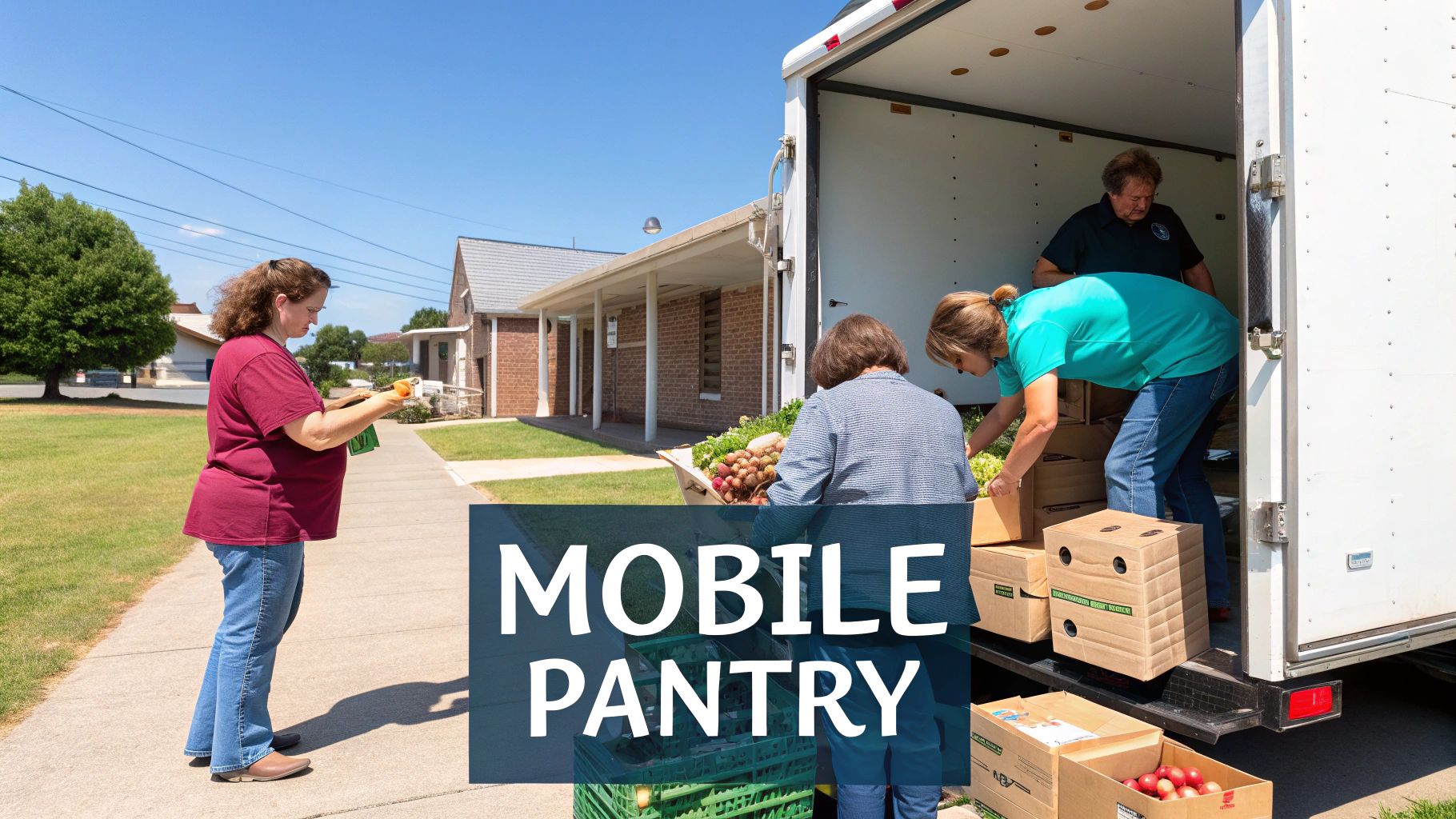
Case Study: Umoja Hunger Project's Mobile Delivery Model
Barrier: The core challenge these programs solve is logistics. In rural areas, the distance to the nearest grocery store or traditional food pantry can be a prohibitive barrier for families without reliable transportation or the means to afford fuel. This "last mile" problem means that even when food is available in a county, it doesn't always reach the most isolated households.
Solution: The Umoja Hunger Alleviation Project perfected this model by treating mobile delivery not just as food distribution but as a vital community touchpoint. In areas like Livingston and Peoria counties, they demonstrated how mobile units can deliver not just food but also dignity and connection. By partnering with local agencies, they ensured routes were strategically planned based on need, turning community centers and church parking lots into temporary, reliable distribution hubs. This transformed a simple delivery service into a predictable part of the local support ecosystem, reaching isolated seniors and families who would otherwise be missed.
Key Strategic Insight: The success of mobile food insecurity programs in rural settings hinges on hyperlocal partnerships and data-driven logistics. Rather than arbitrary stops, effective programs use population density mapping and collaborate with trusted community anchors to establish predictable, accessible distribution points that become integrated into the fabric of community life.
Actionable Takeaways for Program Managers
To deploy effective mobile pantry or rural CSA programs, logistics leads and community partners should prioritize targeted, community-centric strategies:
- Develop Strategic Routes: Use census data and input from local social service agencies to map areas of highest need. Plan routes that are consistent and predictable, allowing residents to rely on the service schedule.
- Partner with Community Anchors: Don't just show up; integrate. Work with local churches, libraries, schools, and senior centers to host distribution events. These partners provide credibility, volunteer support, and essential infrastructure like parking and restrooms.
- Incorporate Flexible Payment and Kitting Models: To serve the widest audience, accept multiple payment forms, including SNAP EBT. For CSAs, offer subsidized shares or sliding-scale payment options. Additionally, pre-packing food into standardized boxes makes distribution faster and more dignified. Learn more about effective kitting programs on umojahealth.com for models that can be adapted for mobile delivery.
8. Community Food Cooperative and Buying Club Models
Community food cooperatives and buying clubs are grassroots, member-owned models that empower rural residents to take direct control over their food supply. These structures enable community members to pool their resources, purchase food in bulk at lower costs, and often prioritize sourcing from local producers. Unlike traditional retail, co-ops are democratically governed by their members, ensuring that operations align with community needs and values, fostering both food security and local economic resilience.
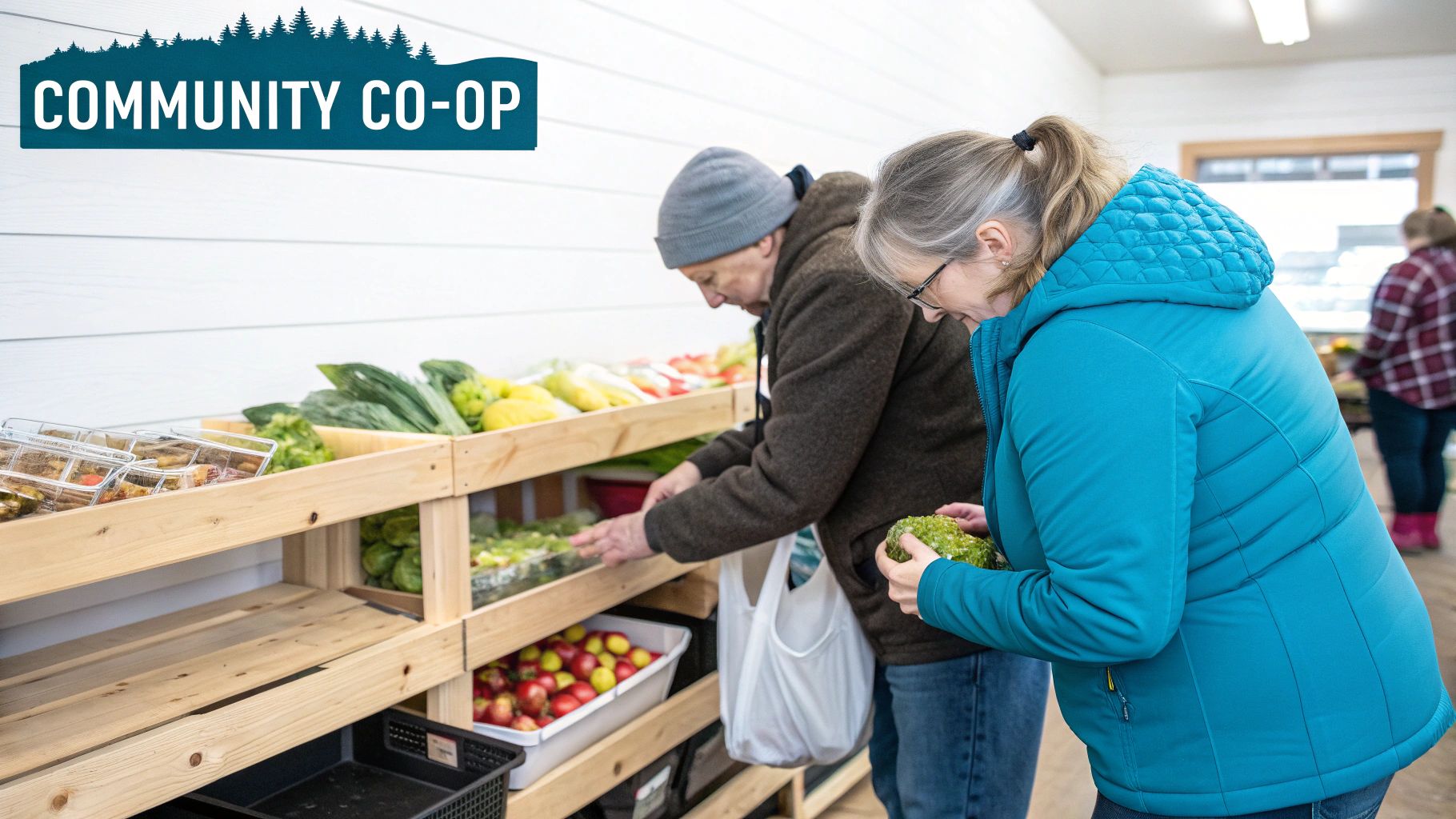
Strategic Analysis: Overcoming Rural Barriers
The core challenge for establishing cooperatives in rural areas is achieving the necessary scale and logistical capacity to be sustainable. Limited population density can make it difficult to build a large enough member base, while underdeveloped supply chains can complicate sourcing and distribution. For these initiatives to succeed, they must overcome the initial hurdles of startup capital, member recruitment, and operational complexity in low-resource environments.
Models like the Ozark Cooperative Warehouse in Missouri provide a powerful solution. Instead of one large, centralized co-op, they serve as a hub for over 50 smaller, rural buying clubs, aggregating their purchasing power to secure better pricing and a wider variety of products. This federated approach allows individual communities to maintain local autonomy while benefiting from the scale of a larger network, effectively overcoming the isolation that often hinders rural food security programs.
Key Strategic Insight: Successful rural cooperative models don't just sell food; they build community infrastructure. By focusing on member engagement, distributed logistics, and collaborative purchasing, they create a resilient, decentralized food system that is less vulnerable to the market failures and access gaps common in rural America.
Actionable Takeaways for Program Managers
For community leaders and program managers looking to foster cooperative models, the focus should be on building a strong foundation and leveraging collaborative networks:
- Start with a Buying Club: Before committing to a full-scale retail cooperative, initiate a simpler buying club. This lowers the barrier to entry, tests community interest, and builds the operational experience needed for future growth.
- Develop Member-Leader Training: Invest in training for members on cooperative governance, financial management, and volunteer coordination. Empowered local leadership is the single most critical factor for long-term sustainability.
- Partner with Agricultural Cooperatives: Forge supply chain partnerships with existing farmer cooperatives, like Organic Valley. This provides a reliable source of high-quality products and strengthens the regional food economy by connecting local producers directly with consumers.
Rural Food Insecurity: 8-Program Comparison
| Program / Model | Implementation complexity | Resource requirements | Expected outcomes | Ideal use cases | Key advantages |
|---|---|---|---|---|---|
| SNAP (Supplemental Nutrition Assistance Program) | Moderate — federal/state enrollment systems and EBT infrastructure | Federal funding, state admin, retailer EBT terminals | Immediate purchasing power; broad coverage; local economic stimulus | Low-income households needing flexible food access across large rural populations | Largest reach; flexible use; integrated with other services |
| CSFP (Commodity Supplemental Food Program) | Low–Moderate — commodity procurement and local distribution networks | USDA commodities, storage space, local distribution partners | Monthly nutritious food packages; reduced transport barriers for beneficiaries | Low-income elderly, pregnant women, and children in food deserts | Circumvents retail gaps; low stigma; guaranteed nutrition |
| WIC (Women, Infants, and Children Program) | High — clinical certification, frequent recertification, and counseling services | Federal funds, clinic staff, nutritionists, supply vouchers | Improved maternal/child health outcomes and early-life nutrition gains | Pregnant/postpartum women and children under five in rural areas | Strong health impacts; comprehensive education and breastfeeding support |
| SNAP-Ed (SNAP Education) | Low–Moderate — community-based program delivery and education | Educators, extension services, program materials, modest funding | Increased food literacy and healthier purchasing behaviors over time | SNAP participants and communities needing nutrition skills and prevention | Builds self-sufficiency; extends SNAP effectiveness; community-centered |
| TEFAP (The Emergency Food Assistance Program) | Moderate — federal procurement plus local food bank logistics | USDA-purchased commodities, food bank capacity, storage and transport | Rapid emergency relief; supplements charitable food networks during crises | Disaster response, economic downturns, acute food insecurity events in rural areas | Fast crisis response; minimal access barriers; supports food bank infrastructure |
| Farm to School Programs | High — procurement, school coordination, and seasonal logistics | School kitchen capacity, farmer partnerships, aggregation and transport | Fresh produce in school meals; improved student nutrition; farmer income support | School districts seeking local sourcing, nutrition education, and rural farm support | Improves child nutrition; supports regional farmers; educational benefits |
| Mobile Food Pantries & CSA Programs | Moderate–High — vehicle routing, cold-chain management, scheduling | Refrigerated trucks, fuel, volunteers/staff, storage and distribution logistics | Direct fresh-food delivery to remote communities; increased access and engagement | Food deserts and dispersed rural populations with transportation barriers | Overcomes transport gaps; provides fresh foods; builds community connections |
| Community Food Cooperative & Buying Club Models | High — cooperative governance, start-up organization, and ongoing management | Startup capital, member recruitment, supply partnerships, governance training | Lower household food costs, local economic resilience, increased food self-reliance | Communities with strong social capital seeking collective purchasing and food system control | Significant cost savings; community ownership; long-term resilience and local empowerment |
Building a Resilient and Equitable Rural Food System
The journey through the landscape of rural food insecurity programs reveals a complex but hopeful picture. From federal pillars like SNAP and WIC to innovative grassroots models like mobile pantries and community co-ops, the tools to combat hunger are varied and potent. Yet, as we have explored, simply having these programs is not enough. The true measure of success lies in their strategic implementation, their adaptability to the unique challenges of rural America, and their ability to forge genuine connections within the communities they serve. The most effective programs are not just distribution channels; they are lifelines built on deep understanding, logistical precision, and unwavering commitment.
This article has dissected the operational DNA of successful initiatives, moving beyond surface-level descriptions to provide a tactical playbook. We’ve examined how to build compliant, multi-day meal kits for CACFP, navigate cold-chain exceptions for home delivery, and leverage technology for WIC online benefits. We have also seen the power of data in measuring outcomes for Medicaid-funded "grocery not MTM" pilots and the importance of culturally relevant SKUs in senior nutrition programs.
Core Strategic Pillars for Effective Rural Programs
The case studies and program breakdowns throughout this guide converge on several critical strategic pillars. Mastering these is non-negotiable for anyone serious about making a lasting impact on rural hunger.
- Hyper-Local Customization: The most successful rural food insecurity programs reject a one-size-fits-all mentality. As seen in the Livingston County case study, understanding local transportation barriers and leveraging existing community hubs like schools for parent pick-up is paramount. This requires granular data on client needs, infrastructure gaps, and cultural food preferences.
- Logistical Agility and Innovation: The "last mile" is often the longest and most difficult in rural areas. Programs that thrive, like the mobile delivery model used in Peoria, embrace logistical creativity. This means exploring partnerships with 3PLs, optimizing delivery routes with mapping software, and designing volunteer-friendly kitting SOPs that can be deployed quickly and efficiently.
- Data-Driven Decision Making: From procurement to program evaluation, data is the bedrock of an effective strategy. Tracking metrics like redemption rates for WIC benefits, patient outcomes in medically tailored meal programs, and inventory turnover in food banks allows for continuous improvement. This data provides the evidence needed to secure funding, justify program expansion, and prove ROI to stakeholders.
- Cross-Sector Collaboration: No single organization can solve rural food insecurity alone. The strongest initiatives are ecosystems of collaboration, uniting state agencies, healthcare providers, food banks, schools, and private sector partners. This integration streamlines services, reduces duplication of effort, and creates a more comprehensive safety net for vulnerable families.
Your Actionable Next Steps
Translating these insights into action is the next crucial step. Whether you are a state administrator drafting new guidance or a logistics manager planning your next procurement cycle, the path forward is clear. Begin by conducting a thorough needs assessment of your target community. Identify the specific barriers-be they transportation, technology access, or lack of storage-that prevent residents from accessing nutritious food.
Next, audit your current operational workflows. Are your kitting processes efficient? Is your cold-chain management compliant and cost-effective? Are you leveraging technology to its fullest potential for inventory management and client communication? Use the templates, checklists, and case studies in this article as a benchmark to identify areas for immediate improvement. Finally, forge one new partnership this quarter. Reach out to a local healthcare provider, a school district, or a community organization. Explore how you can align your efforts to create a more powerful, unified response to food insecurity.
The work of building a resilient and equitable rural food system is challenging, but it is also profoundly achievable. By embracing these strategic principles and taking decisive, informed action, we can move beyond simply managing hunger and begin to build communities where every family has the reliable access to the nutritious food they deserve.
Ready to streamline your logistics and amplify your impact? Umoja Health provides the end-to-end operational platform to manage complex, large-scale rural food insecurity programs, from compliant kitting and warehousing to last-mile delivery. Visit Umoja Health to see how our technology and expertise can help you deliver health and hope, one meal at a time.