
Senior meal delivery programs are so much more than just a hot meal on a doorstep. They're a lifeline. For older adults who are homebound or can't cook for themselves, these programs offer consistent nutrition, a vital social connection, and a daily wellness check. It's what allows them to live with dignity and health in their own homes.
Laying the Groundwork for Your Program
Launching a successful program takes more than good intentions. It demands a rock-solid plan built on hard data and real community insight. Before a single meal gets packed, the most important work happens—understanding exactly who you need to serve and the specific challenges they face. This is what separates programs that just get by from those that truly make a difference.
And the need is growing. Fast. The global market for senior meal delivery is expected to jump from $2.49 billion in 2025 to a staggering $5.8 billion by 2035. This isn’t just a number; it’s a clear signal that we need well-designed, compliant programs that can scale effectively.
Conducting a Targeted Needs Assessment
A vague sense of "need" won't cut it with funders, and it won't help you design an effective service. Your first real move is a targeted community needs assessment. This isn’t just about pulling demographics; it's about digging into the real-world facts of food insecurity where you are.
The goal here is to pinpoint the gaps. Are there "food deserts" in certain neighborhoods where seniors have no access to fresh groceries? Do specific cultural groups have dietary requirements that are being ignored? Learning how to write a needs assessment is a critical step that will give you the clear, actionable data you need to build on.
A strong needs assessment is the cornerstone of your grant proposals and partnership pitches. It provides the concrete data funders need to see, transforming your mission from a nice idea into a data-backed solution for a clearly defined problem.
Setting Measurable Goals and OAA Alignment
Once you have a clear picture of the need, you can set sharp, measurable goals. This is how you'll guide your operations and prove your worth to funding partners. Vague objectives like "helping seniors" are dead on arrival. You need to focus on outcomes that show tangible impact.
Think in terms of concrete goals like these:
- Reduce hospital readmissions by providing medically tailored meals to 150 recently discharged seniors in the first year.
- Decrease reported social isolation by adding a weekly wellness check during meal delivery for 90% of clients.
- Improve nutritional intake for seniors with chronic conditions, which you can track through simple participant surveys.
These goals absolutely must align with the Older Americans Act (OAA), which is a primary funding source for many programs. OAA compliance isn't just about checking a box; it’s a framework that ensures your program targets those with the greatest economic and social need. For food banks and sponsors, finding a reliable supply of OAA-compliant meal components is a huge piece of the puzzle. You can explore a variety of compliant senior nutrition solutions to meet these very specific requirements.
Forging Early Strategic Partnerships
You can’t do this alone. Building a successful program means weaving it into the existing fabric of community support. Early partnerships are essential for creating a reliable referral pipeline and reaching seniors long before they hit a crisis point.
Start by identifying the key players who are already serving this population. Think local health clinics, hospital social workers, senior community centers, and home health agencies—they're your natural allies. When you approach them, don't just ask for referrals. Show them how your program helps them achieve their goals by improving health outcomes and client well-being. A formal Memorandum of Understanding (MOU) can lock in these relationships, clarifying referral processes and shared objectives right from the start.
Connecting with Seniors Who Need You Most
You can build the most thoughtful senior meal program in the world, but it won’t matter if you can't reach the people who need it. This is often the biggest hurdle we see—moving beyond simple advertising and into genuine community partnership and trust-building.
The challenge is real. Despite the proven benefits, a staggering 86% of low-income, food-insecure seniors aren't receiving home-delivered meals. Many are stuck on waitlists for months. This data isn't just a number; it's a call to action for smarter, more effective outreach.
Building Your Outreach and Recruitment Engine
Effective recruitment isn’t about waiting for the phone to ring. It means getting out there and meeting seniors and their caregivers where they already are. It's about building a web of referrals and connections throughout the community. A newspaper ad just won't cut it anymore.
A great place to start is by partnering with home health care providers. These professionals are in seniors' homes every day and have a trusted, firsthand view of who is struggling. Hospital discharge planners, social workers, local faith leaders, and senior center staff are also essential allies in this work.
Your outreach toolkit should be practical and multi-faceted. Here are some useful tools:
- Outreach Design Tools: Use a platform like Canva to easily create professional flyers and social media graphics.
- Website Builders: A simple, clear website is non-negotiable. Platforms like WordPress or Squarespace can help you create a central hub with eligibility rules and contact info.
- Referral Partnerships: Create simple, one-page flyers for your partners. Make it crystal clear who is eligible, what you offer, and exactly how they can make a referral.
Using Menus as an Engagement Tool
Once you’ve enrolled a senior, the menu itself becomes your most powerful tool for keeping them engaged. A bland, repetitive menu leads to meal fatigue and, eventually, people dropping out of the program.
Think about using menu planning software like MealSuite or Nutrislice. These tools can help you manage dietary restrictions, weave in culturally relevant options, and even gather feedback through simple surveys. Just offering a choice between two main entrees can empower clients and make a world of difference in their satisfaction.
Thoughtful menu planning shows you respect the people you serve. It tells them you see them as individuals with their own tastes and backgrounds, not just as a number on a delivery route.
How Strong Engagement Opens Up Funding
Strong participant engagement is more than just good practice—it's a direct line to new funding. Grantors and donors want to see proof of real impact, not just a tally of meals served. They're looking for signs of a thriving program community.
Here’s how to connect the dots for them:
- Volunteer Programs: When community members volunteer for deliveries or wellness calls, it shows powerful local buy-in. Foundations love to see that.
- Client Testimonials: A heartfelt story from a senior about how your program improved their health is your single best fundraising asset. Use them in your donor campaigns.
- Meaningful Data: During deliveries, a quick wellness check-in can provide data on things like social isolation or health status. This is the kind of hard evidence that proves your impact beyond nutrition in a grant application.
A Scannable Compliance Checklist for Recruitment and Engagement
Follow this sequential guidance to ensure your recruitment and engagement efforts are both effective and compliant.
- Define and Document Eligibility Criteria. First, get your program's eligibility rules (age, income, mobility, location) in writing, based on OAA and other funder guidelines. This becomes the single source of truth for your team.
- Create Standardized Intake Forms. Next, use a consistent form to capture all essential demographic and health information, including dietary needs and emergency contacts.
- Train Staff on Empathetic Communication. Train every person who interacts with potential clients—staff and volunteers alike—in respectful, patient, and clear communication.
- Establish a Waitlist Protocol. If you have a waitlist, create a formal policy. Decide how often you'll provide updates and keep a list of alternative community resources for referrals.
- Secure Client Consent. Always get documented consent for services and for any data collection you'll use for reporting before services begin.
- Schedule Regular Program Audits. Finally, set a regular time to review your intake and engagement processes. This helps you catch problems and ensure you’re staying compliant.
How to Secure and Manage Program Funding
A great senior meal delivery program can’t run on passion alone. You need a solid, sustainable funding strategy to keep the engine running and the meals showing up on doorsteps. Relying on a single grant or one big annual fundraiser is just too risky—it creates a feast-or-famine cycle that puts your entire operation in jeopardy.
The goal is to build a resilient financial foundation, one that can handle economic shifts or a change in a key donor’s priorities. This isn’t just about asking for money. It's about telling a powerful story, backed by hard data, that proves an investment in your program is a direct investment in your community’s health, dignity, and connection.
Tapping Into Federal and State Funding Streams
For most senior nutrition programs, the biggest and most consistent source of funding is the Older Americans Act (OAA). This is the federal legislation that provides funds to states, which then flow down to local Area Agencies on Aging (AAAs) and other community providers. These OAA grants are the backbone of the entire national senior nutrition network.
To get a piece of that pie, you have to prove you’re running a tight ship. This means demonstrating strict compliance with all OAA requirements, from hitting specific nutritional targets to ensuring you're reaching seniors with the greatest social and economic need. Your grant proposals need to be meticulous, packed with data, and directly aligned with the OAA's core mission.
But the OAA isn't the only game in town. Keep an eye out for other public funding opportunities:
- Community Development Block Grants (CDBG): These are federal funds that get passed down to cities and counties. They can often be used to support services for low- and moderate-income residents, which absolutely includes seniors.
- State-Level Grants: Many states have their own dedicated funds for aging services, public health, or nutrition initiatives that can supplement federal dollars.
- Medicaid Waivers: In some states, you can actually get reimbursed for home-delivered meals through Medicaid waiver programs for eligible individuals. This can create a reliable, direct revenue stream.
Building a Diverse Funding Base Beyond Government Grants
While federal money is essential, putting all your eggs in that one basket is a bad move. Building a diverse funding portfolio is what creates real stability and gives you the flexibility to innovate. This is where your community storytelling really has to shine.
Corporate sponsorships are a fantastic place to start. Think about the local businesses in your area—banks, grocery chains, healthcare providers—and approach them with a clear, professional proposal. Show them how sponsoring a delivery route or funding a "holiday meal drive" aligns perfectly with their community relations goals. Make it easy for them to say yes by offering tangible benefits, like putting their logo on your delivery bags or giving them a shout-out in your newsletter.
Individual donor campaigns are just as crucial. These can be anything from a big annual appeal to a simple, ongoing "Friend of the Program" monthly giving campaign. Remember, people give to people. Share powerful, anonymous testimonials from the seniors you serve. A short, heartfelt story about how a daily meal and a friendly volunteer visit chipped away at someone's loneliness is often far more persuasive than a page full of statistics.
"A diversified funding model—blending federal grants, corporate partners, and individual donors—is your program's best insurance policy. It protects you from the unpredictability of any single funding stream and demonstrates broad community support."
Proving Your Value with Data-Driven Reporting
Every single one of your funders, whether it’s a federal agency or a local business owner, wants to see a return on their investment. For a senior meal delivery program, that means proving your impact goes far beyond just the number of meals you serve. Meticulous budget management and transparent financial reporting are completely non-negotiable.
You need to track and report on key metrics that tell a compelling story about the difference you’re making.
- Reduced Healthcare Costs: Can you partner with a local hospital or clinic to track hospital readmission rates for your clients? Showing a decrease compared to a control group is powerful proof that you're saving the healthcare system money.
- Improved Nutrition: Use simple, validated surveys to measure changes in your clients' self-reported food security and nutritional health over time.
- Decreased Social Isolation: Add a few questions about loneliness and social connection to your client intake and follow-up surveys. This allows you to quantify the incredible impact of the simple human interaction your program provides.
When you present this kind of data in clear, concise reports, you build trust with your current funders and make a powerful case to new ones. It transforms your program from a nice-to-have charity into a vital piece of your community's public health infrastructure.
Designing Menus and Sourcing Food the Right Way
Let's be honest: the heart of any senior meal delivery program isn't the logistics or the funding—it's the food itself. A great meal delivers far more than just calories. It brings comfort, a sense of dignity, and the feeling that someone truly cares. This is where your mission comes to life—crafting menus that are nutritious, appealing, and fully compliant.
The goal is to move beyond just checking nutritional boxes. We need to think about the entire meal experience, designing menus that seniors actually look forward to eating. When we get that right, participation climbs and health outcomes genuinely improve.
Crafting Menus That Nourish and Delight
The foundation, of course, is the set of mandated nutritional guidelines. If you’re using federal funds, each meal has to provide at least one-third of the Dietary Reference Intakes (DRIs) for older adults. But hitting that standard is just the baseline. Truly great programs build menus that accommodate a wide range of real-world needs.
This is where menu planning tools like MealSuite or Nutrislice can be a game-changer. They help you build menus that meet DRI targets while also managing medically tailored options for conditions like diabetes or hypertension. It’s a critical piece of the puzzle for ensuring nutrition security for vulnerable populations.
And it doesn't stop with medical needs. Cultural relevance has become a massive factor in a program's success. We’re seeing a big shift as providers expand their offerings to include culturally responsive meals that reflect the backgrounds and preferences of the seniors they serve. This isn't just a nice-to-have; it boosts satisfaction and leads to better nutrition. You can see more on these key trends in senior nutrition right now.
Sourcing Food with Compliance and Quality in Mind
Once your menus are set, the next challenge is finding the right suppliers to make them a reality. This procurement process is governed by strict rules, especially when public money is on the line. Your most important tool here is a clear, detailed Request for Proposal (RFP).
Your RFP needs to be incredibly specific. Spell out everything from nutritional content and portion sizes to delivery schedules and food safety protocols. It's also where you lock in critical compliance language, like the Buy American provision. This rule requires programs to purchase domestically grown and processed foods whenever practical. Building relationships with local farms and producers is a fantastic way to meet this requirement and pour money back into your own community.
Vetting your suppliers isn't a one-and-done task. Regular check-ins, site visits, and quality control reviews are essential. They guarantee that the food you serve is consistently safe, high-quality, and exactly what you promised your clients.
Menu Planning and Sourcing Checklist
Staying organized during procurement is key to keeping your program compliant and running smoothly. This checklist will help you navigate the process from menu design all the way through to final sourcing.
Here’s a scannable checklist to guide your menu design and procurement, making sure you hit both your nutritional goals and all compliance requirements.
| Compliance Area | Key Action Item | Verification Method |
|---|---|---|
| Nutritional Compliance | Design menus to meet 1/3 of the DRIs for older adults using certified nutritional software or a registered dietitian. | Retain menu analysis reports and dietitian sign-off documentation for audits. |
| Special Diets | Develop and document procedures for handling medically tailored and culturally responsive meals. | Review intake forms against meal labels and delivery manifests for accuracy. |
| Procurement Process | Write a detailed RFP that includes all OAA requirements, food safety standards, and Buy American clauses. | Keep copies of all vendor proposals, communication records, and the final signed contract. |
| Vendor Vetting | Verify vendor licenses, food safety certifications (e.g., HACCP plan), and liability insurance before signing a contract. | Create a vendor file with copies of all certifications and check them annually for renewal. |
| Buy American Provision | Require vendors to specify the origin of food products and document any exceptions needed for cost or availability. | Conduct periodic spot-checks of invoices and product packaging to confirm country of origin. |
| Food Safety & Quality | Establish receiving protocols to check food temperatures, expiration dates, and packaging integrity upon delivery. | Maintain daily temperature logs for all food storage areas and document any rejected shipments. |
Using a structured approach like this helps eliminate guesswork and ensures every meal you deliver is safe, nutritious, and fully compliant from start to finish.
Mastering Your Delivery and Kitting Logistics
Great programs are built on solid operations. While the food is obviously the heart of the mission, it’s the logistical backbone—how that food gets assembled, packed, and delivered—that makes or breaks everything. A well-oiled system is the unsung hero, minimizing waste, locking in food safety, and creating a smooth experience for both your team and the seniors you serve.
This whole process, from planning menus to vetting suppliers, needs to be carefully orchestrated.
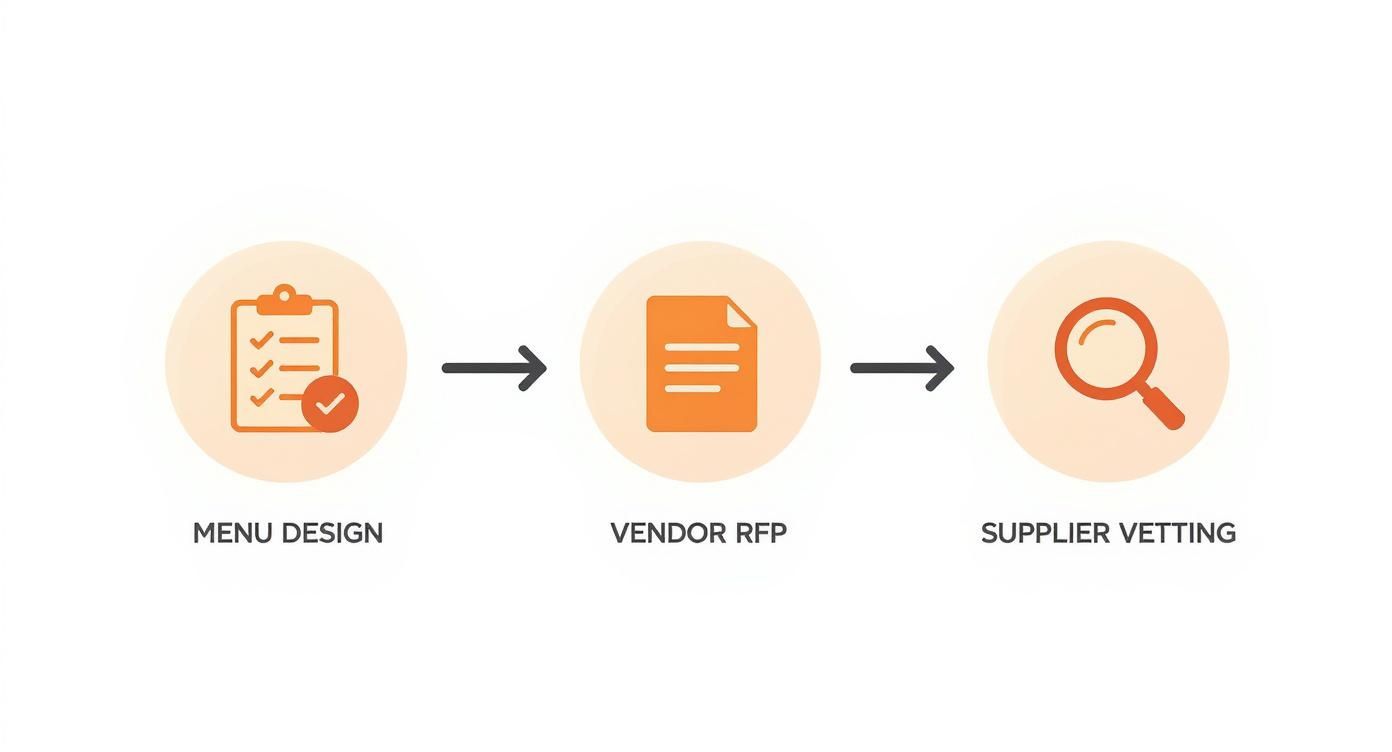
This workflow shows the essential groundwork: Menu Design, Vendor RFP, and Supplier Vetting. You have to nail these first. Getting these stages right from the start prevents a world of logistical headaches down the road and ensures you have a reliable supply of high-quality, compliant meal components.
Creating Standard Operating Procedures for Kitting
The assembly line, where individual meals or boxes come together, is a process we call kitting. This is where precision is everything. It's where portion control happens, allergen labels are slapped on, and the final product takes shape. Clear, written Standard Operating Procedures (SOPs) aren't just a nice-to-have; they’re non-negotiable.
Think of your SOPs as a step-by-step playbook that anyone—from a new hire to a last-minute volunteer—can pick up and follow perfectly. Every detail needs to be covered to keep things consistent and safe.
Your kitting SOP should absolutely include:
- Workstation Setup: A simple diagram showing how to lay everything out. This maximizes efficiency and, more importantly, prevents cross-contamination.
- Portion Control: Get specific. List exact measurements or counts for every single food item, and make sure teams use standardized scoops or scales.
- Allergen Handling: Detail your process for managing major allergens. Think designated prep areas, color-coded utensils, and strict glove-changing rules.
- Labeling Protocol: Define exactly where labels go on containers and what they must include: client's name, meal type, "use by" date, and big, bold allergen warnings.
For those running bigger, more complex operations, truly understanding the fine points of compliant kitting programs is the key to scaling up without letting standards slip.
The Critical Importance of Cold-Chain Management
Once those meals are packed, your top priority shifts to protecting them from temperature abuse. Cold-chain management is the entire process of keeping perishable foods at safe temperatures (usually below 41°F or 5°C) all the way from your facility to a senior's front door. One slip-up, one break in this chain, can make a meal unsafe to eat.
Your cold-chain protocol has to be airtight. It starts with the basics: insulated delivery bags or coolers packed with the right size of freezer packs. But it doesn't stop there.
The moment a meal leaves your temperature-controlled facility, the clock starts ticking. Effective cold-chain management isn't just a best practice; it's a fundamental promise of safety you make to every senior you serve.
To keep everyone accountable, every route needs a temperature log. Drivers should be recording the temperature inside their cooler at the start of their route and at set intervals. There are even affordable, single-use temperature monitoring devices you can pop into coolers to get a continuous record of the temperature history.
Optimizing Routes and Managing Volunteers
Wasted time and fuel can bleed a program's budget dry. Trying to plan routes by hand often leads to inefficient paths, backtracking, and longer delivery times. Route optimization software is an investment that pays for itself over and over.
Tools like Route4Me or OptimoRoute can automatically spit out the most efficient delivery sequence based on your daily list of stops. This does more than just cut fuel costs—it helps ensure meals arrive within that critical safe temperature window.
These systems are just as valuable for managing your volunteer crew. Volunteer management software can handle scheduling, communication, and tracking hours. For instance, a good system can automatically push route assignments and reminders straight to drivers' phones, making the whole daily dispatch process run smoother. It creates a more professional, organized experience for the volunteers who are the lifeblood of so many senior meal delivery programs.
Common Questions About Senior Meal Programs
Even the best-laid plans run into real-world challenges. When you're running a senior meal delivery program, you’re bound to hit a few common snags. Let's walk through the recurring questions we hear from program managers and tackle them with practical, field-tested advice.
Navigating Recruitment and Engagement Hurdles
Finding and keeping seniors in your program can feel like a constant uphill battle. The folks who need meals the most are often the hardest to reach, sometimes due to isolation or simply not knowing where to look for help. A good outreach plan has to be layered, mixing old-school community connections with clear, easy-to-find information.
Your best bet for building a steady pipeline of participants is to connect directly with social workers, local health clinics, and senior centers. These are the trusted voices in the community who can refer people directly to you.
And for keeping them engaged? The food itself is your most powerful tool. A menu that’s varied, looks appealing, and respects cultural preferences can make all the difference. When people have choices and enjoy what they’re eating, participation and satisfaction skyrocket.
A few tools that can make this easier:
- Outreach Tools: You don't need a huge marketing budget. A simple platform like Canva helps create professional-looking flyers and social media posts. A basic website on WordPress or Squarespace is a must-have, giving people one clear place to find eligibility rules and contact info.
- Menu Planning Software: Tools like MealSuite or Nutrislice are a game-changer for making sure your meals hit that one-third Dietary Reference Intakes (DRIs) mark. They also take the headache out of managing medically tailored menus or culturally specific requests.
Securing and Diversifying Program Funding
Funding is the fuel for your mission, and putting all your eggs in one basket is a risky game. Older Americans Act (OAA) grants are a critical piece of the puzzle for many, but true long-term stability comes from a diverse funding stream. That means actively chasing a healthy mix of government grants, local foundation support, corporate sponsorships, and even individual donations.
To win over these different funders, you need to tell a compelling story backed by solid data. They want to see your impact go beyond just "meals served." Start tracking metrics that show a real return on community investment, like reduced hospital readmissions or lower rates of social isolation reported in client surveys.
"A common mistake is treating fundraising like a separate department. The truth is, your strongest fundraising assets are your program data and heartfelt client testimonials. They turn a simple ask for money into a powerful case for investing in the community's well-being."
A Scannable Compliance Checklist
Staying compliant isn't just about checking boxes to avoid penalties—it’s about delivering a program that is safe, reliable, and worthy of your participants' trust. Think of this checklist as a clear roadmap to keep your operation on the right track.
-
Define and Document Eligibility. Get your program's eligibility criteria (age, income, mobility, location) in writing, based on OAA and other funder rules. This document becomes the single source of truth for your entire team.
-
Standardize Your Intake Process. Create one universal intake form. It should capture the essentials: demographics, emergency contacts, and, critically, any physician-prescribed dietary needs and food allergies.
-
Lock Down Food Safety Protocols. Write down your procedures for everything, from the moment food arrives to the second it’s delivered. This has to include detailed cold-chain rules to keep food below 41°F (5°C) until it’s in the client’s hands.
-
Train Your Team Consistently. Every single person—staff and volunteers—needs to be trained on food safety, client confidentiality, and how to handle and report concerns. Keep logs of who was trained on what, and when.
-
Establish a Grievance Policy. Give clients a clear and easy way to provide feedback or file a complaint. This not only builds trust but also helps you spot and fix problems before they get bigger.
-
Maintain Meticulous Records. Keep everything organized: grant reports, vendor contracts, temperature logs, client data. When auditors come knocking, you’ll be ready. Good documentation is proof of your program's integrity.
Following these steps in order gives you a strong framework. It helps you run a program that’s not just doing good work, but is also transparent and accountable to both the community and the funders who make it possible.
At Umoja Health, we provide the OAA-compliant meal components and culturally connected foods that help organizations run effective senior meal delivery programs at scale. Discover how our shelf-stable nutrition solutions can support your mission by visiting us at https://umojahealth.com.