
Choosing to become a WIC-approved food supplier is a powerful commitment to your community’s health and a strategic business decision. It positions your store as a vital link between local families and the essential nutrition they need to thrive, building a stable, loyal customer base in the process.
This guide provides a comprehensive, step-by-step roadmap for vendors looking to navigate the certification process. We’ll cover everything from eligibility and documentation to compliance and operational excellence, drawing on real-world insights from Umoja’s experience supporting community grocers. By following these steps, you can transform a complex application into a successful partnership that benefits both your business and your neighborhood.
Step 1: Understanding Eligibility and Your Role
Before diving into paperwork, it’s crucial to understand what it means to be a WIC partner. Your grocery or convenience store becomes a cornerstone of community well-being, providing the foundational building blocks for a healthy start in life. It’s a significant responsibility, but the rewards—both in revenue and reputation—are substantial.
From our experience at Umoja, we’ve seen how this partnership builds deep, lasting trust. When families rely on you for WIC-approved items, your store becomes a dependable resource, and that loyalty often extends to non-WIC purchases.
Tangible Benefits for Your Business
While the community impact is huge, the business advantages are just as powerful. The WIC program offers a consistent, government-backed revenue stream.
Participants receive monthly benefits on an eWIC card, creating a customer base that is less affected by economic fluctuations. For small, independent stores, this stability can be a game-changer.
Key benefits include:
- Increased Foot Traffic: WIC participants often shop for their entire family, leading to larger basket sizes and more sales of non-WIC items.
- Enhanced Community Standing: Aligning your business with a trusted public health program elevates your reputation and shows you’re committed to local families.
- Competitive Advantage: Being the go-to WIC vendor can set you apart from larger chain stores that may not offer the same personalized service or community feel.
Becoming a WIC supplier is a direct investment in nutrition security, a critical component of public health that ensures all people have access to the foods they need to thrive. Learn more about the principles of improving nutrition security in our guide.
Understanding the Program’s Scale and Scope
The WIC program is massive. In 2021 alone, an estimated 12.1 million people were eligible for WIC benefits, and 6.2 million were active participants. These numbers make it clear: WIC-approved food suppliers aren’t just businesses; they are a critical piece of the national public health infrastructure.
For a deeper dive into the retail environments that serve these families, you can explore some great insights into the Grocery and Convenience Store Industry. To learn even more about the program’s reach, check out the latest data on WIC eligibility and program reach from the USDA.
Step 2: Navigating the WIC Vendor Application
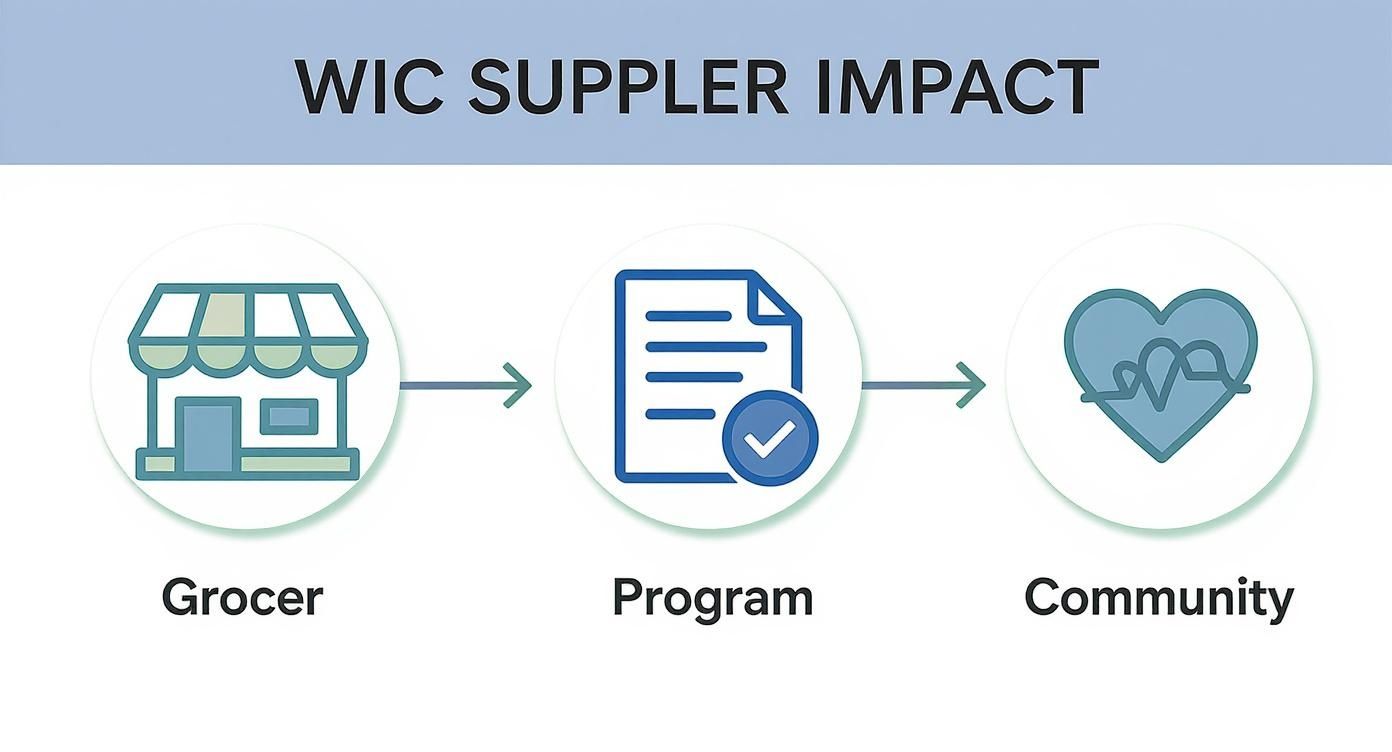
The journey to becoming a WIC-approved food supplier is a well-defined path. With careful preparation, you can navigate it successfully. This section breaks down the entire process, from understanding your state’s specific rules to acing the on-site inspection. Think of this as building a partnership from day one; your state WIC agency is looking for reliable stores, and your goal is to show you are ready to fill that role.
Finding and Understanding Your State’s Requirements
First, you need to find your specific state WIC agency. While the program is federally guided, each state manages its own application process, deadlines, and rules. Visit your state or county health department’s official website to download the WIC vendor application, as third-party sites may have outdated or unofficial forms.
Once there, download the entire vendor application packet and read every page carefully. Pay close attention to:
- Minimum Inventory Requirements: The exact types and quantities of WIC-approved foods you must stock.
- Business Documentation: All required licenses, tax IDs, and ownership information.
- eWIC/EBT Readiness: Point-of-sale (POS) system requirements for processing electronic WIC benefits.
Umoja’s Tip: Create a master folder—physical or digital—for all WIC-related documents. This simple organizational hack will save you from last-minute headaches and keep everything you need in one place.
Preparing for The On-Site Inspection
The on-site inspection is a critical milestone. A WIC agency representative will visit your store to verify your application and ensure you meet all program standards.
They will focus on:
- Proper Food Storage: Refrigerated and frozen foods must be held at correct temperatures and stored hygienically.
- Accurate Pricing: Every WIC-eligible item needs a clear shelf price that matches the price at the register. You cannot charge WIC shoppers more than other customers.
- Store Accessibility and Cleanliness: The store must be clean, well-lit, and accessible to all customers, including those with disabilities.
- Stocking Levels: They will physically verify that you meet the minimum stock requirements.
This inspection is your chance to prove you are a serious, capable partner.
WIC Vendor Application Checklist
Staying organized is the best way to avoid delays. Use this checklist to manage each stage of your application.
| Stage | Key Action Items | Status (To Do, In Progress, Complete) |
|---|---|---|
| Preparation | Locate and download your state’s WIC vendor application packet. | To Do |
| Documentation | Gather all required business licenses, tax IDs, and supplier invoices. | To Do |
| Inventory | Procure minimum stock levels for all required WIC food categories. | To Do |
| Technology | Confirm your POS system is eWIC compatible or plan for an upgrade. | To Do |
| Submission | Complete and submit the full application with all attachments. | To Do |
| Inspection | Conduct a self-audit of your store for cleanliness and compliance. | To Do |
| Training | Schedule and complete mandatory new vendor training. | To Do |
For stores looking to streamline their supply chain and ensure compliance, exploring a partnership with specialized providers can be invaluable. You can learn more about how Umoja supports government WIC programs with compliant solutions.
Step 3: Mastering WIC Inventory and Compliance
Success as a WIC-approved food supplier hinges on one core principle: consistently stocking the right food in the right quantities. The minimum stock requirements from your state WIC agency are non-negotiable, specifying everything from brands of infant formula to the sizes of whole grain bread.
Decoding The WIC Food Packages
Your inventory strategy must align with WIC food packages, which are scientifically designed to deliver crucial nutrients. You must stock items from every required category.
- Infant Formula and Foods: States often have exclusive contracts with specific formula manufacturers, and these lists can change; regularly check for the most up-to-date authorized brands and sizes to stay compliant. WIC is the largest purchaser of infant formula in the U.S., giving it immense influence over brand availability.
- Dairy and Eggs: You’ll need to stock specific milk types (low-fat or non-fat), various cheeses, and a reliable supply of large, Grade A eggs.
- Whole Grains: This includes items like 100% whole wheat bread, brown rice, oatmeal, and specific cereals that are low in sugar and high in iron.
- Fruits and Vegetables: A variety of fresh produce is essential. While some states permit frozen or canned options, the focus is increasingly on fresh choices.
- Protein Sources: Staples like canned fish (light tuna, salmon), peanut butter, and dried or canned beans are core requirements.
Meeting these requirements ensures every WIC family has access to a balanced, nutritious diet.
Sourcing Compliant Products and The Buy American Provision
A common hurdle is sourcing products that meet both WIC’s nutritional standards and the federal “Buy American” provision. This rule requires that, with few exceptions, all food bought with WIC funds must be produced and processed in the United States.
You must be vigilant with your suppliers. Always verify the origin of your products. We’ve seen vendors at Umoja face issues by unknowingly stocking ineligible imported items.
Partner with distributors experienced with WIC regulations to ensure compliance. Beyond WIC rules, mastering essential inventory management best practices will improve your overall operation.
Staying Ahead of Program Updates
The WIC program is constantly evolving. Staying informed is critical to maintaining your status as an approved supplier. For example, recent updates increased access to whole grains, reduced sugar in yogurt, and expanded choices to reflect cultural food preferences.
Subscribe to your state agency’s vendor newsletter and regularly check their website. These updates often include newly eligible foods, like tortillas or tofu. Embracing these changes demonstrates your commitment to serving the diverse needs of your community.
Step 4: Building Your Daily WIC Operations for Success
Getting certified is a major accomplishment, but long-term success depends on your day-to-day operations. This is where the program comes to life: at the checkout counter, in the aisles, and with every family you serve. The goal is to make every transaction smooth, compliant, and positive.
The shift to eWIC cards simplifies transactions but places more responsibility on your staff and POS system. Your team is on the front line, and their ability to handle eWIC transactions confidently is essential.
Essential Staff Training for eWIC
Effective staff training fosters an environment where WIC participants feel respected and supported. Your training must be thorough and ongoing, covering:
- eWIC Transaction Processing: Every cashier must know how to process an eWIC transaction on your POS system, including split payments.
- Approved Product Identification: Knowledgeable cashiers can spot potential issues before an item is scanned, saving time and preventing awkward moments.
- Handling Approved Substitutions: Training must cover your state’s specific substitution rules to prevent declined transactions.
- Troubleshooting Common Errors: Equip your staff with a simple, respectful script to explain why an item was rejected, such as, “It looks like this specific size isn’t covered by WIC, but we can find one that is.”
Understanding Cost Containment Measures
Your daily operations must adhere to state-mandated cost containment measures, which are designed to stretch WIC funds. These rules often dictate the exact sizes or types of eligible products, such as gallon-sized milk or specific cereal box sizes, because they offer the best unit price. A USDA study found that all 70 WIC state agencies surveyed use container size restrictions to save millions annually.
You can dive deeper into these WIC food cost containment practices from the USDA to understand the mechanics.
From Umoja’s Experience: The best WIC suppliers understand the why behind the rules. When you explain to your team that size restrictions help WIC serve more families, they can enforce the rules with empathy and clarity.
Creating Simple Operating Procedures
Create simple, clear standard operating procedures (SOPs) for your cashiers. A great WIC transaction SOP might include:
- Greeting and Initial Steps: A visual guide for starting a WIC transaction on the POS screen.
- Scanning and Verification: Reminders to scan all items and watch for rejected products.
- Handling Rejections: A go-to script for politely explaining why an item wasn’t approved, like: “This yogurt has added sugar; let’s find one on the approved list together.”
- Finalizing the Transaction: Clear instructions for completing payment and providing the customer their updated benefit balance receipt.
These tools transform complex regulations into manageable tasks. For businesses aiming to master complex fulfillment challenges, exploring Umoja’s logistics and operational solutions can offer powerful insights.
Step 5: Excelling as a WIC Partner
Becoming an approved WIC supplier is just the beginning. Thriving as a partner means tackling real-world challenges with foresight and creating a store where families feel genuinely welcome. Drawing from our experience at Umoja, we’ve seen that the most successful vendors are proactive problem-solvers.
Navigating State-by-State Differences
A key challenge is managing inventory according to different state-approved product lists (APLs), especially for businesses near state lines. The approved list for whole grains in California might include a wide variety of tortillas, while Texas may have different brand contracts for milk. These differences are tied to state-level rebate contracts, demographic needs, and exclusive manufacturer agreements for items like infant formula.
Umoja’s Insight: Build a strong relationship with your state WIC agency contact. Proactive communication is your best strategy. If a required product is out of stock, letting your agency know immediately shows you are a responsible partner and can help them identify broader supply chain issues.
Turning Checkout Problems into Positive Experiences
A rejected WIC transaction can be embarrassing for a participant. How your team handles these moments defines your store’s reputation. Train your staff for empathy and quick problem-solving.
Instead of a blunt “This isn’t covered,” empower them with supportive language:
- For a wrong size: “It looks like this carton of juice is just a bit too large for WIC, but the 64-ounce version is fully covered. Would you like me to grab one for you?”
- For a non-approved brand: “This brand of cereal isn’t on the approved list, but we have Cheerios and several other great options that are. Let’s find one your family will love.”
This small shift transforms a negative interaction into a supportive one, building trust and loyalty.
What Makes a WIC Supplier Truly Excel
Exceptional WIC partners weave the program’s mission of dignity and health into their store’s fabric.
Here’s what makes the biggest difference:
- Clear Shelf Labeling: Use WIC shelf tags to clearly mark approved items. This empowers participants to shop confidently and reduces confusion.
- A Welcoming Atmosphere: Ensure your store is clean, well-lit, and easy to navigate. A welcoming environment shows that all shoppers are valued.
- Proactive Staff Training: Train your team on the why behind WIC—its vital role in public health—to foster empathy and a sense of purpose.
- Community Engagement: Partner with your local WIC clinic for outreach events. This positions your store as a community health hub, not just a retailer.
By turning challenges into opportunities, you can become an indispensable resource for the families you serve.
FAQ: A Summary for Beginners
Stepping into the world of WIC as an approved food supplier is a big move. Here are answers to some of the most common questions from prospective vendors.
How Long Does the WIC Vendor Application Process Usually Take?
The timeline varies by state but typically ranges from 30 days to several months. The duration depends on the completeness of your application, your state agency’s workload, and how quickly you prepare for the site visit. To be safe, start the process at least three to four months before your target launch date. A thorough, error-free application is your fastest path to approval.
What are the Top Reasons an Application Gets Denied?
Denials are often avoidable and usually stem from a few key issues:
- Not meeting minimum stock requirements: Failure to consistently carry the specific types and quantities of WIC-approved foods.
- Store saturation: If your area is already well-served by other WIC vendors, the state may deny the application to ensure balanced participant access.
- Past program violations: A history of violations with other federal nutrition programs like SNAP is a major red flag.
- A poor application or failed inspection: Missing documents, incorrect pricing, or failing the site visit due to cleanliness or accessibility issues are common reasons for denial.
Can I Charge WIC Customers a Different Price?
Absolutely not. This is a zero-tolerance rule. You must charge WIC shoppers the exact same price as any other customer. Any form of surcharge or special pricing for WIC transactions is strictly forbidden and can lead to disqualification and severe penalties.
What Kind of Training and Support Should I Expect as a New Vendor?
State WIC agencies provide mandatory initial training for new vendors and key staff. This comprehensive session covers program rules, eWIC transaction processing, and all compliance standards. After certification, ongoing support includes vendor newsletters, updated Approved Product Lists (APLs) on their websites, and a dedicated vendor relations contact you can call with questions. Actively using these resources is key to long-term success.
At Umoja Health, we work with government agencies and community partners every day to run compliant, large-scale food programs. If you’re tackling the complexities of WIC home delivery or need to manage intricate nutritional programs, see how our solutions can help at https://umojahealth.com.