
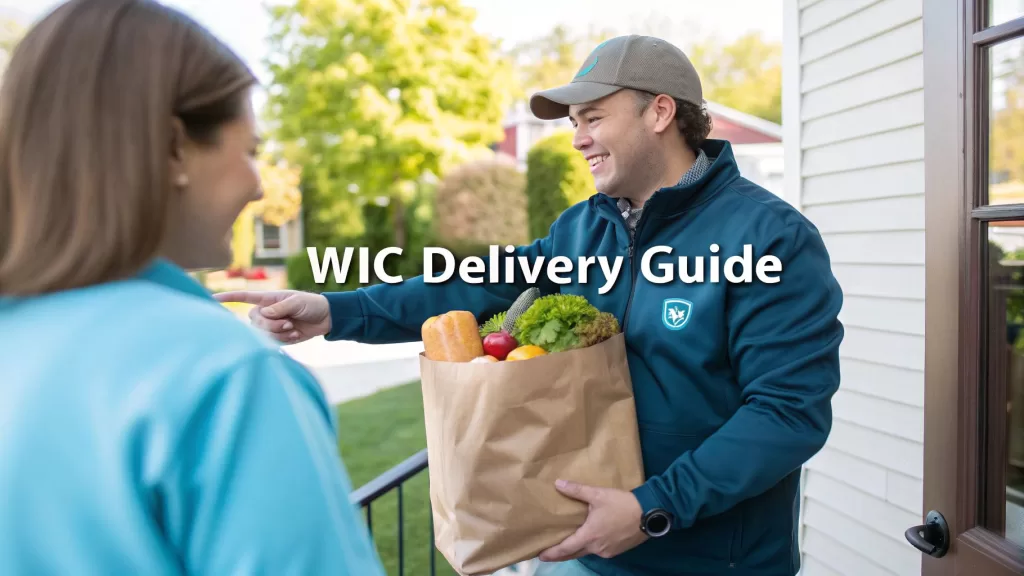
For families trying to access nutritional benefits, WIC food delivery is a game-changer. Instead of the traditional trip to the grocery store, these programs use technology to bring WIC-approved foods directly to a participant’s front door or a nearby pickup spot. This simple shift makes a world of difference for people juggling transportation challenges or tight schedules.
The Evolution of WIC Food Delivery Programs
The Special Supplemental Nutrition Program for Women, Infants, and Children (WIC) has been a pillar of American public health since it began in 1974. At its peak in 2009, WIC served 9.1 million people, but as of 2024, monthly participation averages around 6.5 million—still only reaching about 51% of eligible families nationwide.
Why the gap? The traditional in-store shopping model, while well-intentioned, puts up some serious roadblocks. These aren’t just small hassles; they’re real barriers that stop families from getting their benefits.
Common Barriers to WIC Access
- Transportation Issues: Not everyone has a car. Trying to manage groceries and small children on public transit is a logistical nightmare for many.
- Time Constraints: Between work, childcare, and clinic appointments, finding time for a grocery run is tough. It gets even harder when you have to visit multiple stores just to find WIC-approved items.
- Stigma and Confusion: Many participants feel judged at the checkout line when they have to separate WIC items or navigate a complicated payment process. On top of that, confusing shelf labels just add to the stress.
This is where modern WIC food delivery programs step in. By shifting the shopping experience online, these models give families a more private, dignified, and straightforward way to use their benefits. This isn’t just about convenience—it’s a critical move toward real nutrition security for every single participant.
This evolution reframes delivery not as a luxury, but as a vital tool for public health equity. It helps ensure that nutritional assistance translates into actual, healthy food on the table for mothers, infants, and children who need it most.
As we’ll see, launching these programs means getting into the weeds of logistics, technology, and compliance. From maintaining up-to-date inventory of approved foods to ensuring that delivery fees are never charged to participants, a successful WIC program depends on compliance, planning, and robust systems. All vendor Standard Operating Procedures (SOPs) should address the federal ‘Buy American Provision,’ which prioritizes American-made food products when available, as required by USDA. The next sections will walk you through exactly how it all works and how to pick the best approach for your community.
How WIC Food Delivery Programs Operate: Logistics, Compliance, and Tech
Moving from the traditional in-store WIC experience to a delivery-based system requires a solid operational blueprint. At their heart, WIC food delivery programs are designed to dismantle barriers, but how they achieve this varies significantly. Success depends on mastering the interplay between logistics, compliance, and technology.
Let’s dive into the three dominant operational models: community delivery, direct-to-door, and curbside pickup. Each offers a unique workflow, technology stack, and communication strategy tailored to different community needs, from dense urban cores to sprawling rural counties.
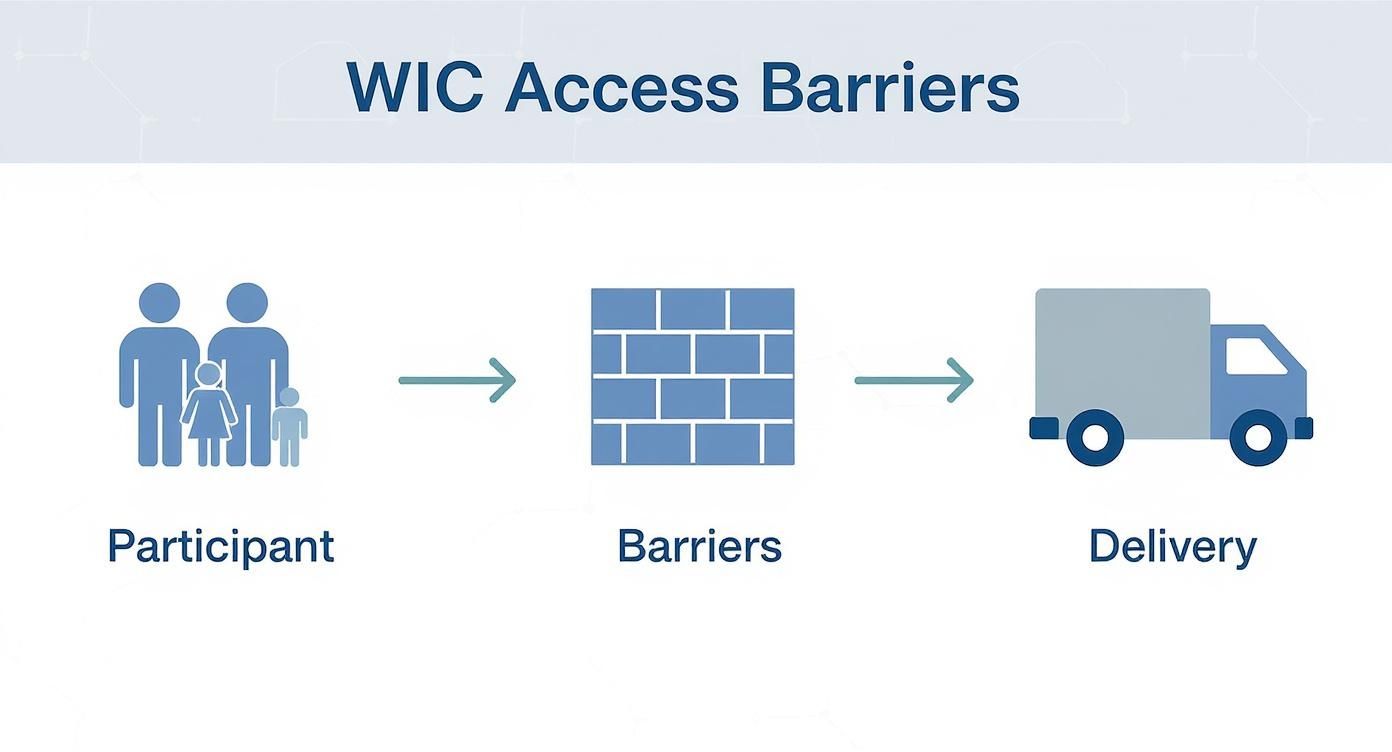
This isn’t just about convenience; it’s a direct response to the real-world hurdles that prevent families from fully utilizing their WIC benefits.
The Community Delivery Model
The community delivery model operates on a hub-and-spoke system. Instead of individual home deliveries, orders are aggregated and delivered in bulk to a central, trusted location like a WIC clinic, church, or community center. Participants then make a short trip to this familiar spot for pickup.
Workflow & Logistics:
- Ordering: Participants use a mobile app or website to place orders from a WIC-authorized vendor before a weekly cutoff.
- Fulfillment: The vendor picks and packs all orders for a specific drop-off site, often using pre-kitted boxes for efficient distribution.
- Bulk Delivery: A single truck delivers all orders to the community hub on a scheduled day, drastically reducing last-mile delivery costs.
- Participant Pickup: Participants arrive during a designated window to collect their food packages.
Tech Stack & Communications: This model requires an online ordering platform integrated with inventory management and an automated SMS/email system to notify participants when their orders are ready for pickup. Communication is key to coordinate pickup times and manage site logistics.
The Direct-to-Door Model
This model mirrors popular online grocery services, offering maximum convenience by bringing WIC-approved foods directly to a participant’s doorstep. It completely eliminates the transportation barrier but demands the most sophisticated operational backbone.
Workflow & Logistics:
- Ordering: Participants use a WIC-compliant e-commerce platform to select items and schedule a delivery window.
- Fulfillment: Orders are picked and packed at a local WIC-authorized store or a dedicated fulfillment center.
- Last-Mile Delivery: A fleet of drivers delivers orders to individual homes, often using route optimization software to ensure efficiency.
Tech Stack & Communications: The technology must include a robust e-commerce platform with real-time inventory sync, EBT payment processing, and route management software. Communication is constant, with automated alerts for order confirmation, substitutions, and delivery ETAs to keep participants informed.
The Curbside Pickup Model
Also known as “click-and-collect,” curbside pickup is a hybrid solution that balances convenience and cost. Participants shop online and then drive to a WIC-authorized store where their pre-packed order is brought directly to their car.
Workflow & Logistics:
- Ordering: Participants fill their online cart and select a pickup time slot.
- Fulfillment: Store employees pick and pack the order and process the EBT payment details entered online.
- Pickup: The participant arrives at the store, notifies staff via the app or a text message, and an employee loads the groceries into their vehicle.
Tech Stack & Communications: This model requires an e-commerce platform tightly integrated with in-store operations (Point of Sale and inventory systems). Key communications include order-ready notifications and instructions for a smooth pickup experience.
Comparison of WIC Delivery Program Models
| Feature | Community Delivery | Direct-to-Door | Curbside Pickup |
|---|---|---|---|
| Participant Effort | Low; requires travel to a nearby central location. | Very low; no travel required. | Low; requires travel to the store but no in-store shopping. |
| Logistical Complexity | Moderate; requires site coordination and bulk transport. | High; requires route optimization and individual deliveries. | Low; leverages existing store infrastructure and staff. |
| Operational Cost | Low to moderate; reduced last-mile delivery costs. | High; significant fuel, vehicle, and driver costs. | Low; minimal additional cost beyond staff time. |
| Best Suited For | Rural, semi-rural, or areas with clustered participant groups. | Densely populated urban and suburban areas. | Communities with widespread car ownership and tech access. |
| Technology Needs | Online ordering platform, inventory and delivery management. | E-commerce platform, real-time inventory, route software. | E-commerce platform integrated with store operations. |
Ultimately, choosing the right model requires a deep understanding of your community’s specific needs, resources, and vendor capabilities. By analyzing these operational frameworks, agencies can design a program that effectively delivers nutrition and dignity.
The Technology That Makes Modern WIC Delivery Work
A modern WIC food delivery program simply can’t get off the ground without the right technology holding it all together. This isn’t just about putting up a website. It’s about creating a fully connected system that manages everything—from the moment a participant logs in to the second their groceries show up at their door.
Think of it as the program’s digital nervous system. It has to ensure compliance, keep an eye on inventory, process payments, and keep everyone in the loop, all at the same time.
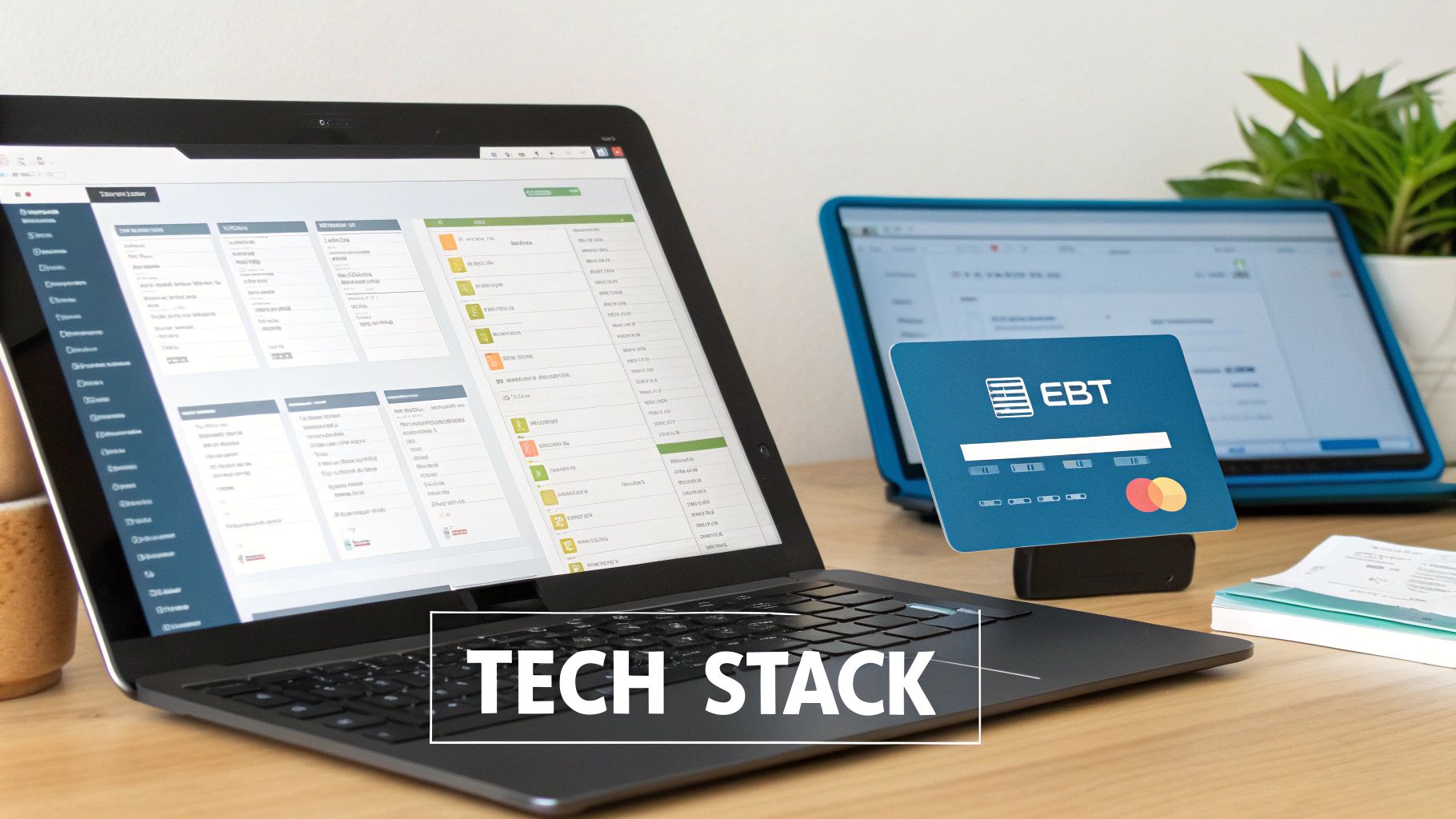
This system needs to be powerful enough to handle the notoriously complex rules of WIC, but simple enough for a busy parent to use without wanting to pull their hair out. The ultimate goal is to make using WIC benefits feel as easy and dignified as any other online shopping trip.
Core E-commerce and Inventory Platforms
At the center of it all is an e-commerce platform built specifically for WIC compliance. Your average, off-the-shelf shopping cart just won’t cut it. Why? Because it can’t tell the difference between a WIC-approved brand of whole wheat bread and one that isn’t.
The platform must be directly integrated with the state’s electronic Approved Product List (APL), ensuring real-time eligibility and compliance with ongoing updates.
This deep integration does a few critical jobs:
- WIC-Only Filtering: It instantly shows participants only the items they can actually buy with their benefits. This completely removes the frustrating guesswork of trying to find eligible products in a sea of options.
- Real-Time Inventory Sync: The system has to know what’s actually on the store shelves, right now. This is key to preventing a participant from ordering an approved item, only to get a notification later that it’s out of stock.
- EBT Payment Integration: The checkout must be able to securely process WIC EBT (Electronic Benefit Transfer) cards. It also needs to be smart enough to separate WIC-approved items from any other groceries in the same cart, handling the split payment seamlessly.
A truly effective platform must have the ability to manage inventory-aware substitution rules. This means if the specific APL-approved yogurt a family ordered is gone, the system can automatically suggest another compliant brand or size. This simple feature is the difference between a failed order and a family receiving their full nutritional benefits.
The Power of Smart, Inventory-Aware Substitutions
Let’s walk through a situation that happens every single day. A mother places an order for a specific brand of WIC-approved infant cereal. But by the time a store employee goes to pick the order, the last box on the shelf has just been sold.
A basic, clunky system would just mark the item as unavailable. The order would be incomplete, and the participant would be left short. It’s a terrible experience.
An advanced, inventory-aware system, on the other hand, is much smarter. It instantly checks the APL and finds a compliant alternative—maybe a different approved brand of the same cereal, or a slightly different size. The system then automatically sends an SMS to the participant with the suggested swap, asking for a quick approval.
This proactive approach turns a potential disaster into a helpful, positive interaction. Platforms like the UmojaCloud system are built from the ground up to manage these kinds of complex, rules-based substitutions, which are absolutely essential for keeping fulfillment rates high and participants happy. While UmojaCloud is one solution, several other platforms such as SmartWIC and WIC Shopper are also used for WIC e-commerce and delivery nationwide.
Communication and Logistics Management
Technology isn’t just about databases and payment gateways; it’s also about clear, empathetic communication. Participants need to feel seen and supported every step of the way. This is where dedicated communication platforms—using tools like SMS, in-app notifications, and email—become so important.
Here’s what great communication looks like in practice:
- Order Confirmation: An immediate message confirming the order was received. Peace of mind, delivered instantly.
- Substitution Alerts: A proactive text about any out-of-stock items, offering compliant alternatives they can approve with a simple reply.
- Delivery Updates: Real-time alerts when the order is being packed, when it’s out for delivery, and an estimated arrival time.
- Post-Delivery Follow-Up: A simple message confirming the delivery was made and asking if everything was okay. This builds trust and gives you invaluable feedback.
This steady flow of information dramatically reduces anxiety for participants and cuts down on the number of calls to your support team. When you get it right, the tech stack transforms a complicated logistical puzzle into a smooth, reliable service that delivers both nutrition and dignity.
Real-World Case Studies in WIC Delivery
Theory is one thing, but seeing how WIC food delivery programs actually perform on the ground is where the real learning happens. These anonymized case studies from Umoja’s network show how different communities tackled unique challenges to boost WIC redemption and better serve families. They’re great examples of how adaptable and impactful a well-designed delivery model can be.
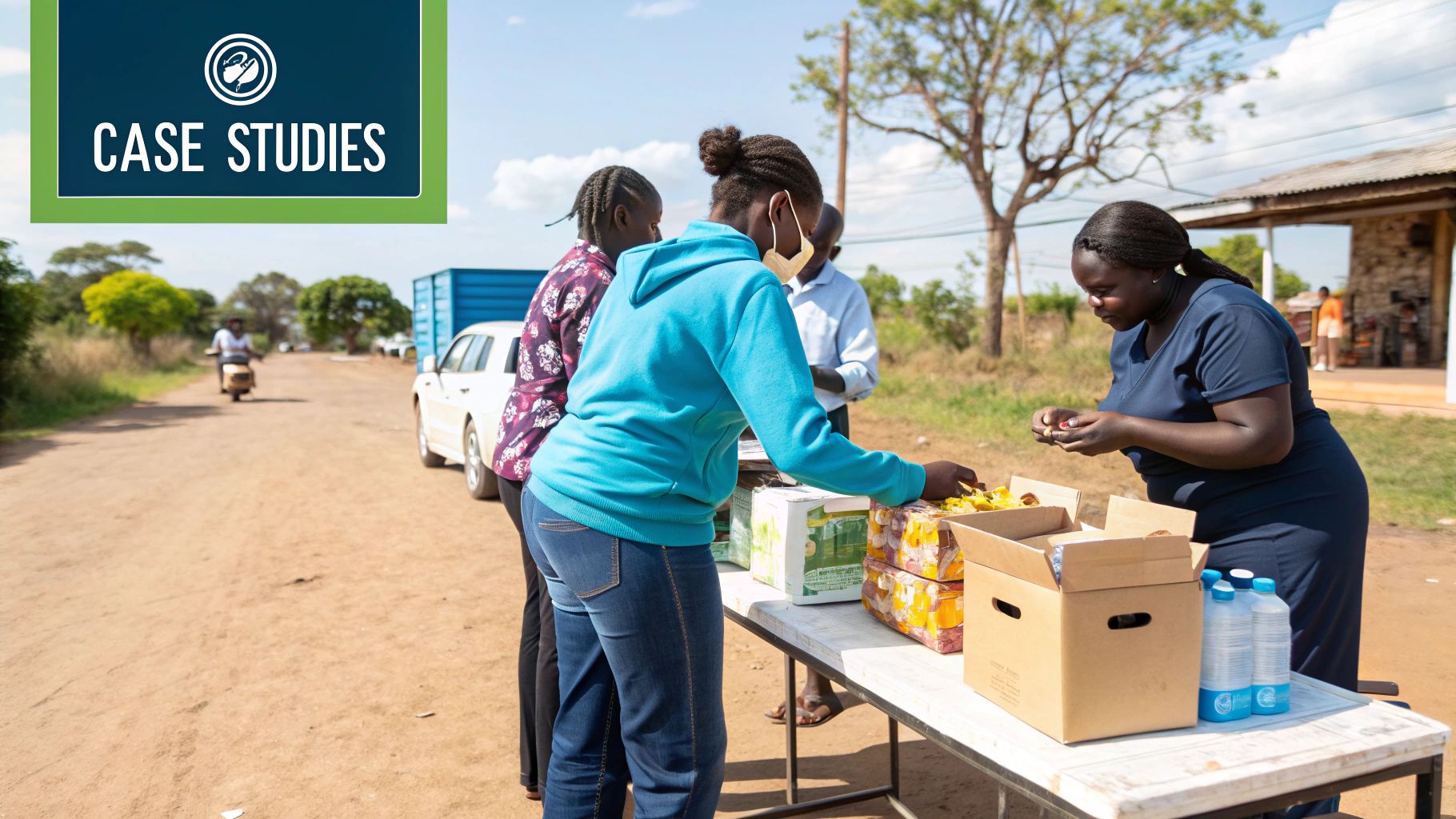
Case Study 1: Overcoming Rural Barriers with Community Delivery
A largely rural county was facing a classic WIC access problem. With only two authorized vendors spread across a vast area, many participants had to drive over an hour just to get groceries. Public transit was virtually non-existent, and that trip was becoming a real financial strain. Redemption rates were stuck at a concerning 55%. The WIC agency knew a direct-to-door service would be financially unfeasible.
The Solution and Workflow
The agency partnered with a local health clinic and a community center—places participants already knew and trusted—to launch a community delivery program.
- Ordering: Families used a simple, mobile-friendly website to place WIC orders before a weekly cutoff.
- Fulfillment: A regional grocer aggregated the orders and packed them into individual, labeled boxes.
- Logistics: The grocer made just two bulk deliveries each week, one to each partner site, drastically cutting down on transportation time and cost.
- Communication: An automated SMS notified participants when their orders were ready for pickup, giving them a two-day window to collect their food.
The results were staggering. Within six months of launch, WIC redemption rates jumped from 55% to over 72%. The big takeaway? Solving even part of the “last-mile” problem can dramatically increase access and participation.
Case Study 2: Direct-to-Door Delivery in a Dense Urban Setting
An urban WIC agency in a major city faced different challenges: time poverty, the difficulty of using public transit with groceries and children, and the stigma of in-store WIC transactions. A direct-to-door model was the logical solution. They partnered with three mid-sized, local grocery stores that were already community staples. Success hinged on crystal-clear Standard Operating Procedures (SOPs) for vendor-managers to ensure compliance and smooth operations.
Compliance and Operational Excellence
This program’s success depended on mastering the operational details.
- Vendor-Manager SOPs: The agency created a detailed playbook covering order picking accuracy, temperature controls for cold items, and driver training for courteous and discreet deliveries.
- ‘Buy American’ Provision: The e-commerce platform automatically flagged American-made foods, and the vendor’s picking software highlighted these items for staff. Regular spot-checks were built into the SOPs to ensure compliance.
- Reporting Templates: A shared dashboard provided real-time data on redemption rates by zip code, order accuracy, on-time delivery percentages, and participant feedback, allowing for immediate issue resolution.
A key operational challenge was managing delivery windows. Broad, four-hour windows were frustrating for families. By implementing route optimization software, they were able to provide much more accurate 60-minute delivery estimates via SMS, significantly improving the participant experience. This direct-to-door model proved that with strong vendor partnerships and the right tech, even the most complex WIC food delivery programs can thrive.
Getting Compliance Right and Dodging Common Pitfalls
Launching a WIC food delivery program that really works is about more than just slick technology and good logistics. It’s about carefully navigating a maze of compliance rules while sidestepping the operational traps that can trip up even the best-intentioned efforts. Every single part of the program, from how you manage inventory to how you talk to participants, has to line up with strict state and federal guidelines.
Getting these details wrong leads to frustration for families and big headaches for program administrators. The real goal here is to build a system that’s not just efficient, but completely compliant and built around the participant’s needs from the very beginning.
Mastering the Must-Haves of Compliance
In the world of WIC, compliance isn’t just a suggestion—it’s everything. Three areas, in particular, demand your constant attention to keep a delivery program running smoothly and legally. Think of these as the pillars holding up your entire operation.
- Spot-On Approved Product Lists (APLs): Your e-commerce platform has to be a perfect mirror of the state’s APL. This isn’t a one-and-done setup. APLs change, and your system needs to reflect those updates instantly. If it doesn’t, you risk participants ordering items they can’t actually receive.
- Zero-Fee Delivery Workflows: A core promise of WIC is that families receive their benefits at no cost. That absolutely includes delivery. You have to design a system where delivery costs are either baked into vendor contracts or covered by administrative funds. The bottom line: a family should never see a delivery fee.
- Rock-Solid State and Federal Reporting: WIC programs answer to both state agencies and the USDA. You’ll need powerful reporting templates that can track everything from redemption rates and order accuracy to participant satisfaction. This data is your proof that the program is effective and compliant.
Sidestepping the Usual Operational Stumbles
Even a perfectly compliant program can be undermined by operational missteps. Getting ahead of these common issues with clear Standard Operating Procedures (SOPs) is the key to providing a high-quality service that families can count on.
One of the biggest culprits is poor inventory management. Nothing is more frustrating for a participant than ordering an approved item, only to find out it’s out of stock. This creates friction and can lead to families not getting the full benefits they need. The fix is a real-time, inventory-aware system that can offer compliant substitutions on the fly, turning a potential breakdown into a helpful interaction.
Another major hurdle is simply not talking to participants enough. When families place an order and then hear nothing, it creates anxiety. A silent system is a confusing system. Setting up automated SMS or in-app notifications for order confirmations, delivery ETAs, and any hiccups is absolutely essential for building trust.
Finally, failing to properly train vendor staff can sink the whole ship. Every single employee, from the person picking items in the aisle to the driver at the door, is the face of your WIC program. SOPs must cover everything—customer service, how to deliver discreetly, and proper food handling—to ensure every family has a consistent and dignified experience. To manage these relationships and the regulatory landscape effectively, WIC programs must have robust third-party risk management strategies in place when partnering with outside vendors.
Getting this right isn’t just about good operations; it’s about public health. Successful WIC food delivery programs have been directly linked to better health outcomes for moms and babies. In fact, research covering nearly two million deliveries showed that better WIC access was tied to major reductions in adverse pregnancy outcomes, like lower rates of gestational diabetes and preterm births. You can learn more about how WIC access impacts maternal and infant health on PMC NCBI. By mastering compliance and avoiding these pitfalls, your program can deliver not just food, but better health for your entire community.
A Decision Framework for Choosing Your Delivery Model
Picking the right approach for a WIC food delivery program isn’t about finding a single “best” model. It’s about finding the best fit for your specific community. A direct-to-door system that’s a game-changer in a dense city could be completely impractical in a sprawling rural county. This framework will help you ask the right questions to select a model that aligns with your participants’ needs and your operational reality.
Assess Your Community Landscape
First, analyze the environment you’re serving. The physical layout and infrastructure of your area will dictate which delivery models are feasible and effective.
- Population Density: Are participants clustered in a small urban area or spread out over many miles? High density favors the cost-effectiveness of direct-to-door delivery.
- Participant Transportation: What percentage of your participants has consistent access to a personal vehicle? If car ownership is low, a curbside pickup model will fail to serve those who need delivery the most.
- Community Hubs & Partners: Do you have a network of trusted community locations (clinics, centers, churches) that could serve as pickup points? Strong local partnerships are the backbone of a successful community delivery model.
Evaluate Technology and Budget Realities
Next, match your ambition with your available resources. A program is only as strong as the technology that powers it and the budget that sustains it.
- Technology Readiness: Do participants have reliable internet and smartphone access? Low digital literacy might require a model with more hands-on support.
- Vendor Capabilities: Do you have WIC-authorized vendors who are willing and technologically able to support online ordering and delivery logistics?
- Budget Constraints: What is your realistic budget for operational costs like fuel, driver pay, and vehicle maintenance? Direct-to-door has the highest ongoing costs, while curbside is the lowest.
It’s far better to launch a sustainable, well-funded curbside program than an under-resourced direct-to-door service that can’t deliver on its promises. Tapping into proven fleet management best practices can offer valuable insights for keeping delivery operations efficient.
A Simple Scoring Framework to Guide Your Choice
Use this scoring system to bring these pieces together. Rate each factor from 1 (Low) to 5 (High) based on your community’s profile.
| Factor | Rating (1-5) | Guidance |
|---|---|---|
| Population Density | _ | Higher scores favor Direct-to-Door. |
| Participant Car Access | _ | Higher scores favor Curbside; lower scores rule it out. |
| Community Partner Network | _ | Higher scores favor Community Delivery. |
| Participant Tech Access | _ | Lower scores may require phone-based ordering support. |
| Operational Budget | _ | Higher scores allow for costlier models like Direct-to-Door. |
How to Interpret Your Score:
- Direct-to-Door: Ideal for areas with high population density, a strong budget, and tech-savvy participants.
- Community Delivery: A winning strategy in areas with low population density, limited car access, but strong community partner relationships.
- Curbside Pickup: A great fit for communities with high car ownership, strong vendor partners, and a modest operational budget.
This framework provides a logical starting point, empowering your agency to select a delivery model that is not only effective on day one but also sustainable for the long haul.
Common Questions About WIC Food Delivery
As state agencies and vendors start thinking about a WIC food delivery program, a few key questions always pop up. Getting these sorted out from the beginning is the secret to building a program that’s not just compliant, but one that actually makes life easier for WIC families.
How Can We Make Sure Delivery Is Free for Participants?
This is a big one. A core promise of WIC is that benefits come at no cost to families, and delivery is no exception. To offer no-fee delivery, programs usually take one of two routes. The most common way is to bake the delivery cost into the vendor’s main contract, which spreads the expense so thinly across all orders that it becomes tiny for any single transaction.
Another option is for agencies to use their administrative funds to cover the logistics. Either way you slice it, the experience for the participant has to be seamless—the checkout screen must clearly show a $0.00 delivery fee.
What’s the Smartest Way to Handle Substitutions?
Let’s face it, items will go out of stock. It’s a reality of retail. But that shouldn’t mean a participant loses out on their benefits. The best approach here is to lean on inventory-aware technology that talks directly to the state’s Approved Product List (APL).
Here’s how that works in practice. When an item isn’t available, the system should instantly:
- Find a compliant, APL-approved alternative.
- Send the participant a quick text or in-app message with the suggested swap.
- Let them approve or decline it with a simple tap or reply.
This turns a potential headache into a moment where the participant feels seen and in control.
How Does Delivery Actually Affect a Family’s WIC Benefits?
WIC delivery is really about modernizing access. It doesn’t change the fundamental nutritional support a family gets. Think of it as simply a new, more convenient way for families to use their approved food package.
In fact, delivery can make it easier for families to get the full value of their benefits. A great example is the recent USDA update that permanently boosted the Cash Value Benefit (CVB) for fruits and vegetables. For 2025, monthly Cash Value Benefit (CVB) amounts remain $26 for children, $47 for pregnant or postpartum participants, and $52 for breastfeeding participants, with updates subject to annual federal guidance. Delivery helps families get these healthy—but often heavy or bulky—items home without a hassle. You can read more about the 2024 WIC food package update on FRAC.org.
At Umoja Health, we partner with government agencies, healthcare plans, and community organizations to build food programs that are compliant, efficient, and culturally connected. We bring the technology and logistics know-how to run WIC mobile shopping and home delivery programs that truly work. Learn how we can help at https://umojahealth.com.